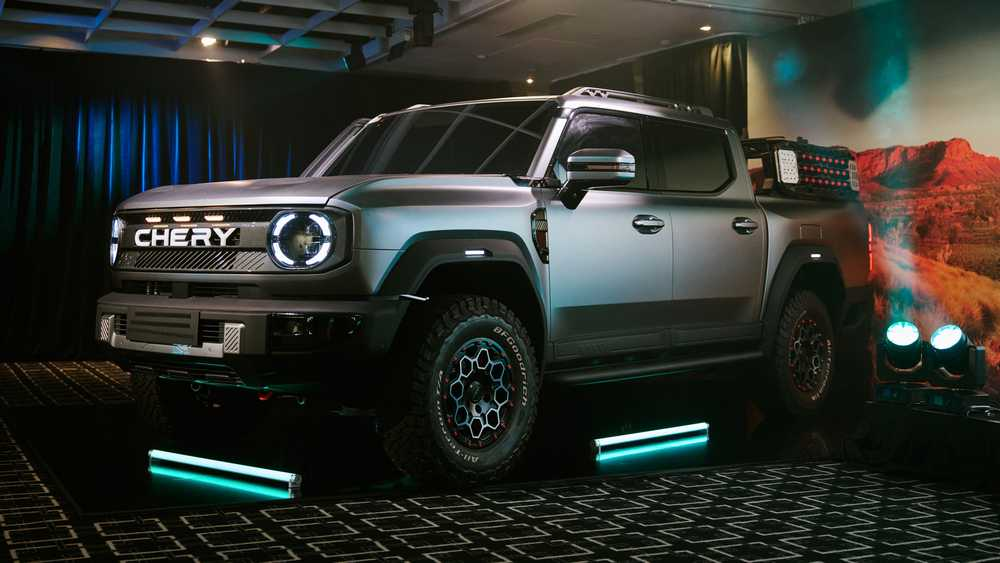
Chinese automaker Chery is warning that the United States could fall behind the global automotive industry if it continues to limit competition from Chinese carmakers. Chery International President Zhang Guibing told Australian media that the growing technology gap between American automakers and international competitors could leave U.S. consumers with older vehicles and higher prices.
Chery President Says the U.S. Risks Falling Behind
Zhang Guibing highlighted the differences between the U.S. automotive market, where Chinese vehicles face significant restrictions, and markets in Australia and Europe, where consumers have access to a broader range of vehicles and prices.
“Five years later, 10 years later, if there is not any good competition inside, so I think maybe outside of America all the cars are completely different, and maybe the US is still a very old car. I don’t know what the situation is,” he said.
Guibing also argued that limited competition could contribute to higher vehicle prices in the United States. He cited comments from journalists about the cost of new cars in the country.
“Yesterday some of the journalists say, ‘Oh now in the US normally the car price is about 60,000 US dollars.’ The car price is very high. I say because there’s no competition, so the customer need to pay more money.”
His comments suggest that the consequences of restricting Chinese automakers could extend beyond vehicle technology to the prices American consumers pay for new cars.
Chinese Automakers Expand Their Presence in Australia
China has established a significant presence in Australia’s new-vehicle market. In September, 38.9% of new vehicles sold in the country came from China, although not all of those vehicles carried Chinese brand names.
Chery accounted for nearly 10% of that share. Company officials have also said Australia can help Chinese automakers learn more about the U.S. market, while upcoming expansions into Canada could provide another opportunity to gain experience in North America.
The company’s comments highlight the differences between markets where Chinese automakers can compete more freely and the United States, where their access remains restricted.
Ford CEO Jim Farley Also Warns About Chinese Competition
Concerns about the growing strength of China’s automotive industry are not limited to Chinese automakers. Ford CEO Jim Farley has repeatedly discussed the competitive challenge facing American manufacturers.
In 2025, Farley compared the rise of China’s automotive industry with the earlier expansion of Japanese automakers in the United States, arguing that the current challenge is significantly greater.
“I think it’s exactly the same thing, but it’s on steroids,” he said.
Farley has also spent time driving a Xiaomi SU7 in the United States and said he did not want to return the vehicle. He explained his decision by emphasizing the importance of understanding competing products.
“Because they’re the competition. And to beat them, you have to know them.”
Bill Ford, the company’s executive chairman, expressed similar concerns in 2023, warning that Chinese brands could eventually enter the U.S. market.
“[Chinese brands are] not here but they’ll come here we think, at some point, we need to be ready, and we’re getting ready.”
Earlier this year, Farley reiterated the need for American automakers to compete directly with Chinese manufacturers.
“We have to make it against the Chinese players,” he said in an interview. “If you’re an American and you want us to beat the Chinese in the car business, you’re all going to want to pay attention.”
Why Chinese Cars Remain Blocked From the U.S. Market
Despite the warnings about competition, Chinese automotive brands remain restricted from entering the U.S. market. A combination of substantial tariffs on electric vehicle imports and a complete block on connected-car technology without a waiver has kept the vehicles off American roads.
These restrictions have also affected Polestar, which withdrew from the U.S. after failing to secure a waiver.
The debate over Chinese automotive competition continues to center on market access, vehicle technology and pricing, with Chery’s president warning that limited competition could leave American consumers paying more while the rest of the world moves toward newer vehicles.