Ford Motor Company reported $2 billion in net income for the third quarter, overcoming rising costs and lower revenue to strengthen its full-year profit outlook. Revenue totaled $49.5 billion, down 2% from the previous year, while adjusted earnings before interest and taxes (EBIT) increased 3% to $2.7 billion. The results prompted Ford management to raise the lower end of its full-year adjusted EBIT guidance to $10.5 billion.
The results came as Ford faced mounting commodity and logistics expenses, along with lower sales volume linked to planned production changes. Despite these challenges, the automaker exceeded Wall Street expectations, supported by the strength of its core business and continued demand for its trucks and commercial vehicles.
Ford Faces Higher Costs and Production Changes
Ford is dealing with an estimated $2.5 billion increase in year-over-year commodity and logistics costs, driven by geopolitical tensions and supply chain volatility. These additional expenses have created pressure on the company’s financial performance.
Sales volume also faced pressure as Ford moved ahead with the planned phase-out of the Escape and Corsair crossovers. The changes are intended to prepare the Louisville Assembly Plant for a new electric vehicle platform.
Even with these challenges, Ford delivered higher adjusted operating earnings and maintained enough confidence in its financial performance to increase the minimum level of its full-year adjusted EBIT forecast to $10.5 billion.
Ford’s Truck Business Remains a Major Profit Driver
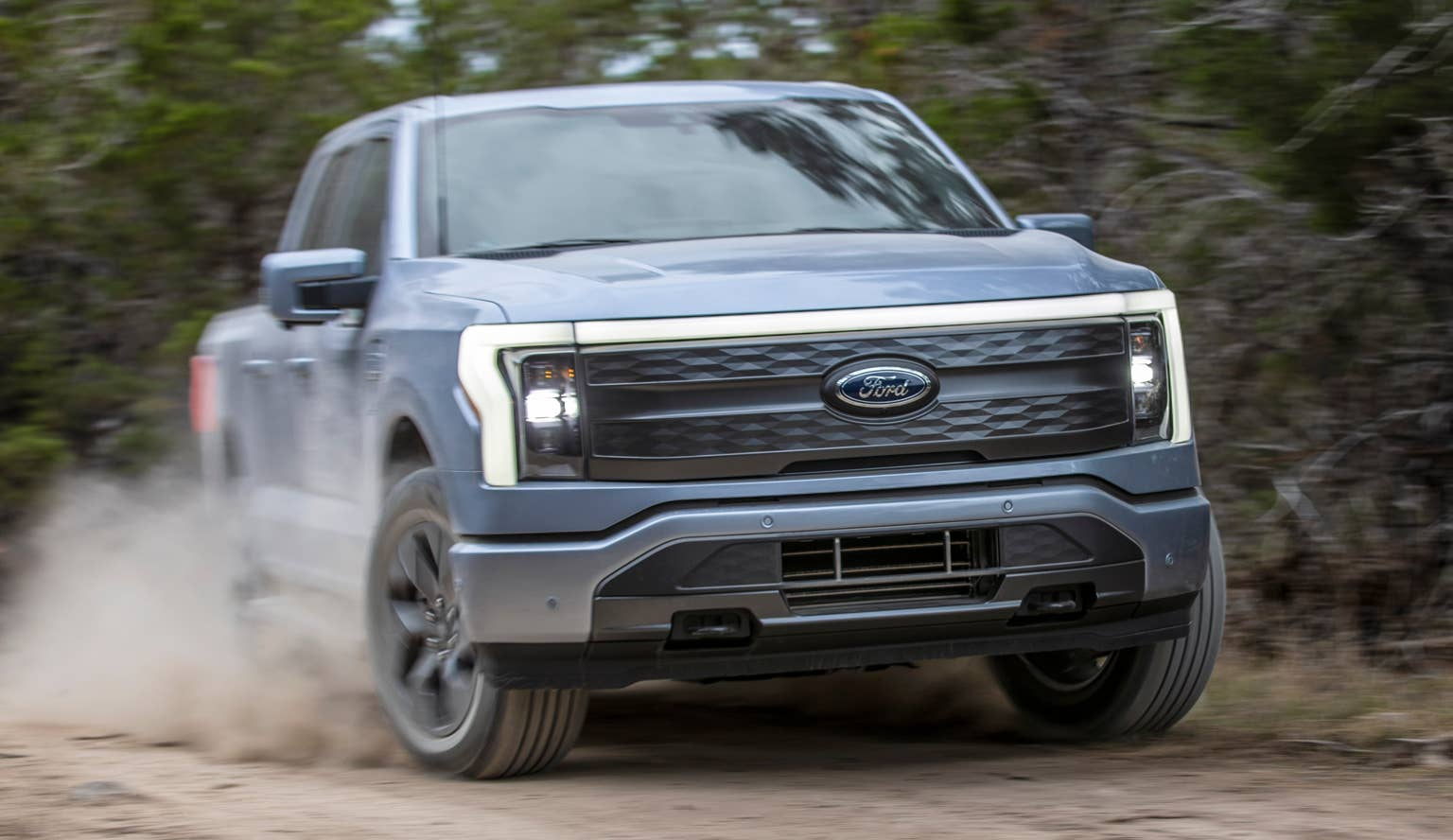
Ford’s truck business continues to provide a critical foundation for its financial stability. The automaker is maintaining a broad lineup of gasoline-powered, hybrid and electric vehicles rather than dividing its offerings into separate strategies for different powertrains.
Demand for the F-Series remains strong despite higher gasoline prices. A supplier issue in late September temporarily slowed F-150 production, but Ford contained the disruption and prevented its financial impact from derailing the company’s annual targets.
The commercial-focused Ford Pro division also contributed significantly to the company’s performance, generating $1.7 billion in EBIT during the quarter. Its profitability helps support Ford’s substantial investments in developing future electric vehicle technology and manufacturing platforms.
Ford is preparing to launch an all-new F-150 in 2028. The continued strength of its truck lineup provides the company with financial resources to support its broader investments and compete in global markets.
Ford’s Electric Vehicle Division Continues to Lose Money
While Ford’s traditional vehicle business remains profitable, its electric vehicle division continues to weigh on overall financial performance. The unit recorded a $1.1 billion loss for the quarter, although that represented a 25% improvement from the previous year.
The reduction in losses indicates progress toward improving the division’s financial performance, but achieving profitability remains a significant challenge for the automaker.
Competition from China’s BYD has added pressure, with the company overtaking Ford in global sales on the strength of its affordable electric vehicles. Ford is responding by developing a new Universal EV platform designed to improve efficiency and reduce production costs.
Ford Targets Lower EV Costs With a New Platform
The planned Universal EV platform is centered around the upcoming $28,350 Fathom pickup. Ford intends to use advanced manufacturing techniques to significantly lower costs and improve the economics of its electric vehicle business.
The strategy is aimed at helping Ford’s Model e division reach break-even by 2029. Reducing manufacturing expenses will be central to that effort as the company continues investing in its electric vehicle lineup while supporting its established gasoline-powered and hybrid businesses.
Ford’s financial performance also highlights its ability to absorb substantial electric vehicle losses while remaining profitable overall. The company previously recorded an $8.2 billion loss, underscoring the scale of the financial challenges it has faced as it invests in its electric vehicle operations.
Ford Balances Current Profits With Long-Term EV Investment
Ford’s third-quarter results reflect the contrasting performance of its established vehicle operations and its electric vehicle division. Strong truck demand and Ford Pro’s $1.7 billion in quarterly EBIT helped support overall profitability despite higher costs and continued losses in the EV business.
With $2 billion in net income, a 3% increase in adjusted EBIT and a higher full-year adjusted EBIT guidance floor of $10.5 billion, Ford is relying on its core operations to finance its electric vehicle investments while working toward lower production costs and improved EV profitability.