The Datsun S30 Concept brings the original Nissan Z into the modern era with a twin-turbocharged V6, a six-speed manual transmission and extensive carbon-fiber upgrades. The one-off restomod is set to debut at the 2026 SEMA Show, combining the classic S30’s distinctive styling with performance hardware from the current Nissan Z.
A Modern Revival of the Original Datsun 240Z
The Datsun S30 introduced the original 240Z, a sports car recognized for its long hood, short rear and clean exterior lines. Its combination of distinctive styling, accessible performance and engaging driving characteristics helped establish its place among the most iconic Japanese sports cars.
For the 2026 SEMA Show, the S30 returns in a modern interpretation that preserves the original car’s silhouette while incorporating contemporary Nissan Z components. The project was developed as a restomod, retaining the classic exterior design while upgrading the engine, chassis, brakes and interior.
Nissan Z Twin-Turbo V6 Powers the S30 Concept
Under the hood, the Datsun S30 Concept features Nissan’s VR30DDTT 3.0-liter twin-turbocharged V6, the same engine used in the current Nissan Z. An official power figure has not been announced, but the engine could exceed the standard Z’s 400 horsepower with the appropriate modifications.
The engine setup includes Garrett PMAX turbochargers, NISMO cold-air intakes, a NISMO heat exchanger and a twin-disc clutch. A six-speed manual transmission from the Nissan Z sends power to the rear through a NISMO R200 limited-slip differential.
The fuel system includes a Radium Engineering 10-gallon fuel cell and surge tank, supported by a DeatschWerks 450-liter-per-hour fuel pump. A carbon-fiber NISMO engine cover adds another motorsport-inspired detail to the engine bay.
Upgraded Suspension and High-Performance Brakes
The S30 Concept receives extensive chassis modifications to complement its upgraded powertrain. The suspension package includes coilovers, control arms, sway bars, strut tower bars and updated steering components.
Wilwood brakes handle stopping duties, with six-piston calipers and large rotors at the front and four-piston calipers with substantial discs at the rear.
The car rides on NISMO LM-RS6 forged wheels measuring 17 by 9 inches, fitted with 245/40R17 X-Comp HP tires. The combination of upgraded suspension, wheels and brakes distinguishes the build from a conventional restoration.
Carbon-Fiber Bodywork Preserves Classic Z Styling
The Datsun S30 Concept retains the original car’s recognizable shape while incorporating carbon-fiber components throughout the exterior. These include the fenders, hood, air dam, bumpers, rear hatch and spoiler.
Nissan Seiran Blue paint gives the car a contemporary appearance, while NISMO 40th anniversary decals reinforce its motorsport-inspired styling.
The carbon-fiber bodywork and forged wheels give the classic sports car a more performance-focused appearance without abandoning the design that made the S30 distinctive.
Inside the Datsun S30 Concept
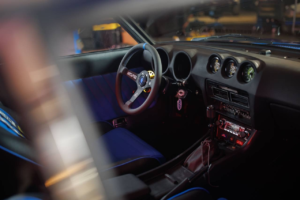
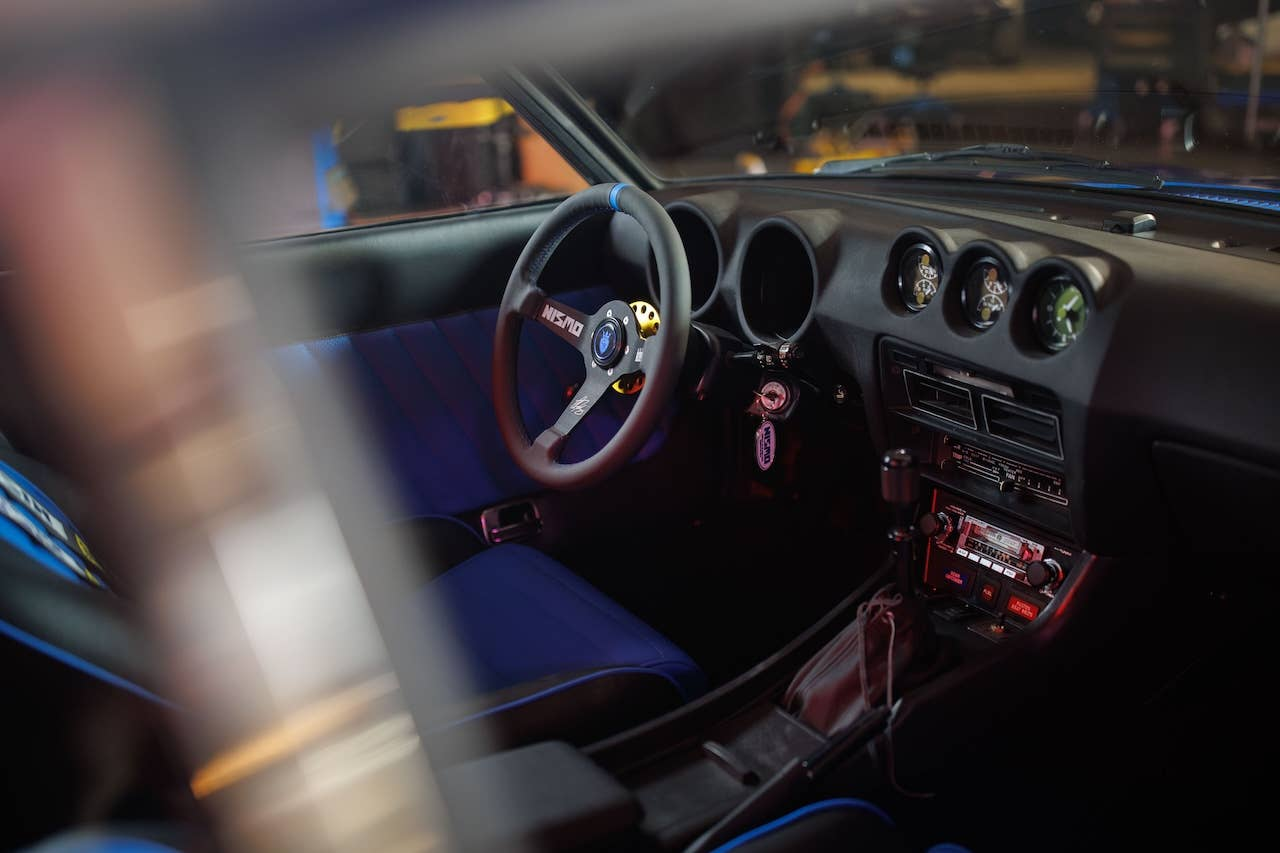
The interior combines the classic S30 layout with modern performance-oriented equipment. OMP Silverstone racing seats, custom door cards and a Grip Royal steering wheel establish the cabin’s motorsport character.
Custom Speed Hut gauges provide the instrumentation, while a Techno Toy Tuning harness bar adds another track-inspired element. A black aluminum NISMO shift knob completes the manual transmission setup.
The cabin maintains the original S30’s appearance while incorporating equipment that reflects the car’s upgraded performance focus.
Datsun S30 Concept Set for SEMA 2026
The Datsun S30 Concept is scheduled to appear at the 2026 SEMA Show as a one-off build. It is not expected to be available through local dealerships, and no price has been announced.
With its twin-turbocharged V6, six-speed manual transmission, carbon-fiber bodywork and upgraded chassis, the concept combines the original S30’s styling with modern Nissan Z hardware. Although its final power output remains unannounced, the project demonstrates how the classic Japanese sports car’s design can be retained while incorporating contemporary performance components.