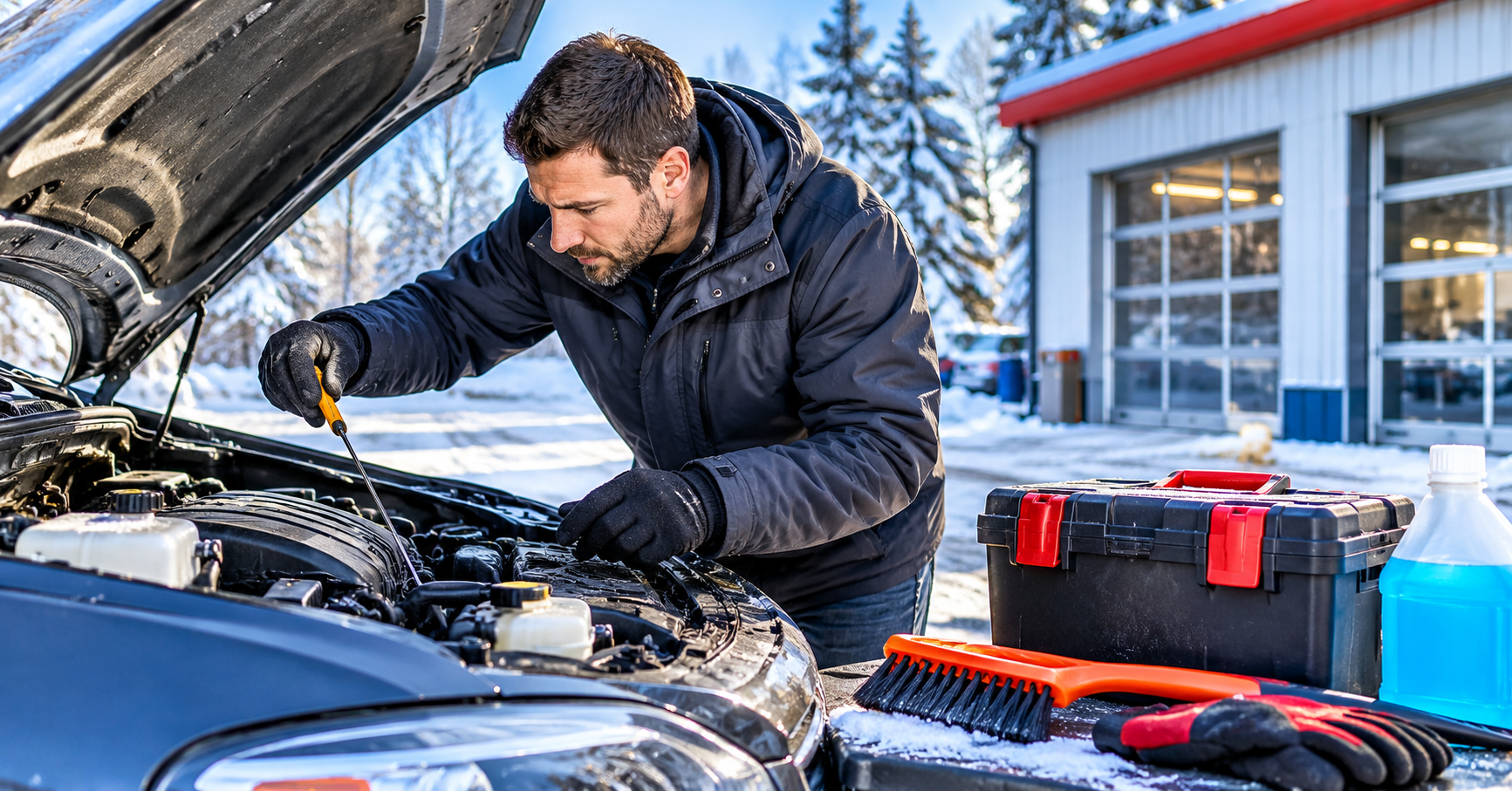
Wisconsin winters can be tough on vehicles. Freezing temperatures, heavy snowfall, icy roads, and road salt create challenging driving conditions that can affect everything from your tires and battery to your brakes and suspension. For drivers in Star Prairie, New Richmond, Somerset, and surrounding communities, preparing a vehicle before winter arrives is an important part of staying safe and avoiding unexpected repairs.
Winter vehicle maintenance is about more than installing snow tires or keeping an ice scraper in the trunk. A reliable vehicle needs properly functioning brakes, a healthy battery, suitable fluids, good visibility, and dependable heating systems. Scheduling a professional inspection before temperatures drop can also help identify developing problems before they become more expensive or inconvenient.
Whether you drive a family SUV, a daily commuter, a minivan, or a light-duty truck, taking a few preventive steps can make a significant difference throughout the colder months. Here is what Wisconsin drivers should know about preparing their vehicles for winter.
1. Check Your Tires Before the First Snowfall
Your tires are the only parts of your vehicle that make direct contact with the road. During winter, their condition becomes especially important because snow, ice, slush, and freezing rain can dramatically reduce available traction.
Start by checking the tread depth. Tires with worn tread have a harder time channeling water and slush away from the contact surface. This can increase the likelihood of slipping, especially when braking or turning on wet or icy pavement.
Although Wisconsin law does not generally require every passenger vehicle to use dedicated winter tires, they can provide meaningful advantages in consistently cold conditions. Winter tires use specialized rubber compounds designed to remain more flexible at low temperatures. Their tread patterns are also engineered to improve grip on snow-covered and icy surfaces.
All-season tires may be suitable for some drivers, depending on their vehicle, driving habits, and local conditions. However, drivers who frequently travel on untreated roads or commute during severe winter weather may benefit from dedicated winter tires.
Pay Attention to Tire Pressure
Cold weather naturally reduces tire pressure. As temperatures fall, the air inside your tires contracts, which can cause pressure readings to drop even when there is no puncture or leak.
Underinflated tires can affect handling, braking performance, fuel efficiency, and tire wear. Check the pressure regularly using a reliable gauge, preferably when the tires are cold.
Always follow the recommended pressure listed on the vehicle’s driver-side door-jamb sticker rather than relying on the maximum pressure printed on the tire itself.
Look for Uneven Wear and Visible Damage
Inspect each tire for cracks, bulges, cuts, exposed cords, and uneven tread wear. These signs may indicate alignment problems, suspension issues, or other conditions that deserve attention before winter driving becomes more demanding.
If your vehicle pulls to one side, vibrates at highway speeds, or feels unstable during turns, have the tires and related components inspected by a qualified technician.
2. Have Your Brakes Inspected Before Winter Driving
Reliable brakes are essential throughout the year, but winter conditions make them even more important. Snow-covered roads, black ice, and freezing rain can significantly increase stopping distances. A braking system that already has worn components may become a serious concern when traction is limited.
Before winter arrives, have the brake pads, rotors, calipers, and related hydraulic components checked. A professional inspection can help identify wear, damage, or developing problems that may not be obvious during everyday driving.
Recognize Common Brake Warning Signs
Drivers should pay attention to changes in how their vehicles respond when braking. Some common warning signs include:
- Squealing or grinding sounds: Unusual noises may indicate worn brake pads or damaged braking components.
- Vibrations while braking: A pulsing sensation through the steering wheel or brake pedal may point to rotor-related problems.
- A soft or spongy brake pedal: This can indicate a hydraulic issue that requires prompt professional attention.
- Pulling to one side: Uneven braking performance may cause the vehicle to move left or right when slowing down.
- Longer stopping distances: If the vehicle takes longer than usual to stop, the braking system should be inspected.
It is important to remember that even a properly maintained braking system cannot eliminate the additional stopping distance caused by ice and snow. Drivers should leave more space between vehicles, reduce speed, and avoid sudden braking whenever possible.
Addressing brake problems before the first major snowfall can help reduce the risk of unexpected breakdowns and make daily winter travel more predictable.
3. Test Your Battery and Charging System
Few things are more frustrating than turning the ignition on a freezing morning and discovering that your vehicle will not start. Cold temperatures place additional demands on automotive batteries, making winter one of the most common times for battery-related problems to appear.
As temperatures decrease, a battery’s ability to deliver electrical power becomes less efficient. At the same time, starting a cold engine generally requires more power than starting one that is already warm.
A battery that performs adequately during mild weather may struggle when temperatures drop below freezing.
Signs Your Battery May Need Attention
- The engine turns over more slowly than usual.
- Headlights appear dimmer when the engine is off.
- Electrical accessories behave inconsistently.
- The battery warning light appears on the dashboard.
- The battery case shows visible swelling, corrosion, or damage.
Before winter, ask a qualified technician to test the battery’s condition and check the charging system. A battery load test can help determine whether it still has sufficient capacity to handle cold-weather starting demands.
It is also worth checking the battery terminals and cable connections. Corrosion or loose connections can interfere with electrical performance, even when the battery itself is in reasonable condition.
If the battery is nearing the end of its expected service life or fails a professional test, replacing it before winter can help prevent an inconvenient roadside situation.
4. Check Engine Oil and Other Essential Fluids
Fluids play an important role in keeping a vehicle operating properly. During Wisconsin winters, the right fluid levels and specifications become particularly important because extreme cold can change fluid behavior and place additional stress on mechanical systems.
Start with the engine oil. Oil becomes thicker as temperatures decrease, which can make cold starts more demanding. Using the viscosity grade recommended by the vehicle manufacturer helps ensure appropriate lubrication under the conditions for which the engine was designed.
Do not automatically switch to a different oil grade simply because winter is approaching. Check the owner’s manual or consult a qualified technician before making changes.
Inspect These Important Fluids
- Engine coolant: Coolant helps regulate engine temperature and protects the cooling system against freezing. Check its condition and concentration according to the manufacturer’s recommendations.
- Windshield washer fluid: Use a winter-rated formula designed to resist freezing. Ordinary summer washer fluid may freeze in the reservoir, lines, or spray nozzles.
- Brake fluid: Proper brake fluid condition is essential for consistent hydraulic braking performance. Follow the recommended inspection and replacement intervals.
- Transmission fluid: The transmission depends on properly specified fluid for lubrication and operation. Check for leaks and follow the manufacturer’s maintenance schedule.
- Power steering fluid: If your vehicle uses a hydraulic steering system, check the fluid level and inspect for leaks or unusual steering behavior.
Never ignore fluid leaks or warning lights. A small problem discovered during a pre-winter inspection may be much easier to address than a mechanical failure during extremely cold weather.
5. Inspect Your Heating and Defrosting Systems
A working heating system is important for more than personal comfort. It also helps maintain visibility by allowing the vehicle’s defrosting system to clear condensation, frost, and moisture from the windshield and windows.
Before winter, test the cabin heater and make sure it produces warm air consistently. Check whether the fan operates at different speeds and whether air can be directed toward the windshield, floor, and dashboard vents.
If the heater takes an unusually long time to warm the cabin, produces inconsistent temperatures, or blows cold air when the engine is fully warmed up, the system may need professional attention.
Do Not Overlook the Defroster
A properly functioning front defroster helps maintain a clear windshield, while the rear defroster removes frost and condensation from the back window. Both are valuable during freezing mornings and snowy commutes.
Check that the windshield wipers are in good condition, too. Worn or damaged blades can leave streaks, skip across the glass, or fail to remove snow and road spray effectively.
Winter-rated wiper blades may provide additional benefits in areas that experience frequent snowfall. Keep the windshield washer reservoir filled with cold-weather fluid and make sure the spray nozzles are working properly.
Clear visibility should never be treated as optional. If frost, fog, or snow prevents you from seeing clearly, wait until the windows are fully cleared before driving.
6. Protect Your Vehicle From Road Salt and Winter Corrosion
Road salt is one of the biggest long-term challenges for vehicles in Wisconsin. Highway departments and local municipalities use salt and other deicing materials to improve road conditions during snow and ice events. While these treatments can make winter roads safer, they can also accelerate corrosion when they accumulate on vehicle surfaces.
Salt, moisture, and metal create conditions that encourage rust. Over time, repeated exposure can affect the undercarriage, suspension components, brake lines, exhaust-related components, and other exposed metal surfaces.
Why the Undercarriage Needs Attention
Many drivers focus on keeping their vehicle’s exterior clean during winter but overlook the areas underneath. Unfortunately, the undercarriage often receives substantial exposure to salty slush and road debris.
These materials can collect around suspension components, mounting points, wheel wells, and other areas that are not immediately visible during a routine walk-around inspection.
Washing the vehicle regularly during winter can help remove accumulated salt. Pay particular attention to the wheel wells and underbody, especially after driving on heavily treated roads.
When temperatures allow, use a car wash that provides undercarriage rinsing. Avoid washing a vehicle when water may freeze immediately on important surfaces or create dangerous icy conditions around the parking area.
Look for Early Signs of Corrosion
During routine maintenance, ask a technician to inspect accessible underbody areas for rust, damaged protective coatings, and corrosion around important components.
Early attention can help identify problems before they become more extensive. However, not every rust spot requires the same treatment, so professional evaluation is useful when corrosion appears near safety-related components.
Keeping the vehicle clean and addressing developing problems promptly can help preserve its condition through repeated Wisconsin winters.
7. Check Your Suspension and Steering Components
Winter roads can be unpredictable. Hidden potholes, frozen pavement, snow-covered road edges, and uneven surfaces can place additional stress on a vehicle’s suspension and steering systems.
These systems help maintain tire contact with the road, support vehicle stability, and allow the driver to maintain control. Worn or damaged components may become more noticeable when driving conditions deteriorate.
Warning Signs Worth Investigating
- Clunking noises: Repeated knocking sounds when driving over bumps may indicate worn suspension components.
- Excessive bouncing: A vehicle that continues bouncing after passing over uneven pavement may have worn shock absorbers or struts.
- Uneven tire wear: Irregular tread patterns may point to alignment or suspension-related problems.
- Loose steering: Excessive play in the steering wheel can make it harder to maintain control.
- Vehicle pulling: A vehicle that consistently drifts to one side deserves an inspection.
Suspension and steering problems should not be ignored simply because the vehicle remains drivable. Properly functioning components contribute to predictable handling and stable tire contact, which become especially valuable on slippery winter roads.
A professional inspection before winter can help identify worn parts and determine whether repairs or adjustments are necessary.
8. Inspect Belts, Hoses, and Other Engine Components
Cold temperatures can make older rubber components more vulnerable to cracking and other forms of deterioration. Belts and hoses that already show signs of wear may be more likely to develop problems during winter.
Check accessible engine belts for visible cracks, fraying, glazing, or unusual looseness. Damaged belts can interfere with the operation of components driven by the engine, depending on the vehicle’s design.
Cooling system hoses also deserve attention. Look for swelling, soft spots, cracks, leaks, or loose connections. A damaged hose can allow coolant to escape, potentially leading to overheating or other engine problems.
Because many modern vehicles have complex engine compartments, it is best to have questionable components evaluated by a qualified technician rather than attempting repairs without the correct tools and knowledge.
9. Prepare an Emergency Winter Driving Kit
Even a well-maintained vehicle can become stranded during a severe Wisconsin winter storm. Keeping an emergency kit in the vehicle provides additional peace of mind and can make an unexpected roadside situation easier to manage.
A practical winter emergency kit should include:
- A compact snow shovel.
- An ice scraper and snow brush.
- A warm blanket or extra winter clothing.
- Gloves, hats, and other cold-weather essentials.
- A flashlight with spare batteries.
- A first-aid kit.
- Drinking water and nonperishable snacks.
- A portable phone charger or power bank.
- Reflective warning triangles or other roadside visibility equipment.
- A properly rated tire pressure gauge.
- Basic tools suitable for your vehicle.
- Jumper cables or a compatible portable jump starter.
Drivers who frequently travel through rural areas may also want to carry traction aids and additional emergency supplies. Keep everything secured so that loose items do not become hazards during sudden braking.
Check the emergency kit periodically to make sure batteries work, supplies are usable, and nothing important is missing.
10. Change Your Winter Driving Habits
Vehicle maintenance is only one part of winter preparation. Drivers also need to adjust their habits to account for reduced traction, limited visibility, and unpredictable road conditions.
Even new tires and properly maintained brakes cannot eliminate the risks associated with ice and heavy snow. Driving more cautiously is essential when temperatures fall and road surfaces become slippery.
Give Yourself More Stopping Distance
Increase the distance between your vehicle and the one ahead. Stopping distances can increase considerably on snow-covered and icy pavement, so following too closely leaves little room to respond to sudden changes.
Accelerate and Brake Smoothly
Avoid sudden movements whenever possible. Gradual acceleration and gentle braking can help reduce wheel spin and improve vehicle stability. Make steering adjustments smoothly rather than making abrupt movements.
Reduce Speed When Conditions Deteriorate
Posted speed limits are not always appropriate for winter weather. Snow, freezing rain, and reduced visibility may require driving significantly slower than normal.
If road conditions become dangerous, consider delaying the trip until conditions improve. Reaching your destination safely is more important than maintaining a normal travel schedule.
Keep Windows and Lights Clear
Remove snow and ice from all windows, mirrors, headlights, taillights, and other exterior lighting before driving. Snow left on the roof can also slide onto the windshield or blow toward other vehicles when traveling at higher speeds.
Good visibility helps you recognize road hazards earlier and makes your vehicle easier for other drivers to see.
11. Why a Professional Pre-Winter Inspection Makes Sense
Some winter maintenance tasks are easy to perform at home, such as checking tire pressure, replacing windshield wiper blades, and keeping an emergency kit stocked. However, other issues require diagnostic equipment, technical experience, and a closer examination of the vehicle’s mechanical systems.
A professional pre-winter inspection can provide a more complete picture of your vehicle’s condition. Depending on the vehicle and its maintenance history, a technician may evaluate:
- Brake pads, rotors, calipers, and hydraulic components.
- Battery health and charging system performance.
- Tire condition, tread depth, and inflation pressure.
- Engine oil and other essential fluid conditions.
- Cooling system protection and visible leaks.
- Suspension and steering components.
- Belts and hoses.
- Heating and defrosting performance.
- Visible undercarriage corrosion or damage.
The goal is not to replace every component before winter. Instead, the inspection helps prioritize necessary repairs, identify developing problems, and distinguish urgent safety concerns from maintenance that can be scheduled later.
For drivers researching auto repair Star Prairie WI, choosing a qualified local repair facility can make seasonal maintenance more convenient. TInJToo Auto Repair is a locally owned automotive repair shop in Star Prairie, Wisconsin, serving drivers from New Richmond, Somerset, Osceola, and communities throughout the St. Croix Valley.
Owned by Jared Berhow, an ASE Master Certified Technician, the shop works on Asian and domestic cars, SUVs, minivans, and light-duty trucks up to one ton. Its services include complex diagnostics, brake repair, suspension and steering work, engine repair, and transmission repair.
Repairs are backed by a four-year or 48,000-mile warranty, providing customers with additional confidence when addressing vehicle maintenance and repair needs.
Having an experienced technician evaluate your vehicle before the first major snowfall can help you understand its condition and plan the maintenance needed for the months ahead.
12. Create a Winter Maintenance Schedule
Winter preparation should not be treated as a one-time activity. Vehicles experience changing conditions throughout the season, and regular checks can help catch problems before they affect reliability or safety.
Creating a simple maintenance schedule makes it easier to stay organized and remember important inspections.
Before Winter Begins
- Inspect tires and determine whether winter tires are appropriate.
- Test the battery and charging system.
- Inspect brakes and suspension components.
- Check engine oil and all essential fluids.
- Test the heating and defrosting systems.
- Inspect belts, hoses, and visible underbody areas.
- Prepare a winter emergency kit.
During Winter
- Check tire pressure regularly as temperatures change.
- Monitor fluid levels and watch for leaks.
- Keep the windshield, windows, and lights clean.
- Remove accumulated road salt when conditions permit.
- Pay attention to unusual noises, vibrations, and warning lights.
- Schedule inspections when new problems appear.
After Winter
- Wash away accumulated road salt and winter grime.
- Inspect the undercarriage for visible corrosion or damage.
- Check tires for uneven wear.
- Review any maintenance issues that developed during the season.
- Schedule necessary repairs before spring and summer driving.
Following a consistent schedule can help extend the useful life of important vehicle components and reduce the likelihood of unexpected maintenance problems.
Frequently Asked Questions About Preparing a Car for a Wisconsin Winter
When should I prepare my car for winter in Wisconsin?
It is best to begin preparing your vehicle in early fall, before temperatures consistently drop and the first major snowfall arrives. This gives you time to inspect important components, address developing problems, and install winter tires if needed without waiting until repair shops become busier during the first cold-weather rush.
How often should I check tire pressure during winter?
Check tire pressure at least once a month and before longer trips. It is also a good idea to check it when temperatures change significantly. Always measure pressure when the tires are cold and follow the manufacturer’s recommended PSI listed on the driver’s door-jamb sticker.
Why is a car battery more likely to fail in winter?
Cold temperatures reduce a battery’s available starting power while increasing the energy needed to start a cold engine. An older or weakened battery may struggle to deliver enough power during freezing conditions. A professional battery test before winter can help identify potential problems.
Can road salt damage my car?
Yes. Road salt can accelerate corrosion when it combines with moisture and accumulates on exposed metal surfaces. The undercarriage, wheel wells, and other exposed components are particularly vulnerable. Regular washing, including underbody rinsing when conditions permit, can help remove accumulated salt.
Are winter tires necessary in Wisconsin?
Winter tires are not generally mandatory for all passenger vehicles in Wisconsin, but they can improve traction in cold, snowy, and icy conditions. Whether they are worthwhile depends on your driving habits, local road conditions, vehicle, and the type of tires currently installed.
What should a pre-winter vehicle inspection include?
A thorough inspection should consider tires, brakes, battery health, engine oil, coolant, washer fluid, heating and defrosting systems, belts, hoses, suspension, steering, and visible undercarriage conditions. The exact inspection should be based on the vehicle’s age, mileage, manufacturer recommendations, and maintenance history.
How can I prevent winter driving emergencies?
Start with preventive maintenance and keep an emergency kit in your vehicle. Check weather and road conditions before traveling, maintain a safe following distance, reduce speed when roads are slippery, and avoid sudden acceleration or braking. If conditions become dangerous, delay your trip when possible.
Why should I have my brakes checked before winter?
Winter roads often have reduced traction, making reliable braking particularly important. An inspection can identify worn pads, damaged rotors, hydraulic problems, and other issues that could affect braking performance. Addressing these concerns before winter can help improve vehicle safety and reliability.
Final Thoughts: Make Winter Vehicle Preparation a Priority
Wisconsin winters put vehicles through demanding conditions, but proper preparation can help drivers avoid many common cold-weather problems. Checking tires, testing the battery, inspecting brakes, maintaining essential fluids, and protecting the undercarriage are practical steps that support vehicle reliability throughout the season.
Just as importantly, regular maintenance should be combined with sensible winter driving habits. Slowing down, leaving extra stopping distance, keeping windows clear, and carrying emergency supplies can make a meaningful difference when snow and ice affect local roads.
For drivers in Star Prairie and nearby communities, arranging a professional inspection before winter arrives is a practical way to identify maintenance needs and prepare for the months ahead. A little attention before the first snowfall can help make everyday travel more dependable, comfortable, and predictable throughout another Wisconsin winter.
About TInJToo Auto Repair
TInJToo Auto Repair is a locally owned automotive repair shop serving Star Prairie, New Richmond, Somerset, Osceola, and the surrounding St. Croix Valley communities in Wisconsin. Owned by ASE Master Certified Technician Jared Berhow, the shop provides professional automotive diagnostics and repair services for domestic and Asian vehicles.
Address: 170 County Hwy M, Star Prairie, WI 54026
Phone: (715) 417-2844
Website: TInJToo Auto Repair