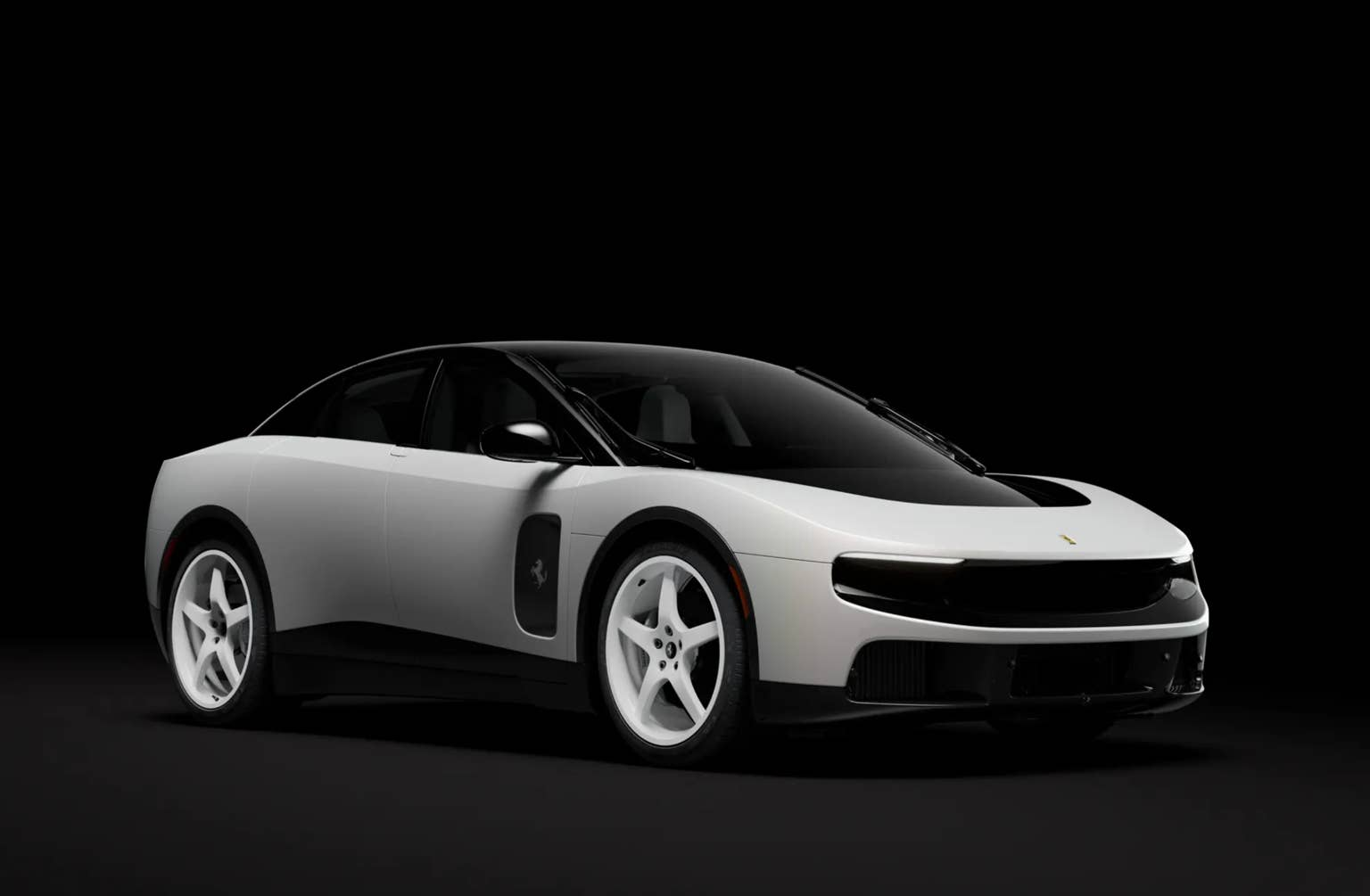
The Ferrari Luce continues to generate debate over its controversial styling, but the automaker’s first electric vehicle is drawing attention for its battery technology and engineering innovations. With customer deliveries about to begin, Ferrari says the Luce has sold out, with a significant portion of orders coming from China.
Despite the criticism surrounding its design, the electric Ferrari incorporates several technologies that could influence the brand’s future models, including swappable batteries and specially developed pouch-type cells.
Ferrari Luce Combines Controversial Styling With New Technology
The Luce has faced strong reactions online since its unveiling, largely because of its exterior design. However, the car’s engineering includes several features aimed at improving its long-term usability and performance.
Its battery system is designed to be replaceable, helping extend the vehicle’s lifespan, while the chassis has been engineered to accommodate the setup.
The interior also introduces distinctive features, including a swiveling infotainment screen and a cabin design that reflects the vehicle’s unconventional approach.
Ferrari Partners With SK On for Pouch-Type Batteries
Developing its first electric vehicle presented Ferrari with significant technical challenges, prompting the automaker to partner with South Korean battery company SK On to develop pouch-type battery cells.
Although pouch batteries are commonly used in smaller electronic devices, adapting the technology for a high-performance electric vehicle requires specialized engineering.
Ferrari Luce Project Leader Andrea Binotti explained that SK On customized the battery cell tab design to improve power delivery.
“SK On was willing to customize the cell tab design to enable higher current delivery than the nominal rating, thereby increasing power density,” Binotti said.
What Makes Pouch-Type Battery Cells Different?
Pouch cells are flat, flexible battery cells enclosed in laminated aluminum-plastic film. Their design allows manufacturers to produce batteries in different sizes and shapes, making them suitable for applications where space and packaging efficiency are important.
Compared with steel-cased and aluminum-cased cells, pouch batteries are lighter, an important advantage for electric vehicles where weight affects performance and driving range.
Their flexible dimensions also allow them to fit irregular spaces within a vehicle, potentially improving packaging efficiency and freeing up additional cabin space.
Power Density and Cooling Are Key Advantages
One of the most important benefits of pouch-type batteries is their ability to support high power delivery. Stacked electrode structures help achieve higher discharge rates and improved pulse current delivery.
The cells also feature a wider surface area, which supports cooling and heat dissipation. This helps the battery operate at lower temperatures while delivering energy more efficiently.
These characteristics make pouch cells particularly relevant to the performance requirements of a high-performance electric vehicle such as the Ferrari Luce.
Ferrari Luce Technology Could Shape Future Models
Although the Luce’s styling remains a major talking point, its reported sales performance and technical innovations suggest the vehicle could play an important role in Ferrari’s electrification strategy.
The technologies introduced in the Luce may also be applied to future Ferrari models, making the vehicle more than a standalone electric experiment.
Ferrari is gradually electrifying its core lineup, with hybrid powertrains expected to deliver substantial performance alongside conventional engines. The automaker is also adapting to changing emissions standards.
While Ferrari does not face the same stringent requirements as larger automakers, its electrification efforts provide a way to prepare for potential regulatory changes affecting low-volume manufacturers.
The Luce represents Ferrari’s effort to develop new battery and electric powertrain technologies while preparing its future vehicles for evolving performance and emissions requirements.