
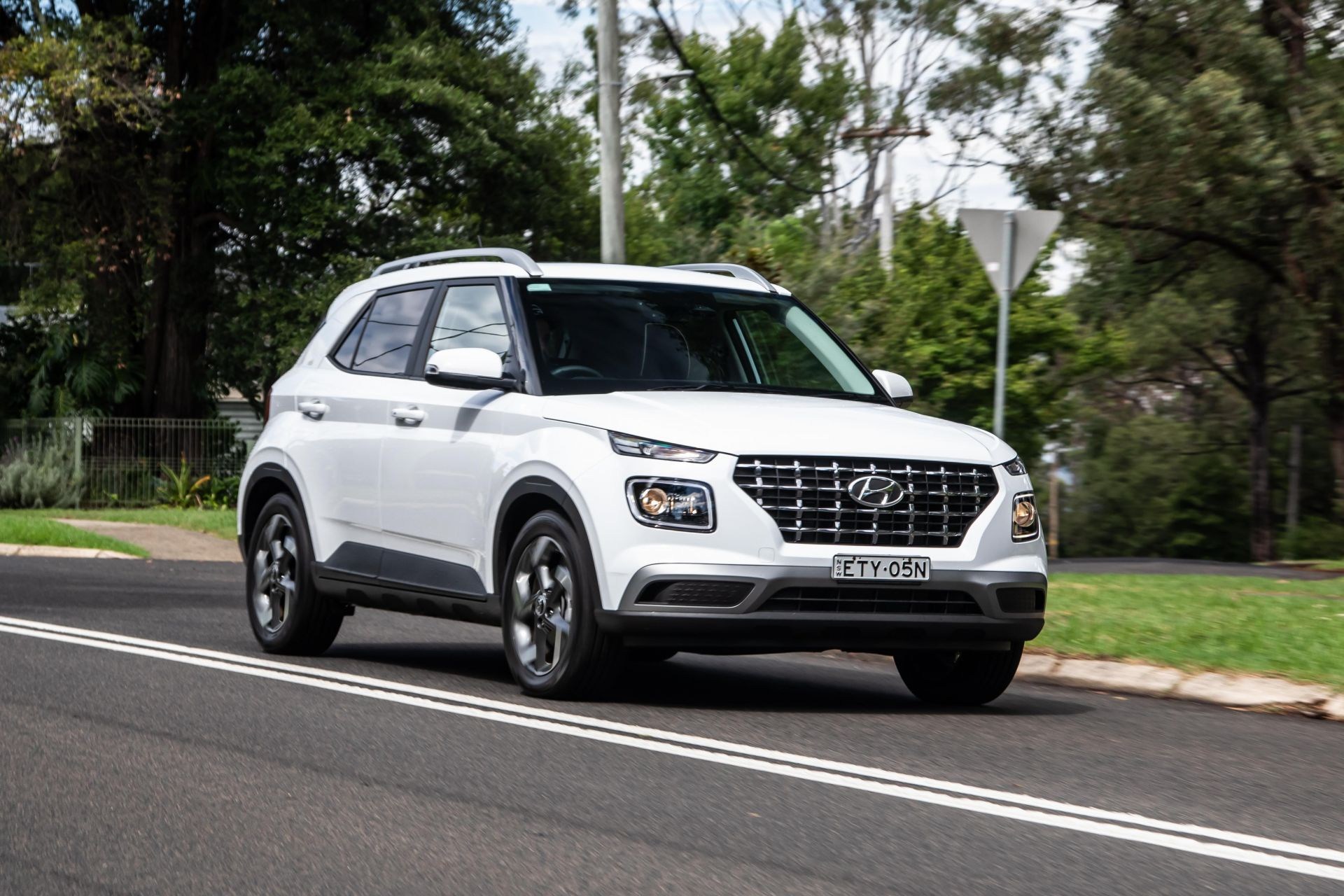
Hyundai Venue Review 2025
If you’re searching for a compact SUV that balances affordability and technology, this Hyundai Venue review will be your ultimate guide. In 2025, the Hyundai Venue continues to position itself as one of the most budget-friendly SUVs in the market. Despite recent price hikes and stiffer competition, the Venue still holds its ground—especially in base trim.
With prices starting under $23,000, Hyundai’s smallest SUV is aimed squarely at city dwellers and budget-conscious families. But does the top-tier Venue Elite model justify its price tag, or are buyers better off sticking with the base trim? Let’s explore every angle of the 2025 Hyundai Venue to help you make the right decision.
1. Hyundai Venue Pricing and Variants in 2025
The Hyundai Venue saw a $250 price increase across all trims in 2025. The base manual version remains one of the cheapest SUVs in the country, while the Elite variant inches closer to more premium competitors.
Hyundai Venue 2025 Pricing Table
| Model | Price (Before On-Road Costs) |
|---|---|
| Hyundai Venue Manual | $22,750 |
| Hyundai Venue Auto | $24,750 |
| Hyundai Venue Active | $27,000 |
| Hyundai Venue Elite | $29,500 |
- Optional Denim paint on Elite adds $595.
- Total RRP for our test car: $30,095 plus on-road costs.
Competitor Comparison
- MG ZS Excite: Offers better equipment at a lower price.
- Chery Tiggo 4 Pro: Priced under $27K drive-away.
2. Inside the Cabin: Quality and Features
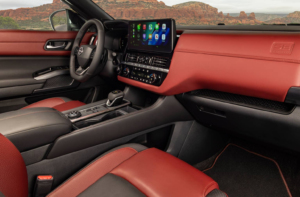
The interior of the Hyundai Venue Elite is a blend of basic materials and tech-forward features. While it’s well-equipped, some elements feel dated or low-cost.
Key Interior Highlights
- Leather-wrapped steering wheel
- 4.2-inch trip computer display
- Wired Apple CarPlay and Android Auto
- 8.0-inch touchscreen infotainment system
- Wireless charging pad
- Manual cloth/leatherette seats with white stitching
…but:
- Predominantly hard plastics dominate the dashboard
- Flimsy-feeling door handles and cheap vent surrounds
- No rear center armrest or rear air vents
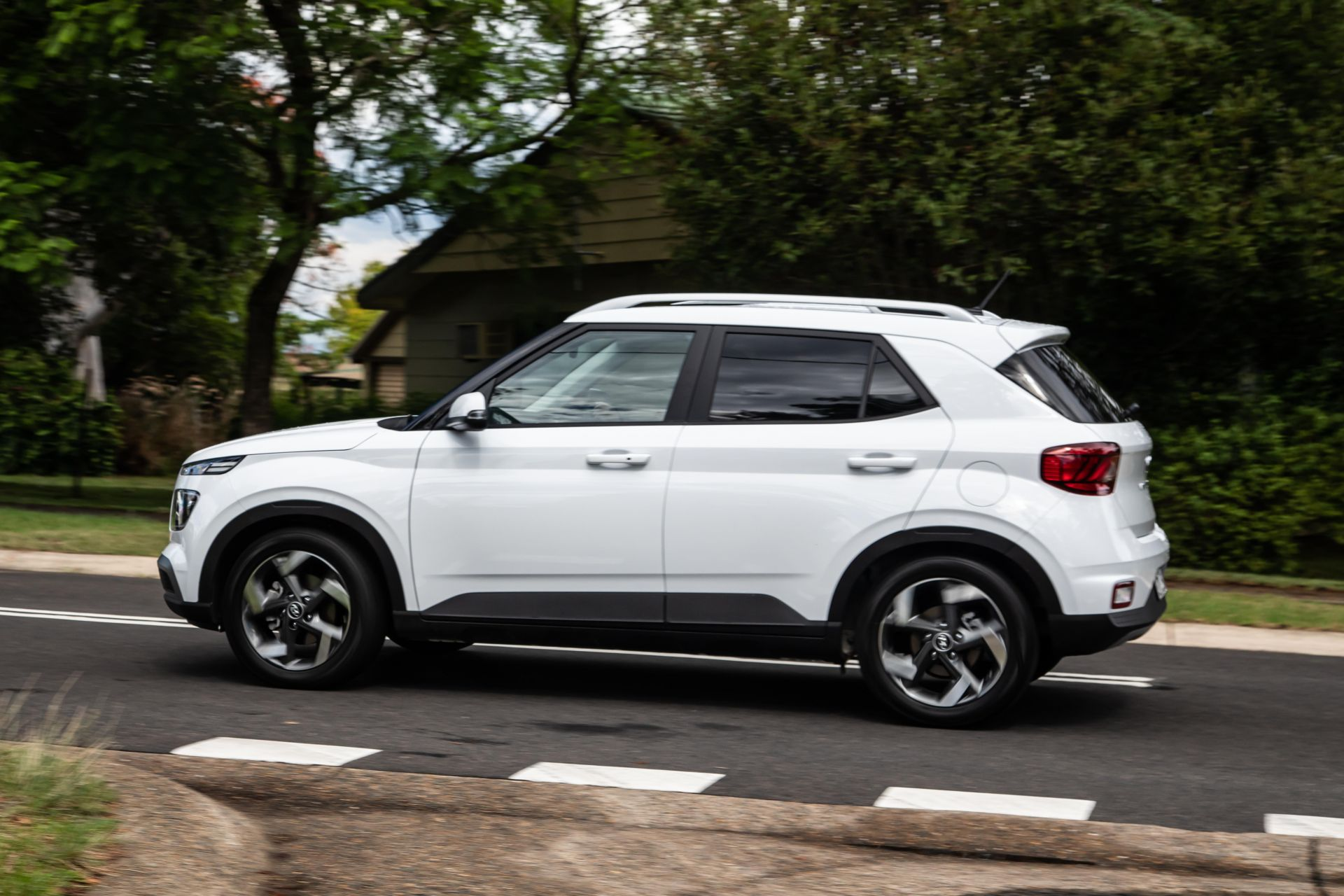
Interior Dimensions
| Feature | Specification |
|---|---|
| Length | 4040mm |
| Width | 1770mm |
| Height | 1592mm |
| Wheelbase | 2520mm |
| Cargo Capacity | 355 litres |
3. Infotainment and Tech Experience
Hyundai has made sure even the budget-conscious Venue doesn’t skimp on tech.
Infotainment System
- 8.0-inch touchscreen with physical shortcut buttons
- Apple CarPlay (wired) and Android Auto (wired)
- Satellite navigation with responsive search
- DAB+ digital radio
- Sounds of Nature ambient system
Connectivity Features
- 1x USB-A (media)
- 1x USB-C (front fast charging)
- 2x USB-C (rear charging)
- 1x 12V outlet
- Qi wireless charging pad
Despite its affordability, the Hyundai Venue offers connectivity and infotainment features rarely seen in this segment.
4. Practicality and Everyday Usability
When it comes to daily usability, the Venue excels in a few key areas.
1. Front Cabin Storage:
- Large door bins fit a water bottle
- Dual cup holders handle up to 1L bottles
- Covered armrest cubby
- Glovebox with dash-top tray
2. Rear Seat Practicality:
- Doors have bottle holders
- 1x map pocket (passenger seat only)
- USB-C charging for rear passengers
- Limited legroom for adults
3. Boot Space:
- 355 litres of space
- 60:40 split-fold rear seats
- Minimal step when seats are folded flat
Bottom line: It’s more spacious than most hatchbacks, but rear comfort is tight for long trips.
5. What Powers the Hyundai Venue?
All Venue variants use the same engine in 2025: a naturally aspirated 1.6L four-cylinder.
Engine Specs Table
| Feature | Specification |
|---|---|
| Engine Type | 1.6L NA 4-cylinder |
| Power | 90kW |
| Torque | 151Nm |
| Transmission | 6-speed automatic |
| Drivetrain | Front-wheel drive |
| Fuel Economy (Claimed) | 7.2L/100km |
| Fuel Economy (Tested) | 8.5L/100km |
| Fuel Type | 91 RON unleaded |
| CO2 Emissions | 165g/km |
| Emission Standard | Euro 5 |
Key Notes:
- Underpowered for highway overtakes
- Performs adequately in urban environments
6. Driving Experience and Ride Quality
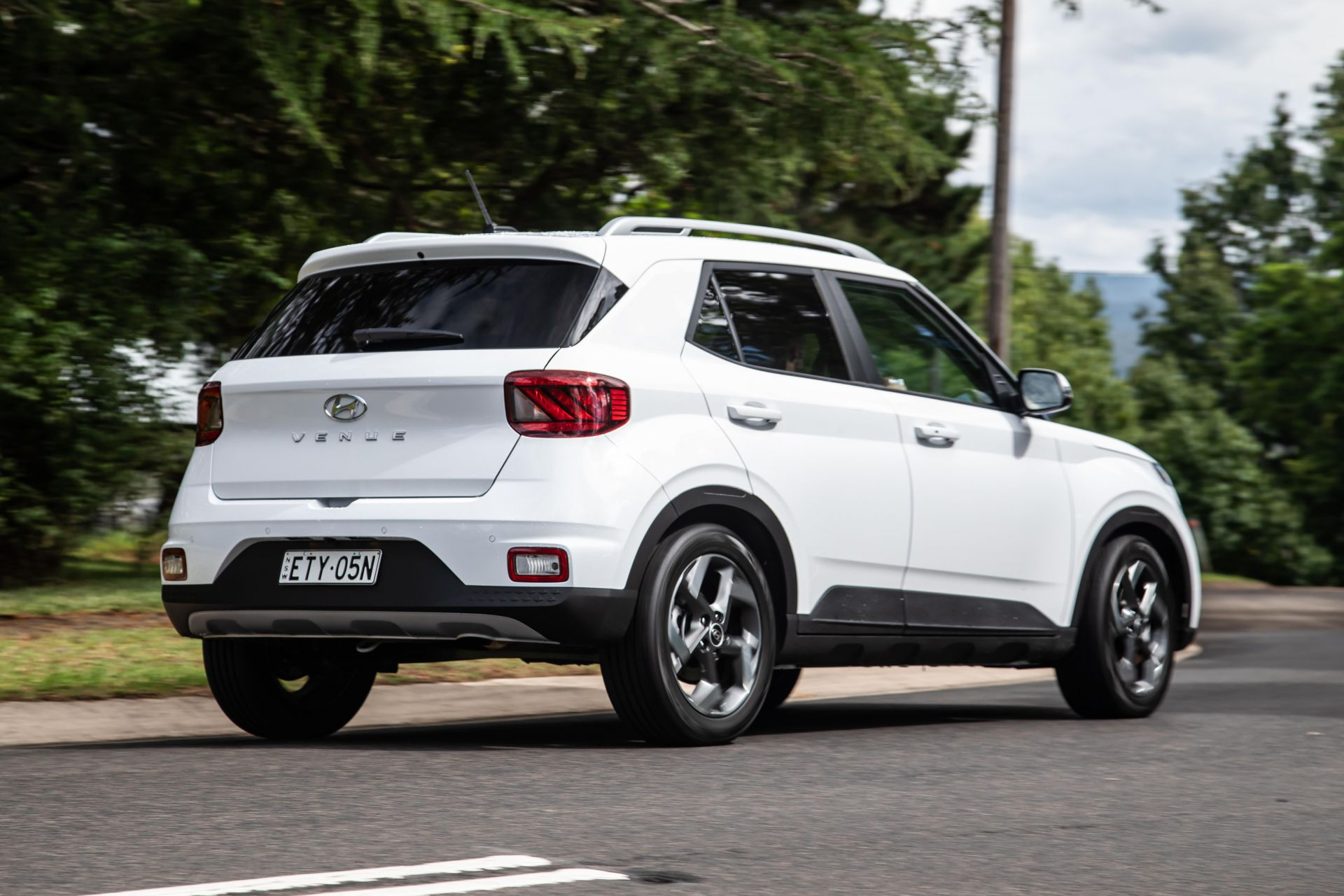
Let’s break down the on-road performance of the Hyundai Venue:
1. Ride Comfort
- The Elite’s 17-inch wheels contribute to a firm ride
- Noticeable vibration on rough surfaces
- Feels unsettled over speed humps
2. Steering and Handling
- Vague and slow steering response
- Requires more input than expected for lane changes
- Compact size makes parking easy, especially with a reversing camera
3. Highway Driving
- Lots of road and wind noise above 80 km/h
- Weak acceleration past 60 km/h
- Stereo volume needs boosting to drown out cabin noise
While the Venue Elite struggles on highways, it’s right at home in city traffic.
7. Hyundai Venue Safety Features
The Venue may be small, but it offers a generous suite of active safety features.
ANCAP Safety Rating (2019)
| Category | Score |
|---|---|
| Adult Occupant Protection | 91% |
| Child Occupant Protection | 81% |
| Vulnerable Road Users | 62% |
| Safety Assist | 62% |
Standard Safety Features
- Autonomous emergency braking
- Lane-keep assist
- Rear occupant alert
- Reversing camera
- Pedestrian detection
Elite-Only Additions
- Blind-spot monitoring
- Rear cross-traffic alert
Conclusion: It’s well-equipped for a small SUV in this price range.
8. Hyundai Venue Ownership Costs
Warranty and Service
| Feature | Specification |
|---|---|
| Warranty | 5 years, unlimited km |
| Roadside Assistance | 12 months (extendable with service) |
| Service Interval | 12 months or 15,000 km |
| Average Annual Service Cost | $373 |
| Total 5-Year Cost | $1865 |
Hyundai is rumored to extend warranty to 7 years starting July 2025, aligning with Kia and Chery.
9. Hyundai Venue Pros and Cons
Pros:
- Affordable entry pricing
- Great infotainment system
- Compact dimensions ideal for city driving
- Well-equipped with safety features
- USB-C ports and wireless charging
Cons:
- Harsh ride on Elite’s 17-inch wheels
- Noisy at highway speeds
- Interior quality could be better
- Underpowered engine for freeway use
10. Hyundai Venue Review Conclusion
The Hyundai Venue review for 2025 reveals a small SUV that delivers solid value—especially in its base trim. With user-friendly tech, ample cargo space, and good safety features, it’s an excellent urban runabout.
However, the Venue Elite version is starting to feel overpriced, especially with competitors offering more for less. The ride is too firm, and performance is underwhelming on highways.