
Finding the cheapest SUVs to insure in 2026 has become a top priority for American drivers facing still-elevated insurance costs across the country. While auto insurance inflation has cooled compared to the sharp spikes seen earlier in the decade, many U.S. households are still paying thousands of dollars each year just to stay covered.
The good news? Not all SUVs are expensive to insure. In fact, several compact crossovers and family-friendly SUVs now rank among the most affordable vehicles for full-coverage insurance in America.
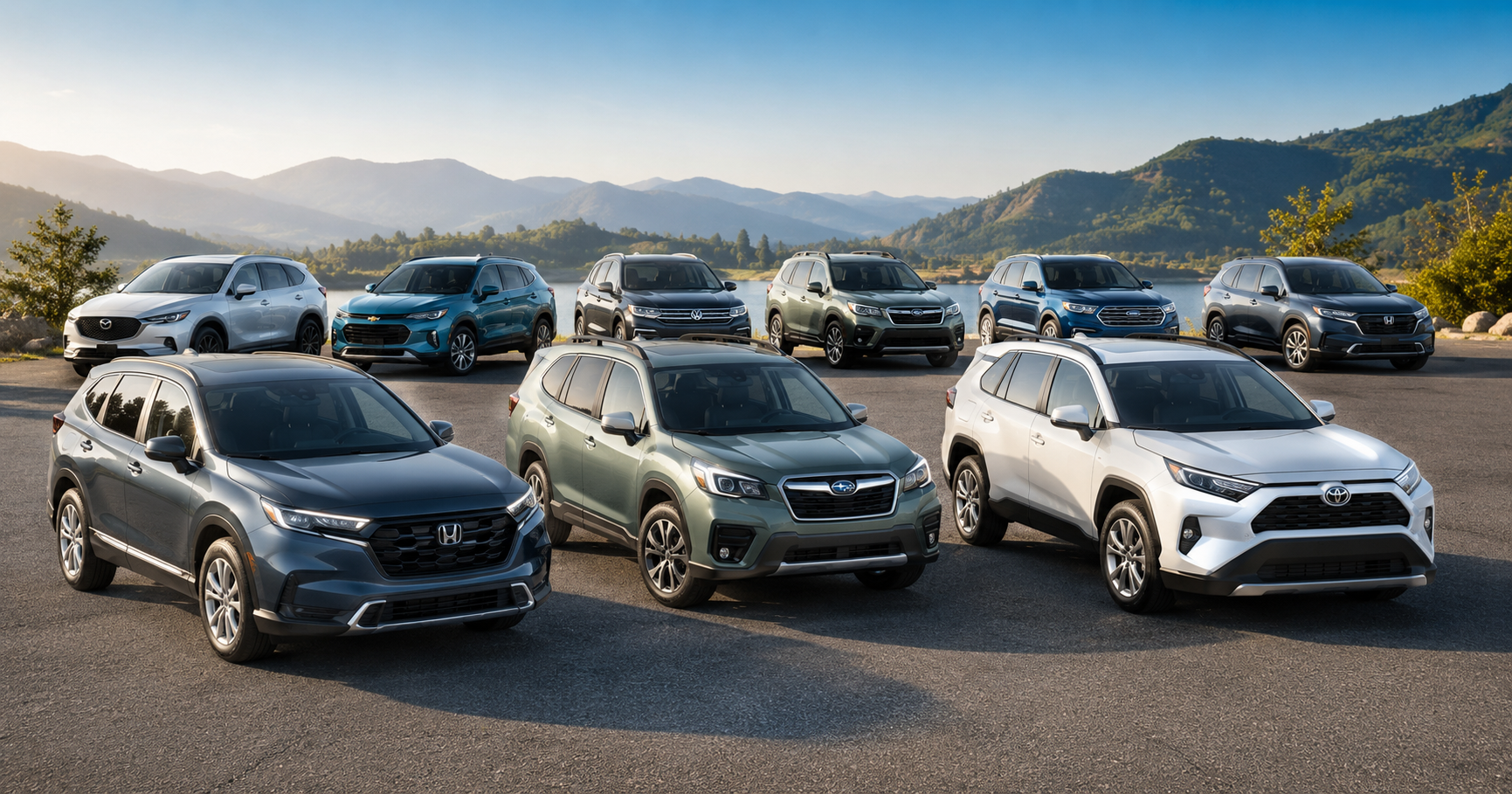
Models like the Honda CR-V, Subaru Forester, Toyota RAV4, and Ford Escape consistently appear on major 2026 insurance rankings because they combine strong safety scores, lower repair costs, practical designs, and lower claim risk.
According to multiple 2026 insurance studies, SUVs now average lower insurance premiums than sedans overall — a major shift in the market that continues to benefit mainstream crossover buyers.
Here are the 10 cheapest SUVs to insure in 2026 and why they stand out for American drivers looking to cut ownership costs.
Why Some SUVs Are Cheaper to Insure in 2026
Insurance companies calculate premiums using several risk factors, including:
- Crash-test performance
- Repair costs
- Theft rates
- Driver demographics
- Claim history
- Vehicle horsepower and performance
- Availability of replacement parts
Mainstream compact SUVs tend to perform well in these categories. They are usually driven by families and commuters rather than high-risk drivers, and they often feature advanced safety systems that reduce accident frequency.
Industry data from 2026 shows SUVs average roughly $2,553 annually for full coverage compared to approximately $3,222 for sedans. That difference alone explains why crossovers dominate today’s low-insurance rankings.
However, newer safety technology creates a trade-off. Features like radar sensors, adaptive cruise systems, and collision cameras can reduce crashes but also increase repair costs after minor accidents.
10 Cheapest SUVs to Insure in 2026
1. Honda CR-V

Average annual premium: Around $1,932–$2,270
The Honda CR-V remains the gold standard for affordable SUV insurance in 2026. It consistently ranks at or near the top of multiple insurance studies because of its excellent safety scores, strong reliability reputation, and relatively low repair costs.
For many U.S. families, the CR-V offers the ideal balance between affordability, fuel economy, cargo space, and insurance savings.
Why insurers like it:
- Excellent crash-test ratings
- Strong theft-prevention systems
- Moderate repair expenses
- High reliability history
2. Subaru Forester

Average annual premium: Around $1,992
The Subaru Forester continues to attract drivers looking for safety-focused transportation with low ownership costs. Subaru’s reputation for safety plays a major role in keeping premiums competitive.
The Forester also benefits from standard all-wheel drive and advanced driver-assistance technology that insurers generally favor.
Best for: Families, snowy climates, and suburban commuters.
3. Volkswagen Tiguan
Average annual premium: Around $1,968
The Volkswagen Tiguan quietly ranks among the cheapest SUVs to insure in America for 2026. Despite being slightly more upscale than some rivals, its moderate performance levels and solid safety ratings help keep insurance costs manageable.
Its practical size and family-oriented buyer demographic also contribute to lower claim risks.
4. Subaru Outback
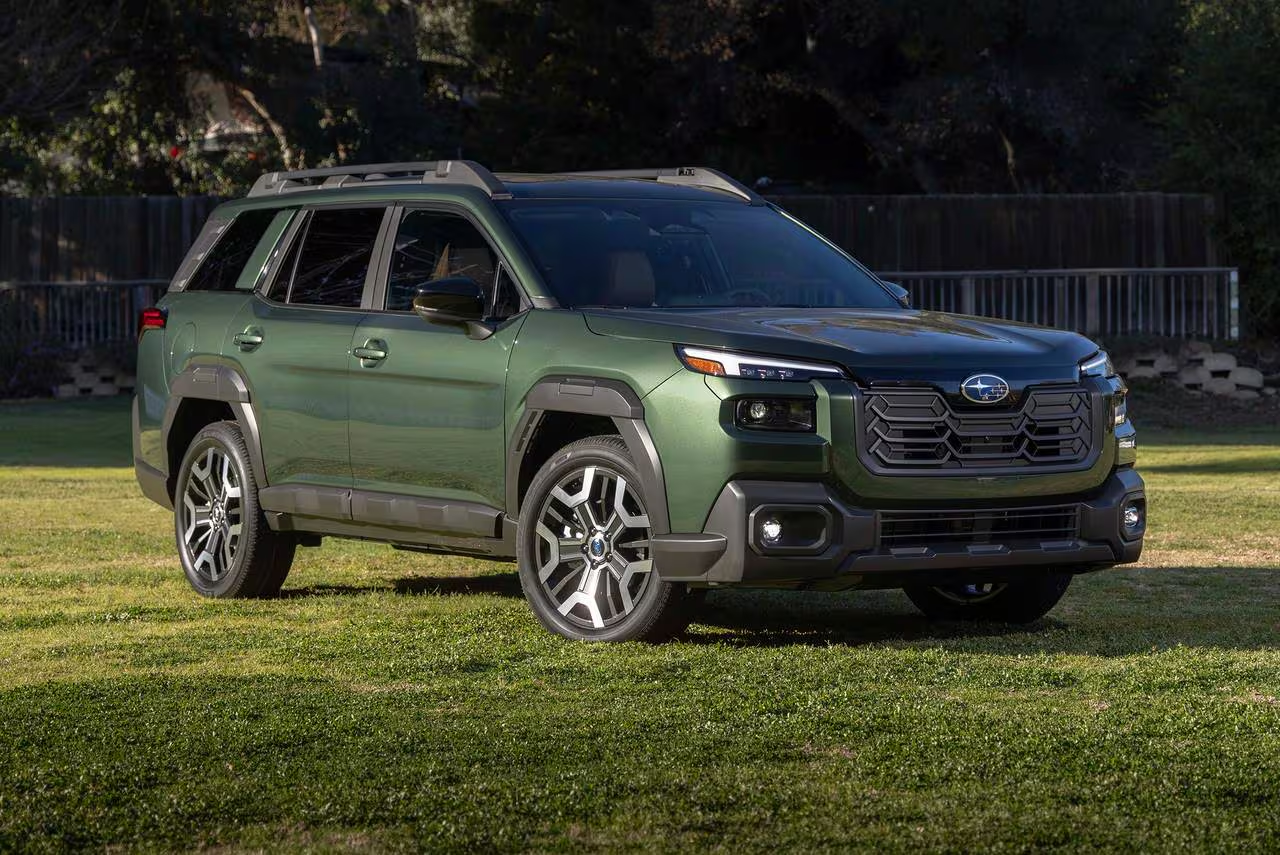
Average annual premium: Around $1,968–$2,242
Technically a wagon-crossover hybrid, the Subaru Outback still competes directly with compact SUVs in the insurance market.
The Outback’s safety reputation is one of the strongest in the industry, helping it consistently land on low-premium insurance lists.
Key advantage: Excellent long-term durability combined with strong resale value.
5. Mazda CX-5

Average annual premium: Around $2,016
The Mazda CX-5 proves that drivers do not necessarily have to sacrifice premium styling to save money on insurance.
Unlike performance-oriented SUVs that generate higher claim risks, the CX-5 combines upscale design with practical ownership costs and strong crash-test results.
It is especially appealing for drivers wanting a more refined crossover without luxury-brand insurance premiums.
6. Chevrolet TrailBlazer
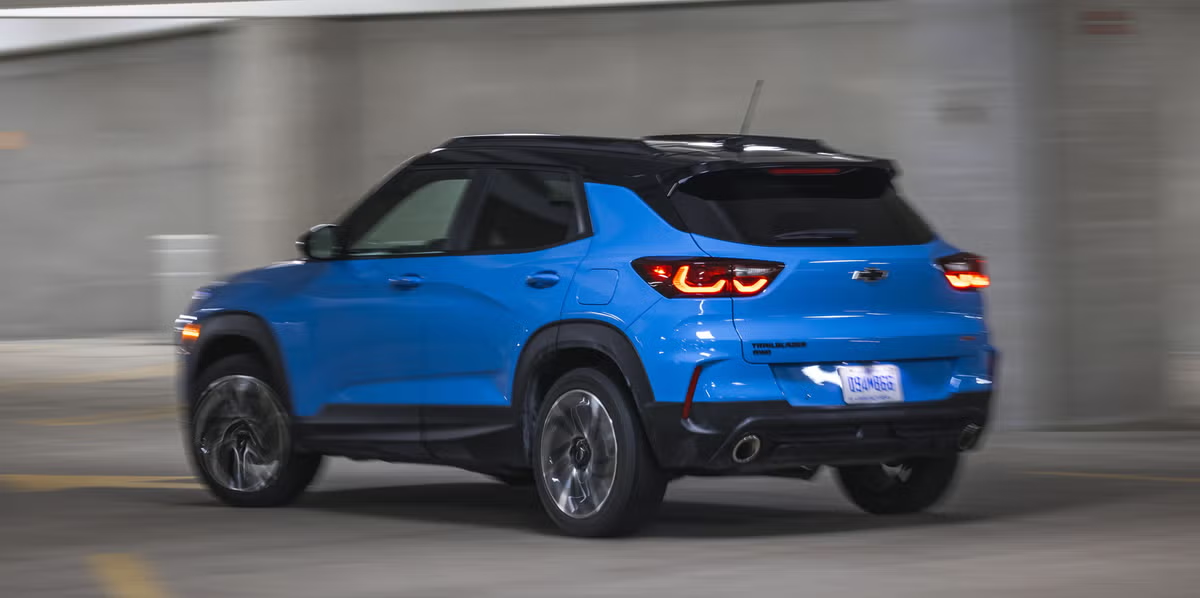
Average annual premium: Around $2,028
The Chevrolet TrailBlazer has become one of the surprise insurance bargains of 2026.
Its affordable purchase price, compact dimensions, and efficient powertrain help keep claim severity relatively low for insurers.
For younger drivers or first-time SUV buyers, the TrailBlazer can represent meaningful insurance savings.
7. Toyota RAV4
Average annual premium: Around $2,420
The Toyota RAV4 remains one of America’s bestselling SUVs, and its insurance rates remain surprisingly competitive considering its popularity.
Toyota’s strong reliability record and widespread availability of parts help stabilize repair costs nationwide.
Why it stays affordable:
- Excellent reliability ratings
- High resale value
- Strong safety technology
- Lower repair unpredictability
8. Ford Escape

Average annual premium: Around $2,442
The Ford Escape continues to perform well in insurance rankings thanks to its mainstream positioning and relatively affordable repair network across the United States.
Insurance companies generally favor vehicles with widely available replacement parts and predictable repair data, both of which benefit the Escape.
9. Honda Pilot

Average annual premium: Around $2,430
Despite being larger than most compact crossovers on this list, the Honda Pilot still delivers competitive insurance costs for families needing three-row seating.
The Pilot’s strong safety reputation and family-oriented ownership demographics help keep premiums below many competing midsize SUVs.
10. Hyundai Tucson

The Hyundai Tucson continues gaining traction among insurance-conscious buyers because of its strong warranty coverage, modern safety features, and affordable ownership costs.
Although premiums vary more heavily by state for Hyundai models, the Tucson often remains cheaper to insure than many larger or luxury-focused SUVs.
How These SUVs Compare to the National Average
The average U.S. full-coverage insurance premium in 2026 ranges between roughly $2,256 and $2,496 annually, depending on the study.
Several SUVs on this list fall well below those averages.
| SUV Model | Estimated Annual Premium | Below National Average? |
|---|---|---|
| Honda CR-V | $1,932–$2,270 | Yes |
| Subaru Forester | $1,992 | Yes |
| Volkswagen Tiguan | $1,968 | Yes |
| Mazda CX-5 | $2,016 | Yes |
| Toyota RAV4 | $2,420 | Slightly |
Why Compact SUVs Dominate Insurance Rankings
The biggest trend in 2026 is clear: compact crossovers dominate low-insurance rankings because they strike the best balance between safety, repairability, practicality, and risk.
Large luxury SUVs often cost significantly more to insure because:
- Repairs are more expensive
- Parts cost more
- The vehicles are more valuable
- Performance trims increase accident risk
- Advanced electronics raise repair complexity
Mainstream compact SUVs avoid many of those issues while still offering strong utility and comfort for daily drivers.
How to Lower SUV Insurance Costs in 2026
Even if you choose one of the cheapest SUVs to insure, your personal rate can vary dramatically based on your driving history and location.
Here are practical ways to reduce premiums further:
1. Compare Multiple Insurance Quotes
Rates can vary by hundreds of dollars between insurers for the exact same SUV.
2. Increase Deductibles Carefully
Higher deductibles can lower monthly premiums, but make sure you can comfortably afford out-of-pocket costs after an accident.
3. Bundle Policies
Many insurers offer discounts when combining auto and home insurance.
4. Maintain a Clean Driving Record
Tickets and accidents often matter more than the vehicle itself.
5. Use Safety Features
Vehicles equipped with collision prevention systems and anti-theft technology may qualify for discounts.
Are SUVs Still Worth Buying in 2026?
For many Americans, the answer is yes.
Compact SUVs continue to offer a strong combination of:
- Affordable insurance
- Fuel efficiency
- Family practicality
- Higher driving position
- All-weather capability
- Strong resale value
And unlike earlier years when SUVs were consistently more expensive to insure than sedans, many mainstream crossovers now outperform traditional passenger cars on insurance affordability.
Final Thoughts
The cheapest SUVs to insure in 2026 are not necessarily the cheapest vehicles to buy — they are the models that deliver the best overall risk profile for insurers.
That is why practical crossovers like the Honda CR-V, Subaru Forester, Toyota RAV4, and Ford Escape continue to dominate low-cost insurance rankings year after year.
For American drivers trying to reduce total ownership costs in an uncertain insurance market, choosing the right SUV can potentially save hundreds of dollars annually while still delivering safety, comfort, and long-term reliability.
FAQ
What is the cheapest SUV to insure in 2026?
The Honda CR-V is consistently ranked as one of the cheapest SUVs to insure in 2026, with average premiums often below $2,000 annually in national studies.
Are SUVs cheaper to insure than sedans?
In many cases, yes. Recent industry data shows average SUV premiums are lower than sedan premiums because many SUVs have better safety profiles and lower claim severity.
Why do compact SUVs have lower insurance rates?
Compact SUVs typically combine strong safety scores, moderate repair costs, and lower-risk driving behavior, which insurers reward with lower premiums.
Does location affect SUV insurance rates?
Absolutely. Insurance costs vary heavily by state, city, weather risks, theft rates, and local accident statistics.
Do safety features always reduce insurance costs?
Not always. While safety systems can prevent accidents, advanced sensors and cameras may increase repair costs after collisions.
Is the Toyota RAV4 expensive to insure?
No. The Toyota RAV4 generally remains below or near the national average for SUV insurance costs in 2026.