
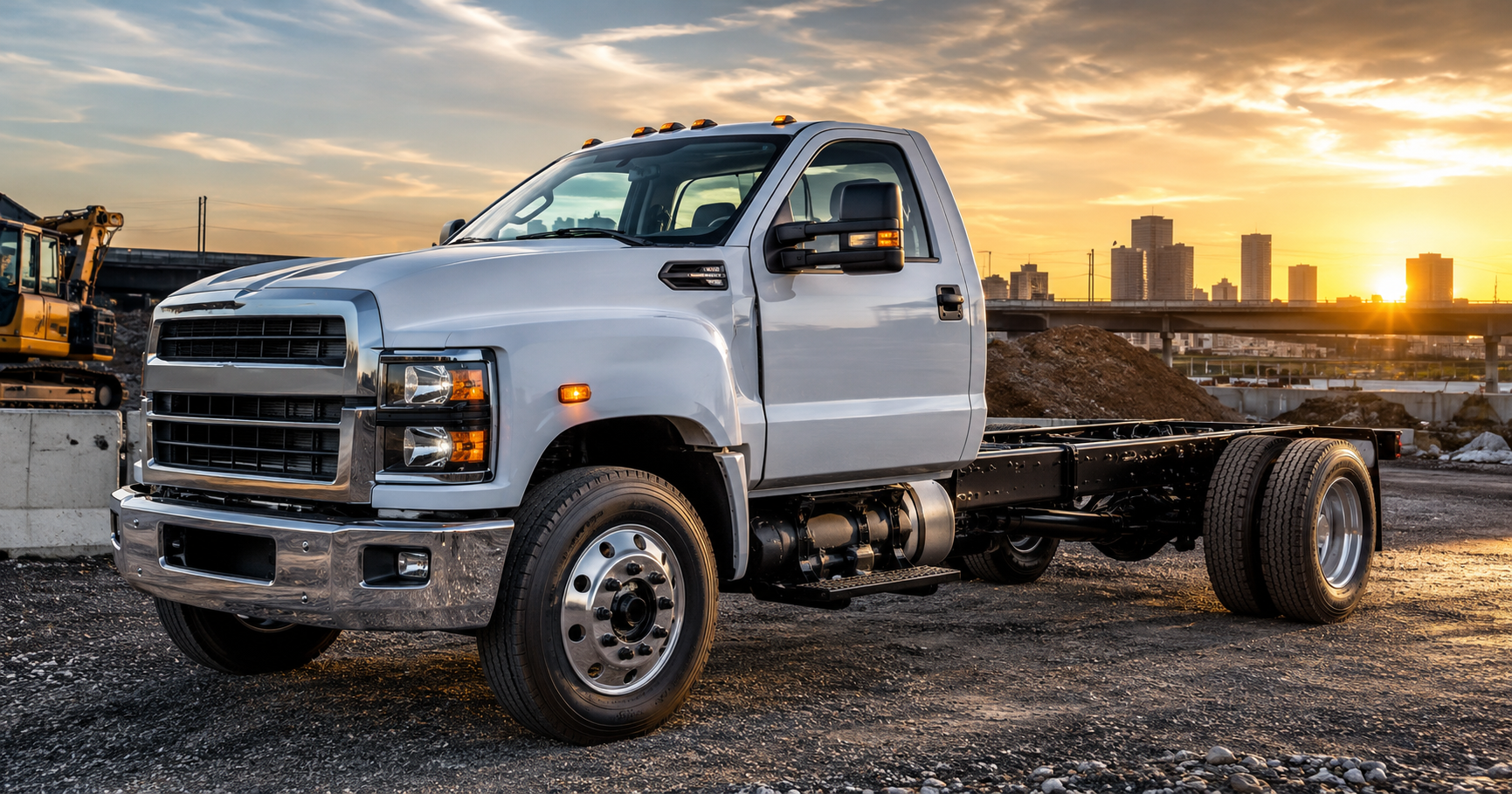
General Motors is preparing to end production of some of the largest Chevrolet Silverado trucks on the market, but there’s an important catch: the company is not killing the Silverado brand itself. Instead, GM is discontinuing the niche Silverado MD medium-duty lineup, which includes the Silverado 4500 HD, 5500 HD, and 6500 HD chassis-cab models.
The decision has sparked confusion among truck buyers because the Chevrolet Silverado remains one of America’s best-known pickup names. However, the move is far more strategic than dramatic. GM is trimming a low-volume commercial truck program while doubling down on higher-profit full-size and heavy-duty pickups that generate stronger demand.
Production of the Silverado MD lineup is reportedly scheduled to end on September 30, 2026, at the Springfield, Ohio facility operated through GM’s partnership with International Motors. For fleet operators, contractors, and vocational buyers, the news marks the end of a unique commercial truck option that has occupied a specialized corner of the market.
GM Is Not Ending the Chevrolet Silverado 1500
One of the biggest misconceptions surrounding the announcement is that GM plans to stop building the mainstream Chevrolet Silverado pickup. That is not the case.
The discontinuation only affects the medium-duty Silverado MD lineup:
- Chevrolet Silverado 4500 HD
- Chevrolet Silverado 5500 HD
- Chevrolet Silverado 6500 HD
These trucks are commercial chassis-cab vehicles typically used for:
- Utility fleets
- Tow trucks
- Dump trucks
- Box trucks
- Municipal service vehicles
- Construction applications
Meanwhile, the light-duty Chevrolet Silverado 1500 and the traditional heavy-duty Silverado 2500 HD and 3500 HD models remain central to GM’s truck strategy. In fact, GM is already preparing the next-generation Silverado and GMC Sierra redesign cycle expected around the 2027 model year.
Why GM Is Discontinuing the Silverado MD Trucks
The biggest reason comes down to economics.
Industry reports indicate GM decided the business case for a next-generation Silverado MD program simply did not justify the investment required to continue production. Medium-duty commercial trucks are expensive to redesign because they must meet evolving emissions standards, safety regulations, and fleet durability expectations.
Unlike consumer pickup trucks that sell in massive numbers, the Silverado MD line served a much smaller niche market.
Sales Numbers Tell the Story
Reported Silverado MD sales totaled approximately 8,341 units in 2025, with around 1,273 units sold during the first quarter of 2026.
Those figures are tiny compared to the hundreds of thousands of mainstream Chevrolet Silverado pickups GM sells annually in North America.
For a company the size of GM, limited sales volume can make a product difficult to sustain long term — especially when future development costs rise.
GM Is Refocusing on More Profitable Truck Segments
The decision also reflects a broader shift in GM’s truck strategy.
Rather than spreading engineering resources across smaller commercial programs, GM appears to be concentrating investment on higher-volume and higher-margin trucks. That includes:
- Silverado 1500 full-size pickups
- Silverado HD heavy-duty trucks
- GMC Sierra models
- Electric truck programs
GM has already expanded heavy-duty truck production capacity at other facilities, including Flint Assembly, signaling where the company sees stronger long-term demand.
From a business standpoint, the strategy is relatively straightforward: focus on products with the strongest returns while reducing complexity in slower-selling segments.
What Made the Silverado MD Different?
The Silverado MD lineup occupied a unique position between traditional heavy-duty pickups and larger commercial trucks.
Unlike a standard Chevrolet Silverado 1500, these medium-duty models were primarily sold as chassis-cab platforms. Buyers typically customized them with specialized bodies depending on the job.
Common Silverado MD Configurations Included:
- Flatbed work trucks
- Landscaping trucks
- Delivery box trucks
- Emergency utility vehicles
- Snowplow configurations
- Tow and recovery setups
The trucks were developed through a partnership with International Motors, which also built related commercial truck platforms.
That arrangement helped GM compete in the medium-duty commercial market without independently developing an entirely separate truck architecture from scratch.
What Happens to Fleet Buyers Now?
For many commercial buyers, the discontinuation creates uncertainty.
Companies that standardized their fleets around Chevrolet Silverado MD trucks may eventually need to transition to competing models from:
- Ford Super Duty chassis-cab trucks
- Ram Chassis Cab models
- International commercial trucks
- Freightliner medium-duty offerings
Fleet transitions can be expensive because businesses often build maintenance systems, training programs, and parts inventories around specific truck platforms.
That means the end of the Silverado MD lineup may have a bigger impact in commercial industries than among ordinary retail truck shoppers.
Why the Chevrolet Silverado Brand Still Looks Strong
Despite the headlines, GM’s broader truck business remains highly profitable.
The Chevrolet Silverado continues to be one of the company’s most important products, competing directly with the Ford F-Series and Ram pickup lineup in the fiercely competitive full-size truck market.
Several signs suggest GM is actually strengthening its truck focus rather than retreating from it:
- Next-generation Silverado and Sierra models are already in development.
- GM continues investing heavily in truck manufacturing capacity.
- Heavy-duty pickup demand remains strong.
- Commercial EV truck development is expanding.
- Truck profit margins remain among the highest in the auto industry.
In other words, GM is not abandoning trucks. It is exiting a smaller commercial niche that no longer fits its long-term investment priorities.
The Bigger Industry Trend Behind the Decision
GM’s move reflects a broader reality facing the auto industry in 2026.
Automakers are under pressure to balance:
- Electrification spending
- Software development costs
- Emissions compliance
- Factory modernization
- Profitability targets
As development costs rise, companies increasingly prioritize products with the highest sales volume and strongest margins.
That environment makes smaller niche vehicle programs harder to justify — even when they serve loyal customer bases.
The Silverado MD program appears to be one of the latest casualties of that financial reality.
Pros and Cons of GM Ending Silverado MD Production
Potential Benefits for GM
- Reduced production complexity
- Better allocation of engineering resources
- Higher focus on profitable truck segments
- Improved capital efficiency
- Stronger focus on next-generation Silverado programs
Potential Downsides
- Loss of a dedicated medium-duty commercial offering
- Fleet customers may switch brands permanently
- Reduced presence in vocational truck markets
- Dealers lose a specialized commercial product line
What Could Replace the Silverado MD?
As of now, there is no confirmed direct replacement for the Chevrolet Silverado MD lineup.
GM could theoretically return to the medium-duty segment in the future with a new platform or electrified commercial truck strategy, but current reporting suggests the company is stepping away from this category for the foreseeable future.
For now, buyers looking for medium-duty commercial trucks will likely need to explore competing brands.
Final Thoughts
The end of the Chevrolet Silverado MD lineup is less about weakness and more about strategic focus.
GM is making a calculated decision to exit a lower-volume commercial segment while investing more heavily in the truck categories that generate the strongest returns. For everyday Silverado buyers, very little changes. The mainstream Chevrolet Silverado lineup remains one of GM’s highest priorities.
But for commercial fleets and vocational operators, the discontinuation of the Silverado 4500 HD, 5500 HD, and 6500 HD marks the end of a specialized truck lineup that filled an important niche for years.
In today’s automotive market, even long-running truck programs must justify their costs — and GM appears to have concluded that the Silverado MD no longer fits the company’s future business equation.
FAQ: Chevrolet Silverado MD Production Ending
Is GM discontinuing all Chevrolet Silverado trucks?
No. GM is only ending production of the Silverado MD medium-duty lineup, not the mainstream Silverado 1500 pickup.
Which Chevrolet Silverado models are being discontinued?
The Silverado 4500 HD, 5500 HD, and 6500 HD chassis-cab trucks are reportedly ending production in 2026.
When will Silverado MD production stop?
Current reports indicate production is expected to end on September 30, 2026.
Why is GM stopping Silverado MD production?
GM reportedly determined that the business case for a next-generation medium-duty Silverado program did not justify continued investment.
Will there be a replacement for the Silverado MD?
No direct replacement has been announced at this time.
Is the Chevrolet Silverado 1500 still being updated?
Yes. GM is continuing development of the next-generation Chevrolet Silverado 1500 and GMC Sierra models expected around the 2027 model year.