
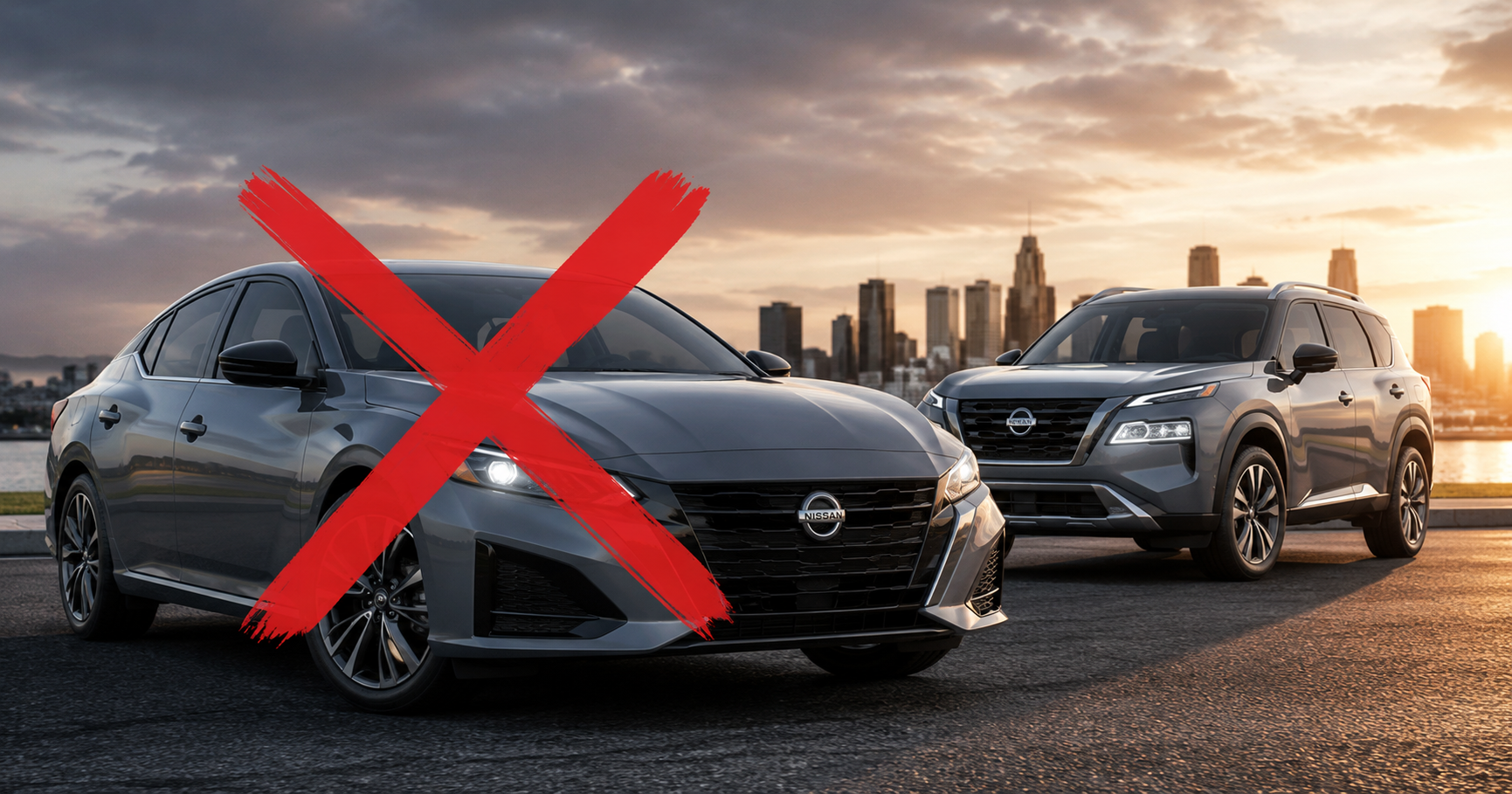
Yes, the Nissan Altima is being discontinued. After months of speculation, Nissan has officially confirmed that the long-running midsize sedan will end production after the 2026 model year. The decision marks the end of one of the brand’s most recognizable passenger cars in North America and reflects a broader strategy focused on SUVs, crossovers, hybrid technology, and future electrified vehicles.
If you’ve been searching “Is the Nissan Altima Being Discontinued?”, the answer is now clear. Nissan executives have confirmed the sedan’s retirement as part of a major lineup overhaul that will also see the Rogue Plug-In Hybrid leave production. The changes are designed to simplify Nissan’s portfolio while preparing the company for a new generation of vehicles expected over the next several years.
For current Altima owners, prospective buyers, and longtime Nissan fans, the announcement raises several important questions. Why is Nissan discontinuing one of its best-known sedans? What happens to existing owners? Will another sedan replace it? And what does this mean for the future of affordable family cars in America?
This guide answers everything you need to know.
Is the Nissan Altima Being Discontinued?
Yes. Nissan has officially confirmed that the Altima will be discontinued after the 2026 model year.
The announcement represents a significant shift for the automaker. Since its debut in the early 1990s, the Altima has served as Nissan’s primary midsize sedan in North America, competing directly with vehicles such as the Toyota Camry, Honda Accord, Hyundai Sonata, and Kia K5.
According to Nissan executives, the decision is part of a larger effort to reshape the company’s product lineup rather than an isolated move affecting only one vehicle.
The company believes reducing overlap between its sedan models will create room for future products while allowing it to concentrate resources on faster-growing vehicle segments.
Why Is Nissan Discontinuing the Altima?
Several factors contributed to Nissan’s decision.
1. SUVs Continue to Dominate the U.S. Market
Consumer demand has steadily shifted away from traditional family sedans toward SUVs and crossovers.
Vehicles like the Nissan Rogue, Pathfinder, Murano, and Armada now attract significantly more attention than midsize sedans, making it increasingly difficult for automakers to justify investing heavily in shrinking sedan segments.
This trend isn’t unique to Nissan.
Many manufacturers have reduced or eliminated sedan offerings in North America as buyers prioritize:
- Higher seating positions
- Greater cargo capacity
- Available all-wheel drive
- Family-friendly practicality
- Hybrid and electrified SUV options
2. Avoiding Internal Competition
According to Nissan’s Senior Vice President and Chief Product & Planning Officer for North America, Ponz Pandikuthira, keeping both the Altima and the redesigned Sentra in the lineup would create unnecessary competition.
Instead of offering two traditional sedans aimed at similar customers, Nissan has chosen to streamline its passenger-car lineup around a single model.
The Sentra will become Nissan’s only remaining sedan in the United States.
3. Investment in Future Technologies
Automakers today face enormous development costs associated with:
- Hybrid systems
- Electric vehicles
- Software platforms
- Advanced driver assistance systems
- Battery development
By reducing the number of conventional gasoline-powered sedans, Nissan can redirect engineering and manufacturing resources toward next-generation products.
The End of a 30-Year Legacy
The Altima first arrived in the U.S. market for the 1993 model year as the replacement for the Nissan Stanza.
Over more than three decades, it evolved from a compact family sedan into one of America’s best-known midsize cars.
Several characteristics helped define the Altima:
- Affordable pricing
- Comfortable highway driving
- Available all-wheel drive
- Fuel-efficient four-cylinder engines
- Sport-oriented SR models
- Strong value for families and commuters
For many years, the Altima consistently ranked among Nissan’s highest-volume vehicles in North America.
How the Altima Compared With Its Rivals
Throughout its lifetime, the Altima competed in one of America’s most competitive automotive segments.
| Model | Primary Strength |
|---|---|
| Toyota Camry | Reliability and resale value |
| Honda Accord | Driving dynamics and interior quality |
| Hyundai Sonata | Technology and warranty |
| Kia K5 | Sporty styling and value |
| Nissan Altima | Available AWD, comfort, affordability |
One feature that distinguished the Altima from several rivals was its available Intelligent All-Wheel Drive system, an option that appealed to buyers in regions with snow and challenging weather.
What Happens to the Nissan Rogue Plug-In Hybrid?
The Altima isn’t the only model leaving Nissan’s portfolio.
The company has also confirmed the discontinuation of the Rogue Plug-In Hybrid.
Unlike the standard Rogue, the plug-in hybrid version was based on Mitsubishi’s Outlander PHEV architecture.
Nissan says the vehicle served as a temporary solution while the company prepared its own hybrid technology.
Executives explained that having a plug-in hybrid available helped attract customers searching online for electrified SUVs, even if production volumes remained relatively limited.
What’s Replacing the Rogue Plug-In Hybrid?
Nissan plans to introduce the Rogue e-Power for the 2027 model year.
The company’s e-Power technology differs from traditional hybrids.
Instead of mechanically driving the wheels most of the time, the gasoline engine primarily generates electricity while an electric motor powers the vehicle.
The system is designed to deliver:
- Smoother acceleration
- Improved fuel efficiency
- A driving experience closer to an EV
- No need to plug in for charging
Nissan believes e-Power will become an important part of its future North American lineup.
Will Nissan Build Another Midsize Sedan?
At the moment, Nissan has not announced a direct replacement for the Altima.
However, several reports suggest the company has not completely abandoned passenger cars.
Patent filings and future product discussions indicate Nissan continues exploring affordable sedan concepts.
Industry observers have also pointed to plans involving the Skyline nameplate in international markets, although a vehicle carrying that name is not currently expected to reach American showrooms.
Instead, future products may share architecture with Infiniti models or arrive under different branding.
What Models Will Nissan Focus on Instead?
Rather than expanding its sedan lineup, Nissan appears focused on strengthening its SUV and crossover portfolio.
Future products expected over the coming years include:
- Next-generation Nissan Rogue
- Rogue e-Power
- Xterra revival
- Juke EV
- Future electrified crossovers
- Potential performance models such as a Z Convertible or Silvia
This reflects broader industry demand, where SUVs consistently outperform traditional passenger cars.
What Does This Mean for Current Altima Owners?
For existing owners, the discontinuation should not be a cause for immediate concern.
Nissan will continue supporting the Altima through:
- Warranty coverage
- Replacement parts
- Dealer servicing
- Software updates where applicable
Automakers typically maintain parts availability for many years after production ends.
Insurance, maintenance, and repair procedures are also expected to remain unchanged.
Should You Buy a 2026 Nissan Altima?
For shoppers considering a midsize sedan, the final 2026 Altima may actually become an attractive purchase.
Potential advantages include:
- Competitive pricing
- Dealer incentives
- Proven reliability
- Comfortable ride quality
- Available AWD
- Strong highway fuel economy
Some buyers also appreciate purchasing the final production year of a mature model because many early-generation issues have already been resolved.
However, shoppers planning to keep a vehicle for more than a decade may also want to compare alternatives such as the Toyota Camry or Honda Accord, both of which continue to receive major investments.
How Nissan’s Strategy Reflects the Broader Industry
Nissan’s decision illustrates a broader transformation taking place across the automotive industry. Traditional midsize sedans once represented one of the largest vehicle categories in America, but consumer preferences have shifted dramatically over the past decade.
Crossovers and SUVs now dominate new-vehicle sales because they combine many of the comfort characteristics of sedans with greater practicality. Manufacturers have responded by reallocating research budgets, factory capacity, and engineering talent toward those higher-demand segments.
At the same time, stricter emissions regulations and growing interest in electrification require enormous investments in battery technology, hybrid systems, software, and advanced safety features. Reducing the number of low-volume models helps automakers free resources for these priorities.
For Nissan, discontinuing the Altima is therefore part of a larger business strategy rather than simply ending one vehicle.
Will the Nissan Altima Become a Collector’s Car?
While it’s too early to know whether the Altima will become highly collectible, discontinued vehicles often attract renewed attention after production ends.
Special editions, low-mileage examples, and well-maintained final-year models may hold stronger appeal among enthusiasts in the future. However, because the Altima was produced in large numbers over many years, it is unlikely to become a rare collector’s item in the near term.
Its lasting legacy will likely be its role as one of Nissan’s most successful family sedans, offering dependable transportation to millions of drivers across North America.
Final Thoughts
So, is the Nissan Altima being discontinued? The answer is yes. Nissan has officially confirmed that the 2026 model year will mark the end of the Altima’s production, closing a chapter that began more than 30 years ago.
The decision reflects changing consumer preferences, the rapid growth of SUVs, and Nissan’s focus on electrification and future technologies. While the Altima exits the stage, the company is preparing a new wave of hybrid, electric, and crossover models designed for the next generation of buyers.
For current owners, support and parts availability are expected to continue for years. For shoppers who still appreciate a comfortable midsize sedan with available all-wheel drive, the final Altima models may represent one of the last opportunities to purchase this long-standing Nissan nameplate new.
Frequently Asked Questions
Is the Nissan Altima being discontinued?
Yes. Nissan has confirmed that the Altima will end production after the 2026 model year as part of its North American product strategy.
Why is Nissan discontinuing the Altima?
The company says the move reduces overlap with the Sentra, reflects declining sedan demand, and allows greater investment in SUVs, hybrids, and future electric vehicles.
What sedan will replace the Altima?
Nissan has not announced a direct replacement. The Sentra will remain the brand’s only sedan in the U.S. lineup.
Is Nissan discontinuing the Rogue Plug-In Hybrid?
Yes. Nissan has also confirmed the end of the Rogue Plug-In Hybrid as it prepares to launch the Rogue e-Power beginning with the 2027 model year.
Should I still buy a Nissan Altima?
For buyers seeking a comfortable, well-equipped midsize sedan with available all-wheel drive, the final 2026 Altima remains a compelling option. Warranty coverage, parts, and dealership support are expected to continue long after production ends.
Will Nissan continue making sedans?
Yes, but on a smaller scale. Following the Altima’s retirement, the Sentra will become Nissan’s only sedan sold in the United States.