
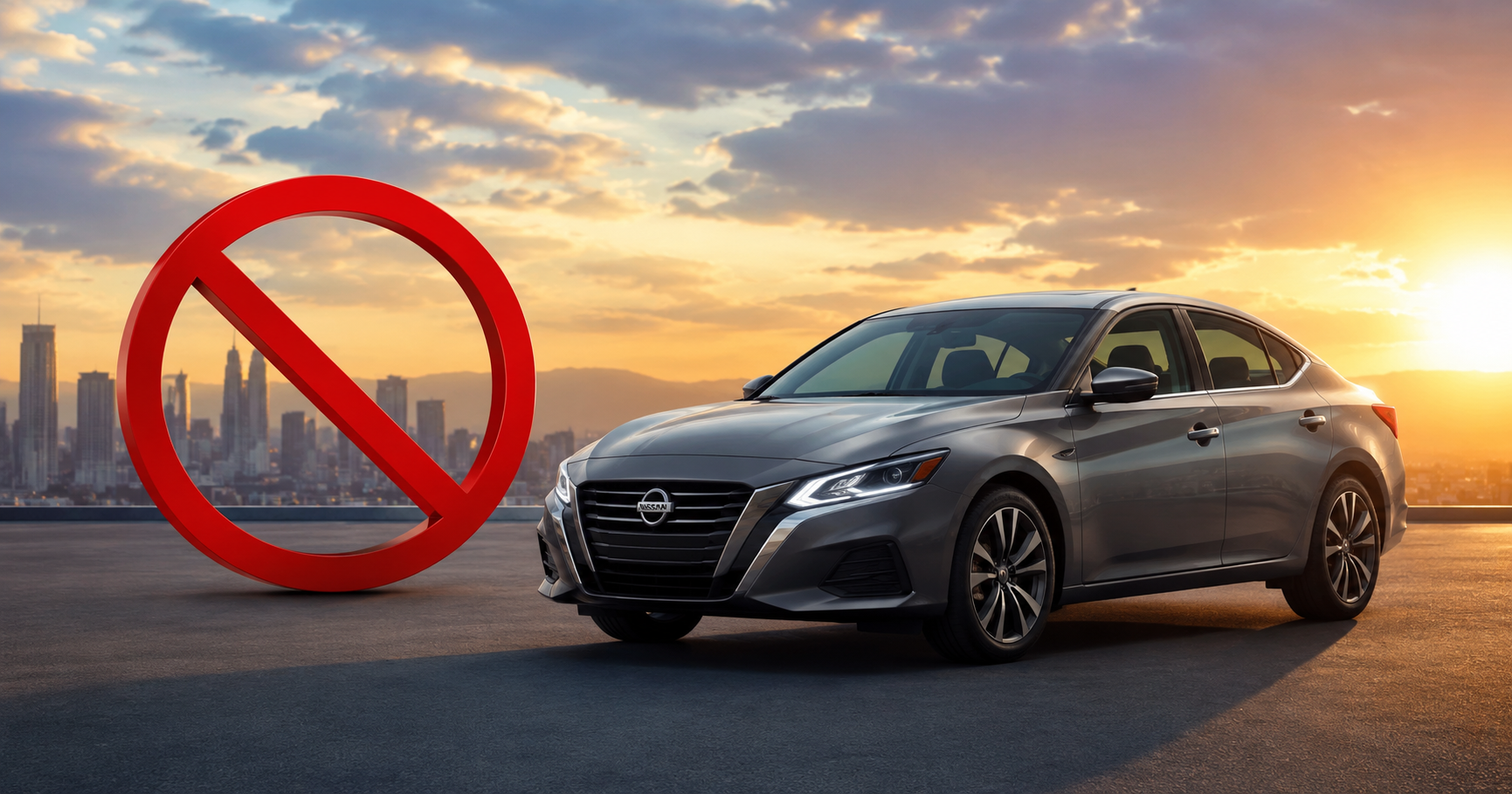
The Nissan Altima Discontinued announcement marks one of the most significant shifts in the American midsize sedan market in recent years. After serving as one of Nissan’s core passenger cars for more than three decades, the Altima is officially leaving production as the automaker reshapes its North American lineup around changing consumer demand, hybrid technology, and a stronger SUV-focused strategy.
For many American drivers, the Altima represented affordable transportation with comfortable interior space, dependable performance, and competitive pricing. It became a familiar sight on highways, suburban streets, rental fleets, and family driveways across the United States.
Now, Nissan has confirmed the sedan’s retirement while simultaneously ending production of the Rogue Plug-In Hybrid. The decision is not simply about eliminating two vehicles—it reflects a broader corporate strategy aimed at simplifying Nissan’s portfolio while preparing for an entirely new generation of electrified products.
So why is Nissan discontinuing one of its best-known sedans? What happens next for buyers? And could another affordable sedan eventually replace the Altima?
This guide explains everything consumers need to know.
Official: Nissan Confirms the Altima Is Ending Production
After months of speculation, Nissan executives officially confirmed that the Altima will be discontinued.
Earlier, the company indicated that the Altima would continue through the 2026 model year. However, company leadership has now decided to end production as part of a wider restructuring effort.
Ponz Pandikuthira, Nissan Americas Senior Vice President and Chief Product & Planning Officer, confirmed the decision, explaining that keeping both the Altima and the redesigned Sentra in the lineup would create unnecessary overlap.
Instead of competing against itself, Nissan will concentrate its passenger-car efforts on the Sentra while investing heavily in crossovers, SUVs, hybrids, and future electrified vehicles.
Why Nissan Altima Discontinued Became the Right Business Decision
Although longtime fans may view the announcement as disappointing, the decision reflects several market realities that have reshaped the automotive industry over the past decade.
1. American Buyers Continue Moving Toward SUVs
The biggest reason is simple: American buyers overwhelmingly prefer SUVs and crossovers.
Over the past ten years, traditional midsize sedans have steadily lost market share as consumers migrated toward vehicles offering:
- Higher seating positions
- Greater cargo capacity
- All-weather capability
- Family-friendly interiors
- Perceived versatility
Manufacturers across the industry have responded by reducing investment in conventional sedans while expanding SUV lineups.
Nissan is following the same trend.
2. The Sentra Now Covers Nissan’s Sedan Market
Company executives also indicated that the redesigned Sentra has become capable of satisfying many buyers who previously considered the Altima.
The new Sentra offers:
- Modern styling
- Improved technology
- Competitive pricing
- Better fuel economy
- Advanced safety systems
Rather than dividing sales between two similar sedans, Nissan believes focusing resources on one model creates a stronger business case.
3. Nissan Wants to Simplify Its Product Lineup
The Altima is not the only casualty.
The company has already retired or announced plans to phase out several models, including:
- Versa
- Maxima
- Altima
- Rogue Plug-In Hybrid
Reports suggest as many as 11 Nissan vehicles could eventually leave the lineup as the company focuses on products with stronger long-term growth potential.
The End of an American Sedan Icon
The Altima first entered the U.S. market during the early 1990s and gradually evolved into one of Nissan’s most recognizable vehicles.
Throughout multiple generations, the sedan earned a reputation for:
- Affordable pricing
- Comfortable ride quality
- Reliable four-cylinder engines
- Available all-wheel drive
- Strong resale popularity
It became one of Nissan’s highest-volume passenger cars for decades.
Millions of drivers selected the Altima because it balanced affordability, practicality, and everyday usability without attempting to compete as a luxury vehicle.
Its departure therefore represents the end of an important chapter in Nissan’s North American history.
How the Nissan Altima Compared With Its Rivals
The midsize sedan segment remains competitive, although smaller than it once was.
| Model | Status | Market Position |
|---|---|---|
| Nissan Altima | Discontinued | Former mainstream midsize sedan |
| Toyota Camry | Active | Hybrid-focused family sedan |
| Honda Accord | Active | Premium mainstream sedan |
| Hyundai Sonata | Active | Technology-oriented sedan |
| Kia K5 | Active | Sporty midsize alternative |
Unlike Toyota and Honda, Nissan has chosen to reduce its sedan portfolio instead of expanding it.
Why the Rogue Plug-In Hybrid Is Also Being Discontinued
The Altima was not the only vehicle affected.
Nissan also confirmed the end of the Rogue Plug-In Hybrid.
The model was based heavily on the Mitsubishi Outlander Plug-In Hybrid and was introduced to give Nissan dealers a plug-in option while the company’s own hybrid technologies were still under development.
According to company leadership, the vehicle successfully filled that temporary role.
Executives explained that many online shoppers expect to see hybrid options when researching SUVs. Without one, Nissan risked losing potential buyers before they ever visited dealerships.
Now that Nissan’s next-generation electrified powertrains are approaching production, the Rogue Plug-In Hybrid has effectively completed its mission.
The Arrival of Rogue e-Power
One major reason behind the lineup changes is the upcoming Rogue e-Power.
Unlike a conventional hybrid, Nissan’s e-Power system operates differently.
In an e-Power vehicle:
- The gasoline engine primarily generates electricity.
- The electric motor drives the wheels.
- Drivers experience electric-like acceleration without relying entirely on public charging.
Nissan believes this technology offers a compelling bridge between traditional gasoline vehicles and full battery-electric models.
The Rogue e-Power is expected to become one of the company’s most important North American launches.
What Happens to Current Altima Owners?
For existing owners, the announcement does not mean immediate changes to vehicle ownership.
Current Altima drivers can still expect:
- Dealer maintenance
- Warranty support
- Replacement parts availability
- Factory service procedures
- Certified repair networks
Automakers routinely continue supporting discontinued models for many years after production ends.
Drivers should not expect service interruptions simply because manufacturing has stopped.
Should Buyers Still Consider Purchasing a Remaining Altima?
In many situations, yes.
Discontinued vehicles often become attractive purchases because dealerships may offer competitive incentives to clear remaining inventory.
Potential benefits include:
- Discounted pricing
- Dealer financing offers
- Large inventories during closeout periods
- Well-understood reliability history
However, buyers should also consider long-term resale values, future product updates, and whether they prefer newer hybrid technology available from competitors.
Nissan’s Future Product Strategy
The Altima’s retirement does not signal a retreat from innovation. Instead, Nissan appears to be redirecting investment toward products that align with future market demand.
Upcoming priorities include:
- New Xterra SUV
- Juke EV
- Rogue e-Power
- Electrified crossover lineup
- Potential Skyline revival outside the U.S.
- Possible next-generation sports cars
Patent filings and internal product planning also suggest Nissan has not completely abandoned affordable passenger cars.
While the Altima is leaving, future sedans could eventually emerge using modern electrified platforms.
Industry Perspective: A Sign of Broader Market Changes
The Nissan Altima discontinued announcement reflects broader trends affecting nearly every major automaker.
Across the industry, manufacturers are reducing investments in traditional sedans while increasing spending on:
- Hybrid technology
- Battery-electric vehicles
- Crossovers
- Large SUVs
- Advanced software platforms
- Connected vehicle technology
Consumer demand—not simply corporate preference—has driven much of this transformation.
As buyers increasingly prioritize utility, cargo space, and electrification, companies must allocate resources toward segments with the greatest long-term growth potential.
Will Nissan Ever Bring Back the Altima?
There is currently no official indication that Nissan plans to revive the Altima nameplate.
However, automotive history shows that discontinued model names occasionally return years later under different technologies or market strategies.
If consumer preferences shift again or affordable electric sedans become a major growth segment, Nissan could revisit the idea of introducing another midsize passenger car.
For now, though, the company’s attention remains firmly focused on SUVs, electrification, and hybrid innovation.
Final Thoughts
The Nissan Altima Discontinued decision closes the chapter on one of America’s most familiar midsize sedans. While the move may disappoint loyal owners, it reflects the realities of today’s automotive market, where SUVs, hybrids, and electrified vehicles increasingly dominate consumer demand.
By eliminating overlap between the Altima and Sentra, discontinuing the temporary Rogue Plug-In Hybrid, and preparing for technologies like Rogue e-Power, Nissan is attempting to position itself for stronger long-term competitiveness.
For consumers, the transition offers both opportunities and choices. Remaining Altima inventory may provide excellent value, while upcoming Nissan products promise a new generation of efficiency, technology, and electrification.
Whether the Altima eventually returns in another form remains uncertain, but its legacy as one of Nissan’s defining American sedans is firmly established.
Frequently Asked Questions
Is the Nissan Altima officially discontinued?
Yes. Nissan has confirmed that the Altima will be discontinued as part of its North American lineup restructuring.
Why is Nissan discontinuing the Altima?
The company says the decision helps avoid overlap with the Sentra while allowing greater investment in SUVs, hybrids, and future electrified vehicles.
Will Nissan continue supporting existing Altima owners?
Yes. Current owners will continue receiving warranty coverage, maintenance support, and replacement parts through Nissan dealerships.
What sedan replaces the Altima?
The Sentra becomes Nissan’s only remaining sedan in the U.S. lineup after the Altima’s retirement.
Why is the Rogue Plug-In Hybrid ending?
Nissan says the model served as a temporary plug-in hybrid offering until its own Rogue e-Power technology is ready.
Could Nissan bring back the Altima in the future?
No official plans have been announced, although future market conditions could eventually lead to new affordable sedan offerings.