
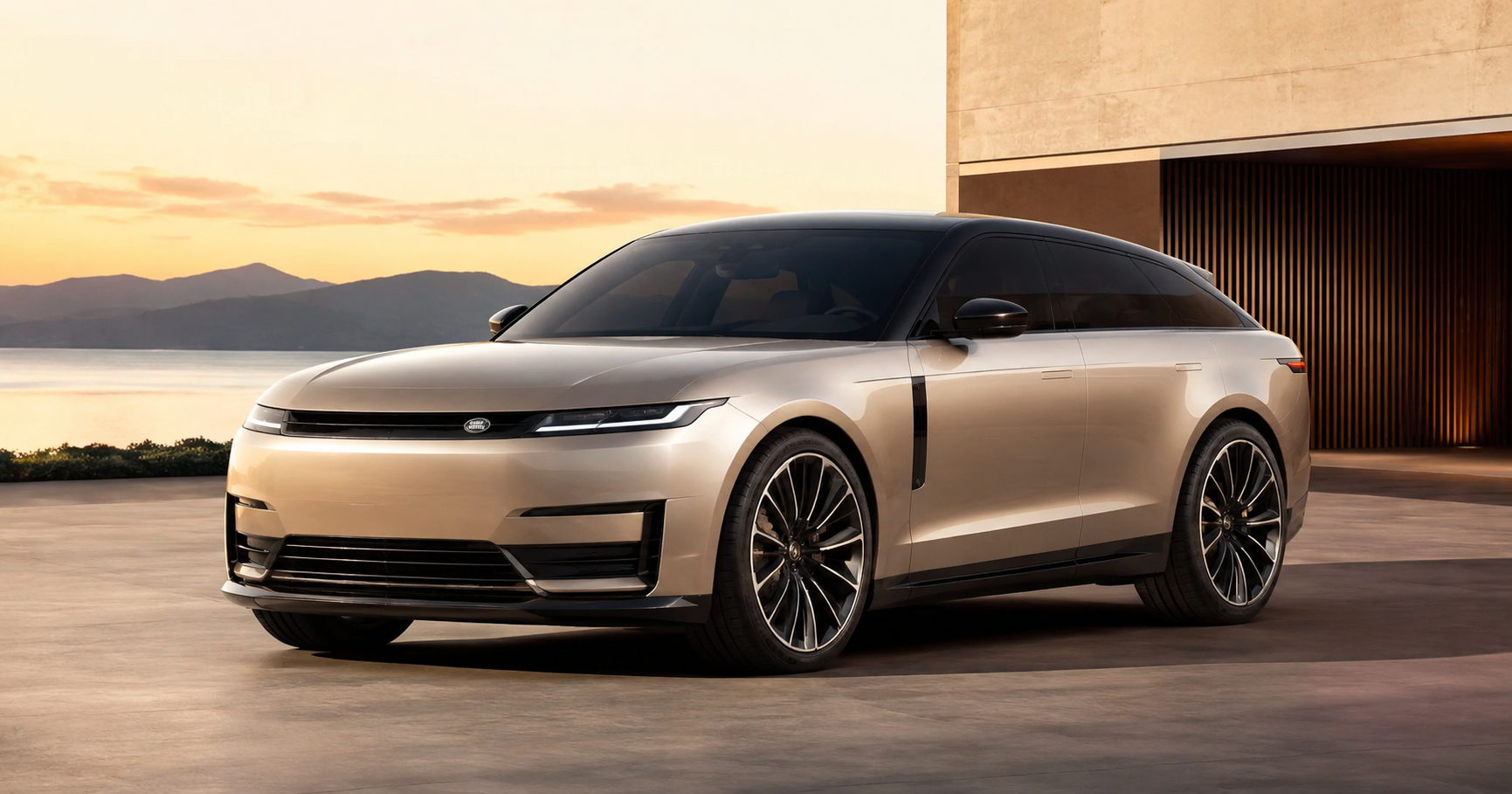
The 2028 Range Rover GT Design marks one of the biggest design shifts in the history of the Range Rover brand. Rather than simply introducing another luxury SUV, Land Rover’s luxury division is creating an entirely new interpretation of what a grand tourer can be. Officially confirmed in July 2026, the Range Rover GT is positioned as the fifth member of the prestigious Range Rover family, combining elegant road-focused styling with the all-terrain capability that defines the brand.
Unlike previous Range Rover models, the upcoming GT embraces a sleek fastback silhouette, cleaner proportions, and an all-electric-first strategy. Built on Jaguar Land Rover’s new EMA platform, it promises a fresh balance between luxury, technology, efficiency, and performance while maintaining the unmistakable DNA that has made Range Rover one of the world’s most recognizable premium automotive brands.
Although final specifications, pricing, and performance figures remain under wraps, official previews and prototype images provide enough insight to paint a compelling picture of what could become the company’s most revolutionary production vehicle in decades.
In this guide, we’ll take an in-depth look at everything currently known about the 2028Range Rover GT Design, including its exterior styling, interior philosophy, electric architecture, expected technology, production plans, competitive positioning, and what buyers can realistically expect before its official launch.
The Biggest Design Evolution in Range Rover History
Range Rover has traditionally been associated with upright proportions, commanding road presence, and unmistakable SUV styling. The GT changes that formula.
Instead of focusing solely on off-road dominance, designers have prioritized long-distance refinement and aerodynamic efficiency without abandoning the premium identity that customers expect.
The result is a vehicle that looks closer to a luxury grand tourer than a traditional SUV.
From early prototype images and official camouflage photography, several design themes immediately stand out:
- Lower overall stance
- Fastback-inspired roofline
- Smooth body surfaces
- Reduced visual clutter
- Wide athletic proportions
- Minimal body creases
- Modern lighting signatures
This represents what Range Rover calls its new “reductive design” philosophy—a design language centered around purity, precision, and quiet modernity.
What Makes the 2028 Range Rover GT Different?
The GT is not intended to replace the flagship Range Rover, the Range Rover Sport, the Velar, or the Evoque.
Instead, it creates an entirely new category within the lineup.
Its mission is simple:
Deliver the comfort and elegance of a luxury grand touring sedan while maintaining the versatility expected from a modern Range Rover.
That means buyers should expect:
- Superior highway refinement
- Exceptional ride comfort
- More engaging on-road dynamics
- Improved aerodynamic efficiency
- Luxury-focused cabin experience
- Practical crossover usability
This positioning also reflects changing consumer preferences, where premium buyers increasingly seek sleek crossovers instead of traditional boxy SUVs.
Exterior Design: Elegant Without Losing Identity
The exterior of the 2028 Range Rover GT Design is arguably its biggest talking point.
Despite the heavy camouflage worn by development prototypes, several characteristics are already visible.
A Coupe-Inspired Roofline
The roofline flows smoothly toward the rear, creating a fastback appearance rarely seen on previous Range Rover products.
This approach reduces aerodynamic drag while giving the vehicle a sportier, more elegant profile.
Unlike many coupe SUVs that sacrifice practicality, the GT appears designed to maintain useful rear passenger space.
Cleaner Surface Treatment
One noticeable change is the elimination of unnecessary body lines.
Instead of aggressive creases, designers rely on carefully sculpted proportions and subtle curvature.
This cleaner look reinforces the premium character while allowing the vehicle’s proportions to become the focal point.
Lower Ride Height
Compared with the standard Range Rover lineup, the GT sits noticeably lower.
This creates:
- Improved visual balance
- Sportier driving stance
- Better aerodynamic efficiency
- Reduced center of gravity
Modern Lighting
Although final lighting details remain hidden, prototype images suggest:
- Ultra-thin LED headlights
- Slim rear light bar
- Minimal front grille treatment
- Flush body integration
These elements align closely with the latest luxury EV design trends.
The Meaning Behind Range Rover’s “Reductive Design”
Rather than adding complexity, Range Rover’s designers have deliberately removed it.
This philosophy focuses on eliminating unnecessary details while emphasizing craftsmanship, proportion, and premium materials.
Instead of attracting attention through excessive styling, the GT aims to project understated confidence.
That makes the vehicle feel timeless rather than trendy—a strategy that has historically worked well for luxury brands.
Interior Design: Quiet Luxury Takes Center Stage
The cabin introduces one of the cleanest interior layouts ever shown by the company.
Official previews reveal an environment designed around calmness rather than complexity.
Minimal Dashboard
The dashboard eliminates excessive buttons in favor of:
- Large central touchscreen
- Slim digital driver display
- Integrated climate controls
- Hidden air vents
The overall appearance feels architectural rather than technological.
Premium Sustainable Materials
Range Rover also appears focused on sustainability.
Visible materials include woven textiles and premium finishes that replace some traditional decorative elements while maintaining a luxurious atmosphere.
This reflects the broader trend among premium manufacturers toward environmentally conscious interiors.
Cabin Atmosphere
Instead of overwhelming occupants with visual information, the interior emphasizes:
- Open space
- Natural light
- Clean surfaces
- High-quality textures
- Reduced noise
The result should be an exceptionally relaxing long-distance environment.
EMA Platform: The Foundation of the GT
One of the most important aspects of the new model is its architecture.
The Range Rover GT will ride on Jaguar Land Rover’s Electrified Modular Architecture (EMA), a platform engineered specifically for next-generation electrified vehicles.
The EMA platform delivers several advantages:
- Dedicated EV packaging
- Improved structural rigidity
- Enhanced battery integration
- Better weight distribution
- Future hybrid compatibility
- Advanced software architecture
Although the GT launches as a battery-electric vehicle, the platform allows future flexibility as market demands evolve.
An EV First—with Hybrid Planned Later
One of the most significant announcements surrounding the GT is its launch strategy.
The first production version will be fully electric.
Later in the model’s lifecycle, Range Rover plans to introduce a hybrid variant, broadening its appeal in markets where charging infrastructure or consumer preferences still favor electrified combustion technology.
This phased rollout allows the company to establish the GT as a modern luxury EV while maintaining long-term flexibility.
How the GT Fits Into the Range Rover Family
The lineup now consists of five distinct products, each serving a different purpose.
| Model | Main Focus |
|---|---|
| Range Rover | Ultimate luxury SUV |
| Range Rover Sport | Performance luxury SUV |
| Velar | Modern luxury crossover |
| Evoque | Compact premium SUV |
| Range Rover GT | Luxury electric grand tourer |
This positioning gives buyers a completely new option within the brand without directly replacing any existing model.
Expected Driving Experience
Although official driving specifications remain unavailable, the GT’s mission provides strong clues about its character.
Rather than chasing outright performance numbers, engineers appear focused on delivering effortless refinement.
Expected characteristics include:
- Comfort-oriented suspension tuning
- Excellent highway stability
- Near-silent cabin
- Smooth electric acceleration
- Confident handling
- Long-distance comfort
This aligns with the traditional definition of a grand touring vehicle.
Technology Expectations
While Range Rover has not revealed the complete equipment list, buyers can reasonably expect the GT to feature many of the brand’s latest technologies.
Likely highlights include:
- Latest Pivi Pro infotainment
- Over-the-air software updates
- Advanced driver assistance systems
- Wireless Apple CarPlay and Android Auto
- Premium Meridian audio system
- Digital key functionality
- Enhanced connected services
Final specifications will likely be announced closer to production.
Production and Release Timeline
The Range Rover GT will be manufactured at the company’s Halewood facility in the United Kingdom.
Prototype vehicles are already undergoing extensive real-world testing.
The current timeline suggests:
- Official family announcement completed in July 2026.
- Prototype testing continues throughout 2026.
- Additional technical information expected later in 2026.
- Production preparation follows.
- Market launch expected for the 2028 model year.
Who Will Buy the Range Rover GT?
The GT targets a different customer than traditional Range Rover models.
Potential buyers include:
- Luxury EV adopters
- Grand touring enthusiasts
- Current premium sedan owners
- Existing Range Rover customers seeking something more road-focused
- Buyers considering high-end electric crossovers
Competitive Landscape
Although pricing has not been announced, the GT is expected to compete with some of the most advanced luxury electric vehicles in the market.
Potential rivals include:
- Porsche Macan Electric
- Polestar 4
- Mercedes-Benz EQE SUV
- BMW iX
- Lotus Eletre
- Audi Q6 e-tron
However, none of these competitors combines the Range Rover heritage with the brand’s unique balance of luxury, refinement, and genuine all-terrain capability.
Pros and Cons
Advantages
- Completely fresh design language.
- Elegant grand touring proportions.
- Modern minimalist interior.
- Dedicated electric architecture.
- Future hybrid flexibility.
- Strong premium brand reputation.
Potential Drawbacks
- Pricing remains unknown.
- Battery range has not been announced.
- Performance specifications remain undisclosed.
- Coupe profile may reduce cargo practicality.
- Traditional SUV fans may prefer classic Range Rover styling.
Our Early Verdict
The 2028 Range Rover GT Design is shaping up to be far more than another luxury SUV. It represents a strategic shift for the entire Range Rover brand, blending elegant grand touring proportions with modern electric technology and the capability expected from one of the world’s most respected luxury automotive names.
Rather than competing solely on horsepower or acceleration, the GT appears focused on delivering an elevated ownership experience defined by quiet luxury, refined design, and effortless long-distance comfort.
Much remains unknown—including battery size, driving range, pricing, and full performance specifications—but the official announcement and prototype previews already suggest this will be one of the most significant luxury vehicle launches of the decade.
If Range Rover successfully delivers on its promise of creating “the most car-like, yet unmistakably capable” model in its history, the GT could redefine expectations for premium electric crossovers and establish a new benchmark for the luxury grand touring segment.
Frequently Asked Questions
Is the 2028 Range Rover GT officially confirmed?
Yes. Range Rover officially introduced the GT as the fifth member of its vehicle family in July 2026.
Will the Range Rover GT be fully electric?
Yes. The first version will launch as a battery-electric vehicle (BEV).
Will there be a hybrid version?
Yes. Range Rover has confirmed that a hybrid model is planned later in the product lifecycle.
What platform does the GT use?
The GT is built on Jaguar Land Rover’s Electrified Modular Architecture (EMA), designed specifically for electrified vehicles.
Where will the Range Rover GT be built?
Production will take place at Jaguar Land Rover’s Halewood manufacturing facility in the United Kingdom.
What makes the GT different from other Range Rover models?
The GT features a lower, more aerodynamic fastback design, a minimalist luxury interior, and a stronger focus on grand touring performance while maintaining the capability associated with the Range Rover brand.
When will more official details be released?
Range Rover has stated that additional technical information will be announced as development progresses, with more updates expected following prototype testing.