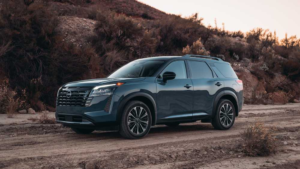

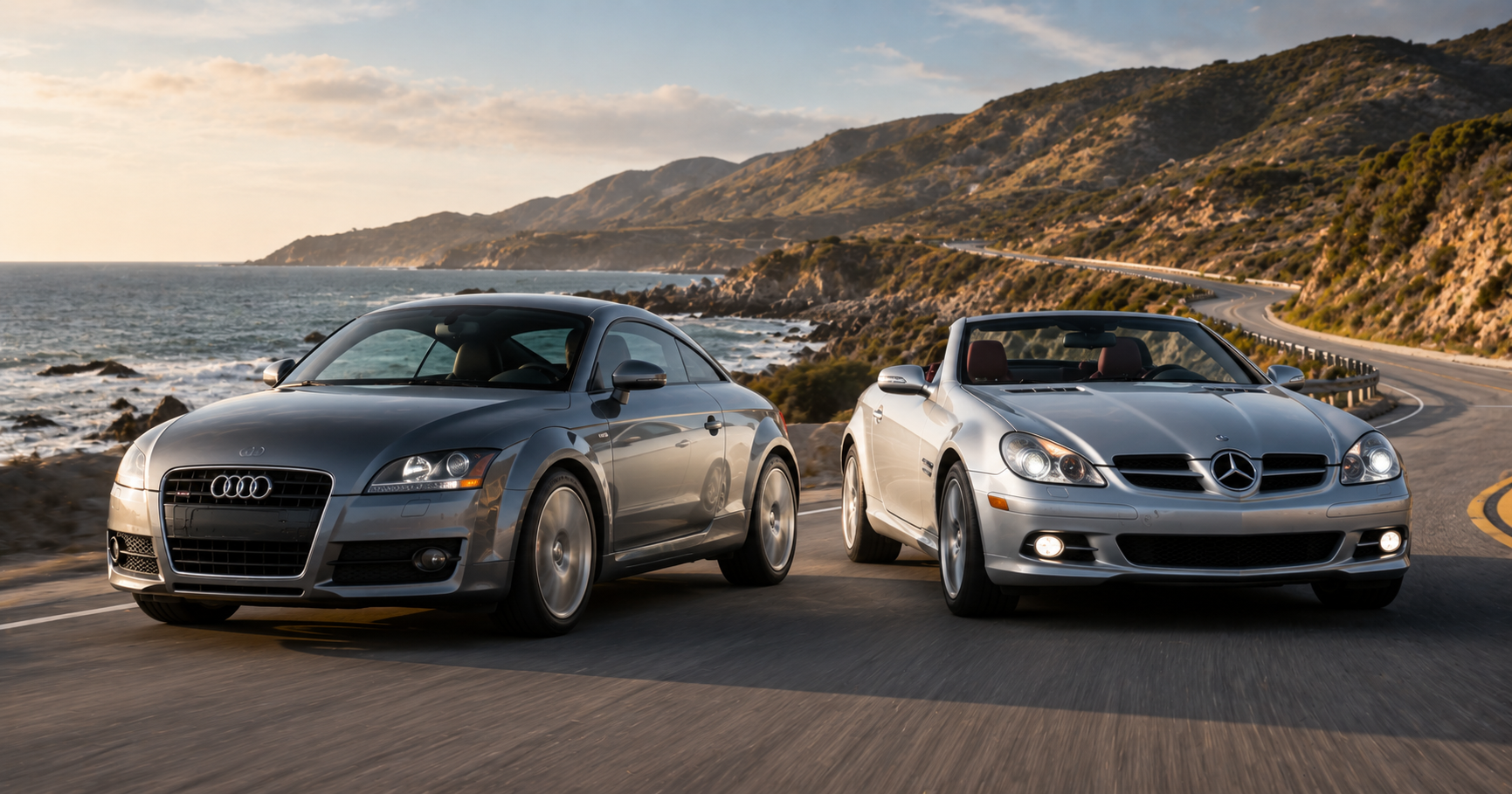
Diesel-powered sports cars promised to combine driving enjoyment with impressive fuel economy, but the formula never gained widespread success. Models such as the Audi TT TDI and Mercedes-Benz SLC 250 CDI offered greater efficiency than their gasoline-powered counterparts, yet both ultimately struggled to win over enthusiasts and buyers.
A Different Take on the Sports Car Formula
Sports cars are available with a wide range of engines, from large V8s found in models such as the Chevrolet Corvette and Mercedes-Benz SL to smaller four-cylinder engines like the one in the Mazda Miata.
Recognizing that fuel costs could discourage buyers, some manufacturers introduced diesel-powered versions of their sports cars. The goal was to deliver the same styling and driving appeal while reducing day-to-day fuel consumption.
Audi Introduced the TT TDI in Europe
The Audi TT TDI debuted in 2009 alongside the second-generation TT for the European market. Unlike the first-generation TT, which was offered only with gasoline engines, the diesel variant paired a 2.0-liter turbodiesel inline-four with the coupe’s existing design.
The model was intended to let buyers enjoy the TT’s styling and driving characteristics while spending less on fuel.
The second-generation TT TDI was equipped exclusively with Audi’s Quattro all-wheel-drive system, producing 165 horsepower and paired with a six-speed manual transmission.
When the third-generation TT arrived in 2015, the diesel engine was updated to produce just over 180 horsepower. Automatic transmission and front-wheel-drive versions were later added, while a Quattro version of the third-generation model followed in 2017.
Efficiency Was the TT TDI’s Biggest Strength
The front-wheel-drive TT TDI produced about 45 fewer horsepower than the gasoline-powered TT TFSI, although it generated an additional 8 lb-ft of torque. Despite that advantage, it reached 60 mph more than a second slower than the gasoline model.
Part of the performance gap was attributed to the diesel engine’s additional weight, which added 88 pounds over the front axle.
Fuel economy remained the diesel model’s standout feature. The TT TDI averaged around 60 MPG, compared with approximately 40 MPG for the front-wheel-drive TT TFSI. It also produced 120 g/km of CO2 emissions versus 144 g/km for the gasoline version.
Poor Sales Ended the Audi TT TDI
Demand for the TT TDI declined by the end of the 2010s. According to the report, only about 16% of TT buyers in the United Kingdom chose the diesel version over the gasoline model.
The report notes that the aftermath of Dieselgate was likely at least partly responsible. Audi discontinued the TT TDI in 2019, while the TT continued with gasoline engines until production ended in 2023.
Mercedes-Benz Followed a Similar Strategy
Mercedes-Benz adopted a comparable approach when it updated the third-generation SLK for 2016 and renamed it the SLC to mark the original SLK’s 20th anniversary.
The European-market SLC 250 CDI retained a 2.1-liter turbo-diesel inline-four producing 204 horsepower and 368 lb-ft of torque. Power was sent to the rear wheels through a nine-speed automatic transmission.
The diesel engine added 220 pounds compared with the SLC 300 and 275 pounds compared with the SLC 200.
Even so, the SLC 250 CDI accelerated from 0 to 60 mph in 6.6 seconds, compared with 6.9 seconds for the automatic SLC 200 and 5.8 seconds for the SLC 300.
Fuel efficiency again proved to be the diesel model’s primary advantage. While comparable gasoline models averaged 47 MPG, the SLC 250 CDI achieved around 70 MPG and produced lower exhaust emissions.
Mixed Reception From Enthusiasts
CarBuzz Senior Editor Gerhard Horn argued that the diesel-powered SLC failed to match expectations.
“The SLK and SLC were available with some truly amazing engine options, but few things in life are as disappointing as lowering the roof and listening to the clatter of a diesel engine. I don’t know how you could walk away from a flat-six Porsche Boxster, a V6 Nissan 370Z, and the NA inline-six powered BMW Z4 and buy this instead.”
The SLC was retired in 2020, and when the new SL-Class debuted in 2022, Mercedes-Benz replaced the diesel option with a hybrid-assisted four-cylinder gasoline engine.
Why Diesel Sports Cars Never Caught On
According to the report, the diesel engines undermined the characteristics buyers typically expect from sports cars. Their added weight increased understeer, while the narrow powerband and engine sound reduced driver engagement.
Discussing the Audi TT TDI, Gerhard Horn said:
“The diesel engine was heavy, which made the TT more prone to understeer, but the absolute worst thing about it was the rev range. The maximum torque arrived at 2,000 rpm, and the engine was all out of ideas at 4,200 rpm. You had to keep the car in that powerband… The best thing you can say about the Audi TT diesel is that it was capable of achieving over 50 MPG.”
The report concludes that although both models delivered impressive fuel economy, buyers looking for a sports car placed greater value on performance, handling, and driving enjoyment. As Horn summarized: “When last did you hear someone say, ‘What I really love about my sports car is how fuel efficient it is?’”