
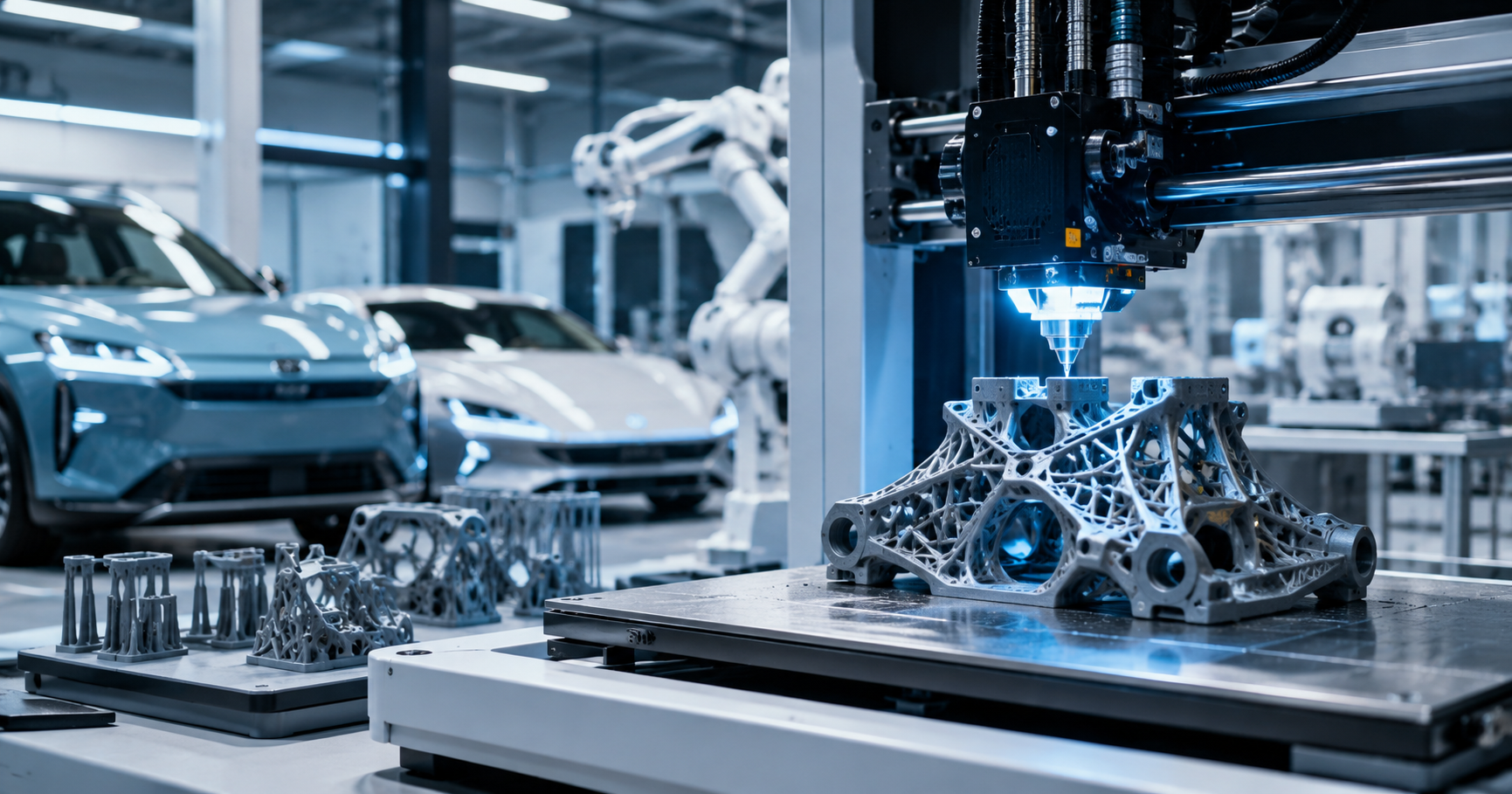
Hyundai and Kia are expanding their use of additive manufacturing, also known as 3D printing, as they work to further develop the technology for vehicle production and manufacturing operations. The automakers say the process gives engineers greater design flexibility and enables the production of complex components that are difficult to manufacture using traditional methods.
3D Printing Supports More Complex Component Design
According to Hyundai and Kia, traditional component production relies on creating molds for individual parts. While that approach remains effective for simpler components, the companies say increasingly complex automotive designs require manufacturing methods beyond conventional processes.
To address those needs, both automakers have continued investing in additive manufacturing technology. They say the process provides greater freedom of design when developing vehicle components.
Additive Manufacturing Solution Center Produces Digital Designs
Hyundai and Kia operate the Additive Manufacturing Solution Center (AMSC) at the Namyang Research and Development (R&D) Center. The facility converts digital component designs directly into manufactured parts.
The AMSC uses additive manufacturing technologies including laser-melted metals and powder-sintered polymers. According to the companies, the facility is capable of designing components for optimal weight and performance while producing complex parts that are difficult to create through traditional manufacturing methods.
Quality Inspection Built Into Every Production Stage
Hyundai and Kia say every 3D-printed product passes through a Quality Inspection Cell throughout the manufacturing process to ensure it meets required standards.
The inspection evaluates tensile strength, bending stiffness, and impact resistance against production-equivalent standards. The process also includes metallurgical analysis to verify that printed components meet the same standards as traditionally manufactured parts.
Applications Across Production and Restoration Programs
The AMSC currently produces parts and components for a range of internal applications, including vehicle production, motorsports, and heritage restoration programs.
According to Hyundai and Kia, additive manufacturing enables both companies to adapt to changing production requirements while providing the ability to “physically build whatever its designers imagine.”
The companies say the continued development of additive manufacturing is intended to support more advanced component design and production while expanding the technology’s role across their manufacturing operations.