

Ford’s return to the top class of the FIA World Endurance Championship is less than a year away, and development of its new Hypercar is already well underway. The latest testing offers the clearest preview yet of the naturally aspirated V8 that will power Ford’s Le Mans challenger when it makes its competitive debut in 2027.
Ford Hypercar V8 Undergoes Intense Dyno Testing
Ford is testing its new engine inside a sophisticated dyno facility at its headquarters in Dearborn, Michigan, rather than waiting to put it through its first full racetrack program.
Engineers have recreated a complete lap of the Circuit de la Sarthe, allowing the 5.4-liter naturally aspirated Coyote V8 to experience the acceleration zones, braking points and gear changes it will encounter during the 24 Hours of Le Mans.
During full-throttle runs, the engine pushes beyond 9,000 rpm. The Hypercar uses a chassis developed alongside ORECA, while its Coyote V8 was designed, developed and built entirely in-house in Michigan.
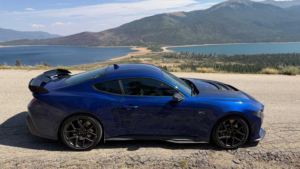
Although the Mustang GT and Mustang Dark Horse also use the Coyote V8, their road-going engines retain the familiar 5.0-liter displacement.
Ford Hypercar Draws on GT40 History
Ford’s preparations for its return to the 24 Hours of Le Mans are taking place near a location with a direct connection to the company’s racing history. Ford worked on the iconic Ford GT40 more than six decades ago just a few yards from where engineers are now developing the new Hypercar.
Once racing begins, however, Ford will face a strong group of competitors. Alongside its old rival Ferrari, the automaker will battle Aston Martin, BMW, McLaren and Toyota, while newcomer Genesis is also preparing to compete.
Chinese carmaker Chery also appears interested in competing in the 24 Hours of Le Mans.
Ford Continues Its Road to Le Mans
The dyno testing represents only one part of Ford’s development program. Ford Racing’s European testing will continue at several circuits, with engineers focusing on performance, reliability, hybrid system integration and aerodynamic validation.
The testing program will take place under conditions designed to closely replicate all the tracks used in the FIA World Endurance Championship.
Ford’s return to the Hypercar class in 2027 will come with a crowded competitive field and increasingly advanced technology. The company’s latest engine testing marks another step in the development of its new Le Mans challenger.