

The global auto industry is entering a period of major change as established manufacturers confront two very different challenges: rapidly shifting consumer preferences in China and uncertainty over the pace of the transition to electric vehicles in the United States.
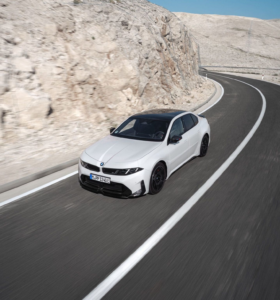
In China, German automakers Mercedes-Benz, BMW and Volkswagen are losing ground to increasingly sophisticated domestic competitors. At the same time, General Motors is preparing to retool its Lansing, Michigan, facilities for the next-generation Cadillac CT5, a move that will temporarily idle hundreds of workers but keep the combustion-powered sedan alive.
German Automakers Face a Deepening China Crisis
Mercedes-Benz, BMW and Volkswagen suffered another major setback in China during the second quarter. Their sales in the April-June period fell by roughly 30% or more compared with a year earlier, with Volkswagen recording one of the steepest declines.
The problem goes beyond weaker demand. German manufacturers are facing increasingly capable Chinese brands that can deliver advanced electric vehicles, connected technology and aggressive pricing at a much faster pace.
China’s automotive market has become particularly difficult for legacy brands. Domestic manufacturers are competing not only on price, but also on software, artificial intelligence, connectivity and rapid product development.
Mercedes-Benz has already seen its China sales fall sharply, while the company continues working to improve efficiency and defend its position in the premium segment.
Volkswagen faces an especially difficult situation. Its China sales fell significantly during the first half of 2026, contributing to broader pressure on profits and prompting the company to accelerate restructuring efforts.
China’s “Speed” Is Changing the Automotive Industry
The biggest advantage for many Chinese automakers is no longer simply lower production costs. It is the speed at which they can develop and update vehicles.
Chinese consumers increasingly expect their cars to behave like connected electronic devices, with advanced infotainment, smartphone integration, over-the-air updates and artificial-intelligence features.
That has created a widening gap between traditional automakers operating on lengthy development cycles and Chinese companies capable of introducing major technology updates far more quickly.
The pressure is now spreading beyond China. Chinese automakers are expanding aggressively into international markets, while European manufacturers face increasing competition from brands such as BYD and other rapidly growing Chinese EV makers. Reuters reported that Chinese vehicle exports surged in July even as domestic sales declined, increasing the incentive for Chinese manufacturers to expand overseas.
GM Keeps the Cadillac CT5 Alive
While some automakers are scaling back their EV ambitions or restructuring their operations, General Motors is taking a different approach with Cadillac.
The company plans to invest $1.25 billion in retooling its Lansing Grand River facilities to prepare for future vehicle production, including the next-generation Cadillac CT5. The investment comes after GM previously prepared the facility for a potential shift toward electric-vehicle production.
The future CT5 is significant because Cadillac’s current CT5-V Blackwing remains one of the few modern performance sedans combining a V8 engine with a manual transmission.
However, preparing the Lansing facility for the next generation will temporarily affect the workforce.
350 GM Workers Face Temporary Layoffs
GM plans to temporarily lay off approximately 350 workers at its Lansing-area facilities beginning January 14, 2027, according to a WARN notice filed with Michigan authorities. The affected locations include the Lansing Grand River Assembly/Stamping facility and Lansing Regional Stamping.
The layoffs are connected to the plant’s retooling program rather than a permanent cancellation of the CT5. GM has indicated that some workers could eventually be recalled after the transition is completed.
Under GM’s agreement with the United Auto Workers, eligible employees may also have access to supplemental unemployment benefits while temporarily laid off.
The EV Transition Has Become Less Predictable
GM’s Lansing investment illustrates how quickly the industry’s expectations have changed.
The automaker committed $1.25 billion in 2023 to prepare the facility for future EV production. The U.S. Department of Energy later awarded GM a separate $500 million grant connected to the electrification of Lansing Grand River.
But EV demand and government policy have changed considerably since those decisions were made. Automakers are now reassessing the pace of electrification and continuing to invest in combustion-powered vehicles alongside electric models.
The CT5’s survival reflects that shift. Rather than abandoning the sedan as the industry moves toward EVs, GM is preparing another generation with an internal-combustion powertrain.
A Wider Industry Reset
The contrast between Germany’s struggle in China and GM’s decision to keep the CT5 alive highlights a broader transformation underway across the auto industry.
German automakers are being forced to rethink how quickly they develop vehicles and how much customers are willing to pay for established brand names when newer competitors offer advanced technology at lower prices.
Meanwhile, U.S. automakers are reassessing how quickly they should move away from gasoline-powered vehicles as consumer demand, government policy and market conditions evolve.
For Mercedes-Benz, BMW and Volkswagen, the immediate challenge is catching up with China’s technology and development speed. For GM, the challenge is finding the right balance between electrification and continued demand for traditional performance cars.
The result could be an automotive industry that looks very different by the end of the decade, with legacy manufacturers simultaneously racing toward the electric future while keeping profitable combustion-powered products alive.