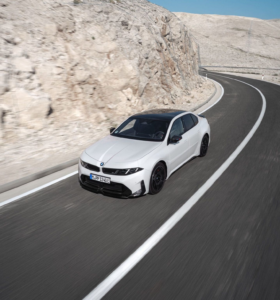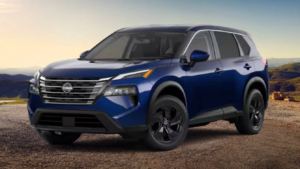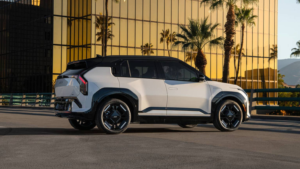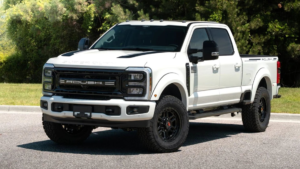


The Best Electric SUVs 2026 market is no longer limited to expensive luxury vehicles or early-adopter compromises. American buyers now have a wide range of electric SUVs that can handle school runs, daily commutes, family road trips and weekend errands while offering hundreds of miles of driving range and increasingly fast charging.
But choosing the right electric SUV is more complicated than simply picking the model with the longest EPA range. Price, charging speed, passenger space, cargo capacity, software, access to fast-charging networks and the availability of incentives can dramatically change which vehicle makes the most sense for a particular household.
For 2026, several models stand out. The Tesla Model Y remains a compelling mainstream choice, the Hyundai Ioniq 5 delivers an unusually strong combination of value and fast charging, and the Chevrolet Equinox EV makes a strong case for buyers looking for more than 300 miles of range without moving into luxury-SUV pricing.
For larger families, the Hyundai Ioniq 9 and Kia EV9 are among the most convincing three-row electric SUVs available, while the Rivian R1S and Lucid Gravity provide more premium alternatives.
Best Electric SUVs 2026 at a Glance
There is no single electric SUV that is perfect for every buyer. The best choice depends heavily on family size, budget, driving habits and charging access.
| Category | Top Pick | Approx. Starting Price | EPA Range | Why It Stands Out |
|---|---|---|---|---|
| Best Overall | Tesla Model Y | About $39,990 | Up to 321 miles | Strong balance of range, charging access, technology and practicality |
| Best Value | Hyundai Ioniq 5 | About $35,000 | Up to about 318 miles | Excellent charging performance and spacious interior |
| Best Budget 300-Mile SUV | Chevrolet Equinox EV | About $34,995 | Up to 319 miles | Exceptional range for the money |
| Best Three-Row Value | Kia EV9 | About $54,900–$56,395 | Up to about 305 miles | Family-friendly three-row layout and fast charging |
| Best Three-Row Overall | Hyundai Ioniq 9 | About $58,955–$60,555 | Up to 335 miles | Long range, rapid charging and genuine three-row practicality |
| Best Luxury Three-Row | Rivian R1S / Lucid Gravity | Luxury pricing | Varies by configuration | Premium interiors, performance and three-row capability |
What Makes the Best Electric SUVs 2026?
Buying an electric SUV requires a slightly different checklist than buying a gasoline-powered vehicle. EPA range is important, but it is only one part of the equation.
Range
For most American households, an electric SUV with 250 to 300 miles of EPA-rated range can cover everyday driving comfortably when home charging is available. Drivers who routinely travel long distances should look for more range, but also pay close attention to charging speed.
A vehicle capable of adding hundreds of miles of range during a short charging stop can be more useful on a road trip than an SUV with a slightly larger battery but slower charging performance.
Charging Speed
Fast charging has become one of the biggest differentiators among modern EVs. Hyundai and Kia models based on 800-volt architectures can achieve exceptionally short charging times when connected to sufficiently powerful DC fast chargers.
The Hyundai Ioniq 5, Hyundai Ioniq 9 and Kia EV9 can reach roughly 10% to 80% charge in around 18 to 24 minutes under suitable conditions. Actual charging times depend on battery temperature, charger output, battery state of charge and other factors.
Interior Space
Families should look beyond seating capacity. A useful electric SUV needs enough second-row legroom, cargo space and storage for the way a family actually travels.
A compact five-seat SUV may be ideal for a couple with children, while larger families may benefit significantly from a genuine three-row model such as the Kia EV9 or Hyundai Ioniq 9.
Total Ownership Cost
The sticker price is only part of the cost of owning an EV. Buyers should consider electricity rates, insurance, charging equipment, maintenance, financing and potential state or utility incentives.
The federal $7,500 new-EV tax credit that many buyers previously relied on is no longer available for vehicles purchased after September 30, 2025. That makes the purchase price and regional incentives even more important in 2026.
1. Tesla Model Y: Best Overall Electric SUV for 2026
The Tesla Model Y remains one of the strongest all-around choices in the 2026 electric SUV market. Its appeal comes from the combination of practical size, competitive range, mature software and access to Tesla’s extensive Supercharger ecosystem.
The refreshed 2026 Model Y, commonly associated with the “Juniper” update, brings improvements to comfort, efficiency and the cabin while retaining the basic formula that made the Model Y one of America’s most popular EVs.
Depending on configuration, the Model Y can deliver roughly 321 miles of EPA range. Its approximately $39,990 starting price also places it within reach of buyers who want a mainstream electric SUV rather than a luxury vehicle.
Why the Model Y Wins
- Up to about 321 miles of EPA range.
- Extensive Tesla Supercharger access.
- Strong software and navigation integration.
- Practical size for small families.
- Competitive efficiency.
- Strong resale and established EV ecosystem.
The biggest drawback is that its minimalist interior will not appeal to everyone. Some buyers may also prefer the more conventional controls and cabin design found in Hyundai, Kia or Chevrolet products.
Best for: Families and commuters who want one of the most balanced electric SUVs for everyday use and road trips.
2. Hyundai Ioniq 5: Best Value Electric SUV
The Hyundai Ioniq 5 continues to be one of the most impressive value propositions among electric SUVs. It combines distinctive styling with a spacious cabin, strong efficiency and an 800-volt charging system.
Depending on trim and configuration, EPA range can reach roughly 318 miles, while the entry price is around $35,000 based on the supplied 2026 research.
The Ioniq 5’s biggest advantage becomes especially obvious during road trips. Under favorable conditions, its fast-charging system can replenish the battery from approximately 10% to 80% in around 18 to 20 minutes.
Why Choose the Ioniq 5?
- Excellent value for a family-oriented EV.
- 800V fast-charging architecture.
- Spacious rear seating for its class.
- Distinctive exterior design.
- Competitive maximum range.
- Strong technology and safety equipment.
Its main limitation is that range varies substantially between configurations. Buyers should check the EPA rating for the exact trim they are considering rather than assuming every Ioniq 5 delivers the maximum figure.
Best for: Families and commuters who want excellent charging performance without paying luxury-SUV prices.
3. Chevrolet Equinox EV: Best Budget Electric SUV With 300+ Miles of Range
The Chevrolet Equinox EV is arguably one of the most important affordability stories in the 2026 electric SUV market. With a starting price around $34,995 and an EPA range of approximately 319 miles, it addresses one of the biggest concerns among EV shoppers: how much range can you get for your money?
For a buyer who mainly commutes, handles errands and occasionally takes longer trips, the Equinox EV can provide an attractive alternative to more expensive electric SUVs.
Why the Equinox EV Stands Out
- Approximately 319 miles of EPA range.
- Starting price around $35,000.
- Practical compact-SUV dimensions.
- Strong range-per-dollar proposition.
- Familiar Chevrolet dealer network.
The Equinox EV does not necessarily offer the premium experience of a Rivian or Lucid, nor does it have the same charging performance as Hyundai’s 800V models. But that misses the point. Its strength is delivering practical range at a relatively accessible price.
Best for: Budget-conscious buyers who want a practical electric SUV with more than 300 miles of EPA-rated range.
4. Kia EV9: Best Three-Row Electric SUV for Value
For families that genuinely need three rows, the Kia EV9 is one of the easiest electric SUVs to recommend. Its boxier proportions create useful passenger space, while its 800V architecture gives it a major advantage during longer trips.
The EV9 can provide roughly 230 to 305 miles of range depending on configuration. Pricing starts in the mid-$50,000 range in the supplied 2026 research.
The EV9 has also received recognition for its value among three-row electric SUVs, making it particularly attractive to families who need more space but do not want to jump immediately into a high-end luxury EV.
EV9 Strengths
- Genuine three-row seating.
- Six- or seven-passenger configurations depending on setup.
- 800V fast charging.
- Family-friendly cabin layout.
- Competitive range in higher-range configurations.
- Strong value compared with some luxury three-row EVs.
The trade-off is size. A three-row SUV takes up considerably more space in a garage or parking lot than a Model Y or Ioniq 5, and lower-range configurations may not be ideal for frequent road trips.
Best for: Families who need three rows and want a balance between price, space and charging performance.
5. Hyundai Ioniq 9: Best Overall Three-Row Electric SUV
The Hyundai Ioniq 9 is one of the most significant additions to the 2026 electric SUV landscape. Designed from the beginning as a large family EV, it combines three-row seating with long range, fast charging and a more premium cabin experience.
Its biggest headline number is an EPA range of up to approximately 335 miles, making it one of the longest-range three-row electric SUVs available.
The Ioniq 9 also uses an 800V charging architecture, allowing a roughly 10% to 80% charging session in around 18 minutes when connected to an appropriately powerful charger.
Why the Ioniq 9 Is a Standout
- Up to 335 miles of EPA range.
- True three-row family practicality.
- Rapid 800V charging.
- Premium-feeling interior.
- Strong passenger and cargo space.
- Excellent combination of efficiency and size.
The starting price is higher than the Equinox EV, Ioniq 5 and Model Y, with the supplied research placing it around $58,955 to $60,555 depending on configuration.
For a large family, however, the additional cost can be justified by the combination of usable third-row space, long-distance capability and fast charging.
Best for: Larger families looking for the strongest overall combination of range, space and charging performance.
6. Rivian R1S and Lucid Gravity: Best Luxury Three-Row Electric SUVs
Buyers with a larger budget have two particularly interesting alternatives: the Rivian R1S and Lucid Gravity.
The Rivian R1S is particularly attractive to drivers who want an electric SUV that can venture beyond paved roads. Its rugged character, performance and three-row practicality separate it from more conventional family EVs.
The Lucid Gravity takes a different approach. It emphasizes on-road comfort, premium materials, interior space and long-distance capability.
Rivian R1S vs. Lucid Gravity
- Choose the R1S if off-road capability and adventure-oriented design are priorities.
- Choose the Gravity if luxury, road-trip comfort and interior space are more important.
- Choose the Ioniq 9 if you want three-row practicality at a more mainstream premium price.
- Choose the EV9 if value is more important than luxury positioning.
Best Electric SUVs 2026 by Use Case
The easiest way to choose among the Best Electric SUVs 2026 is to start with how you actually use your vehicle.
Best Electric SUV for a Small Family
The Tesla Model Y is a strong default choice for families of four or five. It offers enough range for most daily driving, a large charging ecosystem and a relatively manageable footprint.
Best Electric SUV for a Large Family
The Hyundai Ioniq 9 is the strongest overall choice when three rows are required and long-distance capability matters. The Kia EV9 is an excellent alternative, particularly for buyers focused on value.
Best Affordable Electric SUV
The Chevrolet Equinox EV is difficult to ignore because of its combination of approximately $35,000 starting pricing and 319-mile maximum EPA range.
Best Electric SUV for Road Trips
Fast charging matters enormously on road trips. Hyundai’s Ioniq 5 and Ioniq 9, along with the Kia EV9, benefit from 800V charging architectures capable of very fast DC charging under the right conditions.
Best Electric SUV for Daily Commuting
For daily driving, range anxiety is often less important than buyers expect. Someone who drives 50 to 80 miles per day and charges at home may rarely need a public fast charger. In that situation, price, comfort, efficiency and home-charging convenience should receive more attention.
How Much Range Do You Really Need?
One of the most common mistakes EV shoppers make is assuming that more range is always better.
If your daily driving consists of commuting, school drop-offs, shopping and errands totaling less than 100 miles, a 250- to 300-mile EV may already provide a substantial buffer.
Consider a driver who travels 70 miles per day. With home charging, the vehicle can be replenished overnight rather than waiting at a public charger. That means the owner may only need DC fast charging during occasional longer trips.
On the other hand, a family that regularly travels hundreds of miles between cities should prioritize both range and charging speed. In that case, an 800V SUV can provide a meaningful advantage.
800V vs. Tesla Charging: Which Matters More?
Charging performance is increasingly important when comparing the Best Electric SUVs 2026.
Hyundai and Kia’s 800V systems can deliver exceptionally fast charging at compatible DC stations. Under ideal conditions, models such as the Ioniq 5, Ioniq 9 and EV9 can move from about 10% to 80% charge in roughly 18 to 24 minutes.
Tesla takes a different approach. The Model Y benefits from access to the company’s mature Supercharger network, which can be a major advantage for road-trip planning.
In practical terms, the best charging system is the one that is easiest for you to use. A theoretically faster vehicle is less useful if compatible high-power chargers are inconveniently located along your regular routes.
What Happened to the Federal EV Tax Credit in 2026?
Federal incentives are an important part of the 2026 EV-buying equation.
The federal $7,500 new-EV tax credit and $4,000 used-EV credit ended for vehicles purchased after September 30, 2025. Consequently, buyers in 2026 should not automatically subtract $7,500 from an EV’s advertised price.
Instead, shoppers should investigate state and utility programs, dealer incentives and other available benefits before calculating the real purchase cost.
The supplied research also identifies a federal home-charger credit and a new deduction related to interest on qualifying new-vehicle loans. Eligibility, limits and timing can vary, so buyers should verify the current rules before making a purchase decision.
Are Electric SUVs Practical for Families in 2026?
For many families, the answer is yes.
Modern electric SUVs have addressed several of the weaknesses that once made EVs difficult to recommend as family vehicles. Range has increased, charging has become substantially faster, and three-row options are now available.
Home charging is still the biggest convenience advantage. A family that can plug in overnight can effectively start most mornings with a full or nearly full battery without making a separate trip to a gas station.
The biggest remaining consideration is long-distance travel. Families should examine the availability of reliable DC fast chargers along the routes they actually drive rather than relying solely on the vehicle’s maximum range figure.
How We Would Choose Among the Best Electric SUVs 2026
- Determine your daily mileage. You may need less range than you think.
- Check whether home charging is possible. This can dramatically improve the EV ownership experience.
- Decide whether three rows are genuinely necessary. Do not pay for a large SUV if a five-seat model meets your needs.
- Compare the exact trims. Range, equipment and charging capability can vary between versions.
- Map your regular road trips. Look at real charger availability rather than just advertised charging speed.
- Calculate the total cost. Include insurance, financing, charging equipment and electricity.
- Check local incentives. State and utility programs may significantly change the final cost.
Final Verdict: Which Electric SUV Should You Buy?
The Best Electric SUVs 2026 are no longer defined by a single specification. The strongest models succeed because they solve different problems for different buyers.
The Tesla Model Y is the best all-around mainstream choice for many families because it combines practical dimensions, competitive range and access to a mature charging network.
The Hyundai Ioniq 5 is one of the best values for buyers who prioritize fast charging and a spacious, distinctive cabin, while the Chevrolet Equinox EV is particularly compelling for shoppers who want more than 300 miles of range without spending $50,000 or more.
For larger households, the Kia EV9 remains a strong three-row value, while the Hyundai Ioniq 9 is arguably the most complete family-focused electric SUV in the group thanks to its 335-mile range, three-row layout and rapid 800V charging.
Ultimately, the right electric SUV is the one that fits your budget, family and charging routine. For a buyer who can charge at home, drives mostly around town and takes only occasional road trips, almost any of these vehicles can provide an excellent daily-driving experience. For frequent road trippers, charging speed and charger availability should move much higher on the priority list.
FAQ: Best Electric SUVs 2026
What is the best electric SUV in 2026?
The Tesla Model Y is a strong overall choice for mainstream buyers, while the Hyundai Ioniq 9 is the standout option for families that need three rows. The Hyundai Ioniq 5 is another excellent choice for buyers prioritizing value and fast charging.
What is the best electric SUV for a family in 2026?
For a typical family of four or five, the Tesla Model Y is a strong choice. Families that need three rows should consider the Hyundai Ioniq 9 or Kia EV9, with the Ioniq 9 offering particularly strong range and charging performance.
What is the cheapest electric SUV with more than 300 miles of range?
The Chevrolet Equinox EV stands out in the supplied 2026 research, with a starting price around $34,995 and up to approximately 319 miles of EPA range.
Which electric SUV has the longest range in 2026?
Among the family-focused models covered here, the Hyundai Ioniq 9 offers up to approximately 335 miles of EPA-rated range, making it one of the strongest long-range three-row electric SUVs.
Which electric SUV charges the fastest?
The Hyundai Ioniq 5, Hyundai Ioniq 9 and Kia EV9 are among the fastest-charging mainstream electric SUVs because of their 800V architectures. Under compatible conditions, charging from approximately 10% to 80% can take around 18 to 24 minutes.
Is the Tesla Model Y still worth buying in 2026?
Yes. The refreshed 2026 Model Y remains compelling because of its range, practical size, software ecosystem and access to Tesla’s Supercharger network. However, shoppers who prioritize interior design or ultra-fast charging may prefer alternatives such as the Ioniq 5.
Do electric SUVs still qualify for the $7,500 federal tax credit in 2026?
No. The federal $7,500 new-EV tax credit ended for vehicles purchased after September 30, 2025. Buyers in 2026 should instead investigate state, utility and other applicable incentives.
How much range does an electric SUV need for daily driving?
For many households, 250 to 300 miles of EPA range is more than sufficient for daily use, particularly when home charging is available. Drivers who frequently travel long distances should consider both range and fast-charging capability.
What electric SUVs have three rows in 2026?
The Hyundai Ioniq 9, Kia EV9 and Rivian R1S are among the key three-row electric SUVs for 2026. The Lucid Gravity also provides a premium three-row alternative.
Are electric SUVs good for road trips?
Yes, but the quality of the road-trip experience depends on the vehicle’s charging speed and the availability of reliable fast chargers along the route. Models with 800V charging can significantly reduce charging-stop times.
Should I buy an electric SUV in 2026?
An EV SUV can make sense in 2026 if you have convenient charging, your driving pattern fits the vehicle’s range and the overall purchase cost works for your budget. Buyers should also compare available state and utility incentives and consider the cost of installing home charging equipment.