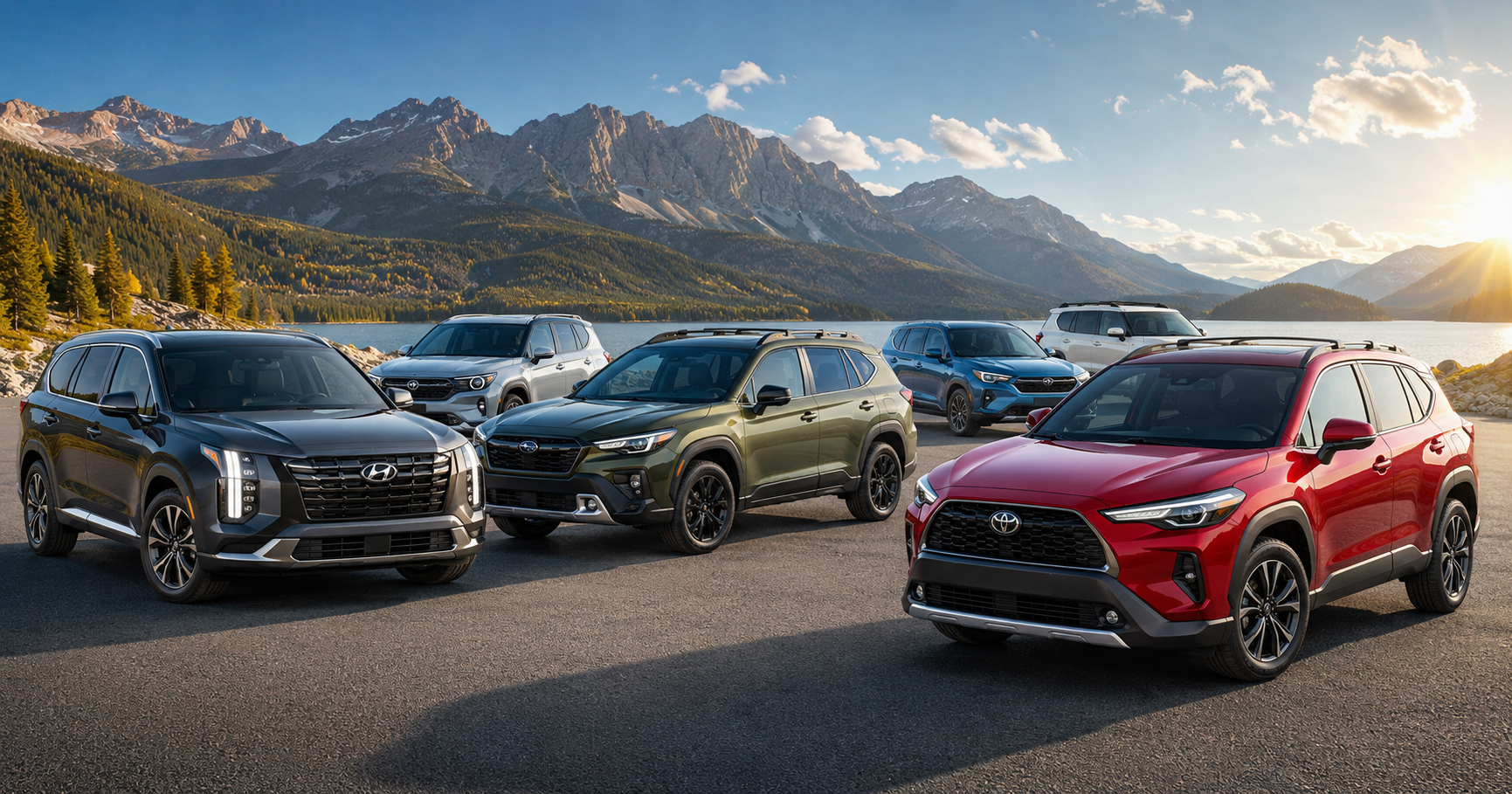
The 2026 SUV market is changing faster than many buyers may realize. Automakers are moving beyond simple styling refreshes and adding hybrid powertrains, plug-in technology, electric drivetrains, larger digital displays, more sophisticated driver-assistance systems and increasingly capable adventure trims.
Among the most important 2026 SUV Model Updates are Toyota’s decision to make the RAV4 hybrid-only in the U.S., the complete redesign of the Hyundai Palisade, the transformation of the Subaru Outback into a more traditional SUV and the continued expansion of electric SUVs. The result is a market with more choices—but also more decisions for shoppers to make.
For buyers shopping in the United States, the biggest question is no longer simply which SUV has the best-looking exterior. It is which combination of powertrain, technology, safety, space, price and long-term practicality makes the most sense.
1. The Biggest 2026 SUV Model Updates at a Glance
The 2026 model year brings several different types of SUV changes. Some vehicles are completely redesigned, others receive major powertrain upgrades, and several existing models gain new technology or electrified versions.
- Hybridization: More SUVs are adopting hybrid power, while the RAV4 has moved to a hybrid-only U.S. lineup.
- Major redesigns: The Hyundai Palisade and Subaru Outback receive substantial changes to styling, packaging and technology.
- Electric expansion: More EV SUVs are arriving across compact, luxury and three-row categories.
- PHEV growth: Plug-in hybrid SUVs are offering more meaningful electric-only driving ranges.
- Safety technology: Advanced driver-assistance features are becoming increasingly important across the market.
- Digital interiors: Larger displays, digital clusters, wireless smartphone integration and connected services are becoming increasingly common.
2. Redesigned 2026 SUVs That Change the Formula
One of the clearest themes of the 2026 SUV market is that automakers are using redesigns to change how their vehicles compete rather than simply giving them new headlights and bumpers.
The redesigned Hyundai Palisade, for example, adds a new turbocharged hybrid powertrain, larger proportions, a more premium cabin and an XRT PRO variant designed for buyers who want additional off-road capability.
The Subaru Outback takes an equally significant approach. Its new generation adopts a boxier, more SUV-like shape while adding a 12.1-inch touchscreen, a 12.3-inch digital instrument cluster and increased cargo capacity.
These changes demonstrate what a major redesign can accomplish: more practical packaging, more technology and a stronger response to changing buyer expectations.
3. 2026 Toyota RAV4: Why Going Hybrid-Only Matters
The 2026 Toyota RAV4 represents one of the most consequential changes in the compact SUV segment. Toyota has eliminated the conventional gas-only RAV4 from its U.S. lineup, leaving hybrid and plug-in hybrid models.
The conventional hybrid produces 226 horsepower with front-wheel drive and 236 horsepower with all-wheel drive, while the plug-in hybrid version reaches 320 horsepower. Some PHEV configurations are rated as high as 107 mpg-e.
The shift is significant because the RAV4 is one of the most important vehicles in the compact SUV market. Rather than treating hybrid technology as an optional upgrade, Toyota is effectively making electrification part of the model’s identity.
What the RAV4 Change Means for Shoppers
Buyers who previously wanted a conventional gasoline RAV4 now have to consider a hybrid or plug-in hybrid. That could increase the initial purchase price in some configurations, but the trade-off is greater efficiency and, in the case of the PHEV, meaningful electric driving capability.
For shoppers who prioritize fuel economy without committing to a fully electric vehicle, the RAV4’s new strategy makes the compact SUV particularly relevant.
4. 2026 Hyundai Palisade: A Bigger and More Advanced Three-Row SUV
The redesigned 2026 Hyundai Palisade is another major story. Hyundai has introduced a new turbocharged hybrid powertrain, expanded the vehicle’s technology and added an XRT PRO trim aimed at more adventurous buyers.
The new Palisade illustrates the direction of the modern three-row SUV: family practicality is still essential, but buyers increasingly expect premium interiors, advanced connectivity, improved efficiency and genuine capability.
The XRT PRO is particularly notable because it adds equipment such as increased ground clearance, all-terrain tires, terrain modes, enhanced camera systems and an electronic rear limited-slip differential.
That combination makes the Palisade more than a conventional family hauler. It gives shoppers an option aimed at buyers who want three rows without giving up outdoor capability.
5. 2026 Subaru Outback: More SUV Than Ever
The 2026 Subaru Outback undergoes one of the more visually important transformations of the year. Subaru has moved away from the previous wagon-like profile toward a boxier SUV shape.
The redesigned Outback also benefits from a larger digital environment. A standard 12.1-inch touchscreen and 12.3-inch digital cluster bring it closer to the technology expectations established by newer competitors.
Cargo capacity rises to 34.6 cubic feet behind the rear seats and 80.5 cubic feet with the seats folded. Reviews of the redesigned model have also highlighted improvements in rear headroom and overall interior practicality.
For shoppers who want the practicality associated with a traditional SUV but still value the Outback’s adventure-oriented identity, the 2026 redesign is an important development.
6. New 2026 Electric SUVs Expand the EV Market
Electric SUVs continue to spread across the market in 2026. Buyers can now find EVs in compact, luxury and three-row categories rather than being limited to a small selection of early-generation electric crossovers.
The expanding market includes vehicles such as the Cadillac Vistiq, Kia EV9 and Rivian R1S in the three-row category, along with luxury and compact entries such as the Audi Q6 e-tron.
Mercedes-Benz is also expanding its electric SUV portfolio. Its GLA EV has been reported with a range of up to 408 miles, demonstrating how electric SUVs are increasingly being designed for buyers who place a high priority on long-distance usability.
7. 2026 SUV Hybrid Updates Are the Biggest Industry Trend
Hybridization is arguably the defining powertrain trend of the 2026 SUV market.
Automakers are using hybrids to bridge the gap between gasoline vehicles and full EVs. A conventional hybrid can deliver improved fuel economy without requiring the owner to plug in, while a PHEV offers the ability to drive on electric power for shorter trips and use gasoline for longer journeys.
The RAV4 is now hybrid-only, the Palisade adds a new hybrid powertrain and the broader market is seeing more hybrid choices in both compact and larger SUVs.
For many American drivers, that middle ground is attractive. A hybrid can preserve familiar refueling habits while reducing gasoline consumption, making it especially appealing to buyers who are not ready to move to a battery-electric vehicle.
8. Plug-In Hybrid SUVs Give Buyers Another Option
Plug-in hybrid SUVs are also becoming more capable. The 2026 Mitsubishi Outlander PHEV, for example, is reported with approximately 45 miles of electric range from a 22.7-kWh battery. August coverage listed trim pricing from $44,990 to $55,440.
A PHEV makes the most sense for buyers who can regularly charge at home or at work. Daily commuting may be completed primarily using electricity, while gasoline remains available for road trips.
However, buyers should compare the electric range, charging capability, purchase price and available incentives rather than assuming every PHEV delivers the same ownership experience.
9. 2026 SUV Interior Features Buyers Will Notice
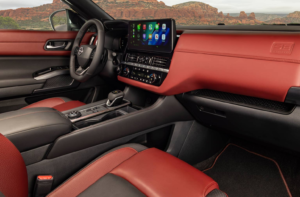
Modern SUV interiors are becoming increasingly digital. Larger infotainment displays and digital instrument clusters are no longer restricted to expensive luxury models.
The 2026 Outback is a good example, with its standard 12.1-inch center display and 12.3-inch digital cluster.
Other important interior trends include:
- Larger center touchscreens
- Digital driver displays
- Wireless smartphone integration
- More USB-C connectivity
- Connected vehicle services
- Over-the-air software updates
- Digital vehicle-key technology
- More flexible cargo and passenger configurations
These upgrades matter because drivers interact with their SUV’s technology every day. A vehicle with excellent mechanical capability can still feel outdated if its infotainment system is slow, confusing or poorly integrated with a smartphone.
10. Advanced Driver-Assistance Features Are Becoming Standard Expectations
Safety technology is another major component of the 2026 SUV changes. Automatic emergency braking, adaptive cruise control, lane-centering assistance, blind-spot monitoring, surround-view cameras and driver-monitoring systems are increasingly important differentiators.
Coverage of 2026 SUVs also highlights the importance of comprehensive ADAS packages in models such as the Subaru Forester, Mazda CX-5, Mazda CX-70 and Genesis GV80.
For shoppers, the key is to check whether desirable safety features are standard or restricted to higher trims. Two SUVs may advertise similar safety technology while offering very different equipment at their respective base prices.
11. Off-Road SUV Updates for 2026
Adventure-oriented SUVs continue to grow in popularity, and automakers are responding with more specialized trims.
The 2026 Palisade XRT PRO is one example. Its package includes increased ground clearance, all-terrain tires, terrain-management modes, an electronic rear limited-slip differential and enhanced camera technology.
Other adventure-focused SUVs include the Subaru Outback Wilderness, Ford Bronco Sport Badlands and Ford Explorer Tremor. Their equipment can include increased clearance, all-wheel or four-wheel drive, terrain modes and specialized tires.
However, buyers should distinguish between an SUV that looks rugged and one that has genuine hardware for off-road use. Ground clearance, tires, drivetrain configuration, suspension tuning and recovery equipment all matter.
12. Three-Row SUVs Are Becoming More Versatile
Family buyers remain a major force in the SUV market. The latest generation of three-row models is responding with more space, improved comfort, hybrid options and better technology.
The redesigned Palisade is a prominent example, while electric choices such as the Kia EV9, Cadillac Vistiq and Rivian R1S expand the three-row market into the EV category.
When evaluating a three-row SUV, shoppers should look beyond the number of seats. Third-row legroom, second-row access, cargo space behind the third row, child-seat compatibility and climate-control usability can make a major difference for families.
13. Why Compact SUVs Remain the Most Competitive Segment
Compact SUVs continue to occupy a sweet spot between affordability, efficiency and practicality. The 2026 market features significant competition from Toyota, Honda, Hyundai, Subaru, Nissan and other manufacturers.
The RAV4’s hybrid-only strategy is especially important because it raises the pressure on competitors to offer compelling electrified alternatives.
For compact-SUV shoppers, the most important comparisons are likely to be:
- Purchase price and available discounts
- Hybrid versus gasoline efficiency
- Interior and cargo space
- Standard safety equipment
- Infotainment and smartphone integration
- All-wheel-drive availability
- Warranty and long-term ownership costs
14. Luxury 2026 SUVs Push Technology Further
Luxury SUVs continue to serve as technology showcases. Electric models such as the Audi Q6 e-tron demonstrate how premium manufacturers are combining electrification with sophisticated cabin technology and high-end design.
Luxury buyers can also expect more advanced suspension systems, premium materials, larger displays, digital controls and driver-assistance technology.
The key consideration is whether these upgrades deliver meaningful improvements in comfort and usability or simply add complexity and cost.
15. 2026 SUV Design Trends: Boxier, Bolder and More Distinctive
Design is moving in two seemingly different directions. Traditional and adventure-focused SUVs are becoming boxier and more rugged, while electric SUVs increasingly use aerodynamic shapes to maximize range.
The Outback is a clear example of the first trend. Its redesigned body adopts a more conventional SUV silhouette, reinforcing its practical and adventurous positioning.
Meanwhile, electric SUVs have stronger incentives to reduce aerodynamic drag because efficiency directly affects driving range.
16. 2026 SUV Prices and Trim-Level Changes
Pricing varies significantly depending on SUV size and equipment. Typical 2026 compact SUVs are positioned around $30,000 to $38,000, midsize three-row models around $38,000 to $52,000, full-size SUVs around $55,000 to $75,000 and luxury SUVs from roughly $60,000 to more than $90,000.
Redesigns can increase prices because manufacturers often add technology, upgraded interiors and new powertrains at the same time.
That makes trim comparison particularly important. A lower-priced SUV can sometimes offer better value than a heavily optioned version of a more expensive model if the buyer does not need every available feature.
17. 2026 SUVs vs. 2025 Models: Is the Upgrade Worth It?
Not every buyer needs the newest model year.
A redesigned 2026 SUV can make sense when it delivers a major powertrain, safety, packaging or technology improvement. The RAV4’s transition to hybrid-only power and the Palisade’s redesign are examples of changes that materially alter the ownership proposition.
But buyers who find heavily discounted outgoing 2025 inventory may get more value by choosing the previous generation. This is especially relevant when the older vehicle already has the features, powertrain and safety equipment the buyer needs.
The smartest comparison is therefore not simply “new versus old.” It is the actual transaction price of each vehicle versus the value of its additional features.
18. Best 2026 SUVs for Different Buyers
Best for Families
Three-row SUVs such as the redesigned Palisade, along with EV options such as the Kia EV9 and Cadillac Vistiq, are strong choices for buyers prioritizing passenger space, comfort and technology.
Best for Fuel Economy
Hybrid compact SUVs and PHEVs are among the most compelling options for efficiency. The RAV4 Hybrid and Mitsubishi Outlander PHEV illustrate two different approaches to electrified SUV ownership.
Best for Technology
Look for SUVs with large standard screens, digital instrument clusters, wireless smartphone connectivity, over-the-air updates and digital-key capability. The 2026 Outback and redesigned Palisade are notable examples of this direction.
Best for Off-Road Driving
Adventure-oriented versions such as the Palisade XRT PRO, Outback Wilderness, Bronco Sport Badlands and Explorer Tremor deserve attention from buyers who regularly leave paved roads.
19. How to Choose the Right 2026 SUV
The best SUV is ultimately the one that matches the buyer’s actual driving requirements.
- Set your total budget. Include taxes, financing, insurance, fuel and maintenance—not just MSRP.
- Choose the right powertrain. Decide whether gasoline, hybrid, PHEV or EV makes the most sense.
- Select the appropriate size. A compact SUV may be ideal for commuting, while families may need three rows.
- Compare standard safety equipment. Do not assume every trim includes the same ADAS features.
- Consider your driving environment. Snow, towing, dirt roads and long highway trips can change the ideal choice.
- Check charging or fuel access. This is particularly important for PHEV and EV buyers.
- Compare ownership costs. Fuel economy, insurance, maintenance and depreciation can have a bigger impact than a small difference in MSRP.
20. 2026 SUV Buying Checklist
- MSRP and actual transaction price
- EPA fuel-economy ratings
- Insurance costs
- Warranty coverage
- Maintenance requirements
- Fuel or charging availability
- Standard versus optional equipment
- Cargo and passenger capacity
- Towing requirements
- Resale-value expectations
21. The Future of SUVs Beyond 2026
The changes arriving for 2026 suggest that SUV development is moving toward greater electrification, more software and increasingly sophisticated safety technology.
Hybrids are becoming mainstream rather than niche products. EVs are expanding into additional size and price categories. Driver-assistance systems are becoming more comprehensive, while software updates and connected services are becoming normal parts of vehicle ownership.
At the same time, demand for three-row family SUVs and rugged adventure models remains strong. That means the future SUV market is unlikely to follow one single formula. Instead, buyers will have an increasingly broad range of powertrains and configurations to choose from.
Frequently Asked Questions About 2026 SUV Model Updates and Features
What are the biggest 2026 SUV model updates?
The biggest changes include the hybrid-only Toyota RAV4, redesigned Hyundai Palisade, more SUV-like Subaru Outback, additional electric SUVs, expanded PHEV choices and broader adoption of advanced safety and connectivity technology.
Which 2026 SUVs are redesigned?
Major redesigned SUVs for 2026 include the Toyota RAV4, Hyundai Palisade, Subaru Outback and Hyundai Tucson.
Which 2026 SUVs are hybrid?
The 2026 RAV4 is hybrid-only in the U.S., while the redesigned Palisade adds a new hybrid powertrain. The Subaru Forester Hybrid is another example of an electrified SUV available for the model year.
Is the 2026 Toyota RAV4 hybrid-only?
Yes. Toyota eliminated the gas-only RAV4 from its U.S. lineup for 2026. Buyers can choose between hybrid and plug-in hybrid versions.
Does the 2026 Hyundai Palisade have a hybrid?
Yes. The redesigned Palisade introduces a turbocharged hybrid powertrain, expanding the model’s powertrain choices and improving its appeal to efficiency-focused family buyers.
Are there more electric SUVs for 2026?
Yes. The 2026 market includes more compact, luxury and three-row electric SUVs, giving buyers more choices than previous model years.
What is the best 2026 SUV for families?
There is no single best choice for every family, but three-row models such as the Palisade, Kia Telluride and Honda Pilot, along with electric options such as the Kia EV9 and Cadillac Vistiq, are strong candidates when space, safety and comfort are priorities.
What is the best 2026 SUV for fuel economy?
Hybrid compact SUVs and plug-in hybrids generally offer some of the strongest efficiency choices, while EVs can provide the lowest energy cost per mile when convenient charging is available.
Which 2026 SUVs have the best technology?
Look for models offering large standard displays, digital instrument clusters, wireless smartphone integration, over-the-air updates and connected services. The redesigned Outback and Palisade are notable examples.
Which 2026 SUVs are best for off-roading?
Adventure-focused SUVs such as the Palisade XRT PRO, Outback Wilderness, Ford Bronco Sport Badlands and Ford Explorer Tremor stand out for equipment designed for more demanding terrain.
Should I buy a 2026 SUV or wait for 2027?
For buyers who want the latest hybrid technology, redesigned interiors or new SUV features, 2026 offers compelling choices. However, shoppers focused primarily on value may find discounted outgoing models attractive, while flexible buyers can wait for 2027 updates.
Final Takeaway: The 2026 SUV Market Is More Diverse Than Ever
The biggest lesson from the 2026 SUV Model Updates is that the traditional gasoline SUV is no longer the only default choice. Hybrids are becoming central to mainstream lineups, PHEVs are gaining useful electric range, and EVs are spreading into more segments.
At the same time, redesigns such as the Palisade and Outback show that practicality and capability remain just as important as electrification. Buyers can choose family-focused three-row SUVs, compact hybrids, luxury EVs or rugged adventure trims depending on their needs.
For shoppers, the smartest approach is to look beyond the model-year label. Compare the powertrain, standard safety equipment, technology, interior space, ownership costs and real-world requirements before signing a deal. The best 2026 SUV is not necessarily the newest or most expensive one—it is the vehicle whose updates actually improve the way you drive.