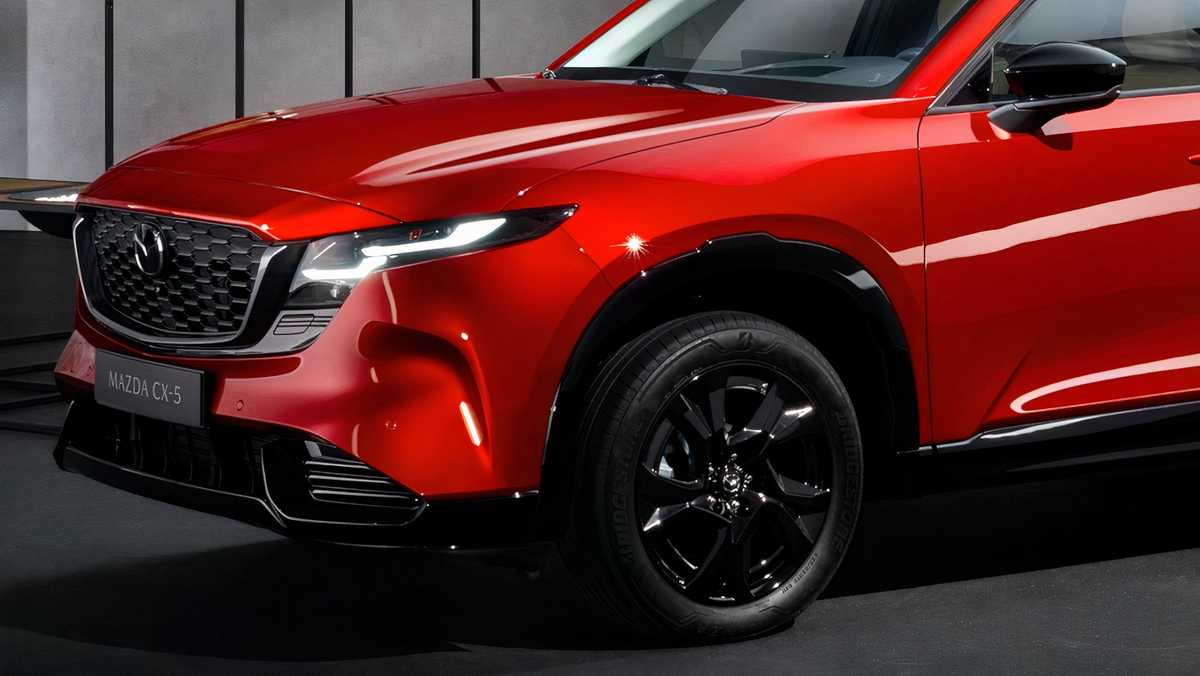
Mazda is expanding its focus on automotive safety with a new roadside alert system designed to warn approaching drivers when a Mazda vehicle is stopped on the side of the road. The automaker has partnered with AAA and HAAS Alert to help make roadside assistance safer for drivers and anyone working around a disabled vehicle.
Mazda Introduces a Virtual Emergency Light
In recent years, Mazda has emerged as a leader in automotive safety. Every Mazda model has received the Insurance Institute for Highway Safety’s (IIHS) highest safety award, the Top Safety Pick+, with the Miata as the only exception because IIHS has not tested it.
The new feature addresses a different safety concern: what happens after a driver has to leave the vehicle on the side of the road.
A flat tire, collision or another problem can force a driver to pull over on the highway to assess the situation or wait for assistance. Once someone is outside the vehicle, airbags and driver-assistance systems cannot provide the same protection they offer while the person is inside.
Mazda’s new partnership is intended to help alert other motorists that a vehicle and potentially roadside workers are nearby.
How Mazda’s Roadside Alert Works
When a driver contacts Mazda Roadside Assistance, the service does more than arrange help. It contacts AAA to dispatch an affiliated support person while also sending a notification through HAAS Alert identifying the Mazda’s location on the highway.
The HAAS Alert notification is then distributed to navigation systems and apps that partner with the company for road-hazard information. Those systems can alert approaching drivers that a vehicle is stopped on the roadside and tell them to leave space around the vehicle and anyone working on it.
HAAS Alert Coverage Has Limits
The system does not reach every driver because HAAS Alert notifications are available only through partner programs. Vehicles and apps that do not work with HAAS Alert will not display the warnings.
The number of automakers partnering with HAAS Alert is relatively small. In the U.S., the list includes every Stellantis brand except Fiat: Alfa Romeo, Chrysler, Dodge, Jeep and Ram. Skoda is also a partner, although the brand is irrelevant to the U.S. market.
One major advantage is HAAS Alert’s partnership with Waze. Because Waze can be downloaded onto any phone, roadside notifications involving Mazdas, Rams and other vehicles can reach a significantly larger audience.
The system is not perfect, but its integration with Waze gives it meaningful reach that could expand as more companies partner with HAAS Alert.
Why Mazda’s New Safety Feature Matters
The roadside alert system adds to Mazda’s broader emphasis on vehicle safety while the automaker also focuses on driving dynamics and a premium feel. That strategy could appeal to buyers who have previously considered Subaru and Volvo, two brands that have built reputations around safety and security.
The use of third-party technology could also provide a more practical path toward widespread vehicle-to-vehicle warnings. Earlier systems developed by individual companies operated on their own vehicle networks, meaning they could alert only other vehicles from the same brand.
That approach has obvious limitations because drivers share roads with vehicles from many different automakers. A more neutral third party could bring more automakers and navigation services into the same system, potentially making roadside and road-condition information more widely available.
For Mazda, the partnership with AAA and HAAS Alert adds another layer to its safety strategy by extending warnings beyond the vehicle itself and toward drivers approaching a roadside emergency.