Genesis may not have BMW’s scale or history, but Hyundai’s luxury brand is becoming a more serious competitor as it expands its lineup, dealer network and global ambitions. With new electric vehicles, a performance sub-brand and plans for broader international growth, Genesis is increasingly positioning itself as an alternative to Germany’s established luxury automakers.
Genesis Is Growing Quickly
BMW has plenty of reasons to watch China, where local automakers have become increasingly competitive, particularly in electric vehicles. Their rapid growth has contributed to declining sales for the German luxury brand, while some Chinese manufacturers are also expanding into markets beyond their home country.
But Genesis presents a different kind of challenge. Hyundai’s luxury brand does not have BMW’s volume, history or global footprint, but its relative youth allows it to move quickly while benefiting from Hyundai’s engineering and manufacturing resources.
Genesis was spun off from Hyundai in 2015 and has spent the past several years building an identity beyond being a luxury version of a Hyundai vehicle.
The brand says it is the fastest-growing luxury automaker to sell one million vehicles since its inception. Genesis reached that milestone in seven years and eight months, compared with about nine years for Toyota’s Lexus and around 14 years for Nissan’s Infiniti.
The gap in overall scale remains substantial. Genesis sold 221,482 vehicles in 2025, while BMW moved 2,169,739 units. Genesis, however, has only a handful of models.
Genesis Is Expanding Its Lineup
That lineup is beginning to grow, led by the GV90 flagship electric SUV, which was unveiled earlier this month as an iX7 rival.
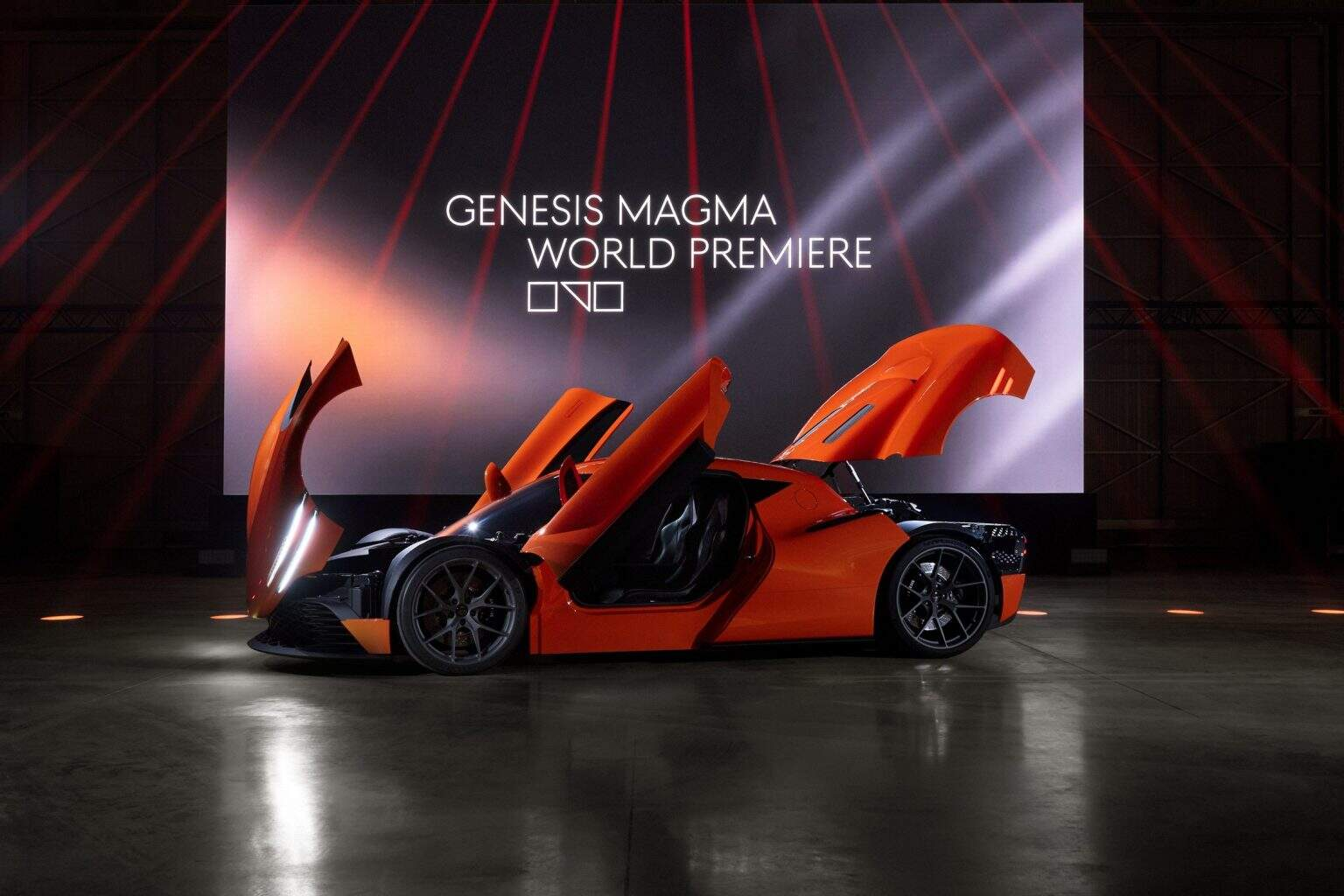
Genesis also has its own performance sub-brand, Magma, which is aimed at competing with BMW M. The GV60 Magma is targeting the upcoming electric BMW X3 M, while the Magma GT concept points toward a potential mid-engined V8 supercar that would have no direct answer from Munich.
The company is also planning a major expansion of its retail and international presence. Genesis aims to increase its dealer network by 50% over the next few years, reaching more than 270 retailers by 2030.
Hyundai’s latest strategy calls for Genesis to expand into more than 40 markets by the end of the decade, compared with fewer than 30 countries today. Annual sales are projected to exceed 350,000 units in just four years.
Genesis Wants to Be More Than a Hyundai Luxury Brand
Genesis remains far smaller than BMW, meaning its growth does not represent an immediate crisis for the German automaker. But luxury buyers do not necessarily focus on how many vehicles a brand sells. Product quality, experience, technology, design and value are among the factors that matter, and Genesis is increasingly competing in those areas.
The brand’s biggest challenge was never simply building capable vehicles. Hyundai has demonstrated for years that it can engineer strong products. The more difficult task was convincing buyers that a Hyundai-owned luxury brand belonged alongside BMW, Mercedes, Audi, Lexus and Porsche.
Genesis has made significant progress toward that goal.
BMW Still Holds Major Advantages
Genesis is not in a position to replicate BMW’s history. It cannot recreate decades of M cars, numerous racing victories or the emotional connection that many customers have with models such as the M3.
BMW also maintains a huge global footprint and customer base. Its Neue Klasse offensive provides a new technological foundation in hardware, software and styling, while BMW continues to produce vehicles that Genesis will have difficulty matching dynamically.
Still, the changing luxury market means BMW cannot simply dismiss a competitor because it currently sells far fewer vehicles. Tesla demonstrated that a newcomer can establish itself quickly, while Chinese automakers are now pursuing similar growth.
Genesis arguably has the strongest industrial backing among relatively young luxury brands. Unlike some Chinese newcomers, it also does not have to persuade customers that an entirely unknown company can build a vehicle, because Hyundai has already spent decades establishing that credibility.
Genesis Could Offer an Alternative to German Luxury
BMW does not necessarily need to lose customers to Genesis in large numbers for the Korean brand to become a meaningful competitor. Genesis only needs to persuade more luxury buyers that a premium experience does not require choosing a German brand.
Chinese automakers may be the more obvious challenge because of their rapid advances in EV technology and aggressive international expansion. Genesis, however, is pursuing a different path with substantial resources, a growing lineup and ambitions that extend well beyond being Hyundai’s luxury sibling.
The GV90 currently represents the brand’s most serious challenge to the established German luxury market, while the Magma supercar could push Genesis into a higher level of competition. A range-extending EV is also coming next year, when Genesis will launch its first hybrid.
For BMW and the broader German luxury establishment, the competitive offensive is only beginning.