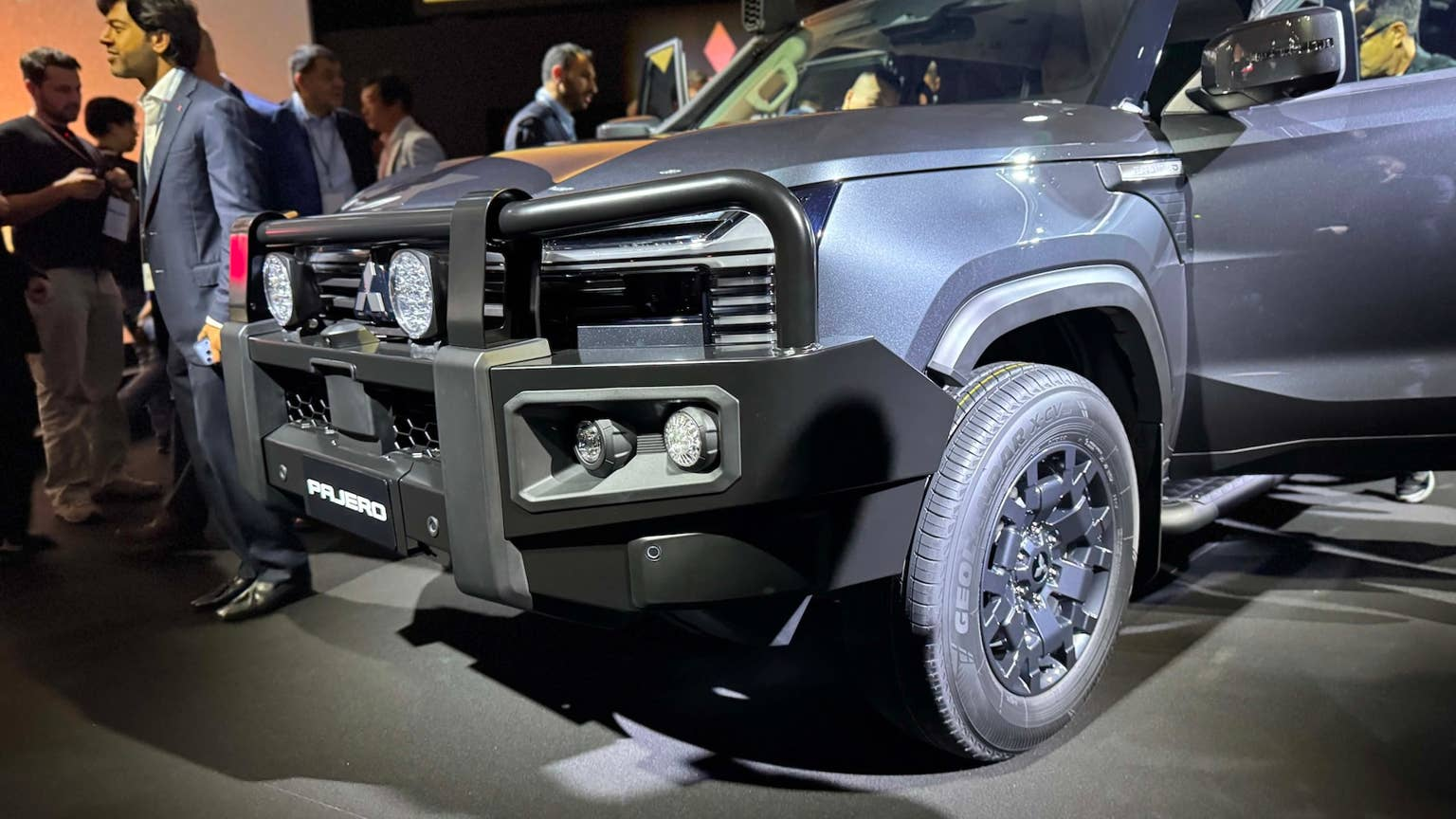
The Mitsubishi Pajero is back, ending years of teasers and speculation with the debut of its fifth generation. The flagship SUV combines body-on-frame construction, a turbo-diesel engine and extensive off-road hardware, while Mitsubishi also displayed a rally-ready concept highlighting the platform’s potential.
More Premium Than the Press Photos Suggest
In person, the new Pajero presents a more upscale appearance while retaining its rugged, go-anywhere character. Its upright hood, squared-off wheel arches and flat roof preserve familiar Pajero design cues, now with sharper and cleaner styling.
The SUV features slim T-shaped LED headlights and, depending on the trim, either horizontal grille slats or a honeycomb-style grille.
Color also changes the Pajero’s character. The Armor Metallic Copper launch paint gives the SUV a more upscale appearance while emphasizing its crisp lines and blacked-out roof. In darker gray, particularly with factory accessories installed, the vehicle takes on a more trail-focused look.
Mitsubishi displayed one Pajero fitted with heavy-duty bumpers, bull bars, LED lights, snorkels, roof racks, tow hooks and recovery equipment. The configuration gives it the appearance of a factory-built expedition vehicle designed for off-road use.
A Modern Cabin With Physical Off-Road Controls
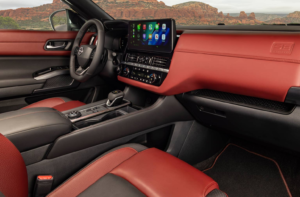
Inside, the dashboard is centered around twin 14.3-inch screens stretching across the cabin. Mitsubishi has retained physical climate controls, along with dedicated knobs and rugged-feeling switches rather than moving all functions into touchscreen menus.
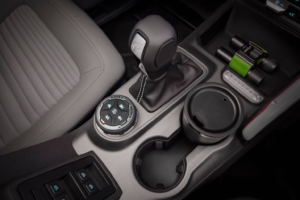
Soft-touch materials, contrast stitching inspired by Japanese Kimekomi and camel leather seats give the Pajero a more premium interior. The upright windshield provides strong visibility, while the center console places the Super Select 4WD-II controller and dedicated off-road switches within easy reach.
Sized to Challenge America’s Land Cruiser
The Pajero rides on a 113-inch wheelbase, slightly longer than the U.S.-spec Toyota Land Cruiser’s 112.2-inch wheelbase. Other measurements, however, show several differences between the two SUVs.
| Dimension | Mitsubishi Pajero / Montero | Toyota Land Cruiser (US-spec) |
|---|---|---|
| Length | 193.7 in | 193.9 in |
| Width | 75.8 in | 78.0 in |
| Height | 75.2 in | 75.8–76.2 in |
| Wheelbase | 113.0 in | 112.2 in |
| Ground clearance | 9.1 in | 8.7 in |
Despite its longer wheelbase, the Pajero is slightly shorter, more than two inches narrower and lower than the American Land Cruiser. Its overall footprint is therefore closer to Toyota’s U.S.-market SUV than the larger Land Cruiser 300 sold in Australia and the Middle East.
Turbo-Diesel Power and Seven Drive Modes
The new Mitsubishi Pajero comes with 9.1 inches of ground clearance, Super Select 4WD-II with low range, Active Yaw Control and seven drive modes: Mud, Sand, Snow, Gravel, Rock, Eco and Normal.
Power comes from Mitsubishi’s new 2.4-liter turbo-diesel four-cylinder engine, producing 201 hp and 354 lb-ft of torque. The engine is paired with a new eight-speed automatic transmission.
Is the Mitsubishi Pajero Coming to America?
Mitsubishi has not confirmed a U.S. launch, leaving the question of whether the Pajero will reach America unresolved. However, the Montero name is returning in traditional markets, U.S. dealers have already received a behind-closed-doors preview, and company executives have acknowledged significant interest in bringing a flagship SUV back to North America.
If the Pajero reaches the United States under the Montero name, the diesel engine may not be part of the package. A gasoline or hybrid powertrain is considered more likely for the American market, although Mitsubishi has not disclosed further details.
A U.S. launch would give Mitsubishi a body-on-frame flagship capable of competing with the Land Cruiser in size and purpose. Pricing remains another unanswered question, as the final positioning could determine how the revived Pajero competes in the segment.