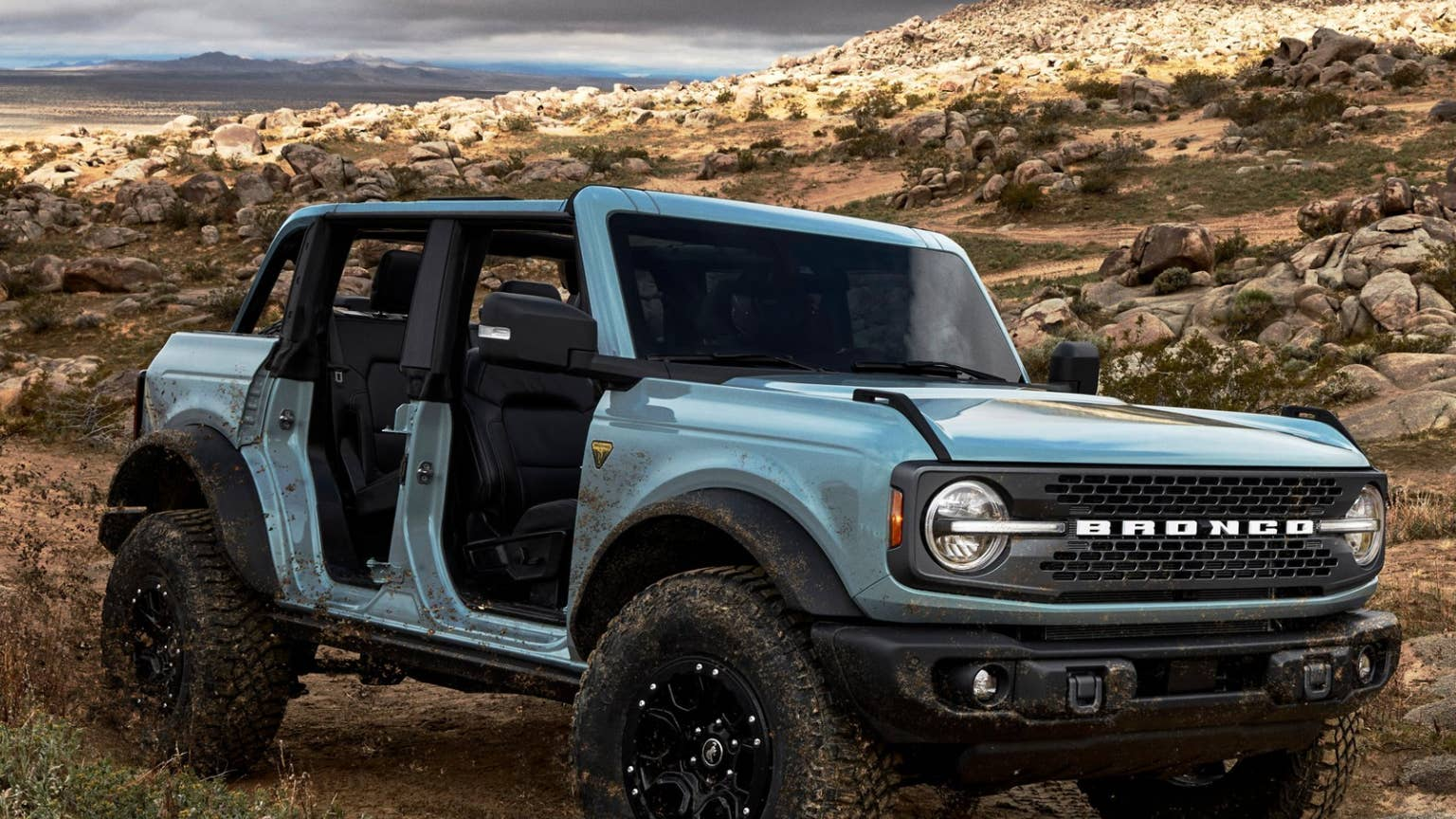
Ford has patented a system that could make removing the doors on the Bronco easier by eliminating the need to unplug electrical wiring. The proposed “Vehicle Door Assembly Power Transfer System” would use wireless power transfer or electrical contacts built into the door hinges.
Ford Wants to Simplify Door Removal
One of the Bronco’s signature features is its removable doors and roof, giving drivers an open-air off-road experience. But removing the doors currently requires owners to disconnect the electrical wiring first.
Ford’s newly published patent, identified as 20260257635, outlines a system designed to eliminate that extra step. Instead of relying on a conventional electrical connector, the removable door could receive power without a physical plug.
Wireless Power Could Keep Door Features Working
Ford’s first approach uses inductive power transfer, similar to the technology used by wireless smartphone chargers. A coil would be built into the vehicle, while another would be integrated into the door.
When the two coils are properly aligned, power could transfer across the gap. That would allow features including the windows, locks, mirrors and speakers to continue receiving power while the door is installed.
A Hinge-Based Alternative
Ford’s patent also describes another approach that would avoid wireless coils. This version uses a hinge with built-in circular electrical contacts.
As the door opens or closes, the contacts would remain connected, allowing power and potentially data to travel through the hinge without flexible wiring.
The proposed system would represent a change from the current setup, which requires an electrical connector to be unplugged before the door can be removed. Those connectors can collect dirt and wear over time while also adding another step to the door-removal process.
The Patent Appears Tailored to an Off-Road SUV
The patent illustrations depict a boxy off-road vehicle with removable doors, pointing toward the type of vehicle represented by the Bronco. One diagram also shows the outer portion of the door separating from the inner structure, allowing a transition between a conventional door setup and an open-air configuration.
If Ford implements the system, removing the doors could become quicker while reducing the number of exposed electrical connectors. That could be particularly useful for a vehicle designed for environments involving mud, sand, water and dust, while also reducing wear on the wiring.
Ford Has Not Confirmed Production
As with any automaker patent, filing the technology does not mean it will reach production. Ford files patents for a wide range of ideas, and many do not become production features.
For now, the patent shows that Ford is exploring wireless-powered removable doors, but it does not confirm that the technology will appear on the next Bronco or any other Ford vehicle.