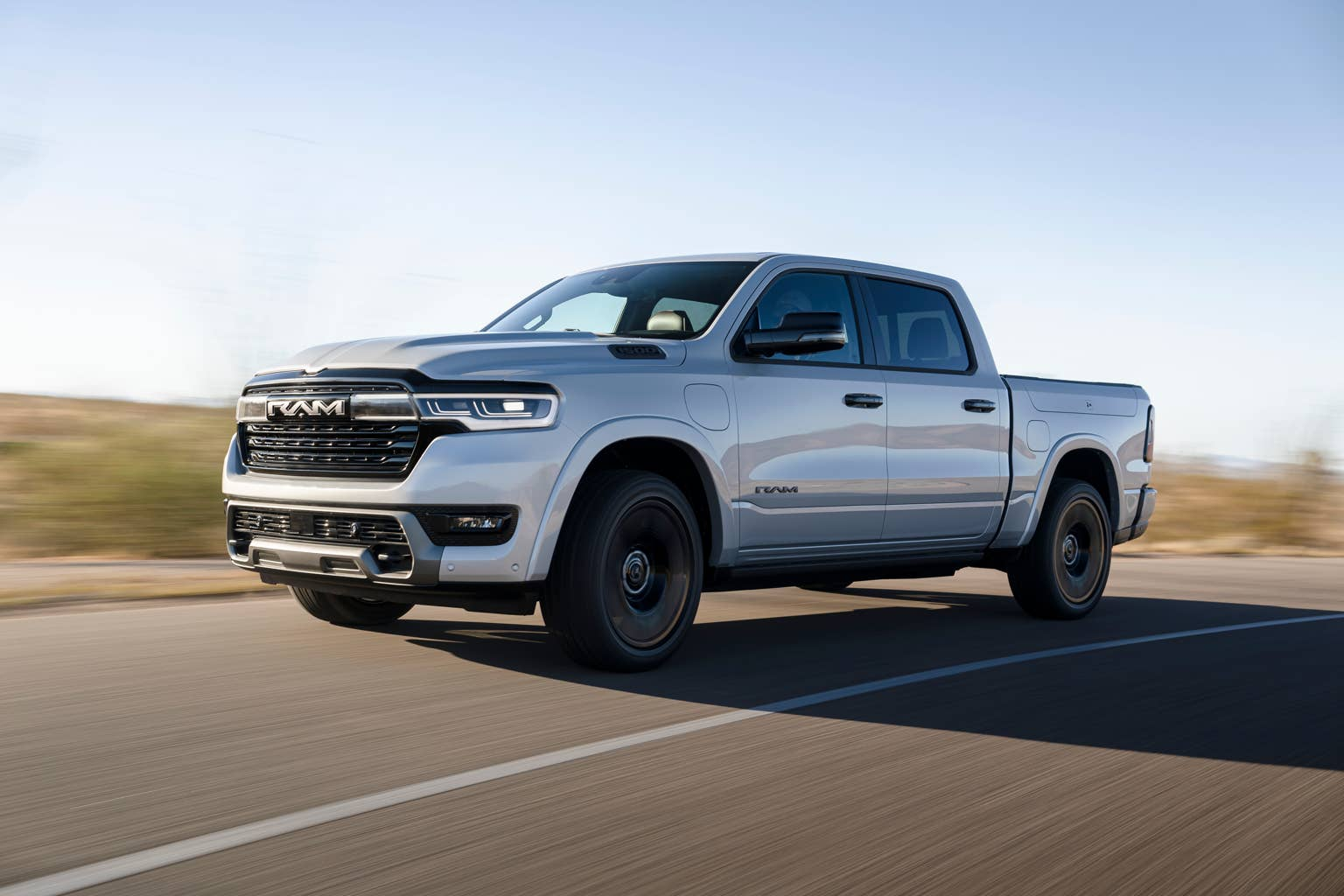
The Ram 1500 REV has been delayed again, with Stellantis now targeting a mid-April 2027 production start for the range-extended electric truck. The latest schedule change follows years of delays and a major shift in the truck’s original powertrain plans.
Ram 1500 REV Timeline Continues to Shift
Stellantis confirmed this month that production of the Ram 1500 REV is moving nine months to mid-April 2027. The Grand Wagoneer EREV is also slipping roughly six months, with production now expected to begin in November.
A company spokesperson described both programs as “on track as planned.” On its own, a delay of several months for a new powertrain architecture would not necessarily be remarkable. In the context of the Ram 1500 REV, however, the latest change follows a pattern that has stretched across three years.
Ram originally unveiled the truck as the all-electric 1500 REV at CES 2023, with a late-2024 launch planned. That target later moved to early 2025.
In September 2025, Stellantis canceled the battery-electric version entirely, citing weak demand for full-size electric trucks. The REV name was then reassigned to what had previously been a separate range-extended model called the Ramcharger.
As recently as this summer, that version was targeting a 2026 launch. Autoblog had already reported “potential production delays” as an open risk before the latest schedule change.
The Ram 1500 REV is now targeting mid-April 2027, more than three years after the nameplate was first unveiled. Pricing and EPA figures have still not been confirmed.
Grand Wagoneer EREV Follows a Similar Path
The Grand Wagoneer EREV has followed a similar development path. It shares the same 400-volt architecture and Pentastar generator setup as the Ram 1500 REV.
Both vehicles are part of Stellantis’ broader push toward range-extended electric powertrains, making their production schedules important to the company’s larger plans.
Stellantis Still Has a Broader Product Plan
The delays do not mean Stellantis’ broader FaSTLAne 2030 plan lacks real product commitments. The company has already committed to products across its brands, including a revived Dakota and Rampage for Ram, three new Chrysler crossovers and a Jeep Cherokee successor built on the new STLA One platform.
Those plans are backed by $70 billion in committed investment.
The central issue is not whether Stellantis will announce new vehicles. The more significant question is whether the company can meet its planned dates for technically ambitious products.
The REV trucks currently represent the most complex and technically ambitious products in the portfolio.
Why the Ram 1500 REV Delay Matters
Stellantis is relying on its EREV architecture as an approach for large trucks and SUVs. The system combines a large battery with a gas generator rather than using a direct-drive engine.
The strategy is aimed at vehicles where pure battery power can struggle with towing and range. Other automakers are reportedly watching the approach closely as they consider their own range-extended plans.
If the strategy succeeds, Stellantis could apply the architecture to a much larger portion of its remaining 60-vehicle pipeline.
But continued delays to a two-truck launch that is already years beyond its original target raise questions about whether the more ambitious elements of the plan will meet their own schedules.
Those projects include a Jeep-Tata global SUV, an all-new Alfa Romeo halo car and Chrysler’s full EV transition.