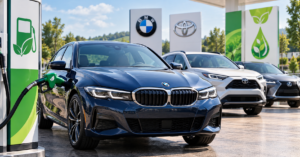

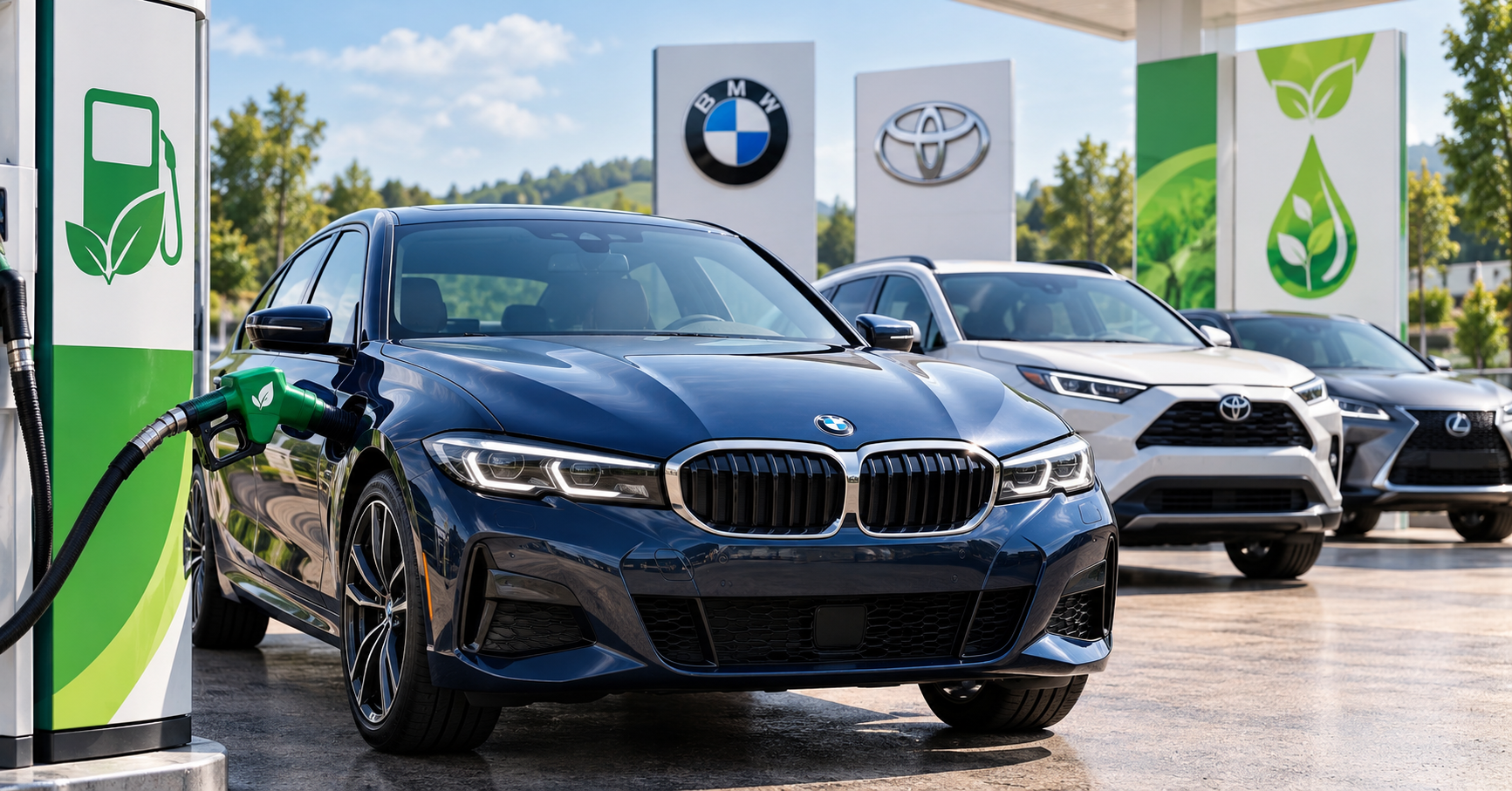
BMW is expanding its efforts to reduce vehicle emissions by testing renewable gasoline in existing gasoline-powered cars, arguing that decarbonization requires more than a rapid shift to electric vehicles. The six-month pilot project, conducted with Toyota and Repsol, aims to evaluate a renewable fuel that can be used without mechanical modifications.
The automaker says relying solely on electric vehicles is not a realistic solution in the near term, citing uneven charging infrastructure, higher EV costs compared with equivalent combustion-powered models, and rising new vehicle prices that are prompting many consumers to keep their current vehicles longer.
BMW Focuses on Reducing Emissions From Cars Already on the Road
Rather than concentrating only on new vehicles, BMW believes greater attention should be given to the large number of vehicles already in use. While the exact global total is difficult to determine, some estimates place the worldwide vehicle fleet at roughly 1.5 billion.
According to BMW, reducing emissions from these existing vehicles represents a significant opportunity to lessen their environmental impact.
Renewable Gasoline Trial Launches With Toyota and Repsol
BMW has previously backed Hydrotreated Vegetable Oil (HVO100), a renewable diesel alternative produced from biological residues and waste materials, including used cooking oil and animal fats.
Now, the company is turning its attention to renewable gasoline. BMW is partnering with Toyota to test approximately 20 vehicles over the next six months using Repsol’s Nexa 95, a fully renewable gasoline made from renewable feedstocks and compliant with the European Union’s Renewable Energy Directive (RED).
Pilot Program Will Monitor Real-World Fuel Use
BMW says renewable gasoline has the potential to significantly reduce greenhouse gas emissions compared with conventional fossil fuels. Lowering CO2 emissions from vehicles already on the road could have a meaningful impact before charging infrastructure is ready to support widespread electric vehicle adoption.
Bosch is supporting the initiative by supplying its digital fuel tracking system, which will monitor how the participating vehicles are fueled during the six-month trial.
Spain was selected for the pilot program because Repsol already supplies renewable gasoline at public filling stations. The trial includes BMW and Toyota models, along with several Lexus vehicles, all drawn from the BMW Group and Toyota Spain fleets.
Renewable Fuels Offer a Potential Near-Term Option
BMW acknowledges that it is still too early to determine whether renewable gasoline and renewable diesel can be produced at the scale needed for widespread adoption. Even so, the company says each step toward expanding these fuels is important.
The pilot project is intended to demonstrate whether renewable gasoline is a practical real-world solution. Because participating vehicles require no mechanical modifications, drivers can refuel with the renewable gasoline without changing their vehicles.
BMW concludes that while an ideal scenario would see all vehicles powered by renewable energy through electric drivetrains, a complete transition in the near future is not considered realistic.