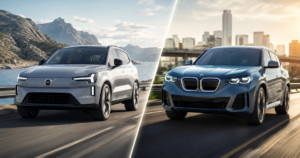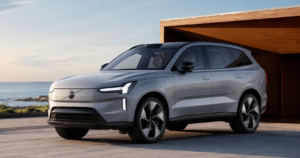

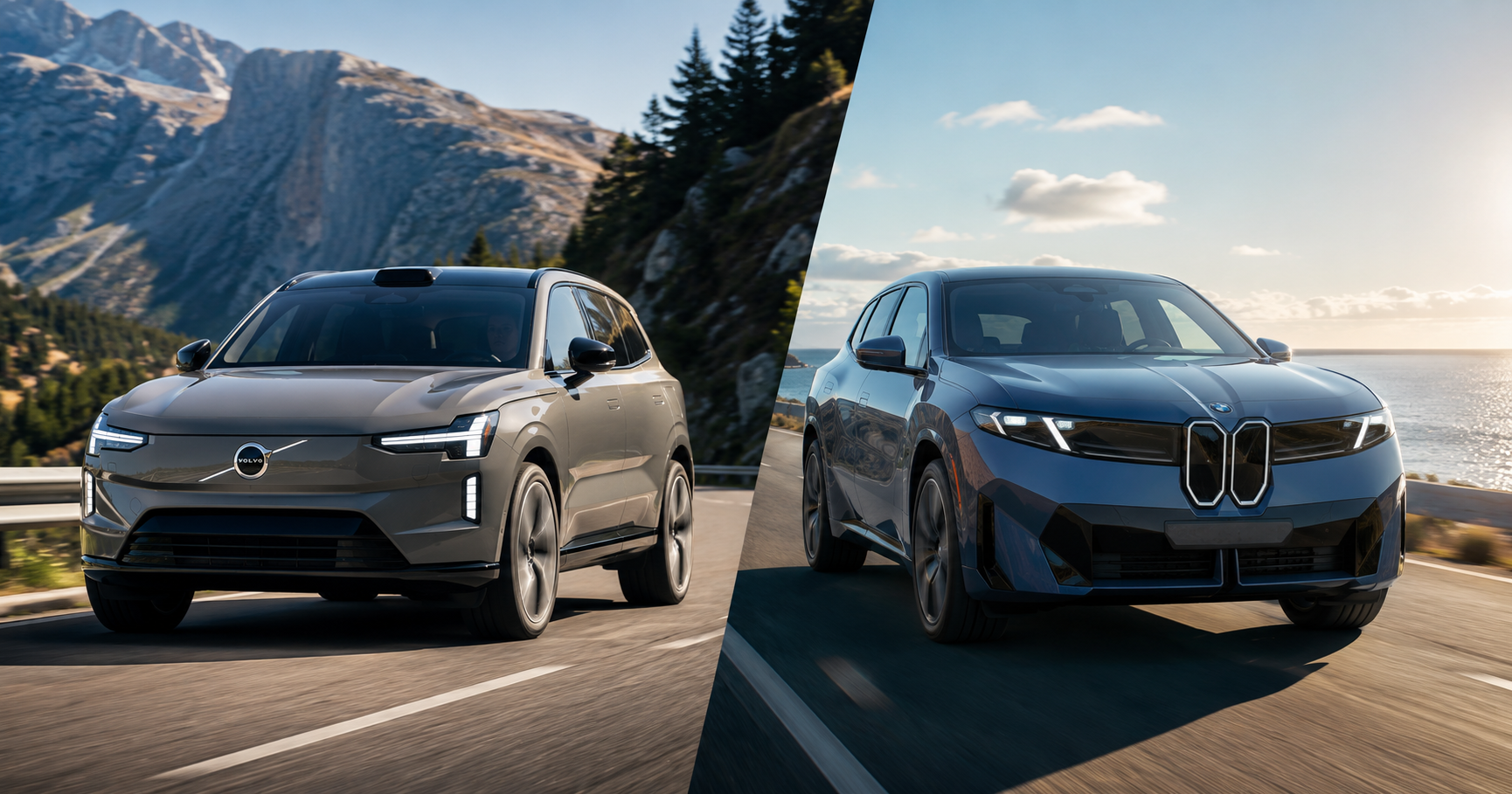
The Volvo vs BMW Electric Range debate has become one of the hottest discussions among American EV buyers in 2027. As luxury automakers continue pushing battery technology, charging speeds, and real-world efficiency to new levels, choosing between Volvo’s new EX60 and BMW’s next-generation iX3 is no longer simply about brand preference.
The latest EPA certification has changed the conversation. Volvo’s all-new EX60 exceeded its own launch estimate by earning an official 330-mile EPA rating, while BMW’s redesigned iX3 continues to claim one of the longest driving ranges available in the premium electric SUV segment.
However, maximum range tells only part of the story.
Charging speed, battery architecture, charging network compatibility, efficiency, wheel selection, future upgrades, and real-world ownership experience all play critical roles when comparing two next-generation electric SUVs.
This comprehensive guide examines every important difference between Volvo and BMW electric range in 2027, helping buyers understand which vehicle better fits their driving habits, commuting needs, and long-distance travel expectations.
Volvo vs BMW Electric Range at a Glance
| Category | 2027 Volvo EX60 P10 AWD | 2027 BMW iX3 50 xDrive |
|---|---|---|
| Maximum EPA Range | 330 miles | Up to 434 miles* |
| Future Top Trim | 400 miles claimed | Already available |
| Platform | SPA3 | Neue Klasse |
| Electrical Architecture | 800V | 800V |
| Maximum DC Charging | 370 kW | 400 kW |
| Fast Charging | 165 miles in 10 minutes | 10%–80% in approximately 21 minutes |
| NACS Port | Standard | Not standard at launch |
| Current Range Winner | No | Yes |
*BMW later restored a 400-mile figure on its official website, although several industry reports referenced a 434-mile EPA estimate during launch.
Why Electric Range Matters More Than Ever
Just a few years ago, reaching 300 miles on a single charge represented a significant milestone for electric vehicles. Today, luxury EV buyers expect much more.
Drivers increasingly want:
- Longer road trips with fewer charging stops
- Greater confidence during winter driving
- Less range anxiety
- Higher resale value
- More flexibility for daily commuting
Both Volvo and BMW understand these priorities, but each company approaches them differently.
BMW focuses on maximizing outright driving distance through advanced battery efficiency and aerodynamics. Volvo, meanwhile, emphasizes balancing competitive range with rapid charging, software optimization, and easier charging access.
2027 Volvo EX60: EPA Rating Beats Expectations
One of the biggest surprises came when the EPA finalized the official rating for the launch-version Volvo EX60.
Earlier this year, Volvo estimated that the EX60 P10 AWD would travel approximately 322 miles on a full charge.
Instead, EPA testing certified the vehicle at:
- 330 miles with 20-inch wheels
- 330 miles with 21-inch wheels
- 312 miles with 22-inch wheels
The eight-mile improvement may appear modest, but it demonstrates that Volvo’s engineering team slightly underestimated the SUV’s efficiency before official certification.
That increase also positions the EX60 as Volvo’s longest-range electric vehicle currently sold in the United States.
BMW iX3 Continues to Set the Benchmark
BMW enters 2027 with enormous momentum thanks to its Neue Klasse architecture.
The newest iX3 is designed from the ground up as a dedicated electric SUV rather than an adaptation of an existing gasoline platform.
Depending on configuration, wheel choice, and tire selection, BMW has reported:
- 434 miles in the most efficient setup
- 399 miles in other versions
- 383 miles in higher-performance configurations
- Later official website listings showing approximately 400 miles
Even using the more conservative 400-mile figure, BMW remains one of the longest-range premium electric SUVs available.
Compared with Volvo’s launch EX60, BMW currently holds a significant advantage in outright driving distance.
How Big Is the Range Difference?
The answer depends on which versions buyers compare.
Current Launch Models
- BMW iX3: 434 miles
- Volvo EX60 P10 AWD: 330 miles
Difference:
104 miles
That margin could eliminate one charging stop during many interstate road trips.
Future Top Trims
- BMW iX3: approximately 400–434 miles
- Volvo EX60 P12 AWD: claimed 400 miles
If Volvo’s future P12 model achieves its expected EPA certification near the claimed figure, the competition becomes dramatically closer.
Wheel Size Makes a Bigger Difference Than Many Buyers Realize
Many shoppers focus entirely on battery capacity while overlooking wheel diameter.
The EX60 clearly demonstrates how larger wheels reduce efficiency.
Volvo EX60 Wheel Comparison
| Wheel Size | EPA Range |
|---|---|
| 20-inch | 330 miles |
| 21-inch | 330 miles |
| 22-inch | 312 miles |
A difference of 18 miles simply from changing wheels highlights why buyers planning frequent highway travel should carefully consider optional wheel packages.
BMW experiences similar efficiency changes depending on wheel and tire combinations.
Charging Speed: Where Volvo Closes the Gap
Although BMW wins today’s range comparison, Volvo narrows the real-world ownership gap with exceptional charging performance.
Volvo EX60 Charging
- 800-volt architecture
- Up to 370 kW DC charging
- Approximately 165 miles added in 10 minutes
- Native NACS charging port
BMW iX3 Charging
- 800-volt architecture
- Up to 400 kW charging capability
- 10% to 80% in roughly 21 minutes
In practice, charging performance depends heavily on charger availability, battery temperature, and charging curve management rather than peak charging numbers alone.
For many drivers, adding over 160 miles during a quick coffee break is more valuable than chasing the highest laboratory charging specification.
Native NACS Support Gives Volvo an Important U.S. Advantage
One area where Volvo immediately stands out is charging convenience.
The EX60 becomes Volvo’s first U.S. model equipped with a built-in NACS charging port.
This allows owners to connect directly to Tesla Superchargers without carrying an adapter.
That seemingly small improvement can simplify long-distance travel considerably, especially across regions where Tesla’s charging network remains the most widespread fast-charging infrastructure.
Battery Technology Behind Both SUVs
Volvo SPA3 Platform
The SPA3 architecture represents Volvo’s newest EV foundation.
Key improvements include:
- Improved battery packaging
- Higher energy efficiency
- Reduced weight
- 800V electrical system
- Faster charging capability
- Future software upgrades
BMW Neue Klasse
BMW’s Neue Klasse platform introduces:
- Sixth-generation battery cells
- Higher energy density
- Reduced charging losses
- Improved thermal management
- Lower manufacturing costs
- Advanced software integration
Both platforms represent major technological leaps over previous-generation luxury EVs.
Real-World Road Trip Comparison
Consider a hypothetical 900-mile interstate drive.
BMW Scenario
- Longer initial driving distance
- Potentially fewer charging stops
- Slightly shorter total travel time
Volvo Scenario
- More frequent charging sessions
- Very rapid charging capability
- Excellent access to Tesla Superchargers through NACS
The difference may not be as dramatic as headline EPA numbers suggest because charging infrastructure often determines trip efficiency more than battery size.
Efficiency Versus Battery Size
Driving range depends on several engineering factors beyond battery capacity.
Manufacturers improve range through:
- Aerodynamic optimization
- Motor efficiency
- Battery chemistry
- Regenerative braking software
- Thermal management
- Tire rolling resistance
- Vehicle weight
Industry estimates suggest BMW currently achieves slightly higher miles per kilowatt-hour than the EX60, helping explain its impressive EPA figures.
Which SUV Is Better for Daily Driving?
For the average American commuter driving 35–45 miles daily, both vehicles provide several days of driving before needing a recharge.
Most owners will rarely use the vehicles’ full range.
Instead, factors such as home charging, software, comfort, and charging availability become more meaningful than maximum EPA estimates.
Future Outlook
The Volvo versus BMW competition is far from settled.
Volvo has already confirmed a higher-spec EX60 P12 AWD targeting approximately 400 miles of driving range.
If official EPA certification approaches that figure, the gap between these premium SUVs could shrink substantially.
BMW, meanwhile, continues expanding its Neue Klasse lineup, suggesting additional improvements in efficiency and battery technology are likely over the coming years.
Which One Wins?
Choose the BMW iX3 if you want:
- Maximum EPA driving range
- Class-leading efficiency
- Fewer charging stops
- Latest BMW battery technology
Choose the Volvo EX60 if you want:
- Excellent fast charging
- Native Tesla Supercharger access
- Competitive EPA range
- Modern Scandinavian design
- Strong value in the premium EV segment
Today’s numbers clearly give BMW the edge in maximum electric driving range. However, Volvo has narrowed the practical ownership gap through rapid charging, native NACS compatibility, and a highly competitive EPA-certified range.
The upcoming 400-mile EX60 P12 AWD could make this comparison significantly more competitive once official EPA ratings become available.
Final Verdict
When comparing Volvo vs BMW Electric Range in 2027, BMW currently remains the undisputed leader in outright EPA-rated driving distance. Depending on configuration, the new iX3 delivers between approximately 400 and 434 miles, comfortably exceeding the launch-version Volvo EX60 P10 AWD’s official 330-mile rating.
Yet maximum range isn’t the only metric that matters.
Volvo has built an EV that prioritizes everyday usability through its 800-volt platform, rapid charging capability, integrated NACS charging port, and strong real-world efficiency. For many buyers, those practical advantages may outweigh the additional miles offered by BMW.
The race is also evolving quickly. Volvo’s upcoming EX60 P12 AWD, with a claimed 400-mile driving range, has the potential to narrow the gap significantly once EPA certification is complete.
For now, the answer is straightforward:
- Longest range: BMW iX3
- Best charging convenience: Volvo EX60
- Best future potential: Volvo EX60 P12 AWD
Ultimately, buyers who prioritize the fewest charging stops will likely prefer BMW, while drivers seeking an excellent balance of range, charging speed, and seamless access to the largest fast-charging network in the United States may find Volvo to be the more practical everyday electric SUV.
Frequently Asked Questions
Which has the longer electric range, Volvo or BMW?
Currently, the 2027 BMW iX3 offers the longest EPA-rated range, reaching up to 434 miles in its most efficient configuration, while the launch-version Volvo EX60 P10 AWD is officially rated at 330 miles.
Will Volvo release a longer-range EX60?
Yes. Volvo has announced the EX60 P12 AWD with a claimed driving range of approximately 400 miles, although official EPA certification has not yet been published.
Does wheel size affect electric range?
Yes. Larger wheels generally reduce efficiency. For example, the Volvo EX60 drops from 330 miles with 20- or 21-inch wheels to 312 miles with 22-inch wheels.
Which charges faster?
Both are among the fastest-charging premium electric SUVs. BMW supports up to 400 kW DC charging, while Volvo supports up to 370 kW and can add approximately 165 miles in about 10 minutes under ideal conditions.
Does the Volvo EX60 use Tesla Superchargers?
Yes. The EX60 includes a native NACS charging port in the U.S., allowing direct access to Tesla Superchargers without requiring an adapter.
Which SUV is better for long road trips?
BMW benefits from its longer maximum range, reducing charging stops. Volvo counters with very fast charging and direct access to Tesla’s extensive Supercharger network, making it an excellent long-distance travel option as well.