
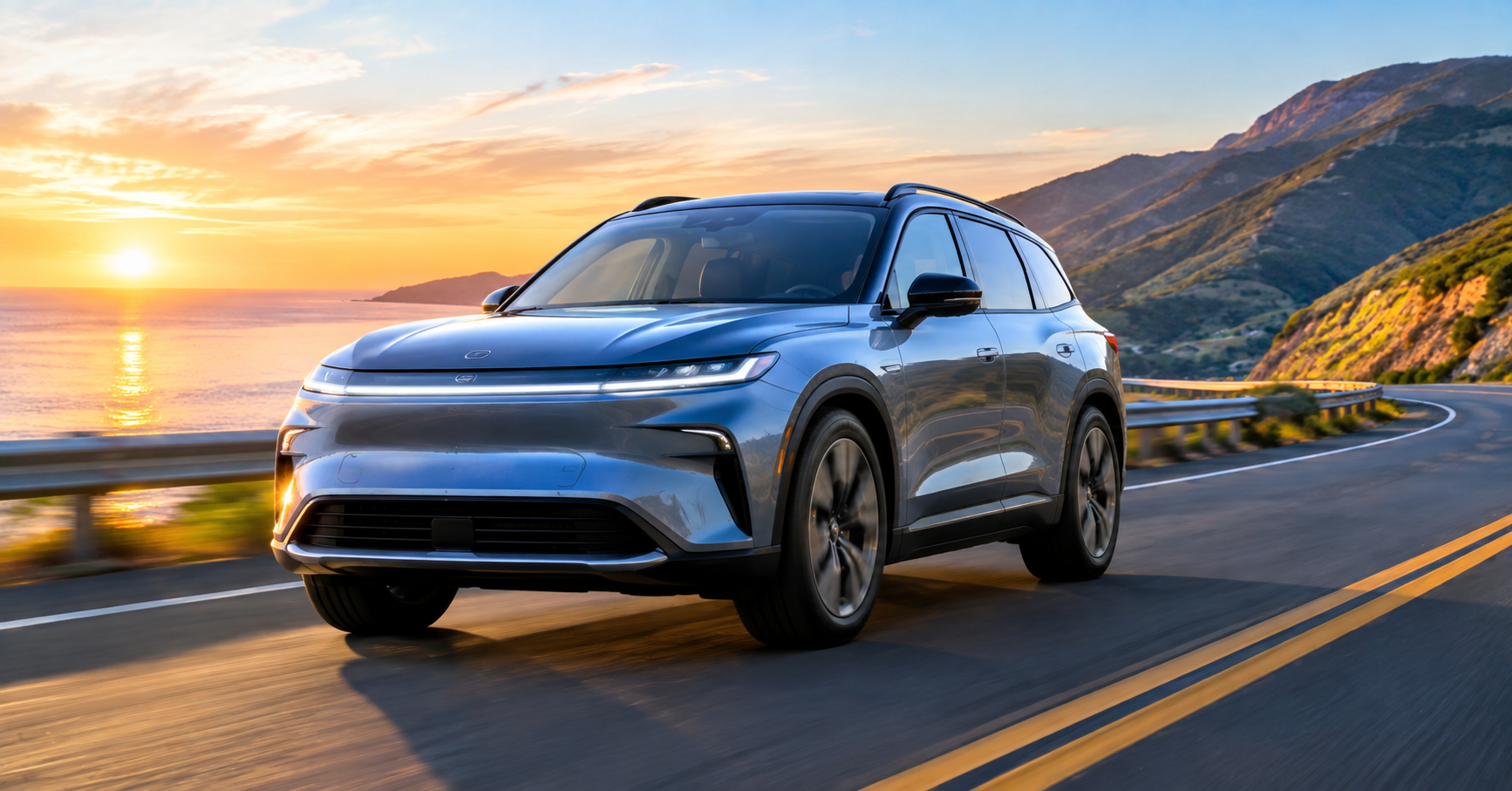
If long road trips without frequent charging are your priority, the ev crossover suv best range 2026 models deserve a closer look. Electric SUVs have traditionally given up some range because their taller, heavier designs are less aerodynamic than electric sedans. Yet the latest generation has pushed the category well beyond the 300-mile mark, with the longest-range model reaching an EPA-estimated 450 miles.
Our guide compares seven notable 2026 electric SUVs using the range, pricing and vehicle information in the supplied research. The goal is to separate headline range from real-world usefulness so shoppers can identify the long-range EV that best fits their needs.
2026 EV SUV Range at a Glance
The seven vehicles below represent a broad range of electric crossover and SUV choices, from luxury three-row models to more attainable mainstream options.
| Rank | Model | Max EPA Range | Starting Price | Best For |
|---|---|---|---|---|
| 1 | Lucid Gravity | 450 miles | $81,550 | Maximum range and luxury |
| 2 | Rivian R1S | 410 miles | $78,885 | Adventure, towing and three rows |
| 3 | Tesla Model Y | 357 miles | $41,630 | Value and charging access |
| 4 | Tesla Model X | 352 miles | $116,630 | Cargo space and performance |
| 5 | Hyundai Ioniq 9 | 335 miles | $60,555 | Three-row family use |
| 6 | BMW iX | 318 miles | $76,600 | Premium driving and interior |
| 7 | Chevrolet Blazer EV | 312 miles | $46,495 | Mainstream midsize value |
Range figures are maximum EPA-estimated ratings and can vary significantly by configuration. Real-world driving conditions, speed, weather, temperature, terrain and vehicle equipment can all affect how far an EV travels between charges.
What Makes the Best Long-Range EV SUV?
Maximum range is the obvious starting point, but it is only one part of the buying decision. The best long-range electric SUV for one driver may be very different from the best choice for another.
For example, a family that regularly carries six or seven people may prioritize three-row seating and fast charging. A commuter may care more about purchase price and efficiency. An adventure-oriented buyer may accept a higher price and larger footprint in exchange for towing and off-road capability.
EPA Range vs. Real-World Range
EPA range provides a standardized benchmark that makes vehicles easier to compare, but it should not be treated as a promise of how many miles every driver will achieve.
Independent testing illustrates why. Edmunds’ EV Range Test found that a Chevrolet Equinox EV LT FWD traveled 356 miles, exceeding its EPA estimate by 33 miles. Its Tesla Model Y Launch Series AWD test result was 327 miles.
Those results demonstrate an important point: an EV’s EPA number is useful for comparison, but actual range can differ from the laboratory estimate.
Charging Speed Matters Too
A vehicle with slightly less range can still be more convenient on long journeys if it can add substantial range quickly during a charging stop.
The Hyundai Ioniq 9 is a strong example. Hyundai says the three-row SUV can charge from 10% to 80% in as little as 24 minutes when connected to a 350-kW charger. That fast-charging capability can make a meaningful difference during road trips.
The 7 Best EV Crossover SUV Best Range Picks for 2026
1. Lucid Gravity: Best for Maximum Range
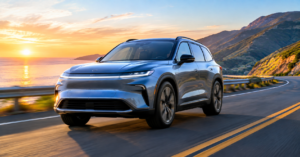
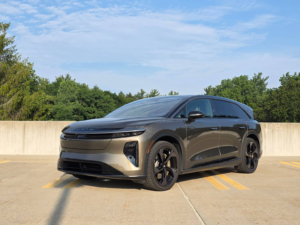
The Lucid Gravity stands at the top of this ev crossover suv best range 2026 comparison because its maximum EPA-estimated range reaches 450 miles.
That figure gives the Gravity a substantial range advantage over the other vehicles in this group. Car and Driver rates the 2026 Gravity 10/10 and lists its starting price at $81,550.
The Gravity also targets buyers who want a premium electric SUV rather than simply the most affordable way to go electric. Its upscale cabin and strong on-road manners add to its appeal, while its large range figure addresses one of the biggest concerns among EV shoppers: stopping frequently to recharge.
The tradeoff is straightforward. The Gravity is expensive compared with mainstream electric crossovers, and Lucid has a newer brand and service network than established automakers.
- Maximum range: 450 miles
- Starting price: $81,550
- Best for: Maximum range and luxury
- Main drawback: High purchase price and newer service network
2. Rivian R1S: Best for Adventure and Three-Row Capability
The Rivian R1S combines long-distance capability with a very different mission from a traditional luxury crossover. Its maximum EPA-estimated range reaches 410 miles, while its starting price is listed at $78,885.
The R1S is particularly compelling for buyers who want three rows and a vehicle designed around adventure. The research positions it as an electric SUV with serious off-road and towing credentials, making it one of the more versatile choices in this group.
Rivian also added a 1,025-horsepower quad-motor R1S variant for 2026, expanding the model’s performance range even further.
Its disadvantages are equally clear. The R1S is expensive and has a large footprint, which may make it less appealing to shoppers who primarily drive in dense urban environments or want an easy-to-park crossover.
- Maximum range: 410 miles
- Starting price: $78,885
- Best for: Adventure, towing and three-row flexibility
- Main drawback: High price and large dimensions
3. Tesla Model Y: Best Combination of Range and Accessibility
The Tesla Model Y occupies an important position in the ev crossover suv best range 2026 market because it delivers up to 357 miles of EPA-estimated range while starting at $41,630 in the supplied research.
That makes it considerably more accessible than several of the luxury SUVs at the top of the range charts. For shoppers who want a long-range EV crossover without moving into an $80,000-plus price category, the Model Y deserves serious consideration.
Car and Driver lists the 2026 Model Y’s range at 294 to 357 miles depending on configuration. The model also received a significant refresh for 2026, keeping it competitive in an increasingly crowded electric SUV segment.
The Model Y’s charging ecosystem is another part of its appeal. At the same time, its screen-centered controls may not suit every driver, particularly buyers who prefer traditional physical buttons and controls.
- Maximum range: 357 miles
- Starting price: $41,630
- Best for: Mainstream value and long-range driving
- Main drawback: Screen-focused interface may not appeal to everyone
4. Tesla Model X: Best for Cargo Space and Performance
The Tesla Model X offers up to 352 miles of EPA-estimated range and starts at $116,630, according to the supplied research.
Its appeal goes beyond range. The Model X is known for exceptional cargo flexibility and quick acceleration, giving it a distinctive position among large electric SUVs.
However, the Model X also demonstrates why maximum range should not be the only metric used when comparing electric SUVs. Its starting price is dramatically higher than the Model Y, while its distinctive falcon-wing doors and interface may divide buyers.
- Maximum range: 352 miles
- Starting price: $116,630
- Best for: Cargo capacity and performance
- Main drawback: Very high price
5. Hyundai Ioniq 9: Best for Three-Row Families
The Hyundai Ioniq 9 may be one of the most compelling choices for families searching for a practical ev crossover suv best range 2026 model.
Its maximum EPA-estimated range reaches 335 miles in rear-wheel-drive S form. AWD SE and SEL versions are rated at 320 miles, while Performance versions are rated at 311 miles. Hyundai says every version exceeds 300 miles.
The Ioniq 9 is a three-row midsize electric SUV powered by a 110-kWh battery. Edmunds selected it as its Best Midsize Electric SUV, giving it an 8.4/10 rating and noting that it exceeded EPA range estimates in Edmunds’ real-world testing.
Charging is another major strength. Hyundai says the Ioniq 9 can charge from 10% to 80% in as little as 24 minutes using a 350-kW charger.
The starting price of $60,555 places it above some mainstream two-row electric crossovers, but the combination of three-row seating, range and charging capability gives it a strong family-oriented proposition.
- Maximum range: 335 miles
- Starting price: $60,555
- Best for: Families needing three rows
- Main drawback: Higher starting price than many mainstream crossovers
6. BMW iX: Best for Premium Driving
The BMW iX combines a 318-mile maximum EPA-estimated range with a premium cabin and refined driving experience.
For 2026, BMW added the xDrive45 variant. According to the supplied Edmunds research, it produces 402 horsepower, has a 312-mile EPA estimate and lowers the iX’s entry price compared with previous versions.
For shoppers considering the iX, interior quality and driving refinement may be more important than simply maximizing miles per charge. Edmunds selected the BMW iX xDrive45 as its Best Midsize Luxury Electric SUV.
The biggest consideration remains price. The iX starts at $76,600 in the supplied data, placing it firmly in the premium segment. Its styling is also distinctive and may not appeal to every buyer.
- Maximum range: 318 miles
- Starting price: $76,600
- Best for: Premium driving and interior quality
- Main drawback: Luxury pricing
7. Chevrolet Blazer EV: Best Mainstream Midsize Value
The Chevrolet Blazer EV rounds out this ev crossover suv best range 2026 list with a maximum EPA-estimated range of 312 miles and a starting price of $46,495.
That combination gives the Blazer EV an important role in the market. It does not match the Lucid Gravity or Rivian R1S for maximum range, but it brings more than 300 miles of available EPA range into a substantially more mainstream price category.
The Blazer EV also offers a spacious midsize package, making it a practical alternative for shoppers who want an electric SUV without moving directly into the luxury segment.
However, range varies among configurations, so buyers should check the exact version they intend to purchase rather than assuming every Blazer EV delivers the maximum rating.
- Maximum range: 312 miles
- Starting price: $46,495
- Best for: Mainstream midsize EV value
- Main drawback: Configuration differences affect range
Which 2026 EV SUV Has the Longest Range?
The Lucid Gravity has the highest maximum range among the seven vehicles covered here, with an EPA-estimated 450 miles.
The Rivian R1S follows at 410 miles. The Tesla Model Y and Model X sit at 357 and 352 miles, respectively. The Hyundai Ioniq 9 reaches 335 miles, while the BMW iX and Chevrolet Blazer EV reach 318 and 312 miles.
That spread shows how quickly the electric SUV market has evolved. Several models now offer more than 300 miles of estimated range, reducing one of the traditional compromises associated with choosing an electric SUV instead of a gasoline-powered vehicle.
Best Long-Range Electric SUV Under $50,000
For shoppers working with a $50,000 starting-price ceiling, the Tesla Model Y and Chevrolet Blazer EV stand out among the seven featured vehicles.
The Model Y starts at $41,630 and reaches up to 357 miles of EPA-estimated range. The Blazer EV starts at $46,495 and reaches up to 312 miles.
That makes the Model Y the strongest range proposition in this particular under-$50,000 comparison. However, buyers should still compare the exact configuration, equipment and charging requirements before making a purchase.
EPA Range vs. Real-World EV Range
One of the most important things to understand before buying an electric SUV is the difference between EPA-estimated range and actual driving range.
EPA testing provides a standardized measurement that allows consumers to compare vehicles. Real-world conditions, however, are considerably more complicated.
Factors that can influence actual range include:
- Highway speeds
- Outside temperature
- Heating and air-conditioning use
- Terrain and elevation changes
- Driving style
- Vehicle configuration
- Wheel and tire choices
- All-wheel-drive systems
Edmunds’ independent testing provides a useful reminder of this difference. Its Chevrolet Equinox EV LT FWD test produced 356 miles, which was 33 miles above the EPA estimate. Its Tesla Model Y Launch Series AWD result was 327 miles.
Does AWD Reduce EV Range?
All-wheel drive can affect an EV’s efficiency and range, although the impact depends on the vehicle and configuration.
The Hyundai Ioniq 9 provides a clear example from the supplied research. Its rear-wheel-drive S version is rated at 335 miles, while AWD SE and SEL versions are rated at 320 miles and Performance versions at 311 miles.
For some buyers, the tradeoff may be worthwhile. AWD can be attractive to shoppers who prioritize traction and performance. Others may prefer the additional range available from a rear-wheel-drive configuration.
Three-Row Electric SUVs: Which One Makes Sense?
Three-row seating changes the equation considerably. A family may care less about achieving the absolute highest range and more about having enough interior space for passengers, luggage and everyday cargo.
The Rivian R1S and Hyundai Ioniq 9 are particularly notable in this comparison. The R1S offers up to 410 miles of range alongside three-row capability, off-road credentials and towing capability.
The Ioniq 9 takes a more family-oriented approach, offering three rows and more than 300 miles of EPA-estimated range in every trim. Its 350-kW charging capability also gives it a strong road-trip proposition.
What About the 2026 EV Tax Credit?
Buyers researching a 2026 electric SUV should be careful when reading older pricing articles or buying guides that mention the federal $7,500 new-EV tax credit.
According to the supplied research, the federal New Clean Vehicle Credit ended for vehicles acquired after September 30, 2025. As a result, it should not be presented as a current federal incentive for vehicles acquired in 2026.
How to Choose the Right Long-Range EV SUV
- Determine your required range. If your regular trips are short, paying a large premium for 450 miles of range may not provide much practical benefit.
- Compare the exact configuration. Range can vary substantially between rear-wheel-drive, all-wheel-drive and performance versions.
- Look at charging speed. Fast charging can be particularly important for frequent road trips.
- Consider passenger requirements. If you regularly carry six or seven people, a three-row SUV may be worth prioritizing.
- Compare the total purchase price. The vehicle with the highest range is not necessarily the best value.
- Check real-world testing. Independent testing can help put EPA estimates into practical context.
2026 EV Crossover SUV Range: Key Takeaways
The 2026 electric SUV market offers more choice than ever for shoppers who prioritize range. The Lucid Gravity pushes the maximum to 450 miles, while the Rivian R1S reaches 410 miles. Meanwhile, the Tesla Model Y brings up to 357 miles into a much lower starting-price category.
The Hyundai Ioniq 9 stands out for families, combining three rows, more than 300 miles of range in every version and fast 350-kW charging capability. The BMW iX focuses on premium driving and interior quality, while the Chevrolet Blazer EV provides a mainstream midsize alternative with a maximum 312-mile rating.
The most important takeaway from this ev crossover suv best range 2026 comparison is that range should be considered alongside price, charging speed, configuration and usability.
If absolute range is the priority, the Lucid Gravity is the clear leader among these seven vehicles. If affordability matters more, the Tesla Model Y offers a substantially lower starting price while still delivering up to 357 miles of EPA-estimated range. For families, the Ioniq 9 and Rivian R1S bring three-row capability to the long-range EV conversation.
Frequently Asked Questions
What electric crossover SUV has the longest range in 2026?
The Lucid Gravity has the highest maximum EPA-estimated range among the seven vehicles in this comparison, at up to 450 miles.
What is the longest-range EV SUV under $50,000?
Among the seven models covered here, the Tesla Model Y has the strongest combination of price and maximum range below $50,000. It starts at $41,630 and offers up to 357 miles of EPA-estimated range.
Is EPA range the same as real-world EV range?
No. EPA range is a standardized estimate used for comparison, while real-world range can vary with speed, temperature, terrain, driving style and vehicle configuration.
Which long-range electric SUV is best for families?
The Hyundai Ioniq 9 is a strong family-oriented choice because it provides three rows, more than 300 miles of EPA-estimated range in every trim and fast charging capability on a 350-kW charger.
Does AWD reduce EV range?
It can. The Hyundai Ioniq 9 is rated at 335 miles in rear-wheel-drive S form, compared with 320 miles for AWD SE and SEL versions and 311 miles for Performance versions.
Does the federal $7,500 EV tax credit apply in 2026?
No. Based on the supplied research, the federal New Clean Vehicle Credit ended for vehicles acquired after September 30, 2025, so it should not be treated as a current federal incentive for 2026 purchases.
Is the Lucid Gravity worth considering despite its price?
The Gravity is particularly relevant for buyers who prioritize maximum range and a luxury SUV experience. Its maximum EPA-estimated range is 450 miles, but its $81,550 starting price is higher than mainstream alternatives.
Which EV SUV offers the best balance of range and price?
The Tesla Model Y stands out in this comparison because its $41,630 starting price is significantly below the luxury models while its maximum EPA-estimated range reaches 357 miles.
Is a three-row EV SUV necessary for families?
Not necessarily. The right choice depends on passenger and cargo needs. Buyers who regularly carry larger groups may benefit from the Rivian R1S or Hyundai Ioniq 9, while households that rarely use a third row may prefer a two-row crossover.
Why is charging speed important if an EV already has long range?
Charging speed affects how long a driver must spend at a charging station during longer trips. A vehicle with slightly less range but significantly faster charging can be more convenient for frequent road trips.
Should buyers focus only on the maximum range figure?
No. Maximum EPA range is useful, but shoppers should also compare price, drivetrain, charging speed, passenger capacity, cargo space and independent real-world testing.
Final Verdict
The search for the ev crossover suv best range 2026 winner ultimately depends on what the buyer values most.
Lucid Gravity is the range leader at 450 miles. Rivian R1S adds long range to a three-row, adventure-focused package. Tesla Model Y provides one of the strongest combinations of price and range. Tesla Model X emphasizes cargo space and performance. Hyundai Ioniq 9 is especially compelling for families, while BMW iX targets premium buyers. Chevrolet Blazer EV rounds out the group with a mainstream midsize package and more than 300 miles of maximum EPA-estimated range.
For shoppers, the smartest approach is to begin with the range you actually need, then compare charging speed, price and configuration. In 2026, several models offer more than 300 miles of EPA-estimated range, while the leading Gravity stretches that figure to 450 miles.