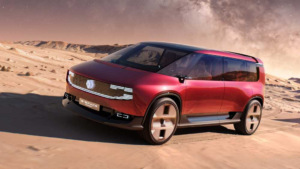

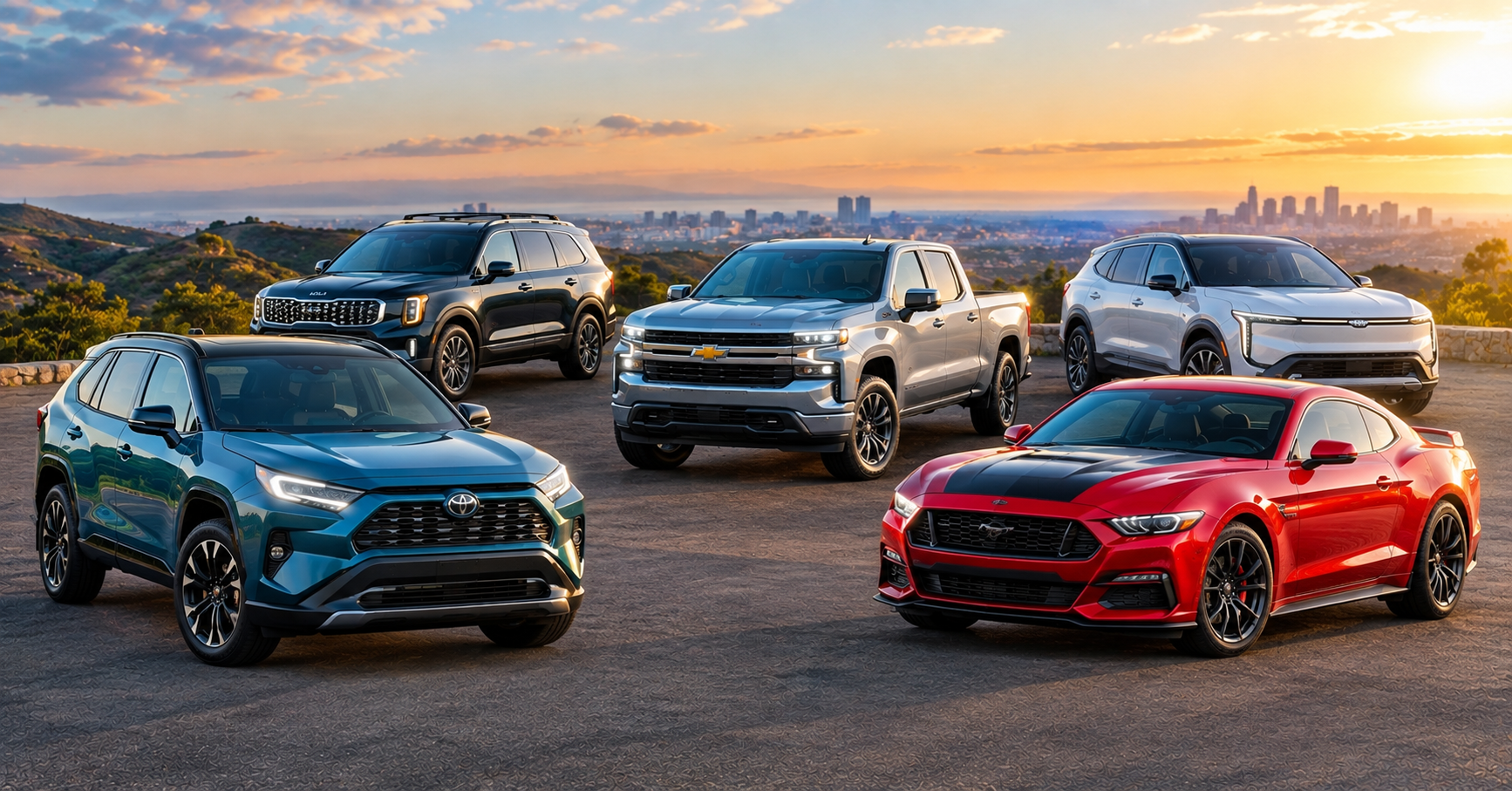
The new car releases 2026 market is shaping up to be less about choosing between gasoline and electric power and more about finding the right balance between efficiency, price, practicality and technology.
For shoppers, the biggest question is no longer simply which new car is the most advanced. It is whether waiting for a 2026 model will provide a meaningful advantage over buying an available vehicle today.
This guide focuses on 10 models that stand out for different reasons. Some are major redesigns, such as the Toyota RAV4 and Subaru Outback. Others bring new powertrain choices, including the Hyundai Palisade Hybrid and Lexus ES. The Kia EV4 and BMW iX3 represent two very different approaches to electric vehicles, while the Toyota Camry and Honda Civic Hybrid show why conventional hybrids remain highly relevant.
Prices, availability and specifications can change during a model year, so buyers should verify final dealer pricing, destination charges, EPA ratings and incentives before making a purchase.
Why 2026 Is Such an Important Year for New Cars
The U.S. new-vehicle market is entering 2026 with a complicated mix of opportunities and challenges. Cox Automotive projected approximately 15.8 million new-vehicle sales in the United States for 2026, a 2.4% decline from 2025.
The forecast points to a market influenced by affordability, interest rates, consumer finances, policy changes and uncertainty surrounding electric vehicles.
At the same time, electrification is continuing globally. The International Energy Agency projected 23 million electric-car sales worldwide in 2026, representing about 28% of global car sales. That figure is global rather than a U.S.-specific forecast, but it illustrates the scale of the industry’s transition.
In America, however, the transition is taking multiple forms. Hybrids and plug-in hybrids remain particularly important because they can reduce fuel consumption without requiring drivers to depend entirely on public charging infrastructure.
That is why the most interesting new cars of 2026 are not necessarily the most futuristic ones. For many buyers, a redesigned hybrid SUV may make more practical sense than an expensive electric vehicle.
How We Selected the 10 Best New Cars to Watch
This list is designed around one central question: Which 2026 models offer a meaningful reason to wait?
The evaluation considers six major factors:
- Overall usefulness: Daily comfort, passenger space, cargo capacity and practicality.
- Value: Purchase price, equipment, operating costs and ownership considerations.
- Powertrain relevance: Fuel economy, electric range, charging requirements and hybrid usability.
- Safety: Independent crash-test and safety information, particularly from IIHS.
- Innovation: New platforms, technology, powertrains and vehicle designs.
- Availability confidence: Confirmed U.S. launch timing and pricing information.
This approach also separates two concepts that are easy to confuse: the best car to buy today and the car most worth waiting for. A proven hybrid sedan may be the easiest purchase decision, while a brand-new electric platform could be more significant from a technology standpoint.
Quick Look: 10 New Car Releases 2026 Buyers Should Watch
| Model | Type | Powertrain | Best For |
|---|---|---|---|
| 2026 Toyota RAV4 | Compact SUV | Hybrid / PHEV | All-around buyers |
| 2026 Hyundai Palisade Hybrid | Three-row SUV | Hybrid | Large families |
| 2026 Honda Passport | Two-row SUV | Gas V6 | Adventure buyers |
| 2026 Subaru Outback | Midsize SUV | Gas | Outdoor lifestyles |
| 2026 Kia EV4 | Electric sedan | Battery electric | Value-focused EV shoppers |
| 2026 BMW iX3 | Luxury SUV | Battery electric | Long-range luxury EV buyers |
| 2026 Lexus ES | Luxury sedan | Hybrid / EV | Comfort-focused buyers |
| 2026 Toyota Camry | Midsize sedan | Hybrid | Value and efficiency |
| 2026 Honda Civic Hybrid | Compact car | Hybrid | Urban commuters |
| 2026 Mazda CX-5 | Compact SUV | Gas | Drivers seeking refinement |
1. 2026 Toyota RAV4: The Mainstream Hybrid Benchmark
The 2026 Toyota RAV4 may be the most consequential mainstream redesign on this list. Toyota has transformed the sixth-generation RAV4 lineup by eliminating conventional gasoline-only versions in favor of hybrid and plug-in-hybrid powertrains.
Toyota says the RAV4 has sold more than 6.4 million units in the U.S. since its introduction in 1996 and describes it as America’s best-selling small SUV. More than half of RAV4 sales were electrified in 2024, helping explain the move to an entirely electrified U.S. lineup for 2026.
Key RAV4 Numbers
- Hybrid output reaches 226 horsepower with front-wheel drive.
- All-wheel-drive versions produce up to 236 horsepower.
- Selected hybrid configurations reach a manufacturer-estimated 44 mpg combined.
- PHEV versions produce up to 324 net combined horsepower.
- PHEV electric range reaches up to 52 miles.
- Hybrid models began arriving around late 2025, while PHEV versions were expected in spring 2026.
The RAV4’s biggest advantage is flexibility. Buyers can choose a conventional hybrid without worrying about routine charging, or step up to a plug-in hybrid if daily electric driving is a priority.
The Woodland and GR SPORT versions also give the lineup different personalities, expanding the RAV4 beyond a basic commuter crossover.
Best for: Families and commuters who want fuel efficiency, available AWD and the familiarity of a high-volume SUV without committing to a full EV.
2. 2026 Hyundai Palisade Hybrid: A Three-Row Hybrid Arrives
The redesigned 2026 Hyundai Palisade Hybrid addresses one of the biggest compromises in the three-row SUV market: how to carry a family without accepting the fuel consumption of a large conventional SUV.
The new Palisade offers a 329-horsepower turbocharged hybrid system, according to Hyundai’s U.S. information. The redesigned SUV also adds updated technology, more rear-seat space and a new XRT Pro trim aimed at buyers who want a more rugged appearance and capability.
Pricing varies by trim and destination charges, but Hyundai’s U.S. listings placed the SEL Premium hybrid around the mid-$40,000 range.
The Palisade is particularly relevant because three-row buyers have historically had fewer hybrid choices than compact-SUV shoppers.
Why It Matters
- Three rows provide flexibility for larger families.
- The hybrid system reduces the need to sacrifice practicality for efficiency.
- The redesigned cabin adds technology and updated packaging.
- It offers an alternative to moving directly into an electric three-row SUV.
The main drawback is price. A larger hybrid SUV can quickly become expensive once higher trims and options are added.