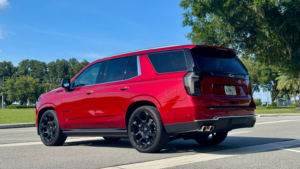

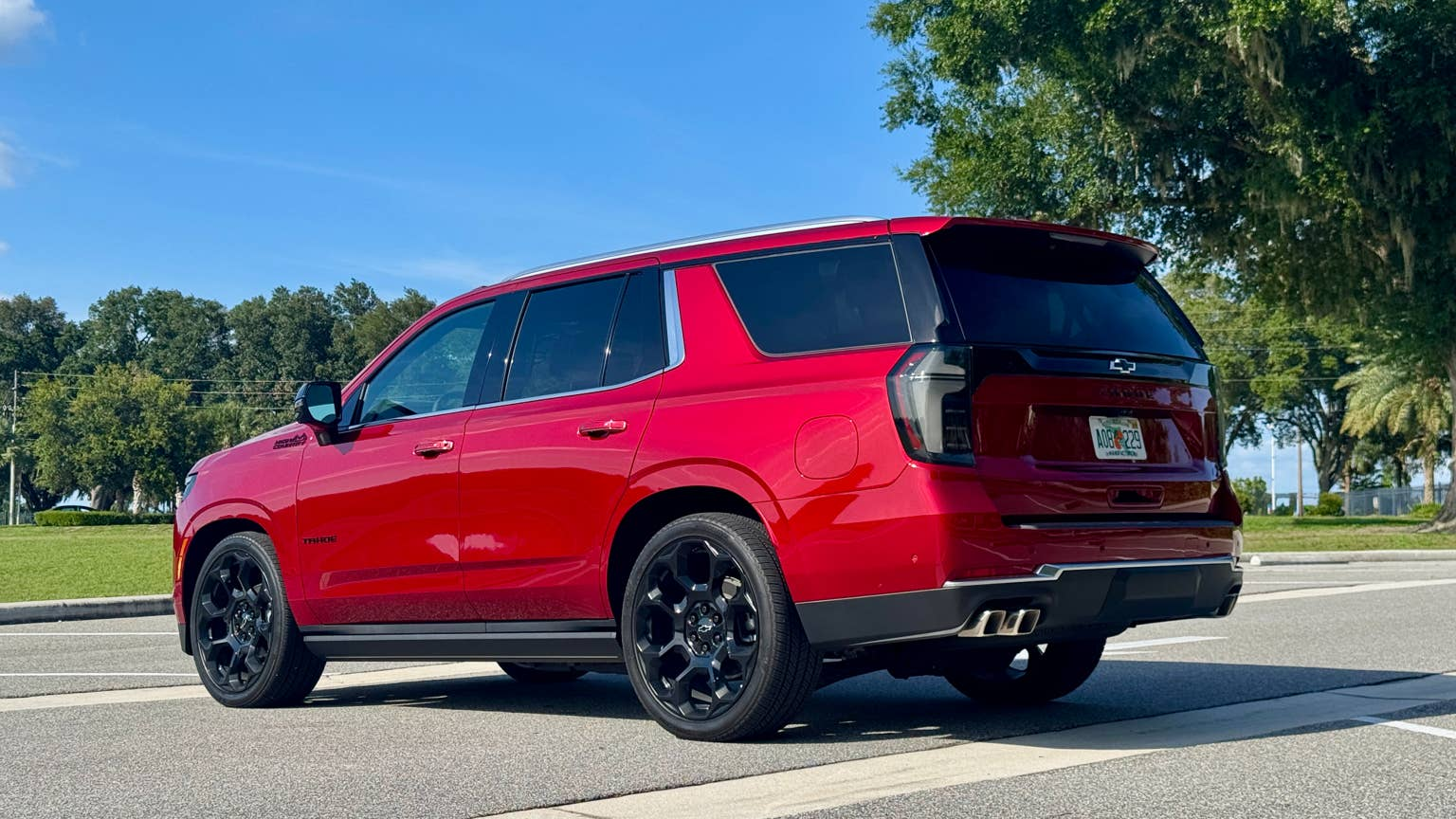
General Motors’ full-size gasoline-powered SUVs are delivering the same 17 mpg combined fuel-economy rating they achieved in 2010, despite 17 years of engineering advances and increasingly strict emissions laws.
The figure applies to the Chevrolet Tahoe, Chevrolet Suburban and GMC Yukon when equipped with the 5.3-liter V8. While GM’s pickups improved from 18 to 20 mpg, an 11% increase, its flagship SUVs have not followed the same trend.
Why GM’s Large SUVs Have Stayed at 17 MPG
CAFE regulations require automakers to meet aggressive fleet-wide fuel-economy targets. However, the standards are based on vehicle footprint, allowing larger vehicles to meet a noticeably lower threshold.
GM has used that structure to continue offering large-displacement engines across its premium SUV lineup without facing catastrophic federal compliance penalties or redesigning its entire chassis strategy.
As first observed by The Drive, the SUVs have actually seen their combined rating decline in recent years. They reached 18 mpg in 2015 and peaked at 19 mpg from 2016 through 2018 before returning to 17 mpg after 2021.
The introduction of the Duramax diesel in 2021 provided another efficiency option, although higher diesel prices make its cost per mile difficult for consumers.
GM Continues Investing in Large Engines
GM’s engineering investments continue to focus on internal-combustion capability rather than fuel-saving measures. Next year, a completely revamped truck engine lineup will introduce an 8.3-liter turbodiesel.
Upcoming applications will also feature new V8 options with significantly improved outputs. GM is currently engineering twin 6.6-liter V8 engines designed exclusively for different duty cycles.
Capability Remains the Priority
The 17-year fuel-economy flatline reflects GM’s choice to prioritize capability over fuel efficiency in its largest SUVs. Buyers of vehicles such as the Chevrolet Suburban and GMC Yukon are rarely looking for economical commuter vehicles, instead seeking serious towing capability and the torque characteristics associated with a traditional small-block V8 platform.
While the lack of MPG growth may appear unfavorable under federal fuel-economy calculations, it reflects how GM has balanced footprint-based regulations with continued consumer demand for large, capable SUVs.
Modern SUVs are also substantially heavier and safer than their 2009 counterparts. Maintaining the same fuel-economy rating while carrying significantly more mass can therefore be viewed as an engineering achievement despite the unchanged 17 mpg figure.