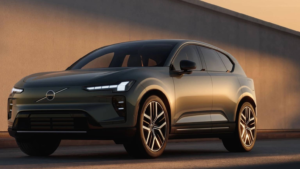

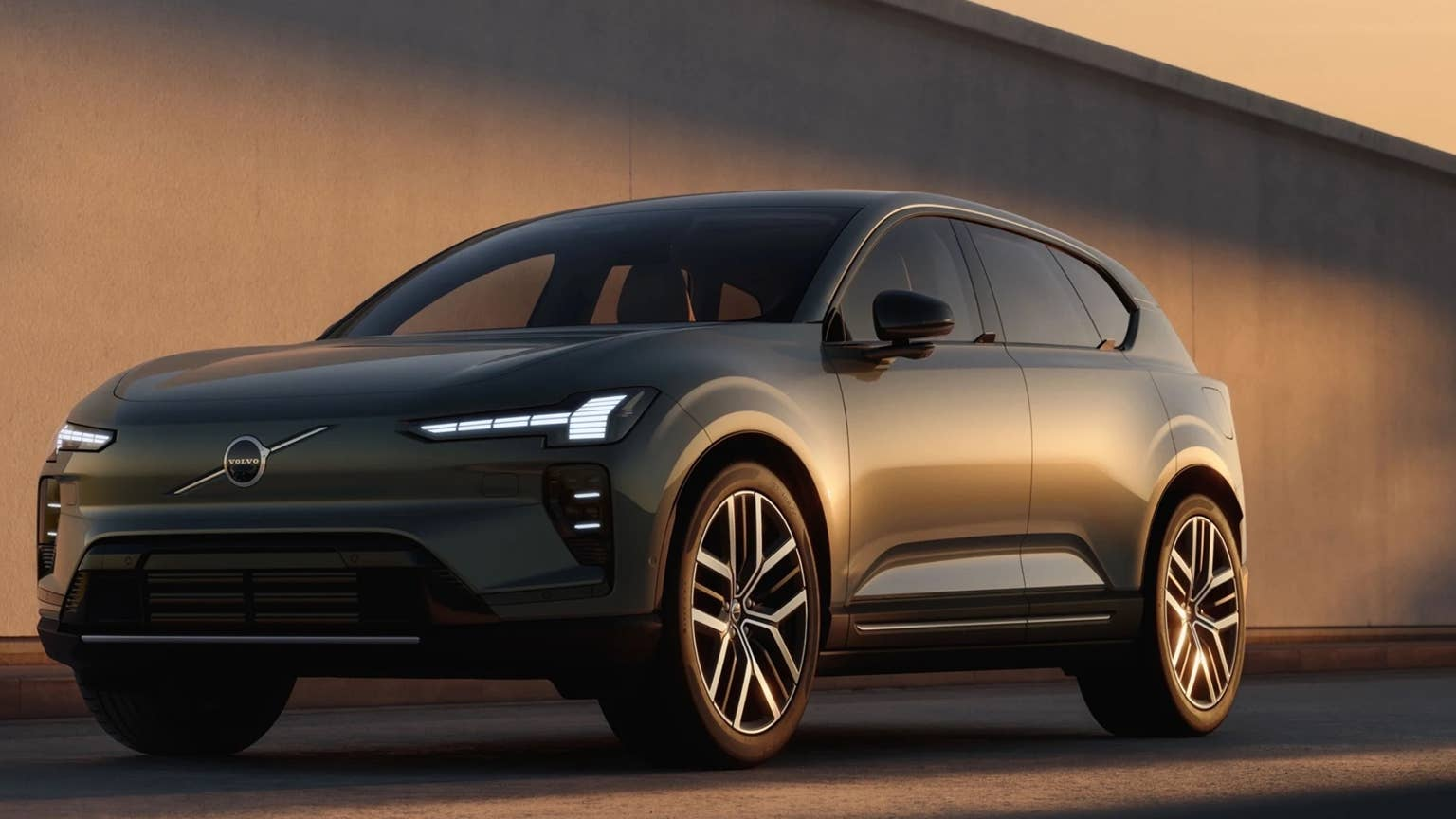
The Volvo EX60, the automaker’s new electric SUV, introduces a multi-adaptive seat belt designed to adjust to an occupant’s body and the severity of a crash. The technology builds on five decades of Volvo crash records, which show that injury risks for women and men in the company’s cars have become nearly equal, while identifying more complex crashes and a wider range of occupant characteristics as continuing safety challenges.
Volvo’s 50-Year Crash Study Tracks Injury Risks
Since 1970, Volvo has collected information about real-world crashes involving its vehicles through owner questionnaires, damage photographs and, with consent, medical records. The latest study examines belted occupants aged 13 and older across five decades of Volvo cars.
For drivers, the risk of a moderate or more serious injury declined from 10.0% in 1970s Volvos to 2.0% in 2010s models. Women’s risk fell from 12.3% to 2.1%, while men’s declined from 9.3% to 2.0%.
In frontal crashes specifically, the injury risk for drivers in 2010s Volvos was 2.8% for women and 2.2% for men. The study says the figures are close enough that their margins of error overlap.
The findings differ from broader research cited in the study, including a 2022 National Highway Traffic Safety Administration analysis of fatal crashes. That research found women faced a higher fatality risk than men, although the gap narrowed in newer vehicles.
How Volvo Design Helped Reduce Injury Risks
Volvo attributes its safety progress in part to designing protection systems for people with different body sizes. One example is the torso side airbag introduced in the 1990s, which the company placed in the side of the seatback rather than the door so it would align with occupants of different sizes as they adjusted their seats.
The study also reports substantial improvements in side-impact crashes. For front-seat occupants on the side struck by another vehicle, injury risk fell from 15.3% to 2.5%. For occupants on the far side, it declined from 9.9% to 1.1%.
Crashes involving large animals also showed a major reduction in injury risk. For drivers, the risk fell from 7.0% to 0.7%. The study’s authors credit stronger roof pillars, which are the parts of the vehicle that a tall animal may strike.
Volvo’s Rear-Seat Safety Has Kept Pace
Volvo’s data show that rear passengers have remained roughly as safe as front-seat occupants across the five decades examined. In 2010s models, the risk of moderate or worse injury was 2.2% for rear passengers and 2.4% for front passengers.
The study points to a series of restraint-system improvements. Volvo made three-point seat belts standard in the outer rear seats in 1972, introduced standard rear-seat belt pretensioners in 1998 and added a load limiter that adjusts to body weight and crash severity a decade later.
According to the study, these developments were not driven by regulators or crash-test programs.
Research from the Insurance Institute for Highway Safety presents a different picture across the wider automotive industry. In vehicles from the 2007 model year onward, belted rear-seat passengers face a 46% higher risk of fatal injury than front-seat occupants.
Multiple-Impact Crashes Remain a Major Challenge
Despite the progress, Volvo’s study identifies crashes involving more than one impact as a persistent weakness. For drivers, the risk of moderate or worse injury in these crashes declined only slightly, from 4.7% in 2000s models to 4.6% in 2010s cars.
The authors identify multiple-impact crashes as the highest-risk crash type in recent decades. They also note that standard crash tests have difficulty capturing these events because the circumstances can vary widely.
The study highlights other challenges ahead, including an aging population, increasing body weight and a wider variety of combinations involving body type, seating position and crash circumstances.
How the Volvo EX60’s Multi-Adaptive Seat Belt Works
The EX60’s multi-adaptive seat belt is designed to respond to those differences. It uses cabin and exterior sensors to adjust restraint based on a person’s height, weight and posture, as well as the characteristics of the crash.
The system offers 11 load-limiting profiles, compared with three in Volvo’s conventional seat belt. In a severe crash involving a larger occupant, it provides greater restraint to protect the head. For a smaller occupant in a less severe crash, it applies less restraint to help protect the ribs.
Volvo says the system can improve through software updates. According to the company’s U.S. launch details, the belt is fitted to the front seats.
For rear passengers, the EX60 continues to rely on Volvo’s existing restraint technology. The company has not said whether the multi-adaptive belt will be offered in the rear seats.
Volvo EX60 Price and U.S. Availability
The Volvo EX60 starts at $58,400 before destination charges. Volvo says the multi-adaptive seat belt will arrive in U.S. vehicles later this year.
What Volvo’s Safety Findings Show
The study draws on five decades of crash records from one automaker, covering vehicles in one country through 2019. Within those limits, its findings show that injury risks for women and men in Volvo cars have become nearly equal and that rear-seat safety has kept pace with front-seat protection.
The EX60’s multi-adaptive seat belt builds on that work by targeting differences in occupants and crash conditions. However, the study documents Volvo’s historical safety performance, while the new system has yet to establish its own real-world record.