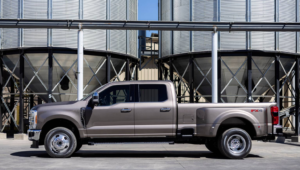

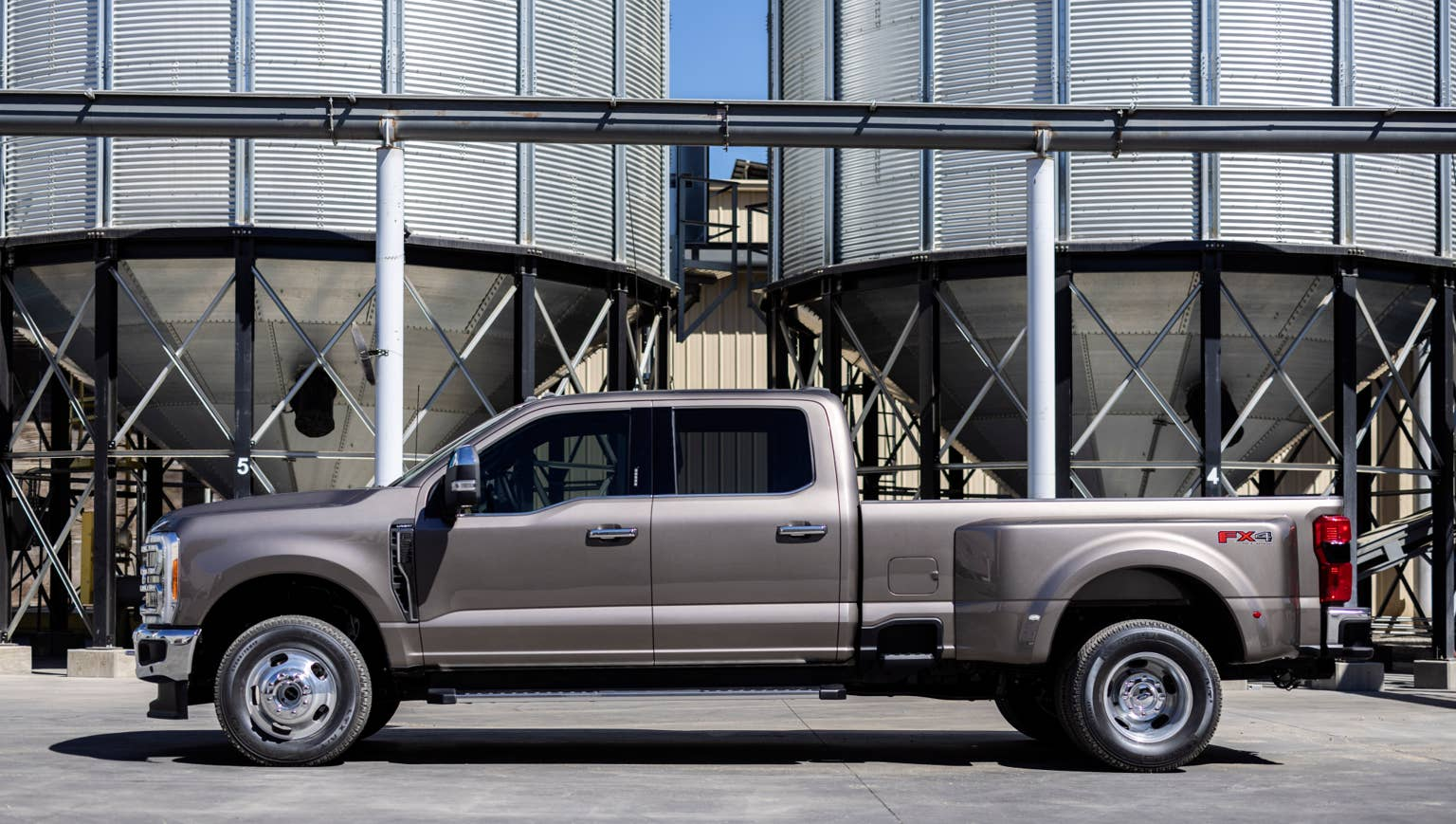
New crash-prevention tests from the Insurance Institute for Highway Safety (IIHS) show that several large pickups and cargo vans struggle to avoid collisions with other vehicles and pedestrians. None of the four Class 3 pickups evaluated earned a Good rating in either test, while cargo vans delivered mixed results, highlighting significant gaps in safety technology across commercial vehicles.
Class 3 Pickup Trucks Struggle to Prevent Crashes
The latest IIHS evaluations covered Class 3 pickups with gross vehicle weight ratings (GVWR) of 10,001 to 14,000 pounds. GVWR represents the maximum weight a vehicle can carry, including its own weight, passengers and cargo.
These large pickups are often used to tow heavy rigs and haul substantial farming equipment. However, the four models tested struggled particularly with vehicle-to-vehicle crash prevention.
- 2025-26 Chevrolet Silverado 3500HD: Poor vehicle-to-vehicle rating and Marginal pedestrian rating.
- 2025 Ford F-350: Poor vehicle-to-vehicle rating and Acceptable pedestrian rating.
- 2025-26 GMC Sierra 3500HD: Poor vehicle-to-vehicle rating and Marginal pedestrian rating.
- 2026-27 Ram 3500: Marginal vehicle-to-vehicle rating and Acceptable pedestrian rating.
None of the pickups earned a Good rating in either category. The Ford F-350’s systems avoided a collision with a passenger-car target only at 31 mph. In four other tests conducted at higher speeds, the truck failed to prevent the collision.
During one test at 43 mph, the F-350 did not reduce its speed at all. The Chevrolet Silverado 3500HD also failed to avoid the passenger-car target in all six tests.
The pickups performed somewhat better in pedestrian crash prevention, with the Ford F-350 and Ram 3500 receiving Acceptable ratings. However, neither vehicle earned a Good rating in that category.
IIHS Warns About Risks Posed by Heavy Vehicles
IIHS President David Harkey said the findings should prompt commercial vehicle manufacturers to improve their safety systems.
“These results are a wake-up call for commercial vehicle makers,” Harkey said. “Front crash prevention is especially important for these larger, heavier vans and trucks because of the danger they pose to other road users.”
According to the IIHS, 6,215 people were killed on U.S. roads in 2024 in crashes involving medium- or heavy-duty vehicles or light vans.
Cargo Van Crash Prevention Results Show Mixed Performance
The IIHS also evaluated several cargo vans, ranging from the Chevrolet Express and GMC Savana to newer models such as the Chevrolet BrightDrop 400 electric delivery van.
- 2025-26 Chevrolet BrightDrop 400: Acceptable vehicle-to-vehicle rating and Good pedestrian rating.
- 2025-27 Chevrolet Express 2500: Poor ratings in both categories.
- 2025 Ford Transit T250: Poor vehicle-to-vehicle rating and Marginal pedestrian rating.
- 2025-27 GMC Savana 2500: Poor ratings in both categories.
- 2025 Mercedes-Benz Sprinter 2500: Good vehicle-to-vehicle rating and Acceptable pedestrian rating.
- 2025-27 Ram ProMaster 2500: Poor vehicle-to-vehicle rating and Marginal pedestrian rating.
- 2025 Rivian RCV-Delivery 500: Marginal vehicle-to-vehicle rating and Good pedestrian rating.
The Mercedes-Benz Sprinter 2500 delivered the strongest overall results among the vans, avoiding Poor or Marginal ratings in both tests. The Chevrolet BrightDrop 400 and Rivian RCV-Delivery 500 also earned Good ratings for pedestrian crash prevention.
Other models performed considerably worse. The Chevrolet Express and GMC Savana, both originally introduced in 1996, received Poor ratings in both categories. Neither van has automatic emergency braking, a technology that has been shown to reduce crashes.
IIHS Plans More Commercial Vehicle Safety Evaluations
The test results highlight how far commercial vehicles still have to go to match passenger cars in crash-prevention performance. The IIHS attributes part of the gap to government safety standards for passenger cars that do not apply to many delivery vehicles and larger work pickups.
The institute argues that larger, heavier vehicles need stronger safety technology because crashes involving them can pose greater risks to other road users.
The IIHS launched its commercial vehicle assessment program in June and expects to conduct additional Class 3 vehicle safety tests between now and 2027. Larger Class 4-6 trucks are also scheduled for evaluation at a later stage.