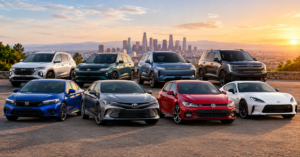

Choosing a new car in 2026 is about more than finding a vehicle that looks good or offers impressive performance. Buyers must balance purchase prices, fuel economy, safety, reliability, interior space and long-term ownership costs. With the average new-vehicle transaction price in the United States reaching $50,089 in August 2026, according to Kelley Blue Book, choosing the right model has become an increasingly important financial decision.
However, there is no single vehicle that is automatically the best choice for every driver. A commuter who travels long distances may prioritize fuel economy, while a family with several children may need a spacious SUV. Buyers who want to avoid frequent fuel stops may prefer a hybrid, whereas drivers with convenient home charging may find an electric vehicle more appealing.
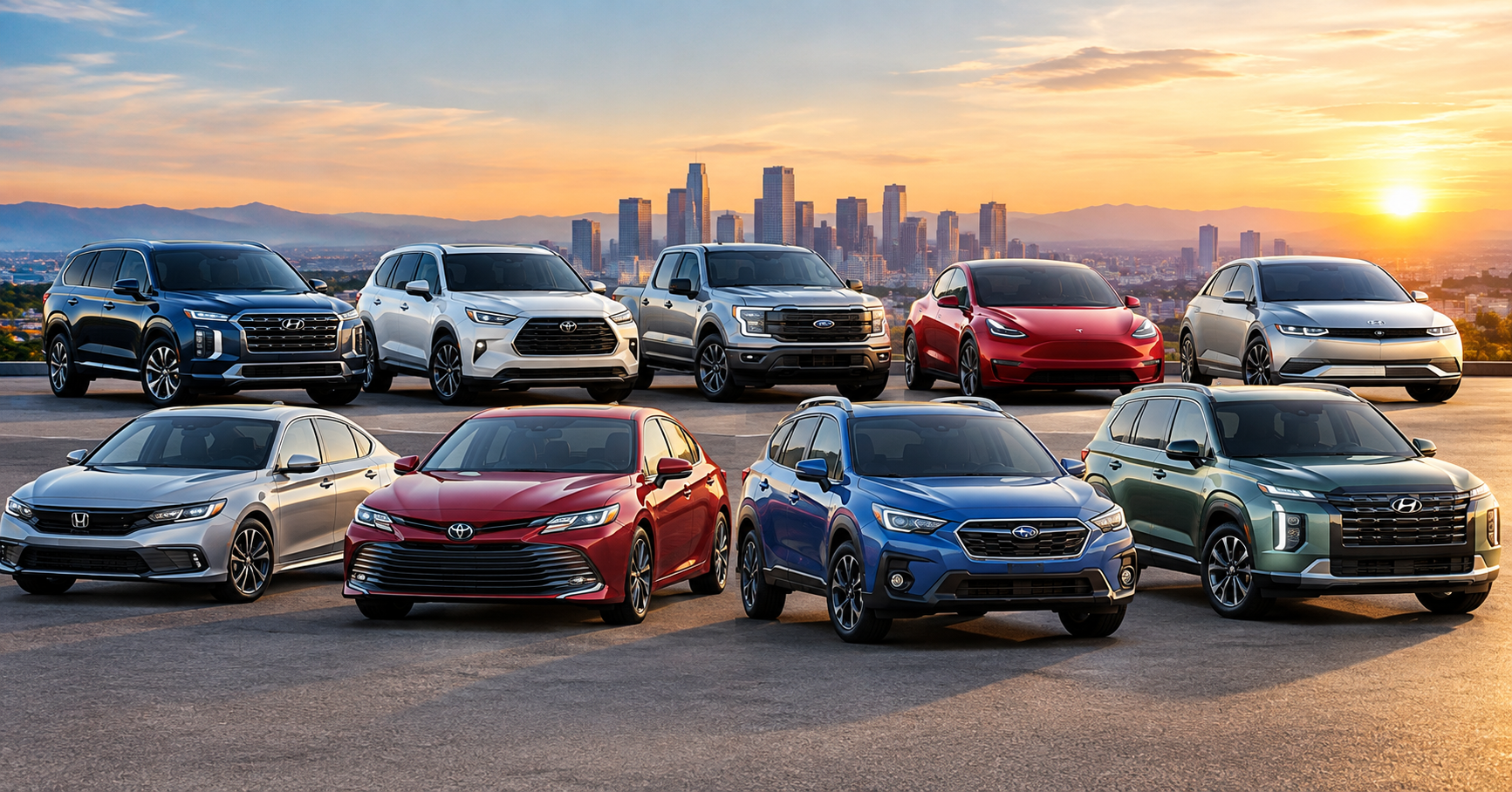
This guide brings together the 2026 vehicle recommendations identified in Consumer Reports, Edmunds, Car and Driver, J.D. Power and other automotive award programs. The following 10 models represent an editorial shortlist based on the research provided, rather than an official combined ranking issued by those organizations.
How We Selected the Best Rated Cars for 2026
Automotive awards measure different aspects of vehicle quality. Some organizations emphasize real-world road tests and driving enjoyment, while others focus on reliability, crash protection, owner satisfaction or the balance between price and features.
To build a useful list of the best rated cars 2026, this guide considers recognition from several established sources:
- Consumer Reports: Evaluates vehicles using road-test performance, predicted reliability, owner satisfaction and safety. Its 2026 Top Picks cover 10 vehicle categories.
- Edmunds: Uses vehicle testing and real-world driving evaluations to recognize leading cars, SUVs, trucks and electric vehicles.
- Car and Driver: Selects vehicles for its annual 10Best awards, emphasizing value and driving experience.
- Insurance Institute for Highway Safety (IIHS): Assesses crashworthiness and crash-prevention performance through its safety award programs.
- J.D. Power: Studies vehicle dependability using owner-reported problems and other measures of long-term ownership experience.
- U.S. News & World Report: Recognizes vehicles that offer a strong combination of quality and value in its Best Cars for the Money awards.
These programs do not use identical scoring systems. An award from one organization should not be interpreted as proof that a vehicle leads every competitor in reliability, safety, affordability and performance.
For that reason, each model below is evaluated according to its recognized strengths, intended audience and potential disadvantages.
Best Rated Cars 2026: The Top 10 Models Worth Buying
1. Honda Civic and Civic Hybrid: Best Overall Car for Most Buyers
The Honda Civic is one of the strongest all-around choices for shoppers comparing the best rated cars 2026. Its combination of everyday comfort, efficient powertrains, practical dimensions and engaging driving characteristics makes it suitable for commuters, young professionals and small households.
The Civic Hybrid stands out in particular. Edmunds named it its 2026 Top Rated Car, while Consumer Reports selected the Civic as its top pick in the small-car category. The Civic line also received recognition from Car and Driver.
Edmunds highlighted the hybrid’s comfort, refinement, interior space and fuel efficiency. According to its 2026 award coverage, the Civic Hybrid achieves up to an EPA-estimated 49 mpg in combined city and highway driving. Actual mileage will depend on driving conditions and vehicle configuration.
The hybrid powertrain is especially appealing to drivers who spend considerable time commuting. It combines fuel-conscious operation with responsive acceleration, making efficiency a central part of the ownership experience rather than a compromise in everyday usability.
Why it is worth buying
- Strong recognition from multiple automotive evaluators.
- Hybrid efficiency without requiring a plug-in charging routine.
- Comfortable passenger space for a compact car.
- Available sedan and hatchback body styles.
- A useful balance of practicality and driving enjoyment.
What buyers should consider
The Civic is still a compact car, so shoppers who regularly carry several adult passengers or bulky cargo may prefer a midsize sedan or SUV. Buyers should also compare the hybrid’s purchase price with the conventional model and consider how much they drive before deciding which powertrain offers the better value.
Best for: Commuters, small households and drivers seeking an efficient, well-rounded daily vehicle.
2. Toyota Camry: Best Midsize Sedan for Efficiency
The Toyota Camry remains a compelling option for drivers who want a comfortable midsize sedan with an emphasis on fuel efficiency and everyday usability. Consumer Reports named the Camry its 2026 Top Pick in the midsize-car category, and Car and Driver included it in its 10Best recognition.
The 2026 Camry lineup is hybrid-only, making electrified efficiency a central part of the model’s identity. Consumer Reports reported an overall fuel economy result of 48 mpg in its testing, although individual results can differ from laboratory and road-test figures.
For buyers who spend hours behind the wheel each week, the Camry offers a different proposition from a compact car. Its midsize format gives it a practical role as a daily commuter, a regular highway traveler and a vehicle for small families who do not need a large SUV.
The hybrid system may also be attractive to drivers who want lower fuel consumption without changing their routines to accommodate charging. Unlike a plug-in vehicle, a conventional hybrid does not need to be connected to an external power source to recharge its battery.
Advantages
- Hybrid powertrain across the lineup.
- Recognition from Consumer Reports and Car and Driver.
- Practical passenger space for daily driving.
- Strong emphasis on fuel economy.
Potential drawbacks
Drivers who specifically want a conventional gasoline-only Camry will need to consider another model or powertrain alternative. The Camry is also less compact than the Civic, which can matter for shoppers who frequently park in tight urban spaces.
Best for: Commuters and families seeking a midsize sedan with hybrid efficiency and everyday practicality.
3. Honda Accord: Best for Comfort and Interior Space
The Honda Accord is worth considering for buyers who like the traditional sedan format but want a midsize vehicle rather than a compact car. Its position on this list reflects its recognition in Car and Driver’s 10Best awards and U.S. News & World Report’s Best Midsize Car for the Money category, as identified in the research brief.
Compared with the Civic, the Accord provides a larger overall package for drivers who place a premium on passenger comfort. That distinction can be particularly relevant for households that frequently carry adult passengers or use their vehicle for longer highway journeys.
The Accord also gives shoppers another way to evaluate the trade-off between efficiency and space. The Civic Hybrid is an attractive choice for buyers who prioritize compact dimensions and fuel economy, while the Accord may be more appealing to those who want a larger sedan for regular family use.
Why it makes the list
- Recognition for its combination of quality and value.
- A midsize format suited to everyday family transportation.
- An alternative to compact cars for drivers who need more room.
- Recognition in Car and Driver’s 10Best program.
What to watch
Fuel economy depends on the selected powertrain and driving conditions. Shoppers comparing the Accord with the Civic Hybrid should examine the specific versions they intend to purchase rather than assume that every configuration offers the same efficiency.
Best for: Drivers who want a practical midsize sedan with an emphasis on comfort and passenger space.
4. Subaru Crosstrek: Best Small SUV for Everyday Versatility
The Subaru Crosstrek is a strong option for shoppers who want the higher seating position and flexible layout of a small SUV without moving into a larger, more expensive vehicle. Consumer Reports selected it as its 2026 Top Pick in the subcompact SUV category.
The Crosstrek is particularly relevant to drivers who divide their time between urban streets, suburban roads and weekend travel. Its compact footprint can make daily maneuvering easier than it would be in a three-row SUV, while its SUV format provides useful versatility for passengers and cargo.
The hybrid version also received IIHS Top Safety Pick+ recognition in the research brief. Buyers interested in this award should confirm that the exact model year, configuration and equipment they are considering match the vehicle covered by the applicable award.
Key advantages
- Consumer Reports Top Pick recognition.
- A compact design suited to daily driving.
- An SUV body style with flexible cargo utility.
- A hybrid option for shoppers prioritizing electrified efficiency.
Potential drawbacks
The Crosstrek’s modest acceleration may disappoint drivers who prioritize brisk performance. Its cargo area is also more limited than the space available in larger compact and midsize SUVs.
Families should test the rear-seat space with their usual passengers and child seats before making a decision. A smaller SUV can be practical, but the right fit depends on how much equipment and luggage the household typically carries.
Best for: Small households, commuters and drivers who want a versatile vehicle without the size of a larger SUV.
5. Honda CR-V: Best Compact SUV for Families
The Honda CR-V is one of the models to consider when the priority shifts from sedan efficiency to family-friendly utility. Car and Driver included it in its 2026 10Best Trucks and SUVs recognition, according to the research brief.
A compact SUV can offer a useful middle ground between a small sedan and a larger three-row vehicle. The format is particularly appealing to households that need room for groceries, luggage, sports equipment and child seats but do not require a third row.
For many buyers, the key question is whether the CR-V’s space and everyday usability justify choosing an SUV over a sedan such as the Civic or Accord. The answer depends on passenger needs, cargo habits, driving conditions and the final transaction price.
Reasons to consider the CR-V
- Recognition in Car and Driver’s 10Best Trucks and SUVs program.
- A practical format for family transportation.
- More flexible cargo utility than a conventional sedan.
- An alternative to larger, more expensive three-row SUVs.
What buyers should check
Compare the price and equipment of the exact trim levels under consideration. Safety technology, comfort features and powertrain availability can differ by configuration, so buyers should verify the details rather than rely solely on the model name.
Best for: Families seeking a practical compact SUV for commuting, errands and road trips.
6. Hyundai Palisade Hybrid: Best Three-Row SUV
The Hyundai Palisade Hybrid is a leading option for buyers who need a larger family vehicle and want hybrid technology. Edmunds named it the 2026 Top Rated SUV and its overall Best of the Best winner, while Car and Driver also recognized it in the 10Best Trucks and SUVs program.
Its three-row layout gives the Palisade a different purpose from smaller SUVs such as the Crosstrek and CR-V. It is designed for households that regularly transport multiple passengers and want a larger vehicle for family travel.
Edmunds praised the SUV’s premium-feeling appearance and interior, along with a hybrid system described as powerful and efficient. Those characteristics help explain its appeal to shoppers looking for a family vehicle that emphasizes comfort as well as utility.
Why buyers may choose it
- Edmunds Top Rated SUV and Best of the Best recognition.
- A three-row layout for larger households.
- Hybrid technology that combines a combustion engine with electric assistance.
- A premium-oriented interior experience.
Important trade-offs
The Palisade Hybrid is a larger vehicle, which can mean a higher purchase price and greater space requirements than a compact SUV. Buyers should compare its actual transaction price, fuel economy, insurance costs and parking needs with those of smaller alternatives.
Families should also test all three rows with the people who will use them regularly. Passenger comfort, access to the rear seats and the amount of luggage space remaining when every seat is occupied can be more important than a headline award.
Best for: Larger families seeking three-row passenger capacity and hybrid technology.
7. Toyota Grand Highlander: Best for Families Needing More Room
The Toyota Grand Highlander earns a place on this list because Consumer Reports selected it as its 2026 Top Pick in the midsize SUV category. Its appeal centers on the needs of families who require more passenger and cargo flexibility than a compact SUV can provide.
Choosing between the Grand Highlander and a smaller vehicle involves more than comparing exterior dimensions. Households should consider how often they transport additional passengers, whether they need to carry luggage alongside a full complement of occupants, and how frequently they use the third row.
For families who regularly travel with children, relatives or groups of passengers, the larger format can be useful. However, buyers who only occasionally need extra seating may find that a compact SUV provides enough space at a more manageable size.
Strengths
- Consumer Reports Top Pick recognition for 2026.
- A midsize SUV format suited to family transportation.
- Greater flexibility for households that need additional seating.
- An alternative to smaller SUVs for longer family trips.
What to consider
The third row should be tested in person, particularly if adults will use it regularly. Cargo capacity with all seats in use is another important consideration. Buyers should also compare the price and fuel economy of the specific powertrain and trim they intend to purchase.
Best for: Families who need a larger SUV and regularly carry passengers or luggage.
8. Ford Maverick: Best Compact Pickup for Practical Value
The Ford Maverick stands out for buyers who want pickup-truck utility without moving into a full-size truck. Consumer Reports named it its 2026 Top Pick in the small-pickup category, and the research brief identifies it as an Edmunds Top Rated Truck.
Its compact format makes it a relevant alternative for shoppers who need an open cargo bed for equipment, home-improvement supplies or recreational gear but do not require the dimensions of a full-size pickup.
Pickup buyers should begin by identifying what they actually need to transport. A smaller truck can be a practical fit for light-duty tasks, while people who regularly haul large loads or tow heavier equipment may need a vehicle with greater capacity.
Why the Maverick is worth considering
- Recognition from Consumer Reports and Edmunds.
- A smaller pickup format for everyday use.
- An open bed for carrying equipment and supplies.
- An alternative to larger trucks for buyers with moderate hauling needs.
Potential limitations
The Maverick’s bed space and towing capacity are more limited than those of many larger pickups. Buyers should verify the payload and towing ratings for their specific configuration and compare them with the equipment, trailers or loads they intend to carry.
It is also important to compare the total cost of ownership, including fuel, insurance and any equipment packages required for the intended job.
Best for: Buyers who need light-duty pickup utility in a more compact vehicle.
9. Tesla Model Y: Best Electric SUV for Many EV Shoppers
The Tesla Model Y is one of the most prominent electric vehicles to consider in 2026. Consumer Reports selected it as its electric-vehicle Top Pick, making it a key option for buyers who want an all-electric SUV.
Electric vehicles can offer a different ownership experience from gasoline-powered cars. They eliminate regular gasoline purchases and can be convenient for drivers who have access to home charging. However, the overall value depends on electricity costs, charging access, insurance, purchase price and driving patterns.
The Model Y’s SUV format also makes it relevant to shoppers who want an electric vehicle with everyday passenger and cargo utility rather than a conventional sedan. Before buying, drivers should examine the actual range of the chosen configuration and how much of their routine driving can be completed using available charging options.
Key advantages
- Consumer Reports electric-vehicle Top Pick recognition.
- An SUV format for everyday passenger and cargo use.
- Electric operation without gasoline consumption.
- Potential convenience for owners who can charge at home.
What buyers should know
Charging access is a major part of the decision. Drivers with home charging may have a different experience from those who rely entirely on public charging stations. Service access, insurance costs, controls and resale value should also be evaluated.
J.D. Power’s 2026 Vehicle Dependability Study found higher reported problem rates for battery-electric vehicles and plug-in hybrids than for gasoline-powered vehicles in its three-year ownership study. That is a broad powertrain-level finding, not proof that every electric vehicle or the Model Y specifically is unreliable.
Best for: Drivers seeking an electric SUV who have a practical charging plan and are comfortable with its technology-focused design.
10. Hyundai Ioniq 5: Best Electric SUV Alternative
The Hyundai Ioniq 5 rounds out this list as another electric SUV worth evaluating. Edmunds named it its 2026 Top Rated Electric SUV, recognizing a vehicle that combines passenger and cargo space with a distinctive interior layout and technology features.
For buyers comparing electric vehicles, the Ioniq 5 provides an alternative to the Tesla Model Y. Both can appeal to shoppers who want an electric vehicle with the flexibility of an SUV, but the final decision should depend on price, range, charging compatibility, equipment and personal preferences.
The Ioniq 5’s interior design and usable space are particularly relevant for people who want an electric vehicle that feels practical for daily life rather than focused solely on efficiency or performance.
Reasons to consider it
- Edmunds Top Rated Electric SUV recognition for 2026.
- A spacious interior layout and useful cargo flexibility.
- Technology features aimed at modern drivers.
- An alternative to other popular electric SUVs.
Potential drawbacks
Charging convenience and resale value can vary by location and market conditions. Buyers should check the charging equipment included with the vehicle, the availability of compatible public charging stations along regular routes, and the warranty terms for the specific model.
Comparing the Ioniq 5 with the Model Y during a test drive can also help buyers evaluate seating comfort, visibility, control layouts and cargo access.
Best for: Drivers who want an electric SUV with a spacious cabin and a distinctive interior design.
Quick Comparison: Which 2026 Car Is Right for You?
The best choice depends on the type of driving you do most often. This comparison summarizes the main strengths of the 10 models without suggesting that every vehicle is equally suited to every buyer.
- Best all-around car: Honda Civic Hybrid.
- Best midsize sedan for efficiency: Toyota Camry.
- Best larger sedan: Honda Accord.
- Best small SUV: Subaru Crosstrek.
- Best compact family SUV: Honda CR-V.
- Best three-row hybrid SUV: Hyundai Palisade Hybrid.
- Best larger family SUV: Toyota Grand Highlander.
- Best compact pickup: Ford Maverick.
- Best electric SUV for many shoppers: Tesla Model Y.
- Best alternative electric SUV: Hyundai Ioniq 5.
These labels are practical editorial recommendations based on the research brief, not official category titles assigned by every award organization.
What Is the Best Rated Car in 2026 for Your Budget?
Price deserves particular attention this year. Kelley Blue Book reported that the average new-vehicle transaction price reached $50,089 in August 2026, rising 1.9% compared with August 2025. It was the first month of 2026 in which the industry average moved above $50,000.
That figure is an industry-wide average, not the price of a typical compact sedan or a recommended budget for every household. It includes vehicles from different segments and price categories, so shoppers should compare actual transaction prices for the models they are considering.
If fuel economy is your priority
Start with the Honda Civic Hybrid and Toyota Camry. Both have received major recognition, and both use conventional hybrid systems that do not require routine external charging. The Civic may suit shoppers who prefer a compact car, while the Camry offers a midsize alternative.
If you need a family vehicle
Compare the Honda CR-V with the Hyundai Palisade Hybrid and Toyota Grand Highlander. The CR-V is worth examining if a compact SUV is sufficient. The Palisade Hybrid and Grand Highlander may make more sense when additional seating and family-trip flexibility are priorities.
If you want a pickup
The Ford Maverick deserves attention if you need a smaller truck for moderate hauling tasks. Before committing, check the exact towing and payload specifications. A larger pickup may be necessary for heavier loads or more demanding work.
If you are considering an EV
Compare the Tesla Model Y and Hyundai Ioniq 5. Estimate how much you will drive, where you will charge, and how much you expect to pay for electricity. Buyers without convenient home charging should investigate their public charging options before deciding that an electric vehicle will be the most practical choice.
Reliability and Safety: What Buyers Should Check
Automotive awards can narrow the search, but they should not replace a review of the vehicle’s reliability data, safety ratings and ownership costs.
Understanding the 2026 dependability findings
J.D. Power’s 2026 U.S. Vehicle Dependability Study found the highest overall reported problem rate recorded since the study was redesigned. The study measures problems reported by owners of 2023 model-year vehicles after three years of ownership.
Lexus ranked highest among premium brands for dependability for a fourth consecutive year, with 151 problems per 100 vehicles. Buick ranked highest among mass-market brands, with 160 problems per 100 vehicles.
The study also found that plug-in hybrids and battery-electric vehicles experienced more reported problems than gasoline-powered vehicles. The findings cover a broad range of issues, including infotainment, software updates, exterior components and other vehicle systems.
These results should be interpreted carefully. Problems per 100 vehicles are not the percentage of vehicles that are defective, and brand-level results do not establish the dependability of every model from that brand.
How to evaluate vehicle safety
The Insurance Institute for Highway Safety evaluates crashworthiness and crash-prevention performance. Its Top Safety Pick+ criteria include specified crash-test ratings, acceptable or good headlights, and performance requirements for pedestrian and vehicle-to-vehicle front crash prevention.
Buyers should verify the award applicable to the exact model year and configuration. A safety award for a hybrid version, for example, should not automatically be assumed to apply to every powertrain or trim in the same model family.
It is also useful to check which advanced safety features are standard. Equipment such as automatic emergency braking, blind-spot monitoring and adaptive cruise control may differ across trims or markets.
How to Choose Between Hybrid, Gasoline and Electric Cars
Powertrain choice can have a major effect on ownership costs and convenience. The best option depends on driving habits rather than on a simple assumption that one technology is always superior.
Conventional hybrid vehicles
Models such as the Honda Civic Hybrid and Toyota Camry combine a gasoline engine with an electric motor and battery. They can be particularly appealing to drivers who want improved fuel economy without changing how they refuel.
A hybrid may be worth considering if you commute regularly, spend time in stop-and-go traffic or want to reduce fuel consumption while retaining the flexibility of gasoline-powered travel.
Gasoline-powered vehicles
Conventional gasoline vehicles remain a practical option for drivers who prioritize familiar refueling, broad availability and a particular purchase price or powertrain configuration. Their suitability depends on the model, fuel economy, maintenance requirements and the buyer’s driving pattern.
J.D. Power’s 2026 study found that gasoline-powered vehicles had the lowest reported problem rate among the powertrain types it compared. That finding can inform a buying decision, but it should be weighed alongside model-specific data and the equipment a buyer actually wants.
Battery-electric vehicles
Electric vehicles such as the Tesla Model Y and Hyundai Ioniq 5 eliminate gasoline use and can offer convenient home charging. Their value depends heavily on electricity prices, charging access, vehicle range, purchase cost and ownership needs.
Before purchasing an EV, calculate the cost of charging and determine whether your usual destinations are accessible within the vehicle’s practical range. Drivers who cannot charge at home should pay particular attention to the cost, reliability and location of public charging stations.
Smart Buying Tips for 2026
Even a highly rated vehicle can be the wrong purchase if it does not fit your budget or daily routine. Before visiting a dealership, use these steps to compare the strongest candidates.
- Set a total budget. Include the purchase price, taxes, registration, insurance, fuel or electricity, maintenance and financing costs.
- Compare the exact trims. Awards may cover a model family, but equipment and pricing can vary considerably across versions.
- Check safety ratings. Verify the model year, body style, powertrain and applicable IIHS award.
- Research dependability. Look at model-specific information when available instead of relying only on a manufacturer’s overall reputation.
- Test the space. Bring child seats or typical luggage if those items are part of your regular routine.
- Calculate fuel or charging costs. Use your expected annual mileage and local energy prices to estimate ongoing expenses.
- Compare dealership offers. Review the out-the-door price, financing terms, incentives and optional packages before signing.
- Take a proper test drive. Check visibility, seating comfort, controls, braking, road noise and ease of parking.
For example, a commuter who drives long distances may find that the Civic Hybrid or Camry better fits daily needs than a large SUV. A household with several children may place more value on the Palisade Hybrid or Grand Highlander. A driver who needs a truck bed for regular projects may find the Maverick more useful than either sedan.
The right vehicle is the one that satisfies your most important needs at a price you can comfortably afford.
Frequently Asked Questions About the Best Rated Cars 2026
What is the best-rated car of 2026?
The Honda Civic Hybrid is a strong overall choice. Edmunds named it its 2026 Top Rated Car, while Consumer Reports selected the Civic as its small-car Top Pick. The best choice for an individual buyer still depends on budget, passenger needs, driving habits and preferred powertrain.
What is the safest car to buy in 2026?
There is no single safest vehicle for every buyer based on the information in this guide. Start by reviewing current IIHS Top Safety Pick and Top Safety Pick+ winners, then confirm the crash-test results and standard safety equipment for the exact model year and configuration you intend to purchase.
What is the best family SUV in 2026?
The Hyundai Palisade Hybrid is a leading option for buyers seeking a three-row SUV, having earned Edmunds’ 2026 Top Rated SUV and Best of the Best awards. The Honda CR-V is worth considering for smaller households, while the Toyota Grand Highlander offers another option for families who need a larger vehicle.
What is the best electric vehicle in 2026?
The Tesla Model Y is Consumer Reports’ 2026 electric-vehicle Top Pick. Edmunds named the Tesla Model 3 its Top Rated Electric Car and the Hyundai Ioniq 5 its Top Rated Electric SUV. The best option depends on preferred body style, charging access, range, pricing and equipment.
Are electric vehicles less reliable than gasoline cars?
J.D. Power’s 2026 Vehicle Dependability Study found that battery-electric vehicles and plug-in hybrids had higher reported problem rates than gasoline-powered vehicles in its three-year ownership research. These are powertrain-level findings and do not mean every EV is less dependable than every gasoline car. Individual models can differ substantially.
Are hybrid cars worth buying in 2026?
Hybrids can be worthwhile for drivers who want improved fuel economy without relying on external charging. The Honda Civic Hybrid and Toyota Camry are notable examples in this guide. Buyers should compare purchase prices, expected mileage, fuel costs and available features to determine whether the savings justify any price difference.
Why are new cars so expensive in 2026?
Kelley Blue Book reported an average U.S. new-vehicle transaction price of $50,089 in August 2026, up 1.9% year over year. The industry average reflects the mix of vehicles sold as well as changes in prices across individual segments. It does not mean that every new car costs $50,000 or more.
Is 2026 a good year to buy a new car?
It can be, provided the vehicle fits your budget and needs. With average transaction prices above $50,000 in August, value-oriented models deserve close attention. Compare multiple vehicles, obtain out-the-door quotes and review financing terms before deciding whether to buy now or continue shopping.
Which car brand is the most dependable in 2026?
In J.D. Power’s 2026 U.S. Vehicle Dependability Study, Lexus ranked highest among premium brands with 151 problems per 100 vehicles, while Buick ranked highest among mass-market brands with 160 problems per 100 vehicles. These brand-level findings are useful reference points but do not replace model-specific research.
Should I buy a sedan or an SUV in 2026?
A sedan may be a better fit if you prioritize compact dimensions, fuel economy and everyday commuting. An SUV may be more suitable if you need additional cargo flexibility, a higher seating position or more passenger capacity. Compare the Civic and Camry with the CR-V, Crosstrek and larger SUVs according to your actual space requirements.
Final Verdict: Which of the Best Rated Cars 2026 Is Worth Buying?
The best rated cars 2026 list demonstrates that buyers do not need to focus on a single vehicle category to find a strong option. The Honda Civic Hybrid stands out for its combination of efficiency, comfort and major award recognition. The Toyota Camry offers a midsize hybrid alternative, while the Honda Accord appeals to shoppers who prefer a larger sedan.
For SUV buyers, the Subaru Crosstrek and Honda CR-V address everyday versatility, while the Hyundai Palisade Hybrid and Toyota Grand Highlander serve households that need more space. The Ford Maverick provides a compact pickup option, and the Tesla Model Y and Hyundai Ioniq 5 give EV shoppers two recognized electric SUVs to compare.
Before choosing a winner, weigh the vehicle’s purchase price against your expected fuel or charging expenses, safety equipment, reliability information and space requirements. Confirm award details for the specific model year and trim, and arrange a test drive before committing.
Ultimately, the best car is not necessarily the one with the most awards. It is the vehicle that meets your needs, fits your budget and delivers the features you will value throughout ownership.