
Porsche sales fell 16% worldwide during the first nine months of the year, with the automaker delivering 178,532 vehicles compared with 212,509 during the same period last year. Despite declining demand in several major markets, the company continues to see strong performance from its flagship sports cars as it shifts its strategy toward exclusivity, higher-value vehicles and stronger profitability.
The decline reflects challenging market conditions, supply issues and continued weakness in China. Rather than pursuing higher sales volumes at any cost, Porsche plans to simplify its lineup, reduce operating expenses and focus on models that deliver greater value and profitability.
Porsche Sales Decline Across Major Markets
China recorded Porsche’s steepest regional sales decline during the first nine months, with deliveries falling 33% to 21,493 vehicles. Overseas and Emerging Markets also struggled, recording a 19% decrease to 35,048 units.
North America remained Porsche’s largest market, although deliveries fell 13% to 56,088 vehicles. Europe, excluding Germany, recorded an 11% decline, with 44,949 cars delivered.
Germany proved more resilient than other regions, with deliveries decreasing 7% to 20,954 vehicles. However, the overall results highlight the challenges Porsche faces in maintaining its sales performance across key markets.
Porsche 911 Sales Rise as Cayenne Leads the Lineup
Porsche’s model-level results revealed a significant difference between its SUVs and sports cars. The Cayenne remained the company’s best-selling model, with 59,586 deliveries, down just 2% from the same period last year.
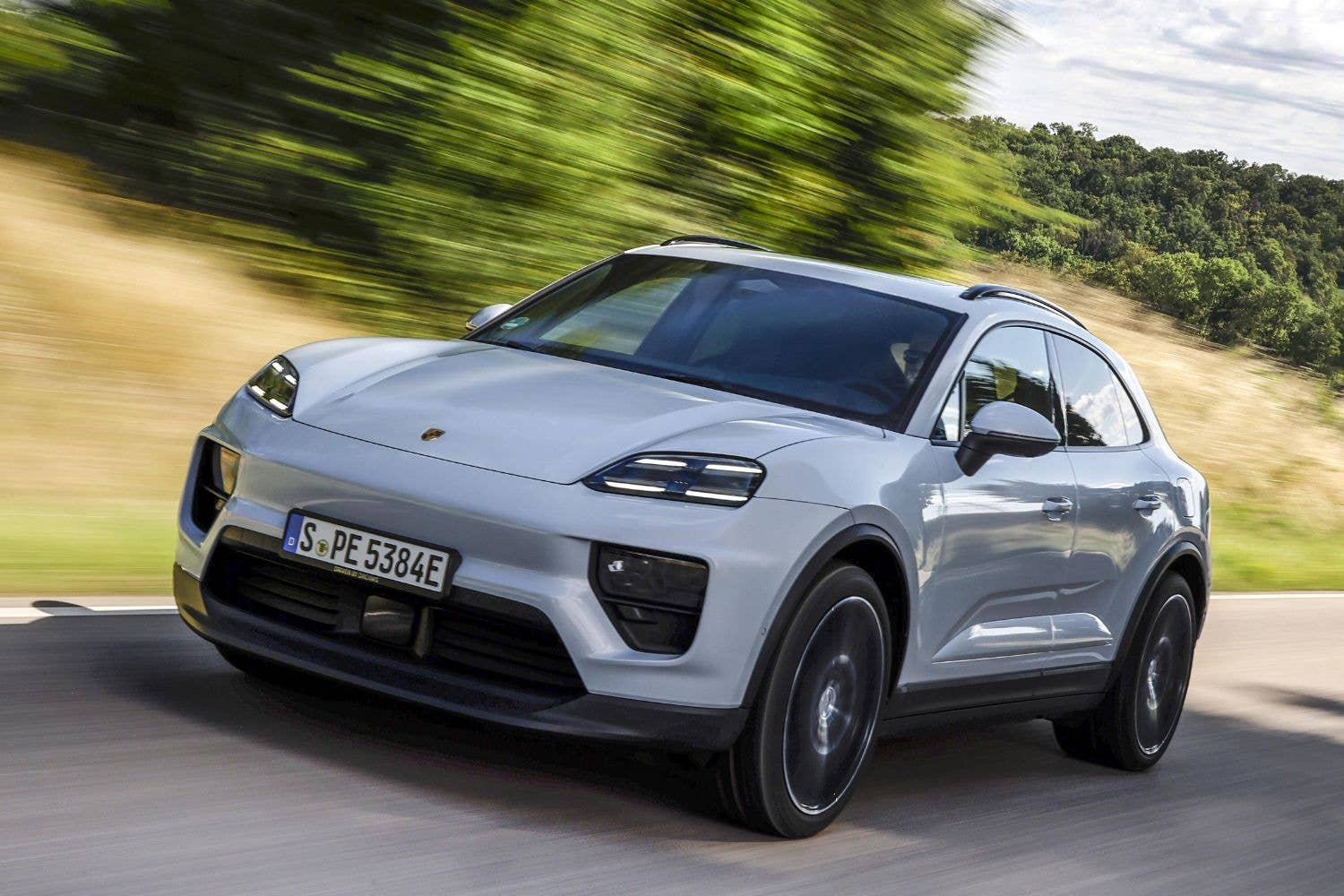
The Macan experienced a sharper decline, with deliveries dropping 21% to 51,025 vehicles. Meanwhile, the Porsche 911 delivered one of the strongest performances in the lineup, with sales increasing 12% to 42,217 cars.
Demand for Porsche’s GTS, Turbo and GT models remained strong, underscoring continued customer interest in the brand’s exclusive, high-performance sports cars.
“Our customers are deliberately choosing the exclusive and most emotionally engaging versions of our sports cars,” said Matthias Becker, Porsche’s executive board member for sales and marketing.
Other models faced more substantial declines. Panamera deliveries plunged 35% to 13,714 vehicles, while the Taycan fell 31% to 8,699 units.
The 718 Boxster and Cayman recorded 3,291 deliveries combined, with production having ended in October last year.
Porsche Plans to Simplify Its Model Lineup
Porsche’s turnaround strategy centers on selling higher-value vehicles while reducing the complexity and cost of its operations. Under its Sportwagenschmiede ’35 initiative, the company aims to reduce its model variants by approximately 20%, potentially increasing sales per variant by around 30%.
The strategy reflects Porsche’s intention to prioritize profitability and exclusivity rather than relying on greater vehicle volumes. The company also plans to expand customization options and offer more high-value versions of its vehicles to increase revenue per car.
Future products are expected to play a central role in the plan. Porsche intends to introduce all-electric versions of the 718 Boxster and Cayman in 2028, followed by a new B-segment SUV expected in 2029.
The company’s product pipeline also includes a mid-engined supercar positioned above the 911 and the possibility of an SUV positioned above the Cayenne. These vehicles form part of Porsche’s broader effort to strengthen its focus on higher-value models.
Cost Cuts and Profit Targets Shape Porsche’s Turnaround
Alongside changes to its vehicle lineup, Porsche plans to reduce its workforce, streamline management, lower development spending and improve manufacturing efficiency. The measures are intended to support a more cost-effective operating structure.
The company is targeting an operating margin of 10% to 15% and net cash flow of between 9% and 12%. Porsche also aims to reach its break-even point at annual sales of fewer than 200,000 vehicles, reducing its dependence on high production volumes.
Achieving these targets will take time, particularly as demand in China remains weak. Porsche’s strategy combines a simpler model range, greater exclusivity and tighter cost controls as the company seeks to restore its financial performance while maintaining its sports car identity.