
A new BMW EV survey reveals that American consumers want longer driving ranges, faster charging and lower prices, even though most report driving relatively short distances each day. Conducted by BMW Group North America, the survey highlights the gap between consumers’ range expectations and daily driving needs, while identifying purchase price as the biggest obstacle to electric vehicle ownership.
The findings come as Reuters reports a 30.7% decline in U.S. EV sales in 2026 through September, with consumers increasingly choosing hybrids. The results suggest that driving range, charging convenience and affordability remain central to how Americans evaluate electric vehicles.
BMW EV Survey Shows a Gap Between Desired and Daily Range
According to the study, 72% of respondents said an EV’s minimum driving range could be a deciding factor when choosing a vehicle. Meanwhile, 42% want at least 300 miles of range, and 18% prefer more than 400 miles.
However, 73% of respondents said their daily driving routines cover just 25, 50 or 75 miles in total. The figures highlight a difference between the range consumers want available and the distance they typically travel each day.
Daily mileage alone does not tell the whole story. Drivers who travel 50 miles a day but lack access to home charging may place greater importance on total range. Others may want the flexibility to tow occasionally or take longer road trips without worrying as much about their remaining battery charge.
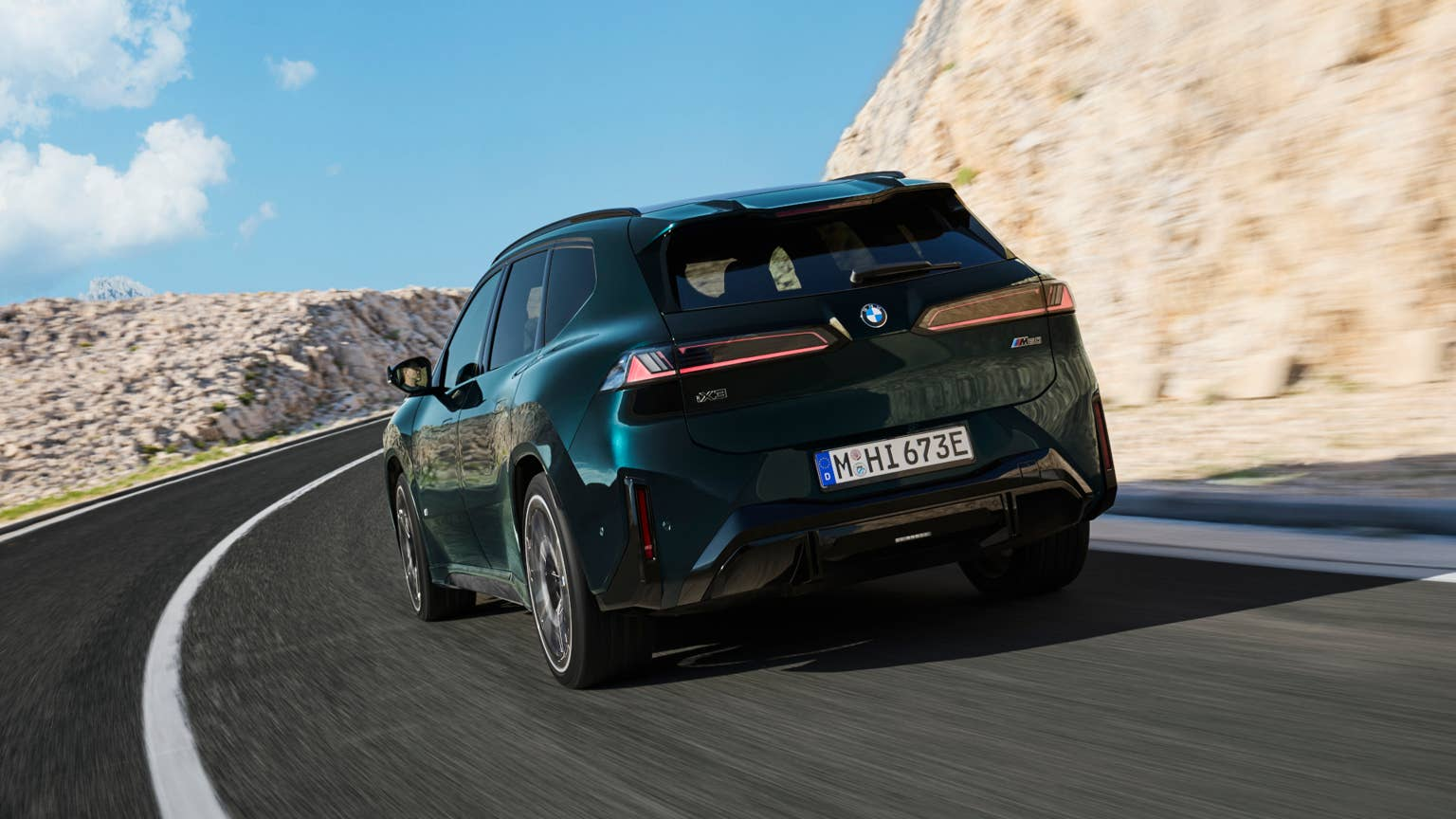
BMW’s latest electric vehicles offer range estimates that meet or exceed the preferences expressed by many survey participants. The new BMW iX3 SUV is expected to deliver between 383 and 434 miles of range, with deliveries scheduled to begin in fall 2026.
The BMW i3 sedan is scheduled to arrive in early 2027, with estimated driving ranges of 446 to 468 miles, depending on the trim. Those figures put both upcoming models within the range levels many respondents said they wanted.
Faster EV Charging Is Becoming a Bigger Priority
Charging speed is another important consideration for prospective EV buyers. In the BMW EV survey, 53% of respondents said they would be more likely to consider an electric vehicle if a 10-minute fast-charging stop could add approximately 150 miles of range.
The preference was particularly strong among younger consumers. Among Generation Z respondents, 70% said that charging capability would increase their interest in an EV, compared with 30% of Baby Boomers.
Expectations for acceptable charging times have also increased. In 2026, 55% of consumers said 30 minutes or less was an acceptable charging time, up from 48% in 2025.
The upcoming BMW iX3 is designed to address these expectations. At an 800-volt DC fast-charging station, the electric SUV can add approximately 185 miles of range in 10 minutes.
The results indicate that charging convenience is an important part of the EV ownership equation, alongside the total distance a vehicle can travel on a full charge.
EV Purchase Price Remains the Biggest Barrier
Despite improvements in driving range and charging performance, upfront cost remains the leading obstacle to EV ownership. The survey found that 51% of respondents cited purchase price as a barrier to buying an electric vehicle.
Other concerns included battery longevity and replacement costs, cited by 31% of respondents, followed by charging time at 26% and driving range at 24%.
The BMW iX3 is scheduled to start at $61,500 when it arrives. That price is more than $10,000 above the base gasoline-powered BMW X3, highlighting the cost difference between the two models.
Less expensive versions could change the pricing picture in the future, although the survey identifies affordability as a significant concern for consumers considering an electric vehicle today.
Consumer Attitudes Toward EVs Continue to Change
The BMW EV survey also found that consumer perceptions of electric vehicles have continued to shift. Overall, 45% of respondents said their opinion of EVs had changed over the previous year, compared with 38% in 2025.
Of all respondents, 34% said they viewed EVs more positively, while 11% reported a more negative opinion. The results show that attitudes are changing, although the direction of that change differs among consumers.
Awareness of charging infrastructure remains another challenge. Only 47% of respondents said they knew where their nearest public charging station was located.
Alexander Schleicher, head of e-mobility at BMW Group North America, said consumers increasingly evaluate electric vehicles based on performance, features and value as range and charging capabilities improve.
“This survey confirms what we’re hearing directly from customers: EVs are mainstream now, and the brands that win deliver real range, fast charging and the driving experience people expect,” Schleicher said.
How BMW Conducted Its EV Survey
The online survey was conducted from September 11 to 13, 2026, among 1,005 U.S. adults aged 18 and older. The sample was weighted to represent the U.S. adult population.
BMW said portions of the survey were also conducted in 2019, 2020, 2021, 2022, 2023, 2024 and 2025. Year-over-year comparisons in the latest results are based on a survey conducted in May 2025.
Range, Charging and Cost Continue to Shape EV Demand
The BMW EV survey identifies three persistent considerations for American buyers: driving range, charging speed and purchase price. Although many respondents drive relatively short distances each day, their expectations extend beyond routine commuting to include the flexibility of longer journeys.
As automakers improve range and charging performance, affordability and access to charging infrastructure remain important parts of the ownership decision. The survey suggests that meeting consumer expectations involves more than extending battery range alone.