Tesla’s new Roadster has attracted worldwide attention with promises of gravity-defying stunts, extreme acceleration and a potential top speed of 330 mph. However, questions about safety, practicality, production costs and delivery timelines raise doubts about whether the ambitious supercar will reach customers with all its promised capabilities.
Why Tesla Is Betting on the Roadster
The Roadster represents a different direction for Tesla, with a proposed design capable of levitating, flipping and jumping. The company has also promised technology that could generate downforce at 0 mph and potentially allow the vehicle to reach 330 mph, making it the fastest car in the world.
Elon Musk has also promised buyers access to a specially designed looped track where they could experience the Roadster’s unusual capabilities. The proposal raises questions about whether the vehicle will remain a practical, road-legal car in its intended configuration.
The supercar is expected to cost more than $250,000. Its specialized technology relies on a single-use carbon-overlaid pressure vessel, known as a COPV, which currently takes six hours to refill. Tesla says it is working to reduce that time to 30 minutes, a more practical interval for track use.
A Potential Engineering Milestone
If Tesla delivers the Roadster on time, with all its promised features and without regulatory, reliability or safety compromises, the achievement could become one of the decade’s most significant automotive developments. The company’s practice of introducing refinements and improvements could also make the vehicle better after its initial release.
The Roadster is targeted for production in some form in 2028. Whether it ultimately reaches customers or not, its unveiling has already generated substantial attention. If it enters production as described, it could establish new automotive performance benchmarks and demonstrate engineering capabilities that other manufacturers might struggle to replicate.
The proposed technology includes cold-gas thrusters and compression tanks associated with SpaceX, actuating components borrowed from Tesla’s Optimus robot and new Tesla battery technology. These systems would connect the Roadster to several of Musk’s businesses while creating a showcase for advanced engineering.
The vehicle is also intended to deliver an exceptional driving experience. Musk and Tesla Vice President of Vehicle Engineering Lars Moravy have described it as the “last best driver’s car.”
The Model 3 Performance has already demonstrated impressive agility, with some automotive journalists comparing its handling to that of a BMW M3. The Roadster is expected to go further through thruster-controlled yaw angles and technology designed to maximize traction.
How the Roadster Could Support Tesla’s Robotaxi Strategy
The Roadster’s potential role extends beyond high-performance driving. Musk has envisioned a future in which autonomous Cybercab robotaxis transport people, creating an apparent contrast with a supercar designed around driver engagement and more than 1,000 horsepower.
Marketing could help connect the two projects. If the Roadster reaches production while robotaxis become more widely available but have not yet achieved mainstream adoption, the supercar could give technology enthusiasts another reason to choose Tesla’s autonomous transportation services.
A vehicle capable of performing a kickflip and competing with hypercars on a track could reinforce the company’s image as a technology innovator. Customers using a Cybercab might associate the service with the engineering ambitions demonstrated by the Roadster.
Tesla could potentially combine its autonomous robotaxi service with exclusive driving experiences at company-owned tracks. This approach would offer autonomous transportation alongside access to a specialized performance vehicle, although its success would depend on appropriate safety standards.
The Roadster’s Financial and Production Challenges
Flying-car concepts have faced significant regulatory obstacles, and earlier projects have struggled to achieve convincing commercial success. The Roadster’s proposed ability to fly and flip appears particularly difficult to reconcile with ordinary public-road use.
Its financial prospects are another concern. The Bugatti Veyron demonstrated how expensive an ambitious hypercar program can become. Bugatti and the Volkswagen Group famously lost money on every Veyron despite charging seven-figure prices, an unusual approach when the model emerged in the mid-2000s.
The Veyron project was delayed by two years, but Ferdinand Karl Piëch pushed the Volkswagen Group to pursue its objectives until the targets were achieved or exceeded. By contrast, Musk has frequently faced questions about meeting self-imposed deadlines and maintaining consistent plans.
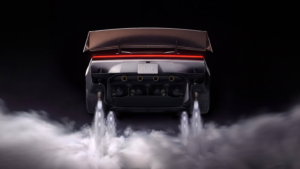
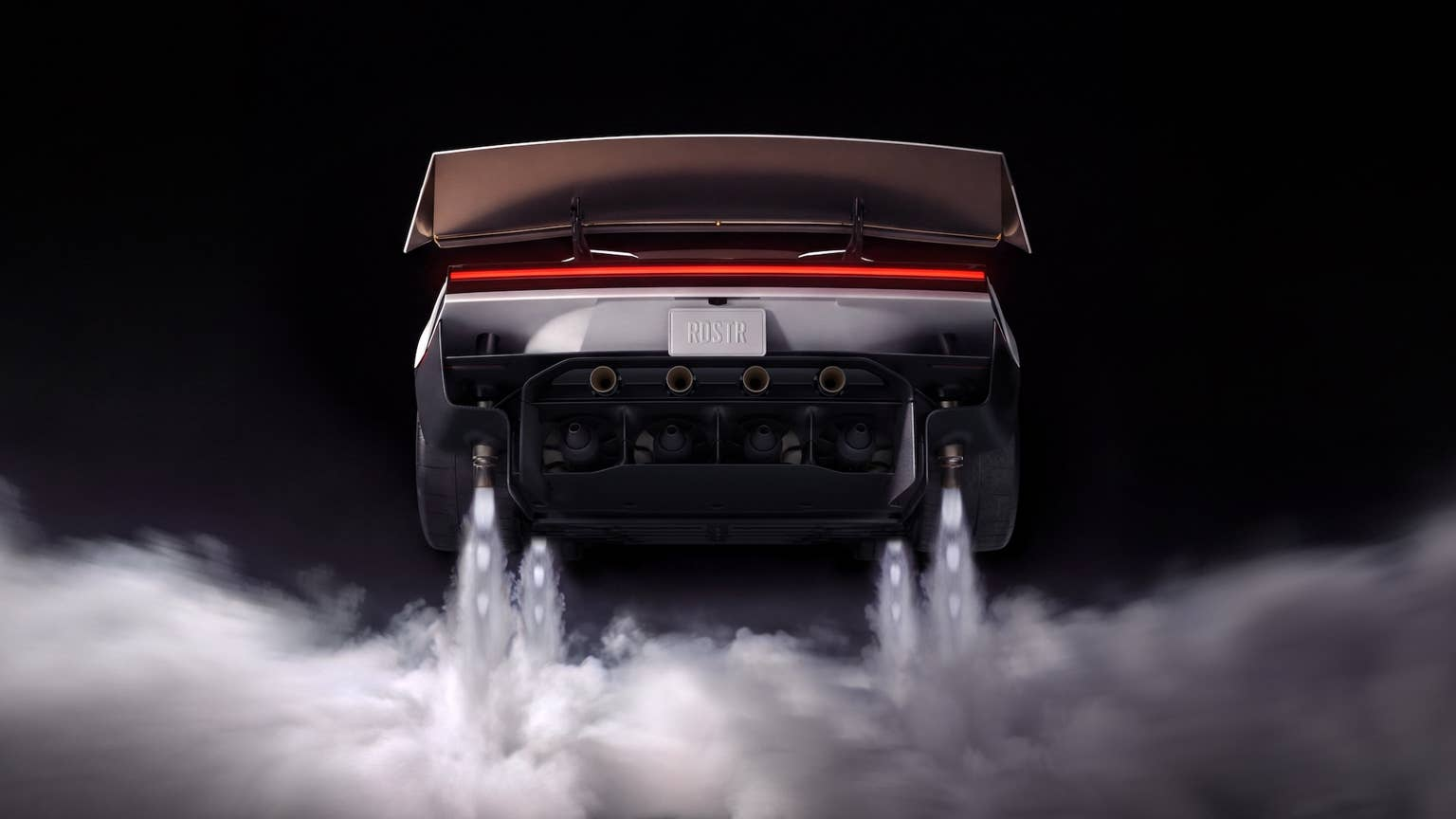
The proposed limited-production Rocket version, which is expected to offer flying and flipping capabilities and be available by invitation, has no disclosed price in the available details. The Thrust version, which includes a 200-liter COPV and four gas nozzles, is priced at $250,000.
Designing, developing and testing a vehicle this complex could require substantial investment. Tesla reported negative cash flow of $1.1 billion in the second quarter of the year, driven largely by capital expenditures related to artificial intelligence and the production of the Cybercab and Optimus robot.
The company’s financial position raises questions about whether committing additional resources to another ambitious project is a sound decision, particularly if the vehicle proves difficult to produce profitably.
Safety Concerns Surround the Tesla Roadster
The Roadster’s cold-gas thrusters introduce serious safety questions even without considering its proposed flying capabilities. The rear-facing thrusters are described as extremely powerful, creating potential hazards for anyone standing behind the car during an acceleration run from 0 to 60 mph in half a second.
The system could also create significant noise and clouds of white vapor. Although the vapor disappears quickly, it could temporarily obstruct visibility. The car’s partially exposed rear tires could also throw stones and other debris toward following vehicles at high speeds.
Unintended acceleration presents another concern. A launch reaching 60 mph in half a second would presumably require a carefully controlled sequence to prepare the vehicle’s systems. However, an unexpected cyclist or pedestrian entering its path could create a dangerous situation.
Even Top Fuel dragsters, which can match the proposed acceleration to 60 mph, require wide lanes for safe operation. A vehicle delivering similar acceleration on public streets would raise questions about whether a driver could react quickly enough to prevent a collision.
The proposed top speed of 330 mph creates additional questions about occupant protection in a crash. The presence of a 10,000-psi pressure vessel close to the occupants also raises concerns about the risks associated with the specialized equipment.
The possibility of flight adds another layer of uncertainty. Questions remain about whether the roof could withstand the vehicle’s weight if the thrusters failed while the car was airborne.
Could the Roadster Connect Tesla and SpaceX?
The Roadster also highlights the technological connections between Tesla and SpaceX. Starlink and Grok have already made their way into Tesla vehicles, making further integration between the businesses a possibility.
Speculation about a potential merger has raised questions about whether the Roadster could generate additional attention for both companies before a broader corporate combination. Musk has denied merger rumors, but the possibility remains part of the discussion surrounding the vehicle.
Part of Musk’s potential $1 trillion compensation package depends on increasing stock values. Achieving that objective could be challenging through sales of the Model 3, Model Y and Cybertruck alone, particularly as Tesla also pursues humanoid robots and autonomous vehicles while competing with other major manufacturers, including Hyundai.
A combined company could potentially bring together energy generation and storage, satellite communications, transportation and logistics, artificial intelligence, supercomputing software, robotics, reusable rockets, and semiconductor and chip production.
Such a combination could also create opportunities involving military and surveillance applications, as well as government contracts. SpaceX reported almost $4 billion in negative cash flow in the first half of 2026, adding another financial consideration to the discussion surrounding the two businesses.
Regulatory Hurdles Could Delay the Roadster
Regulatory and safety concerns could make the Rocket Roadster extremely difficult to approve for public-road use. One possible workaround could involve an “off-road only” restriction, but that would limit how owners could use the vehicle.
The demonstration vehicles also did not provide a view of the cabin, raising questions about whether they were simplified models rather than complete vehicles carrying their full production weight.
These uncertainties leave open the possibility that the final Roadster could be delayed beyond the nine years that buyers have already been waiting, or that production could be postponed indefinitely.
Tesla’s reservation agreement for the Thrust version also warns buyers that delivery is not guaranteed. Clause 4 states: “Delivery: You understand that Roadster is still under development at the time you entered into this Agreement, and so we cannot guarantee when your vehicle will actually be delivered or if it will be delivered [at all].”
Is the Tesla Roadster a Marketing Strategy?
The Roadster’s demonstrations may be intended less as a preview of a vehicle that customers can soon own and more as a way to generate attention for an ambitious project that could consume substantial resources before becoming profitable.
Musk has repeatedly used ambitious goals and unconventional projects to attract attention. However, the Roadster faces a combination of technical, financial, regulatory and safety challenges that could make its proposed capabilities difficult to deliver.
For prospective buyers, the vehicle remains an uncertain proposition. Its most extraordinary features would require regulatory approval, including acceptance of its cold-gas thrusters by the National Highway Traffic Safety Administration and the necessary licenses from the Federal Aviation Administration.
Tesla took four years to develop the Cybertruck, a considerably simpler vehicle than the proposed flying Roadster, and the truck still fell short of some of Musk’s promises.
The company has also experienced crashes, lawsuits, recalls and fires, demonstrating that its products, like those of other manufacturers, can have shortcomings. Nevertheless, Tesla continues to maintain a devoted following among customers and supporters who remain enthusiastic about its ambitious announcements.
The Bottom Line on Tesla’s Flying Supercar
The Tesla Roadster combines extraordinary performance claims with unresolved questions about safety, affordability, production and regulatory approval. Its proposed ability to fly, flip and reach 330 mph makes it an ambitious engineering project, but those same capabilities could prevent it from becoming a conventional road-legal vehicle.
With a target price of $250,000 for the Thrust version, an uncertain delivery schedule and a reservation agreement that does not guarantee delivery, the Roadster remains a work in progress. Its eventual production will depend on whether Tesla can turn its ambitious promises into a vehicle that meets the necessary technical and safety requirements.
For now, the Roadster has already accomplished one objective: generating widespread attention for Tesla and its broader technological ambitions. Whether the company can translate that attention into a production vehicle remains uncertain.