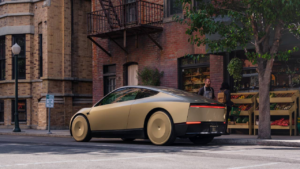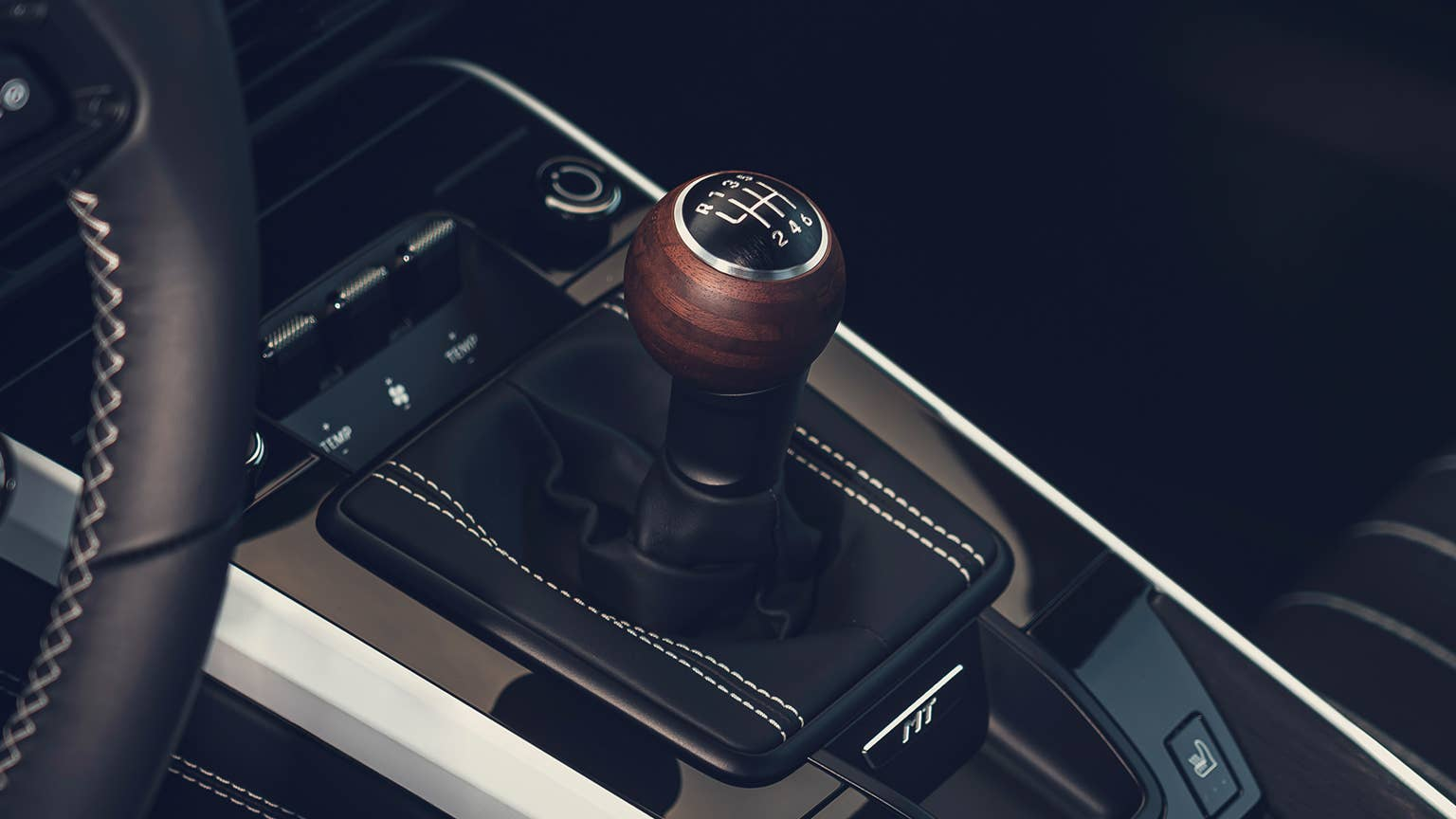
Porsche is exploring a new way to make electric vehicles more engaging by developing an electronic shifter designed to replicate the feel of a conventional manual gearbox. A newly published patent describes a system that uses sensors, an actuator and stored electrical energy to adjust shifter resistance and anticipate when a driver is preparing to change gears.
Although electric vehicles do not require conventional gearboxes, simulated manual shifting has become an area of interest for automakers looking to make their cars more interactive. Porsche’s latest concept builds on that idea by focusing on how the shifter physically responds to the driver’s movements.
How Porsche’s Electric Car Shifter Would Work
The patent, published by the German Patent and Trade Mark Office this week, describes an electronic gear lever that uses sensors to monitor its position, the force applied by the driver and potentially its acceleration. A controller then uses those measurements to adjust the resistance felt when the lever moves.
An electrically controlled actuator, potentially using a magnetic-based mechanism, can make the shifter harder to move at specific points. Springs help return the lever to its resting position, while the actuator can recreate the resistance associated with a conventional gear lever reaching the end of its travel.
The system’s key feature is its ability to anticipate a shift before the driver actually moves the lever. This could be accomplished with a sensor inside the gear knob or a camera that monitors the driver’s hand. If the setup includes a clutch pedal, an additional sensor could detect its use.
Capacitor Technology Could Improve Shifter Response
Once the system detects that a gear change may be imminent, it can charge a capacitor to store electrical energy for a brief burst of power. That energy can then be delivered to the actuator, allowing the mechanism to increase resistance at the moment a particular response is needed.
By preparing the actuator in advance, the system could respond more quickly than a mechanism that adjusts resistance only after the driver begins moving the shifter.
The result could be a more convincing simulated manual-shifting experience, with firmer resistance, defined end stops and physical feedback designed to resemble the feel of a traditional gearbox.
Porsche Is Not the Only Automaker Exploring Manual EVs
Porsche’s concept follows broader efforts by automakers to bring simulated or actual manual-shifting experiences to electric vehicles.
Hyundai helped popularize simulated gear changes with the Ioniq 5 N, while Toyota has explored the possibility of equipping electric vehicles with an actual stick shift. Toyota’s concept includes a clutch pedal and could even allow the vehicle to stall if the driver operates the system incorrectly.
Porsche has also been working on a shifter capable of simulating both manual and automatic transmission behavior. The newly described actuator could add another layer of realism by changing the physical resistance drivers feel when operating the electronic lever.
Could a Future Porsche Taycan Get a Manual-Style Shifter?
The technology could be suited to an electric sports car designed to provide greater driver involvement without requiring a conventional manual transmission. However, Porsche has not confirmed plans to introduce the system in a production vehicle.
The patent does not identify a specific model that could receive the technology. A future Taycan is one possibility, but no production application has been announced.
For now, Porsche’s electronic shifter remains a proposed concept. The patent outlines how the system could recreate the resistance and tactile feedback of manual shifting, but it does not confirm that the technology will reach showrooms.