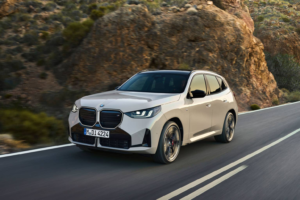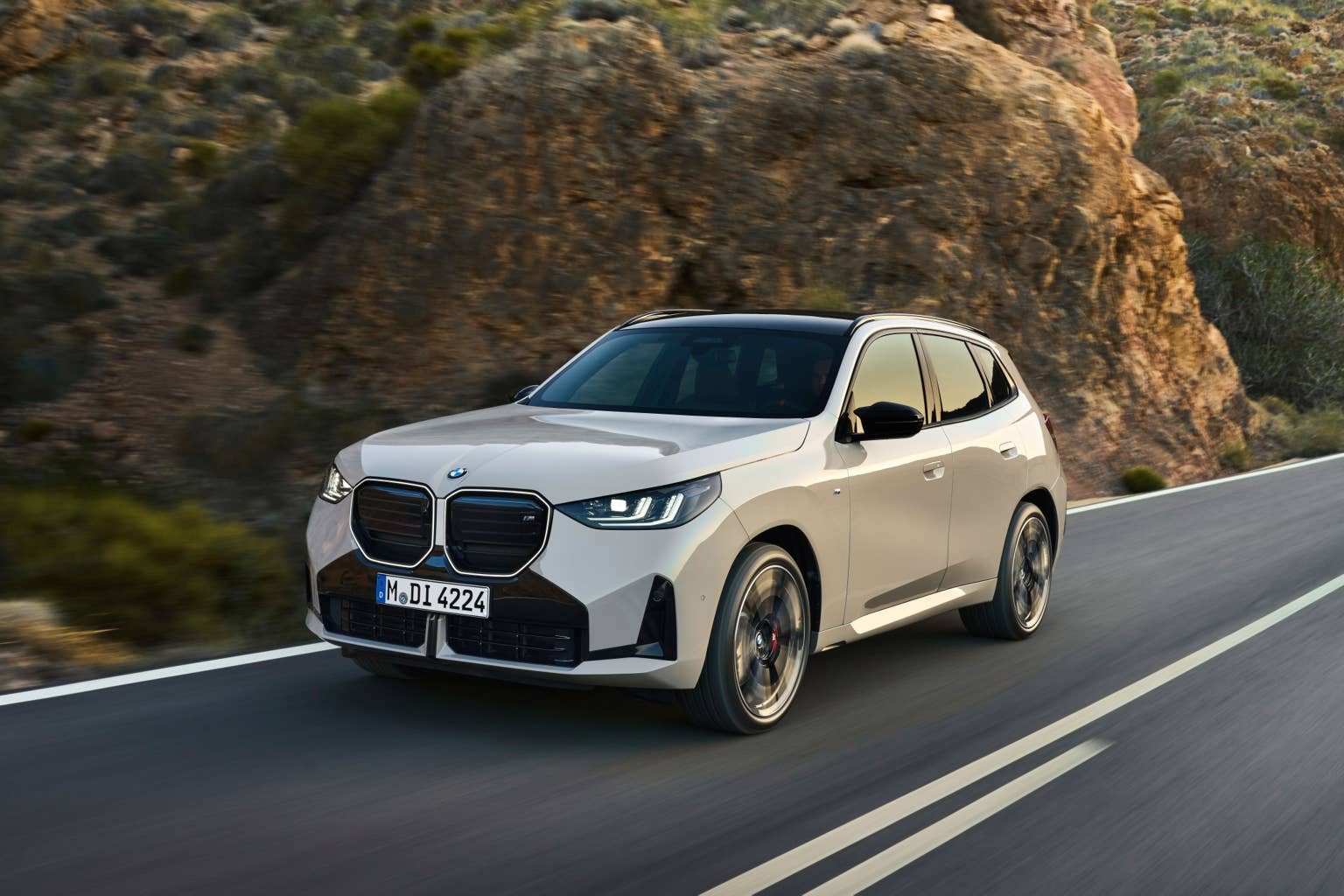
The new BMW iX3 weighs well over 5,000 pounds, making it unusually heavy for a compact SUV. Its large battery contributes to that weight, raising questions about how the electric powertrain affects agility. A moose test put the BMW iX3 through an emergency avoidance maneuver, revealing how effectively the electric SUV manages body roll, understeer and stability when forced to change direction quickly.
How the BMW iX3 Performed in the Moose Test
The vehicle used in the test was the BMW iX3 50 xDrive, the same version that arrived first in the U.S. An even quicker variant, the iX3 M60, was unveiled earlier in October and is scheduled to arrive later. The tested vehicle also featured several optional extras, including substantial 22-inch wheels.
Before attempting the moose test, the testers evaluated the iX3 in a slalom course, requiring the driver to navigate a series of cones. The driver praised the SUV’s precise steering and its resistance to excessive body roll, two characteristics that helped it deliver a competitive result.
The BMW iX3 completed the slalom in 22.7 seconds, matching the gas-powered Porsche Macan. It was fractionally slower than the Mercedes-Benz GLC 400 4Matic EQ, which completed the course in 22.6 seconds.
BMW iX3 Struggles With Understeer at First
The initial moose test attempt took place at around 48 mph. Because the driver had not yet had an opportunity to assess the vehicle’s responsiveness, the iX3 experienced significant understeer, preventing it from returning to its lane within the required distance.
After subsequent attempts, the electric SUV completed the maneuver at a best speed of just over 45 mph. That result exactly matched the electric Mercedes-Benz GLC.
Although the iX3’s maximum speed was not particularly remarkable, it outperformed the gas-powered BMW X3 M50, which managed just 42.8 mph in the same test. That result was considered disappointing.
Testers also found that the iX3 experienced less pronounced understeer than the X3 and inspired greater confidence during the maneuver. That distinction is particularly notable because the electric SUV weighs more than 500 pounds more than the X3 M50.
Why the Electric BMW iX3 Handles Differently
The placement of the iX3’s battery within the SUV’s floor structure likely contributes to its superior handling characteristics compared with the gas-powered X3. The test results suggest that the electric model can manage sudden directional changes more effectively despite its substantially greater weight.
Handling is not the only area in which the new iX3 distinguishes itself from its gas-powered sibling. The two SUVs also take different approaches to exterior design and interior technology.
BMW iX3 Design and Interior Compared With the X3
The gas-powered X3 appears to sit awkwardly between two distinct BMW design eras, while the new iX3 fully embraces the Neue Klasse philosophy. Its exterior features a slimmer grille and cleaner lines, giving the electric model a more cohesive design approach.
Inside, the iX3 introduces BMW’s all-new cabin layout, including the Panoramic iDrive system. This replaces the older dual-screen arrangement found in the X3.
Interior quality has also taken a welcome step forward in the iX3. By comparison, the gas-powered X3 is less impressive in this area than its predecessor.
BMW iX3 vs. X3 M50: Price and Horsepower
The BMW iX3 50 xDrive starts at $61,500 and is both cheaper and more powerful than the X3 M50 xDrive. The electric SUV produces 463 horsepower from its dual-motor powertrain, while the X3 M50 delivers 393 horsepower through its six-cylinder turbocharged engine.
BMW’s B58 six-cylinder engine remains a strong point of the gas-powered model, but its acceleration advantage is relatively small. The X3 M50 reaches 60 mph just 0.3 seconds quicker than the iX3.
The X3 M50 also costs $5,000 more than the electric model. Buyers can equip the iX3 with several desirable features and still end up with a less expensive vehicle than a comparably considered gas-powered alternative.
Does the BMW iX3 Make a Stronger Case Than the X3?
The new BMW X3 has not yet undergone a full test in this evaluation, although the vehicle has been seen in person. The iX3’s handling results, lower starting price and updated design provide several reasons to consider the electric SUV over its gas-powered counterpart.
Despite weighing more than 5,000 pounds, the BMW iX3 delivered a competitive slalom performance, matched the electric GLC in the moose test and outperformed the gas-powered X3 M50 in the emergency avoidance maneuver. Combined with its greater horsepower, redesigned interior and lower price, those results make the iX3 a potentially more appealing choice within the BMW X3 lineup.