
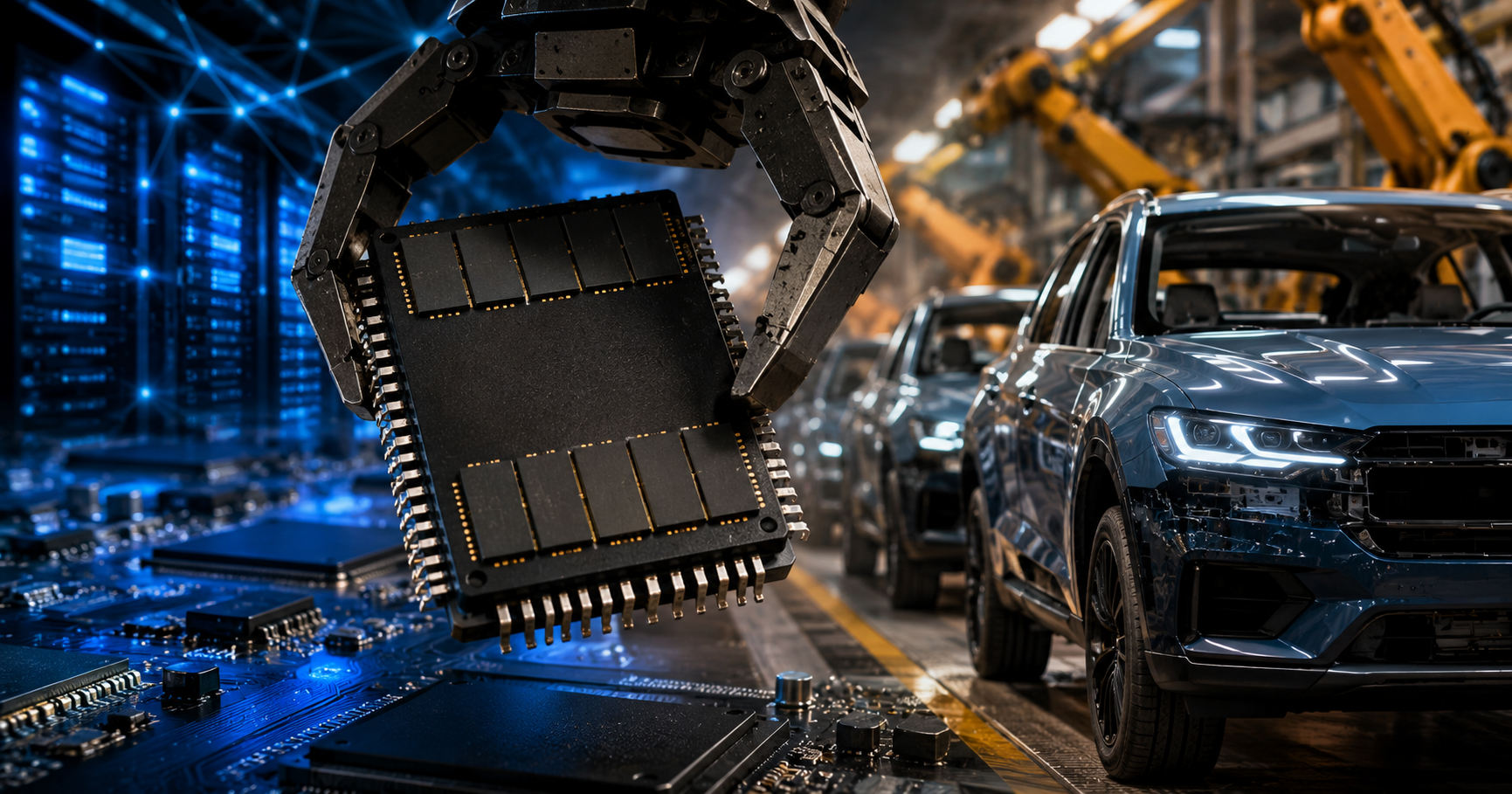
The automotive industry is facing a growing semiconductor challenge as rising demand for artificial intelligence infrastructure drives up the cost and availability of automotive memory chips. According to the article, automakers are competing with major technology companies for Dynamic Random-Access Memory (DRAM), creating new pressure on vehicle production and costs.
AI Demand Reshapes the Memory Chip Market
Artificial intelligence data centers require large amounts of Dynamic Random-Access Memory to operate, prompting silicon suppliers to prioritize technology companies such as Meta and Google over traditional automakers.
According to the article, this shift comes as modern software-defined vehicles increasingly depend on memory to power driver-assistance systems and digital dashboards. At the same time, DRAM spot prices have climbed by roughly 450%, making it more difficult for automakers to secure the components needed for these systems.
Automakers Face Rising Costs
According to a report from Automotive News, the impact is already appearing in automakers’ financial results.
General Motors increased its commodity inflation guidance by $500 million because of higher memory costs. Ford is absorbing nearly $1 billion in inflationary pressures tied to severe DRAM constraints, while Honda reported a $295 million reduction in sales volume resulting from semiconductor shortages.
The article compares the current situation with previous supply chain disruptions that halted production of key vehicle models when critical components became unavailable. Unlike earlier shortages, the current constraints affect memory used in advanced vehicle technologies that consumers increasingly expect.
High-Tech Features Could Be Affected
According to the article, manufacturers may respond by limiting advanced autonomous technology packages to higher-priced vehicle trims in an effort to reduce costs. Another option would be delaying vehicle deliveries until sufficient components become available.
The article notes that consumers have previously experienced delayed deliveries and missing features during earlier semiconductor shortages. It also states that the current challenge comes as automakers continue managing broader powertrain transitions.
Memory Suppliers Hold a Strong Position
According to the article, Samsung, SK Hynix, and Micron account for nearly 90% of the automotive memory market. The suppliers are requiring automakers to enter multi-year agreements to secure chip allocations, a development that the article says is likely to keep vehicle manufacturing costs elevated for years.
The article also states that vehicles typically use older generations of memory technology that require lengthy validation cycles, while chip manufacturers generate higher margins from the latest memory products used in AI servers.
Automotive Industry Navigates Ongoing Supply Challenges
According to the article, the automotive sector continues to face supply chain pressures ranging from component availability to broader shifts in semiconductor production priorities. As AI-related demand reshapes the memory market, automakers are working to secure critical DRAM supplies while managing rising production costs and maintaining advanced vehicle technology offerings.