
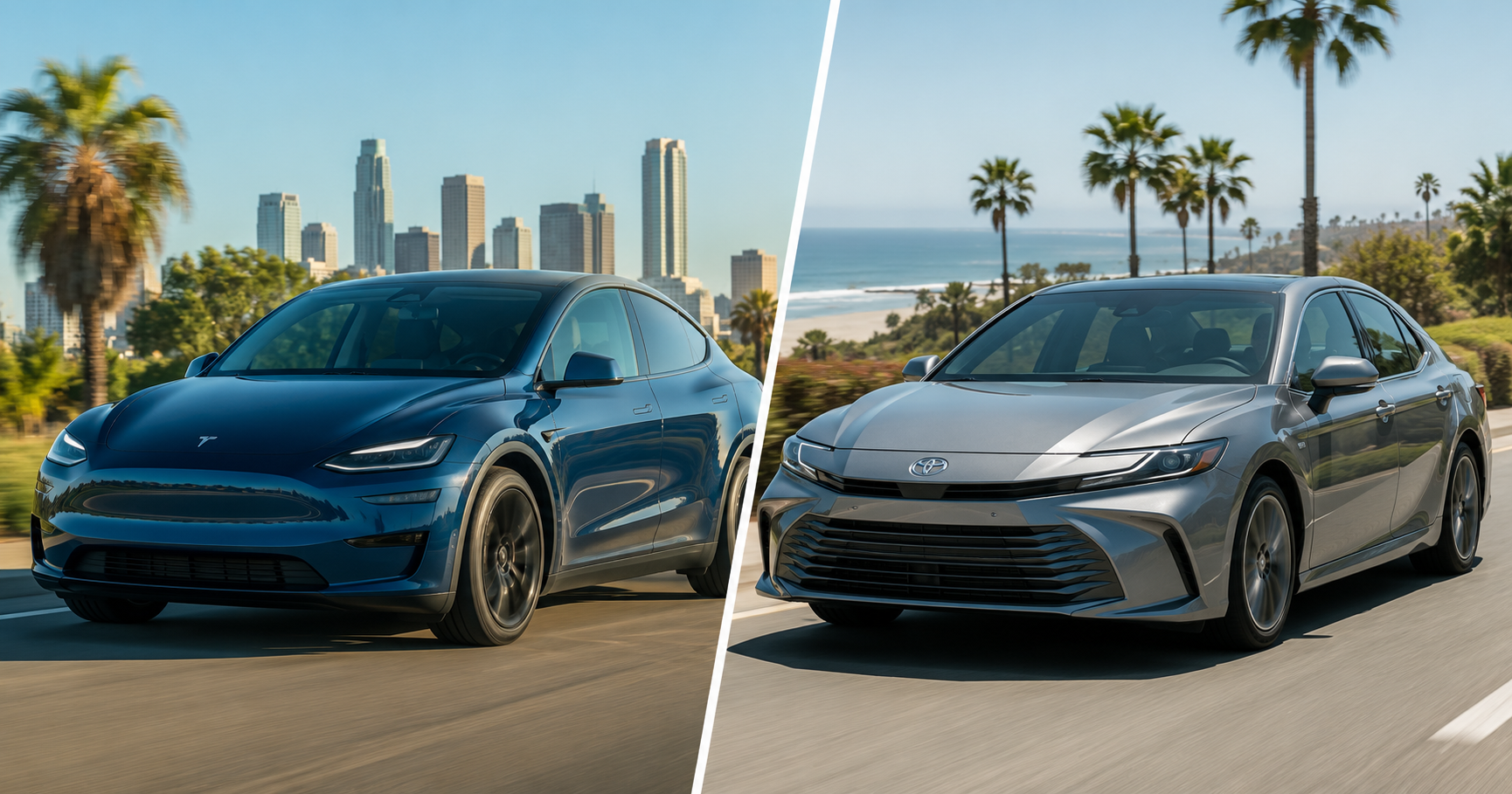
Hybrid vehicles surpassed battery-electric vehicles in California during the first half of the year, marking a shift in the state’s new-vehicle registration mix after four years of EVs holding the lead. The change comes as federal EV tax credits have ended, while new registration data suggests battery-electric vehicle sales may be beginning to recover.
Hybrids Move Ahead as EV Registrations Decline
Demand for battery-electric vehicles in the United States has shifted following the elimination of federal EV tax credits last year, making it more difficult for some buyers to absorb the additional $7,500 cost previously offset by the incentive.
The decline in EV demand has also coincided with the departure of at least a dozen slow-selling electric models from the U.S. market this year, including the Ford F-150 Lightning, Hyundai Ioniq 6, Nissan Ariya, Volvo EX30, Volkswagen ID.4, and Honda Prologue.
California Sales Show Hybrids Taking the Lead
According to Automotive News, hybrids outsold battery-electric vehicles in California during the first half of the year. Data from the California New Car Dealer Association shows hybrids accounted for 22% of new-vehicle registrations, totaling 191,000 vehicles, while EVs represented 16% with 137,430 registrations.
The association reported that zero-emission vehicle registrations in California fell 25% through June compared with the first half of 2025. However, it also said the decline in battery-electric vehicle sales may be easing.
While federal tax credits remained available, battery-electric vehicles accounted for 24.9% of vehicle sales in California. That share fell to 13.8% in the first quarter of this year before improving to 17.8% during the second quarter, based on registration data.
Fuel Economy Helps Drive Hybrid Demand
Hybrid vehicles offer an alternative for buyers seeking improved fuel efficiency without purchasing a fully electric vehicle. California’s average price for regular gasoline stands at $5.65 per gallon, while the average EPA-rated fuel economy for a vehicle in the United States is about 25 mpg.
Several hybrid models are rated above 47 mpg, including the Toyota Prius, Toyota Camry, Toyota Corolla, Hyundai Elantra, Hyundai Sonata, Kia Niro, and Honda Civic.
The increase in hybrid registrations has occurred without California incentives for conventional hybrids. The state continues to offer incentives for certain plug-in hybrid vehicles and first-time EV buyers.
Plug-In Hybrids and Top-Selling Models
Plug-in hybrid vehicles can deliver greater fuel-economy benefits than conventional hybrids if owners charge them at home each night. Under those conditions, many plug-in hybrids can travel about 35 miles using electric power before consuming gasoline.
Despite the broader shift toward hybrids, the Tesla Model Y remained California’s best-selling vehicle during the first half of the year with 54,327 registrations. The Toyota Camry Hybrid ranked second with 33,523 registrations.
Automakers Expand Hybrid Offerings
The changing sales mix comes as several automakers continue to emphasize hybrid technology. Toyota, Honda, Hyundai, and Kia currently offer full hybrid models in the U.S. market, while BMW, Porsche, and Mercedes-Benz are placing greater emphasis on plug-in hybrids.
General Motors, Ford, and Stellantis are also developing new hybrid vehicles as the market continues to evolve.
The first-half registration figures show hybrids leading California’s new-vehicle market while battery-electric vehicles remain in a period of adjustment following the end of federal tax incentives. At the same time, second-quarter registration data indicates EV registrations improved from their first-quarter share.