

Finding the best SUV for elderly drivers is about much more than choosing a vehicle with a high safety rating. For older adults, the right SUV needs to make everyday driving easier, from getting in and out of the driver’s seat to seeing traffic clearly, parking safely, operating controls without frustration, and staying comfortable on longer trips.
That matters because older drivers face a different set of challenges behind the wheel. Drivers age 65 and older accounted for approximately 8,039 traffic deaths in 2025, representing about 21.9% of all traffic fatalities. Older motorists also tend to be more vulnerable to serious injury when crashes occur because physical resilience generally decreases with age.
The good news is that today’s SUVs offer technologies and designs that can directly address many of those challenges. Automatic emergency braking, blind-spot monitoring, rear cross-traffic alerts, adaptive cruise control, parking sensors and increasingly sophisticated cameras can give older drivers an important extra layer of protection.
Based on 2026 safety ratings, accessibility considerations, reliability signals and senior-focused buying guidance, five SUVs stand out: the Honda CR-V, Subaru Forester, Toyota RAV4, Hyundai Tucson and Kia Telluride.
Here is what makes each one worth considering—and which type of senior driver each SUV may suit best.
What Makes an SUV Good for Elderly Drivers?
The best vehicle for an older driver is not necessarily the largest, most luxurious or most expensive SUV. In many cases, a compact or midsize model provides the best combination of accessibility, visibility, maneuverability and safety.
There are several characteristics seniors and their families should prioritize when shopping.
Easy Entry and Exit
Getting into a vehicle should not require dropping down into a low seat or climbing up into a tall truck-like cabin. An SUV with an appropriately positioned seat allows the driver to sit down naturally and swing their legs inside.
AARP guidance cited in the research identifies a seat height of roughly 21 to 24 inches as a useful target for many older adults. Actual comfort varies by the driver’s height, mobility and proportions, however, so a test drive remains essential.
Wide-opening doors are equally important. A vehicle may have an ideal seat height but still be difficult to enter if the door opening is narrow or the steering wheel and seat restrict movement.
Excellent Visibility
Visibility can become increasingly important as drivers age. A vehicle with large windows, relatively thin pillars, a good driving position and well-designed mirrors can make it easier to identify vehicles, pedestrians and obstacles.
The Subaru Forester is particularly notable in this category because of its outward visibility. The Honda CR-V and Hyundai Tucson are also strong choices for drivers who want a commanding view without moving into a full-size SUV.
Advanced Driver-Assistance Systems
Modern driver-assistance technology can be particularly valuable for older motorists.
Automatic emergency braking, or AEB, is one of the most important systems to look for. AARP identifies AEB as a leading safety feature with a proven record of reducing crashes, while the supplied research notes that it can prevent roughly half of rear-end crashes.
Other useful technologies include:
- Blind-spot monitoring
- Rear cross-traffic alert
- Lane-departure warning
- Lane-keeping assistance
- Adaptive cruise control
- Rear automatic emergency braking
- Surround-view or 360-degree cameras
- Parking sensors
- Forward collision warning
- Intersection and left-turn assistance
Comfortable, Supportive Seats
Seat comfort becomes more important when a vehicle is used regularly for appointments, shopping, family visits or road trips.
Look for a seat that provides good lower-back and thigh support without making entry and exit difficult. Power-adjustable seats can be useful because they allow drivers to find a comfortable position without repeatedly wrestling with manual controls.
Simple Controls
More technology is not automatically better. A vehicle packed with touchscreen menus can actually be frustrating for someone who prefers traditional physical controls.
For many older drivers, large buttons, clearly labeled switches and easy-to-read displays are valuable. During a test drive, check whether the driver can adjust the climate control, radio volume and mirrors without taking their attention away from the road.
The 5 Best SUVs for Elderly Drivers in 2026
The following five models stand out because they combine several characteristics that matter to seniors: strong safety performance, accessibility, visibility, comfort, reliability or overall value.
1. Honda CR-V: Best Overall SUV for Elderly Drivers

Why the Honda CR-V stands out
For shoppers asking for the best SUV for elderly drivers overall, the Honda CR-V is one of the strongest starting points.
The CR-V combines a relatively easy step-in height, wide doors, a comfortable cabin and straightforward driving characteristics. Its seating position gives many drivers a good view of the road without creating the difficult climb associated with some larger SUVs.
The model is also available as a hybrid, giving buyers another option if fuel economy is a priority.
Key strengths
- Easy entry and exit for many older drivers
- Wide door openings
- Strong outward visibility
- Available hybrid powertrain
- Quiet, comfortable ride
- Comprehensive driver-assistance technology
- Practical cargo area
The CR-V’s safety technology is another major advantage. Depending on model year and trim, buyers can find features such as automatic emergency braking, blind-spot monitoring and rear cross-traffic assistance.
For an older driver who wants one SUV that does nearly everything well, the CR-V is difficult to overlook.
Potential drawbacks
The more desirable technology and comfort features can become expensive as buyers move into higher trims. Some drivers may also need time to become familiar with the infotainment system.
Still, the CR-V’s combination of accessibility, practicality and safety makes it an excellent all-around choice.
Best for: Seniors who want a comfortable, versatile SUV for everyday driving.
2. Subaru Forester: Best for Visibility and Easy Entry
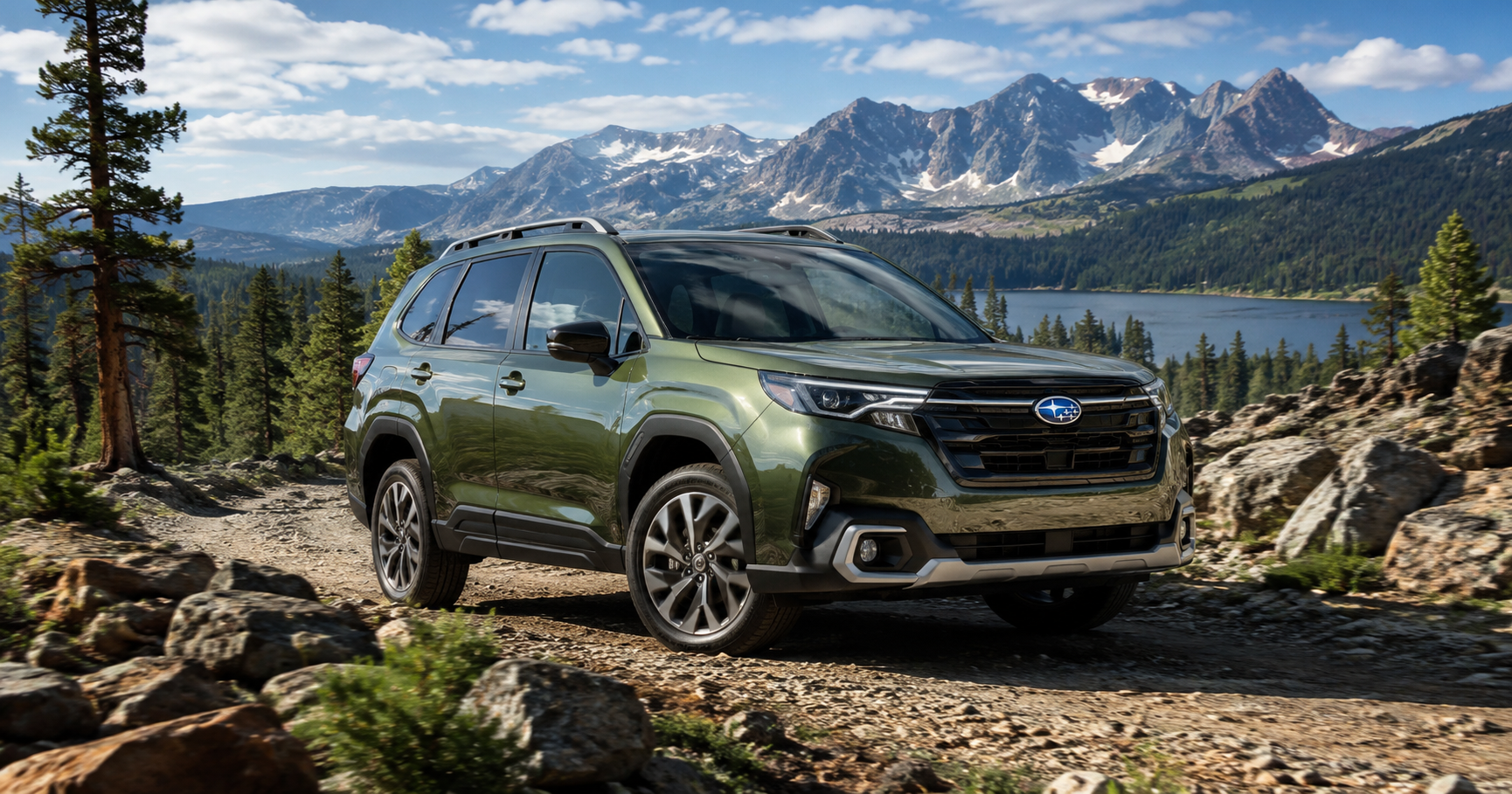
The Subaru Forester may be one of the most compelling options for an older driver who puts visibility and accessibility at the top of the list.
Its upright design provides excellent outward sightlines, while the cabin makes it relatively easy to get into and out of. The standard all-wheel-drive system is another advantage for drivers who live in regions where snow, rain or poor road conditions are concerns.
Consumer Reports has highlighted the Forester as a leading compact SUV, while the research brief identifies it as a strong option for older adults because of its visibility, standard AWD and EyeSight driver-assistance technology.
Why seniors may like it
- Excellent visibility in multiple directions
- Comfortable seating position
- Easy entry and exit
- Standard all-wheel drive
- Strong driver-assistance technology
- Useful cargo space
- Comfortable ride
The Forester’s upright shape can also make the vehicle feel easier to judge in parking lots and narrow spaces.
Potential drawbacks
The continuously variable transmission, or CVT, may not feel as familiar or engaging as a conventional automatic transmission. Fuel economy is also good, but hybrid competitors can offer better efficiency.
For seniors who prioritize confidence and visibility over performance, however, those disadvantages may be relatively minor.
Best for: Older drivers who want excellent visibility, easy access and standard AWD.
3. Toyota RAV4: Best for Reliability and Long-Term Ownership
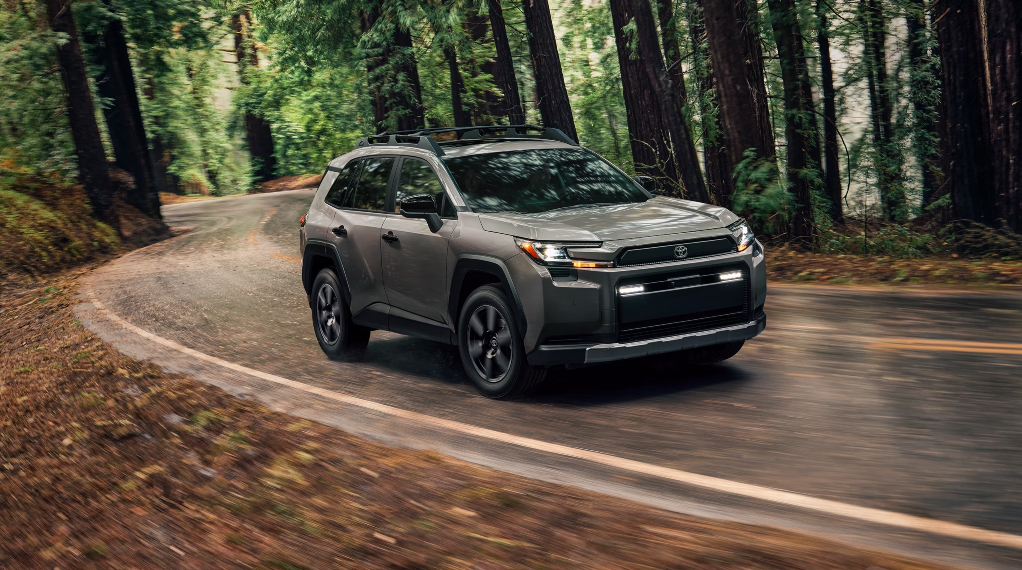
The Toyota RAV4 is another excellent candidate for seniors, particularly those who plan to keep their SUV for many years.
Reliability can be especially important for older drivers. Unexpected mechanical problems can create inconvenience, expensive repair bills and stressful situations. Toyota’s strong reputation for long-term dependability makes the RAV4 appealing to buyers who want predictable ownership.
The RAV4 is also available as a hybrid, giving buyers the opportunity to reduce fuel consumption while maintaining the practicality of a compact SUV.
RAV4 advantages for seniors
- Strong reputation for reliability
- Available hybrid powertrain
- Useful safety technology
- Comfortable driving position
- Practical cargo capacity
- Strong resale value
- Easy-to-use physical controls on many configurations
For someone buying an SUV for a parent or grandparent, long-term reliability can be just as important as the initial purchase price.
Potential drawbacks
The RAV4’s ride can feel firmer than the Honda CR-V or Subaru Forester, depending on configuration. Infotainment and available features also vary by trim.
Nevertheless, the RAV4 remains one of the most sensible choices for a senior who values dependable transportation and low ownership surprises.
Best for: Seniors who prioritize reliability, resale value and long-term ownership.
4. Hyundai Tucson: Best Value SUV for Seniors

If affordability is a major consideration, the Hyundai Tucson deserves a close look.
The Tucson combines a comfortable interior, wide openings, useful cargo space and a strong collection of safety technologies. It is also offered as a hybrid, giving buyers more flexibility when balancing fuel economy and purchase price.
The model’s value proposition becomes particularly attractive when warranty coverage, equipment and pricing are considered together.
Why the Tucson works for older drivers
- Wide door openings
- Comfortable cabin
- Low cargo liftover
- Available hybrid model
- Strong automatic emergency braking technology
- Pedestrian detection and other safety features
- Competitive pricing
- Long warranty coverage
The Tucson can be a particularly good choice for retirees or families looking for a senior-friendly SUV without spending luxury-SUV money.
Potential drawbacks
Some of the most advanced features are reserved for higher trims, which can push the price upward. Buyers should compare standard versus optional safety equipment carefully rather than assuming every Tucson has identical technology.
Best for: Seniors who want a comfortable, safe SUV with strong value for the money.
5. Kia Telluride: Best Three-Row SUV for Seniors
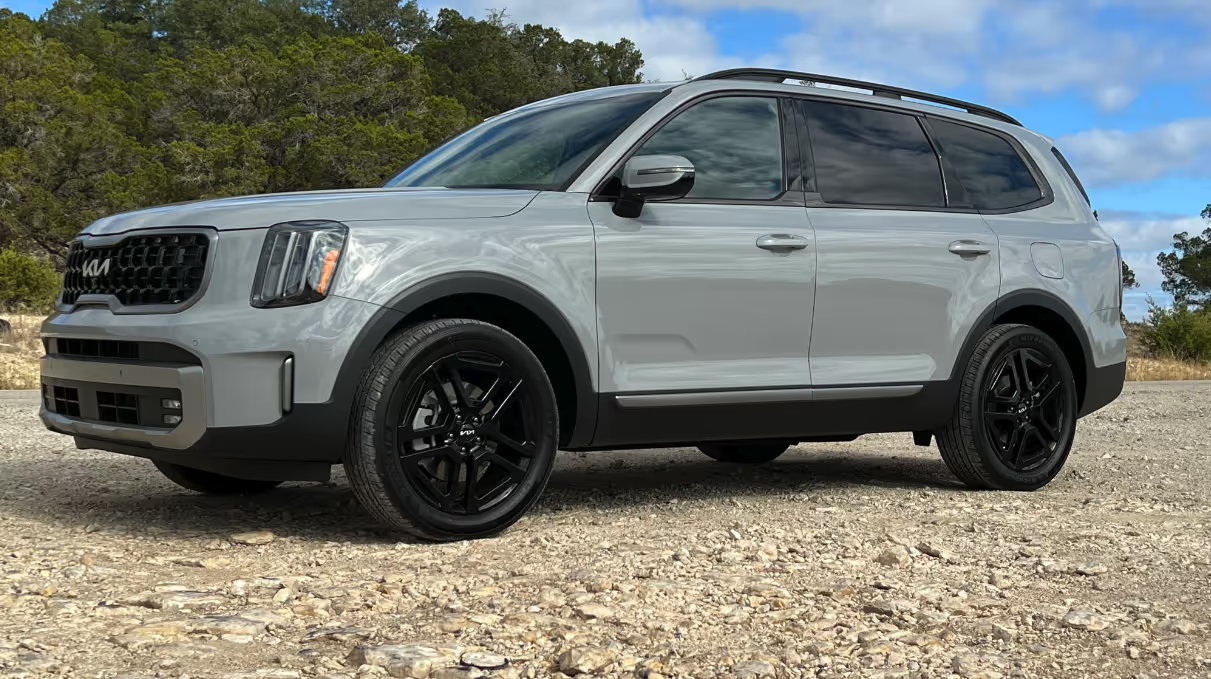
Not every older driver needs a compact SUV. For seniors who frequently transport children, grandchildren, friends or other family members, the Kia Telluride offers a much more spacious alternative.
The Telluride provides three rows while maintaining a more manageable driving experience than many traditional large SUVs. Its elevated seating position provides good visibility, and the cabin offers substantial passenger space.
Telluride advantages
- Three-row seating
- Spacious passenger cabin
- Strong driver-assistance technology
- Good visibility for its class
- Comfortable ride
- Useful family-hauling capability
- Strong dependability scores in the supplied research
The third row can be particularly useful when an older driver regularly travels with family. However, the larger footprint is something buyers should consider carefully.
Potential drawbacks
A larger SUV is naturally more difficult to maneuver in tight parking spaces than a CR-V, Forester or Tucson. Parking sensors and a surround-view camera can therefore be especially valuable.
Best for: Seniors who regularly need three rows and substantial passenger space.
Quick Comparison: Best SUVs for Elderly Drivers in 2026
| SUV | Best For | Biggest Strength | Potential Concern |
|---|---|---|---|
| Honda CR-V | Overall choice | Accessibility and balanced comfort | Higher trims can get expensive |
| Subaru Forester | Visibility | Excellent outward sightlines | CVT feel |
| Toyota RAV4 | Reliability | Long-term ownership confidence | Ride can be firm |
| Hyundai Tucson | Value | Features and warranty for the money | Best equipment may require higher trims |
| Kia Telluride | Families | Three-row practicality | Larger exterior footprint |
Which SUV Is Easiest for Seniors to Get In and Out Of?
For many older drivers, entry and exit should be evaluated before horsepower, styling or even fuel economy.
The Honda CR-V, Subaru Forester and Hyundai Tucson are particularly attractive because their seating positions and door openings make them easier for many drivers to enter and leave.
The right height depends on the individual, however. A very tall SUV can require a step upward, while a low sedan can require a deep squat. Neither extreme is ideal for everyone.
The best approach is simple: sit in the vehicle several times, get out without using the steering wheel for support, and repeat the process as you would in everyday life.
What Safety Features Should Seniors Look For?
A senior-friendly SUV should not be judged solely by its crash-test rating. Active safety technology can help prevent an accident from happening in the first place.
Automatic Emergency Braking
AEB monitors the road ahead and can warn the driver or automatically apply the brakes when a collision is imminent. It is especially valuable in situations where a driver reacts too slowly to a stopped vehicle or pedestrian.
Blind-Spot Monitoring
Blind-spot systems can be particularly helpful for drivers who find it difficult to turn their heads or shoulders fully. A warning in the side mirror can provide an additional check before changing lanes.
Rear Cross-Traffic Alert
This feature is useful when reversing out of parking spaces, where vehicles or pedestrians may approach from the side and remain outside the driver’s direct view.
360-Degree Cameras and Parking Sensors
These features can make a significant difference when maneuvering a midsize SUV in a crowded parking lot or narrow garage.
Adaptive Cruise Control
Adaptive cruise control can reduce fatigue on longer highway trips by automatically maintaining a selected following distance from traffic ahead.
Intersection and Left-Turn Assistance
Intersections deserve special attention. The supplied research notes that roughly one-third of senior accidents occur at intersections, with left turns across traffic being a particular concern.
Technology designed to detect potential conflicts at intersections can therefore be an important consideration when comparing vehicles.
Are Hybrid SUVs Better for Older Drivers?
A hybrid SUV is not automatically safer than a gasoline-powered model, but it can offer meaningful advantages for some seniors.
Hybrid powertrains can reduce fuel consumption and often provide smooth low-speed acceleration. That can make stop-and-go driving feel relaxed and predictable.
The Honda CR-V Hybrid, Toyota RAV4 Hybrid and Hyundai Tucson Hybrid are therefore worth considering if fuel costs are an important part of the buying decision.
However, seniors should not choose a hybrid simply because it is a hybrid. Accessibility, visibility, seat comfort and safety equipment should remain higher priorities.
What About Seniors With Bad Knees, Arthritis or Limited Mobility?
Drivers with mobility limitations should pay particular attention to the physical relationship between the seat, steering wheel, door and pedals.
A good senior-friendly SUV should make it possible to:
- Enter without climbing or dropping down excessively
- Exit without twisting the knees sharply
- Open the door widely
- Reach the steering wheel comfortably
- Adjust the seat easily
- See the instrument panel without leaning forward
- Load groceries without lifting them too high
The Honda CR-V and Subaru Forester are particularly strong starting points for shoppers with mobility concerns. The Nissan Rogue is also worth considering because of its Zero Gravity-inspired seating, while the Lexus RX can provide a more luxurious option for buyers with a larger budget.
Ultimately, individual fit matters more than a ranking. A vehicle that works beautifully for one senior may be uncomfortable for another.
Should Seniors Choose a Compact or Midsize SUV?
For most older drivers, a compact SUV is the logical starting point.
Compact models are easier to maneuver, easier to park and generally provide sufficient interior space for one or two occupants. The CR-V, Forester, RAV4 and Tucson all fit this philosophy.
A midsize SUV becomes more attractive when passenger capacity is important. The Kia Telluride, for example, makes sense for seniors who regularly carry grandchildren or extended family.
There is no universal rule that seniors should avoid large SUVs. The key is whether the driver feels comfortable controlling the vehicle and whether it has the cameras and parking assistance needed to compensate for its larger dimensions.
How to Test-Drive an SUV as an Older Driver
A conventional test drive around a dealership is not enough. Seniors should test the vehicle as realistically as possible.
- Get in and out several times. Pay attention to knee, hip and back strain.
- Adjust the driver’s seat. Make sure the pedals, steering wheel and mirrors can be positioned comfortably.
- Check visibility. Look over both shoulders and evaluate blind spots.
- Test the controls. Adjust the climate system and audio without relying entirely on the touchscreen.
- Try parking. Evaluate the cameras, sensors and steering effort.
- Check the rear seat. If family members will frequently ride with you, make sure access is practical.
- Drive on different roads. Try neighborhood streets, intersections and highways if possible.
- Evaluate seat comfort. Spend enough time in the seat to identify pressure points.
AARP’s CarFit program reinforces an important principle: vehicle fit matters. A car with excellent crash-test performance is not necessarily the best vehicle if the driver cannot comfortably operate it.
How Much Does Insurance Cost for Senior SUV Drivers?
Insurance is another expense that should be included in the total ownership calculation.
The supplied 2026 research estimates that drivers age 65 and older pay approximately $157 to $159 per month on average for full-coverage auto insurance nationally. Actual premiums can vary substantially based on location, driving history, vehicle, coverage limits and insurer.
GEICO and USAA are identified in the research as potentially competitive options for senior drivers, although USAA eligibility is limited to qualifying military families.
Before purchasing an SUV, obtain an insurance quote for the exact model and trim. Two vehicles with similar purchase prices can have noticeably different insurance costs.
What Is the Safest SUV for a Senior Citizen in 2026?
There is no single SUV that is objectively safest for every senior driver.
Instead, shoppers should look for vehicles with strong crash-test performance and comprehensive crash-avoidance systems. The 2026 IIHS safety landscape is particularly relevant: SUVs account for a large majority of the organization’s Top Safety Pick+ winners.
The research identifies the Subaru Forester, Honda CR-V, Hyundai Tucson, Toyota RAV4 and Kia Telluride among the notable senior-friendly choices based on their combination of safety, usability and other ownership considerations.
Remember that safety ratings can vary by model year, trim and production date. Always verify the exact vehicle being purchased.
Luxury Alternatives: Lexus RX and Lexus NX
Buyers with a larger budget may also want to consider the Lexus RX and Lexus NX.
These SUVs offer a more upscale environment while emphasizing smooth ride quality, comfortable seating and advanced safety technology. The RX is especially attractive to seniors who want additional space and a quieter, more luxurious cabin.
The tradeoff is cost. A luxury SUV can be considerably more expensive to purchase and maintain than a mainstream CR-V, Forester, RAV4 or Tucson.
Best SUV for Elderly: Our Final Ranking
After considering accessibility, visibility, safety technology, comfort, reliability and practical ownership factors, these are the five strongest choices for 2026:
- Honda CR-V — Best overall
- Subaru Forester — Best visibility and accessibility
- Toyota RAV4 — Best for reliability
- Hyundai Tucson — Best value
- Kia Telluride — Best three-row option
The Honda CR-V earns the top overall position because it strikes an unusually good balance between ease of entry, visibility, comfort, safety technology, practicality and available hybrid efficiency.
The Subaru Forester is arguably the better choice for a driver who values visibility above almost everything else. The Toyota RAV4 is compelling for long-term ownership, while the Hyundai Tucson makes a strong financial case. Families that need three rows should look closely at the Kia Telluride.
Most importantly, seniors should avoid choosing a vehicle based only on a ranking. The best SUV is the one that fits the driver’s body, mobility, eyesight, confidence and daily routine.
Frequently Asked Questions
What is the best SUV for elderly drivers in 2026?
The Honda CR-V is our best overall choice for elderly drivers in 2026 because it combines easy entry and exit, good visibility, comfortable seating, strong safety technology and available hybrid efficiency. The Subaru Forester, Toyota RAV4, Hyundai Tucson and Kia Telluride are also excellent alternatives.
What is the easiest SUV for seniors to get in and out of?
The Honda CR-V, Subaru Forester and Hyundai Tucson are among the strongest choices because of their accessible seating positions and relatively wide door openings. However, individual body height and mobility make a personal test drive essential.
What is the safest SUV for a senior citizen in 2026?
There is no single safest SUV for every senior. Shoppers should prioritize strong IIHS crash-test performance and advanced systems such as automatic emergency braking, blind-spot monitoring, rear cross-traffic alert and parking assistance. The Forester, CR-V, Tucson, RAV4 and Telluride are strong 2026 options.
Are hybrid SUVs good for elderly drivers?
Yes. Hybrid SUVs can provide smoother low-speed operation and lower fuel consumption. The CR-V Hybrid, RAV4 Hybrid and Tucson Hybrid are particularly relevant choices. However, accessibility and safety should take priority over the powertrain.
What SUV is best for seniors with bad knees?
An SUV with an easy step-in height, wide doors and supportive seats is generally preferable. The Honda CR-V and Subaru Forester are strong starting points, although the ideal vehicle depends on the driver’s specific mobility needs.
Should seniors buy a large SUV?
Not necessarily. Larger SUVs provide more passenger and cargo space but can be harder to park and maneuver. If a senior needs three rows, a vehicle such as the Kia Telluride can make sense, particularly when equipped with parking sensors and camera systems.
What safety features should elderly drivers look for?
Important features include automatic emergency braking, blind-spot monitoring, rear cross-traffic alert, lane-keeping assistance, adaptive cruise control, rear automatic braking, parking sensors and 360-degree cameras. Intersection and left-turn assistance can also be valuable.
Is the Toyota RAV4 reliable for seniors?
The RAV4 is an appealing choice for seniors who prioritize long-term dependability. Toyota has a strong reputation for reliability, while the RAV4 also offers useful safety technology and an available hybrid powertrain.
Is the Subaru Forester good for older drivers?
Yes. The Forester is particularly well suited to older drivers because of its excellent outward visibility, accessible cabin, comfortable seating, standard all-wheel drive and EyeSight driver-assistance technology.
How should seniors choose the right SUV?
Seniors should evaluate entry and exit, seat comfort, visibility, control layout, safety technology, parking assistance, passenger capacity, insurance costs and long-term reliability. A thorough test drive is more valuable than choosing solely from a ranking.