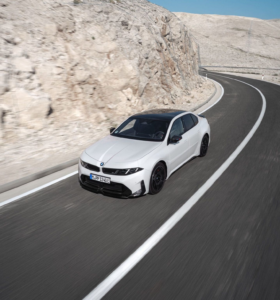


Volkswagen Group is facing as much as €1.5 billion, or approximately $1.7 billion, in potential CO2 penalties through 2027 as Europe’s emissions rules put increasing pressure on the automaker to sell more electric and plug-in hybrid vehicles.
Europe’s Tough Emissions Standards
European emissions regulations are making it increasingly difficult for automakers to continue relying heavily on combustion engines. Under the EU’s CO2 fleet-average rules, the cars an automaker sells must achieve an average below 93.6g/km.
For a large automotive group such as Volkswagen, meeting that target is particularly challenging because the calculation is based on the average emissions of all vehicles sold during the year. Although Volkswagen Group offers several EVs, sales have not been sufficient to reduce its overall fleet average enough.
Last year, the group recorded an average of 100g/km and was required to pay a significant fine for exceeding the EU limit.
Volkswagen’s CO2 Penalties Could Reach €1.5 Billion
The Volkswagen Group is already facing financial pressure, with profits falling dramatically despite the company remaining in the black. Additional emissions penalties would add another major expense.
According to Automotive News, Volkswagen Group CFO Arno Antlitz said the company expects to face approximately €400 million to €500 million in annual CO2 penalties from 2025 to 2027. At the highest estimate, that would amount to €1.5 billion, or approximately $1.7 billion.
The penalty for missing the target is €95 ($98) for every gram of CO2 above the limit per vehicle. The average is calculated over three years, from 2025 to 2027, meaning the costs can quickly accumulate for an automaker selling millions of vehicles in the European Union.
Even manufacturers with multiple EVs can face penalties if their overall fleet average remains above the required threshold. For Volkswagen Group, the money could otherwise be directed toward vehicle development, production, sustainability efforts, and employee salaries and benefits.
Automakers Turn to Emissions Pools
Some automakers have sought to reduce their fleet averages through emissions pools and partnerships with electric-vehicle manufacturers. The approach effectively involves purchasing carbon credits, with companies such as Tesla holding significant supplies of regulatory carbon and zero-emission vehicle (ZEV) credits.
While purchasing credits still costs money, the expense can be substantially lower than paying billions of euros in regulatory penalties.
Volkswagen Group operates its own emissions pool, but Porsche’s high fleet average has created an additional challenge. Porsche recorded an average of 130.2 g/km last year, contributing to Volkswagen Group exceeding the EU limit.
As a result, Porsche is leaving the Volkswagen pool and partnering with Chinese EV maker Xpeng. The arrangement allows Porsche to lower its average costs while supporting its parent company and generating revenue for Xpeng, which sold about 19,000 vehicles in Europe last year.
Volkswagen Needs Its EVs to Sell
Volkswagen’s upcoming ID. Polo and ID. Cross are important not only for vehicle sales and revenue but also for reducing the company’s fleet-average emissions.
The stronger the sales of these affordable-by-European-standards subcompact EVs, the greater Volkswagen’s ability to bring its fleet average below the EU threshold.
However, strong sales of those two models alone would not resolve the longer-term challenge. By 2030 at the earliest, the EU is targeting a fleet-average CO2 figure of just 49.5 g/km for passenger cars.
Volkswagen will therefore need to persuade more customers to choose EVs and plug-in hybrids to meet the increasingly strict requirements or risk facing additional penalties.
The Pressure on European Automakers
Europe’s emissions rules are putting substantial pressure on automakers to accelerate the adoption of electric and plug-in hybrid vehicles. For Volkswagen Group, the combination of falling profits and potentially costly CO2 penalties makes fleet emissions an increasingly important financial issue.
The decisions European automakers make in response to these regulations will shape not only their operations in their home markets but also how their vehicles are sold around the world.