
The 2027 Hyundai Tucson dimensions reveal something important about Hyundai’s next-generation compact SUV: this isn’t simply a styling exercise. The redesigned Tucson is longer, wider and taller than the outgoing 2026 model, while its wheelbase has also grown to create more room inside.
That matters because the Tucson already occupies one of the most competitive segments in the U.S. market. Buyers shopping for a compact SUV increasingly expect more than attractive styling. They want generous passenger space, useful cargo capacity, easy access to the rear seats and a cabin that feels closer to a premium vehicle.
Hyundai appears to be addressing all of those expectations with its 2027 Hyundai Tucson redesign. The fourth-generation model adopts a dramatically more upright and boxy appearance, introduces a completely redesigned interior and grows in nearly every major exterior measurement.
Here is a detailed look at the 2027 Tucson dimensions vs 2026, what the additional inches mean for passengers, and why the larger body could make the new Hyundai Tucson more competitive against rivals such as the Toyota RAV4 and Honda CR-V.
2027 Hyundai Tucson Dimensions at a Glance
Hyundai has not yet released every technical specification for the new Tucson, but it has confirmed several key measurements. The numbers show a clear growth strategy for the 2027 Tucson size.
| Dimension | 2027 Hyundai Tucson | 2026 Hyundai Tucson | Change |
|---|---|---|---|
| Wheelbase | 109.6 inches | 108.5 inches | +1.1 inches |
| Length | 185.0 inches | 182.7 inches | +2.3 inches |
| Width | 75.0 inches | 73.4 inches | +1.6 inches |
| Height | 66.3 inches | 65.6 inches (FWD) | +0.7 inches* |
| Second-row headroom | 40.6 inches | 39.5 inches | +1.1 inches |
| Rear-door opening | 83 degrees | 73 degrees | +10 degrees |
*The supplied specifications list a 1.3-inch increase for height, but the stated measurements of 66.3 and 65.6 inches calculate to a 0.7-inch increase. The absolute dimensions are therefore more useful than the reported difference until Hyundai publishes a final specification sheet.
The biggest numerical change is the Tucson length, which increases by 2.3 inches. The vehicle is also 1.6 inches wider and gains 1.1 inches between the axles. Those changes may sound modest individually, but together they can have a meaningful effect on cabin packaging and road presence.
How Much Bigger Is the 2027 Hyundai Tucson?
The short answer is: noticeably bigger, but not dramatically larger in the way a Tucson might suddenly move into a midsize SUV category.
Hyundai has stretched the next-generation Tucson in several directions. The body now measures 185 inches long, compared with 182.7 inches for the 2026 model. Width increases from 73.4 to 75 inches, while the wheelbase grows from 108.5 to 109.6 inches.
That means the 2027 Hyundai Tucson dimensions have been increased strategically rather than through one large expansion in a single measurement.
The Tucson Is 2.3 Inches Longer
Length is arguably the most significant change from a packaging perspective. At 185 inches, the new Tucson gains 2.3 inches over the outgoing model.
That extra length gives Hyundai additional flexibility when positioning the wheels, passenger compartment and cargo area. It can also contribute to a more substantial appearance from the side, particularly because the new model combines its longer body with a much more upright design.
For shoppers, the increase in Tucson length does not necessarily mean the vehicle will become difficult to maneuver in a city. A 2.3-inch increase is relatively small in practical terms. However, the additional body length can be valuable when Hyundai engineers use it to improve passenger and cargo packaging.
The Tucson Is 1.6 Inches Wider
The Tucson width grows from 73.4 inches to 75 inches. That is a 1.6-inch increase, making the new SUV visibly broader than the outgoing model.
Width can make a major difference inside a compact SUV. More exterior width provides engineers with additional space to work with across the cabin, potentially improving shoulder room and allowing the interior to feel less cramped when two or three passengers occupy the second row.
It also contributes to the visual character of the 2027 Tucson exterior. The new model’s broad stance works particularly well with its squared-off body, large wheel openings and heavily sculpted surfaces.
The Wheelbase Adds 1.1 Inches
The Tucson wheelbase grows from 108.5 inches to 109.6 inches. Hyundai has added 1.1 inches between the front and rear axles.
Wheelbase is especially important because it can influence both ride quality and interior packaging. A longer wheelbase generally gives designers more room to position the passenger compartment and can create additional legroom without requiring the entire vehicle to grow substantially.
In the new Tucson, the wheelbase increase is accompanied by a 2.3-inch increase in overall length. That combination suggests Hyundai has deliberately created more room rather than simply adding exterior overhangs.
2027 Hyundai Tucson Interior Space Gets a Boost
The most useful part of the larger body may not be visible from outside. Hyundai says the redesigned Tucson has 40.6 inches of second-row headroom, up from 39.5 inches in the current model.
That represents an additional 1.1 inches of rear headroom, which is substantial enough to matter for taller passengers.
The extra space is particularly relevant because the new Tucson adopts a more upright, boxier design. Instead of using a dramatically sloping roofline to create a sporty silhouette, Hyundai appears to have prioritized vertical space and practicality.
More Rear Headroom
For families, rear-seat space can be one of the most important reasons to choose one compact crossover over another. An additional 1.1 inches of headroom may make the difference between an acceptable rear seat and one that feels genuinely comfortable.
The boxier roofline should also complement the additional height. The new Tucson measures 66.3 inches tall, compared with 65.6 inches for the 2026 front-wheel-drive model based on the supplied figures.
That combination of additional height, width and wheelbase reinforces Hyundai’s focus on Tucson interior space.
Rear Doors Open 83 Degrees
One of the less obvious but potentially useful changes is the rear-door opening angle. Hyundai has increased the opening from 73 degrees to 83 degrees.
That is a 10-degree improvement, and it could make everyday loading considerably easier.
Parents placing children into car seats should benefit from the wider access. The same is true when loading bulky objects into the second row or helping an older passenger get in and out.
This is a good example of how vehicle dimensions are about more than exterior measurements. A vehicle can become more useful through changes to access and packaging even when the overall size increase is relatively modest.
2027 Hyundai Tucson Redesign: A Much Boxier Shape
The numbers tell only part of the story. The 2027 Hyundai Tucson redesign is visually far more dramatic than the dimensional changes might suggest.
Hyundai has transformed the compact crossover from the relatively rounded shape of the current generation into something much more upright, angular and architectural.
The design follows the broader direction established by the latest Santa Fe and Palisade, both of which use more squared-off proportions to communicate a stronger outdoor-oriented identity.
Hyundai Art of Steel Design Language
The new Tucson also incorporates Hyundai’s Art of Steel design philosophy. The approach emphasizes strong horizontal elements, structured surfaces and pronounced forms rather than soft, flowing bodywork.
The result is a compact SUV with a much more substantial visual footprint.
Even though the 2027 Tucson size has increased only moderately on paper, the design makes the vehicle appear significantly larger. The broad shoulders, bluff fender flares and squared body sides contribute to that impression.
A More Rugged Tucson Exterior
Hyundai appears to be responding to a growing preference for rugged-looking crossovers. The new Tucson does not suddenly become an off-road vehicle, but its styling gives it a more adventurous personality.
Large wheels, pronounced wheel arches, a heavily sculpted rear bumper and strong horizontal lighting elements all work together to create a planted stance.
The strategy is interesting because the Tucson remains fundamentally an urban-focused compact crossover. Hyundai is essentially giving customers the appearance of a more capable adventure vehicle without requiring them to move into a larger or more specialized SUV.
2027 Tucson Exterior Lighting Makes It Look Wider
One of the most distinctive features of the new Tucson design is its lighting.
The redesigned front end features a slim, full-width-style light treatment for the daytime running lights, while the rear receives a corresponding horizontal light bar. Hyundai also incorporates an illuminated H-inspired motif into the lighting design.
These elements visually emphasize the vehicle’s width. That is especially effective now that the 2027 Tucson exterior is actually 1.6 inches wider.
In other words, Hyundai is not merely making the vehicle look wider through styling. The physical dimensions support the visual strategy.
The result is a compact SUV that looks substantially more expensive and technologically advanced than its predecessor. The new design also creates a clearer visual connection between the Tucson and Hyundai’s larger SUVs.
2027 Hyundai Tucson Interior: A More Premium Cabin
The dimensional changes are accompanied by a completely redesigned cabin.
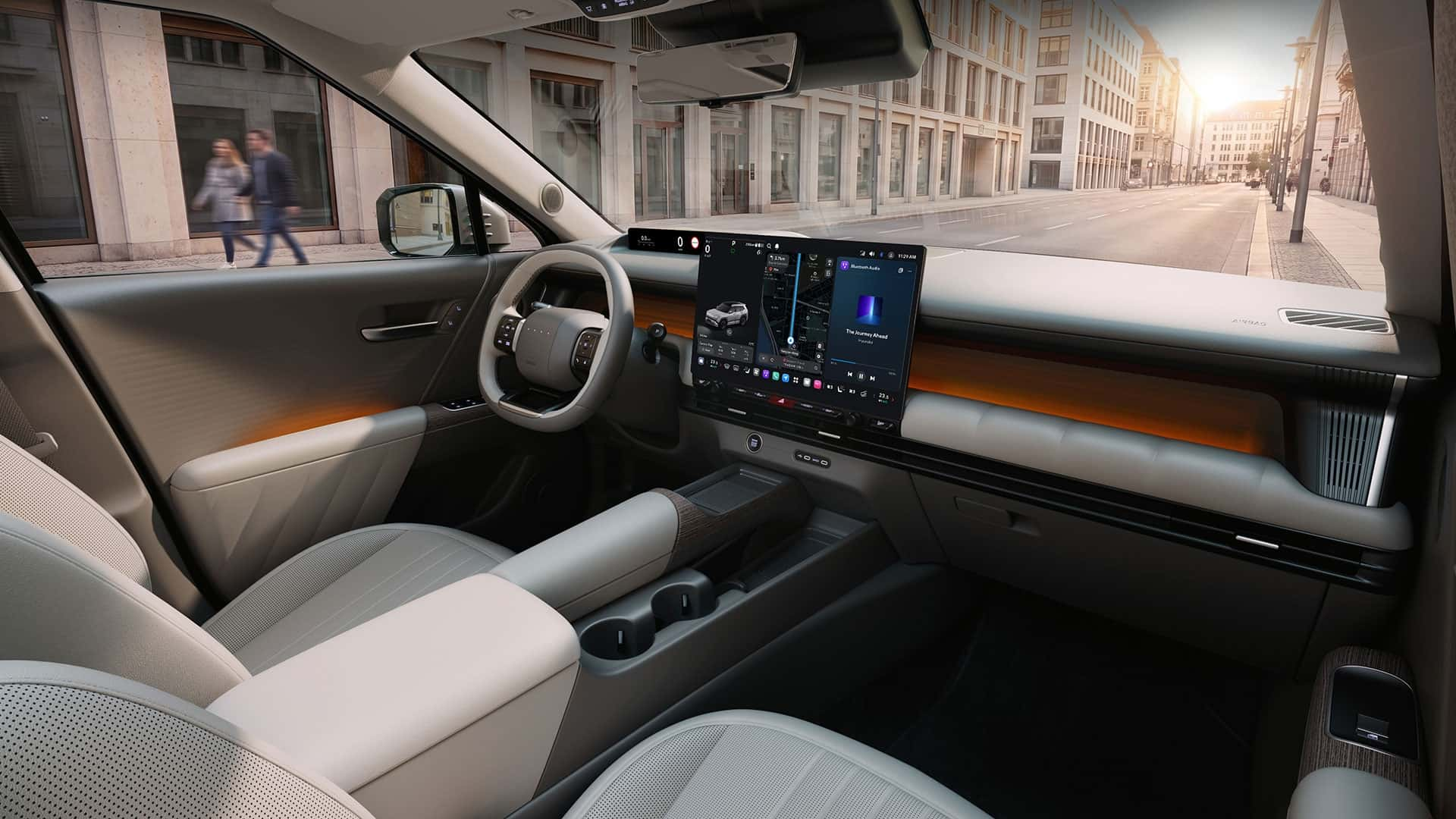
Hyundai has moved toward a cleaner, more horizontal dashboard layout featuring a large central touchscreen, a slim digital instrument display and physical controls underneath the main screen.
The cabin shown in the design reveal uses light-colored upholstery, soft-looking materials, ambient lighting, perforated surfaces and wood-style trim. The overall effect is noticeably more upscale than the typical mainstream compact crossover interior.
Pleos Infotainment System
The new Tucson is expected to use Hyundai’s newer Pleos software and infotainment architecture. Hyundai has not yet released every technical detail, including the final screen size for the Tucson.
That means buyers should wait for the production specification before assuming exactly which display hardware will be offered.
Nevertheless, the interior design suggests Hyundai is attempting to make the Hyundai Tucson 2027 feel more technologically advanced without abandoning conventional controls altogether.
That last point could be important. While touchscreen-heavy interiors have become common, Hyundai retains a row of physical controls below the main display. For drivers who regularly adjust climate or vehicle functions while moving, that could be a welcome usability decision.
2027 Hyundai Tucson Dimensions vs 2026: What Actually Changes?
Looking at the measurements side by side makes the changes easier to understand.
- Length: The Tucson grows by 2.3 inches, reaching 185 inches.
- Width: The body becomes 1.6 inches wider, reaching 75 inches.
- Wheelbase: The distance between the axles increases by 1.1 inches to 109.6 inches.
- Height: The redesigned model measures 66.3 inches tall based on Hyundai’s supplied figures.
- Second-row headroom: Rear headroom increases by 1.1 inches to 40.6 inches.
- Rear-door opening: The opening angle expands from 73 to 83 degrees.
Viewed together, these numbers show that the 2027 Hyundai Tucson dimensions are designed around both presence and practicality.
The longer and wider body gives the Tucson a stronger road stance. The longer wheelbase can help with interior packaging. The additional height and rear headroom improve passenger comfort. And the wider rear-door opening makes the vehicle easier to use.
That is a more meaningful redesign than simply changing the sheet metal.
How the Larger 2027 Tucson Could Affect Driving and Parking
Whenever a compact SUV becomes wider and longer, there is an obvious question: will it still feel like a compact SUV in everyday driving?
The answer will depend on the final suspension, steering calibration, turning circle and visibility specifications, all of which Hyundai has not yet fully disclosed.
Still, the dimensional increases are not extreme. An additional 2.3 inches of length and 1.6 inches of width are unlikely to fundamentally change how most drivers use the Tucson.
The greater width could be more noticeable in narrow parking spaces. However, modern parking sensors and camera systems can help offset some of that inconvenience.
Meanwhile, the benefits of the larger footprint—more passenger room, improved proportions and a more substantial road presence—could be felt every day.
What About the 2027 Tucson Powertrains?
Hyundai has not yet released complete technical specifications for the next-generation Tucson. The design reveal was primarily focused on the exterior and interior rather than the mechanical package.
Based on the information available, however, the existing strategy is expected to continue. That could mean a front-wheel-drive architecture with all-wheel drive available, alongside gasoline, hybrid and plug-in hybrid powertrains.
Gasoline Tucson
The current formula centers on a 2.5-liter inline-four gasoline engine. It would make sense for Hyundai to retain a familiar gasoline option while the company focuses its major changes on design, technology and packaging.
Hybrid Tucson
The hybrid configuration currently combines a turbocharged 1.6-liter four-cylinder engine with an electric motor. A version of that architecture is expected to remain part of the Tucson lineup, potentially with improvements to performance or efficiency.
Plug-In Hybrid Tucson
The plug-in hybrid combines the turbocharged 1.6-liter engine with a more powerful electric motor and a larger battery pack.
Hyundai could make calibration and efficiency improvements as part of the generational change, but the company has not yet confirmed the final specifications.
There is also an intriguing question surrounding Hyundai’s planned extended-range EV technology. Hyundai CEO José Muñoz has said the automaker intends to introduce its first extended-range electric vehicles in 2027. It remains unclear whether the next-generation Tucson will be among the early recipients.
Will There Be a 2027 Tucson XRT or N Line?
Hyundai has shown that a more rugged Tucson XRT variant is planned for the new generation.
That fits naturally with the new Tucson boxy design. The more upright body and aggressive exterior provide an ideal foundation for an adventure-themed appearance package.
The future of the sportier N Line is less certain. Hyundai previously offered a Tucson N Line in the U.S., but that version was discontinued for 2026. Although it delivered a more aggressive appearance, it did not add meaningful horsepower.
There are indications that Hyundai could revisit a sportier Tucson variant, but the automaker has not confirmed a final N Line or full N model for the new generation.
When Will the Next-Generation Tucson Go on Sale?
Hyundai has indicated that the redesigned Tucson is expected to reach showrooms around the end of 2026 or early 2027, with Korea expected to receive the vehicle first and other markets following afterward.
The U.S. launch timing and final American-market specifications should become clearer as Hyundai moves closer to the production launch.
That means buyers considering a new compact SUV now have an interesting choice. They can purchase the current Tucson, which is already a competitive and well-equipped crossover, or wait for the next-generation Tucson and its substantially different design and expanded dimensions.
Should You Wait for the 2027 Hyundai Tucson?
For buyers who prioritize styling, passenger space and the latest technology, the new Tucson looks like a compelling vehicle to wait for.
The case is particularly strong for shoppers who find the current Tucson’s interior or rear-seat space merely adequate. The next-generation model adds 1.1 inches of second-row headroom, increases the wheelbase and grows in overall width and length.
There is also the design factor. The fourth-generation Tucson is visually far removed from the outgoing model, adopting a more rugged and premium appearance that could remain distinctive for years.
On the other hand, shoppers who value proven powertrains, established pricing and immediate availability may prefer the current-generation model. Hyundai has not yet announced final pricing or full specifications for the redesigned SUV.
Reasons to Wait
- Completely redesigned exterior and interior.
- Longer 185-inch body.
- Wider 75-inch body.
- Longer 109.6-inch wheelbase.
- More second-row headroom.
- Wider rear-door opening.
- New Pleos infotainment technology.
- More premium cabin design.
- Planned Tucson XRT variant.
Reasons to Consider the 2026 Tucson Instead
- The current model is already available.
- Pricing and equipment are established.
- The current powertrain lineup is familiar.
- Potential first-year changes on the redesigned model can be avoided.
What the 2027 Tucson Dimensions Mean for Buyers
The most important takeaway from the 2027 Hyundai Tucson dimensions is that Hyundai did not simply make the SUV look bigger. The company increased the vehicle’s actual physical footprint and used that growth to improve interior packaging.
The 2.3-inch increase in length, 1.6-inch increase in width and 1.1-inch increase in wheelbase are relatively modest individually. Together, however, they create a more substantial compact crossover with additional room for passengers and a stronger stance on the road.
The additional 1.1 inches of rear headroom is particularly significant because it directly affects passenger comfort. Meanwhile, the 83-degree rear-door opening shows that Hyundai is thinking about usability as well as styling.
Perhaps the biggest surprise is how much larger the Tucson looks compared with the numerical increases. The combination of the boxy silhouette, horizontal lighting, wide body and sculpted fenders makes the SUV appear closer to a larger premium crossover.
That could be exactly what Hyundai wants.
The Tucson is already one of Hyundai’s strongest-selling global nameplates, so the automaker has little reason to radically alter the formula underneath the skin. Instead, the fourth-generation model appears to preserve the familiar compact-SUV concept while making it roomier, more sophisticated and considerably more distinctive.
For American shoppers, the result could be one of the most significant redesigns in the compact crossover segment when the 2027 Tucson reaches dealerships.
2027 Hyundai Tucson Dimensions: Key Takeaways
If you only remember a few numbers from the new-generation Tucson, these are the ones that matter most:
- 185 inches: overall length.
- 75 inches: overall width.
- 66.3 inches: overall height based on the supplied specification.
- 109.6 inches: wheelbase.
- 40.6 inches: second-row headroom.
- 83 degrees: rear-door opening angle.
Compared with the 2026 Tucson, the redesigned model is longer, wider and taller, has a longer wheelbase and provides more rear-seat headroom. The changes support Hyundai’s goal of making the new Tucson feel more spacious and substantial without abandoning its compact-SUV footprint.
Frequently Asked Questions About the 2027 Hyundai Tucson Dimensions
How long is the 2027 Hyundai Tucson?
The 2027 Hyundai Tucson is 185 inches long, making it 2.3 inches longer than the 2026 Tucson.
How wide is the 2027 Hyundai Tucson?
The new Tucson is 75 inches wide, compared with 73.4 inches for the 2026 model. That makes the 2027 Tucson 1.6 inches wider.
What is the wheelbase of the 2027 Hyundai Tucson?
The 2027 Tucson has a 109.6-inch wheelbase. That is 1.1 inches longer than the 108.5-inch wheelbase of the 2026 Tucson.
Is the 2027 Hyundai Tucson bigger than the 2026 model?
Yes. The redesigned Tucson is longer, wider and taller than the outgoing model, and it also has a longer wheelbase and more second-row headroom.
How much rear-seat headroom does the 2027 Tucson have?
The 2027 Tucson has 40.6 inches of second-row headroom, an increase of 1.1 inches compared with the 2026 model’s 39.5 inches.
Does the 2027 Tucson have more interior space?
Hyundai has confirmed additional second-row headroom and a larger overall body. The longer wheelbase, increased width and taller body should help support improved passenger packaging, although Hyundai has not yet released every interior dimension.
What is new about the 2027 Hyundai Tucson redesign?
The fourth-generation Tucson receives a completely redesigned exterior and interior. It features a much boxier shape, full-width-style lighting elements, a more premium cabin and Hyundai’s newer Pleos infotainment technology.
Will the 2027 Hyundai Tucson have the same engines?
Hyundai has not released complete technical specifications. The available information suggests that gasoline, hybrid and plug-in hybrid powertrains could continue, potentially with improvements to performance and efficiency.
Will there be a 2027 Tucson XRT?
Hyundai has shown that a more rugged Tucson XRT variant is planned for the new generation. Details about its final equipment and specifications have not yet been released.
When will the 2027 Hyundai Tucson go on sale?
The redesigned Tucson is expected to launch around the end of 2026 or early 2027, with Korea expected to receive it before other markets. Exact U.S. availability and pricing have not yet been fully announced.