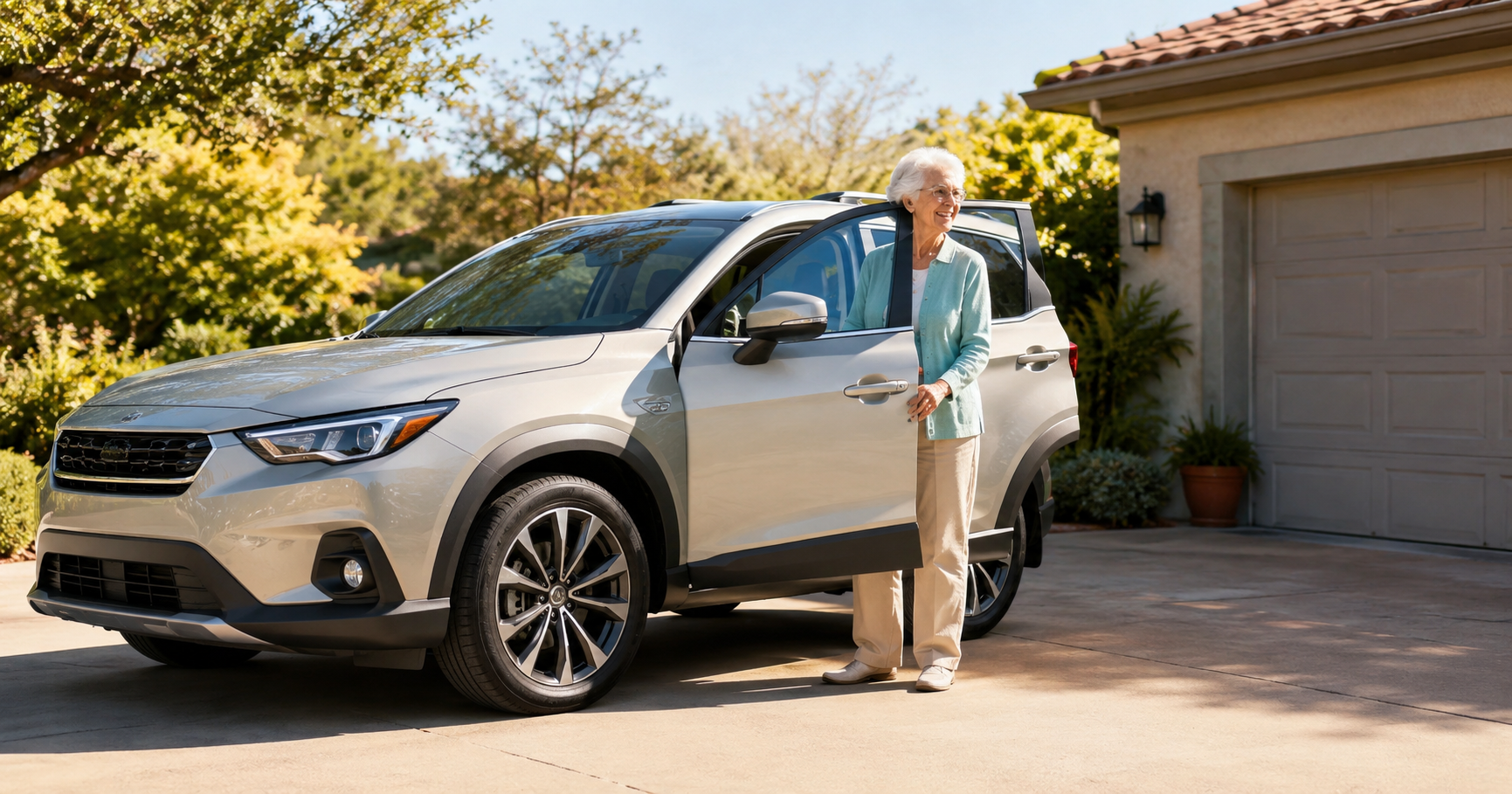
Choosing a vehicle later in life is less about horsepower and more about how effortlessly the vehicle fits into everyday life. The best small SUVs and crossovers for elderly drivers make it easier to get behind the wheel, see traffic clearly, park without stress, and access the features that matter when driving conditions become more demanding.
That is one reason crossovers have become such a popular choice among older drivers. Their elevated seating positions can reduce the need to climb down into a low sedan, while compact dimensions make them easier to maneuver than large SUVs. At the same time, modern driver-assistance systems can provide another layer of protection.
For 2026, safety is an especially strong argument. Nine small SUVs earned the IIHS Top Safety Pick+ designation, including the Subaru Forester, Honda HR-V, Hyundai Kona, Hyundai Tucson, Kia Sportage, Mazda CX-30, Mazda CX-50, BMW X1 and Mazda CX-5.
But a strong crash-test result does not automatically make a vehicle perfect for an older driver. Seat height, door opening, visibility, controls, parking dimensions, power-seat adjustment and the driver’s ability to operate the technology comfortably all matter.
With that in mind, here are 12 of the most compelling choices to consider in 2026.
What Makes a Small SUV Good for Elderly Drivers?
A senior-friendly SUV should solve practical problems rather than simply offer a long list of technology features.
The first consideration is entry and exit. A vehicle that allows the driver to sit down rather than drop into a low seat can make a noticeable difference when getting in and out several times a day.
Research cited in the supplied material places the preferred seat or step-in height for older drivers broadly around the height of a normal chair. One source cited an AARP recommendation of approximately 21 to 24 inches from the ground to the seat cushion, while other ergonomic references identified roughly 18 to 22 inches as an effective range.
Visibility is equally important. Large windows, relatively thin pillars and a good driving position can make intersections, parking lots and lane changes less stressful.
Then there is safety technology. Features such as automatic emergency braking, blind-spot monitoring, rear cross-traffic alert and adaptive cruise control can help reduce workload behind the wheel.
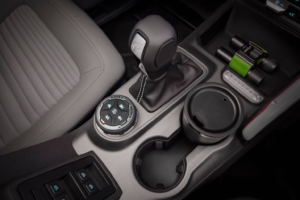
Finally, don’t overlook simplicity. A vehicle can have excellent technology and still be frustrating if basic functions are buried inside menus or controlled exclusively through a touchscreen.
The 12 Best Small SUVs and Crossovers for Elderly Drivers in 2026
1. Subaru Forester — Best Overall for Visibility and Accessibility
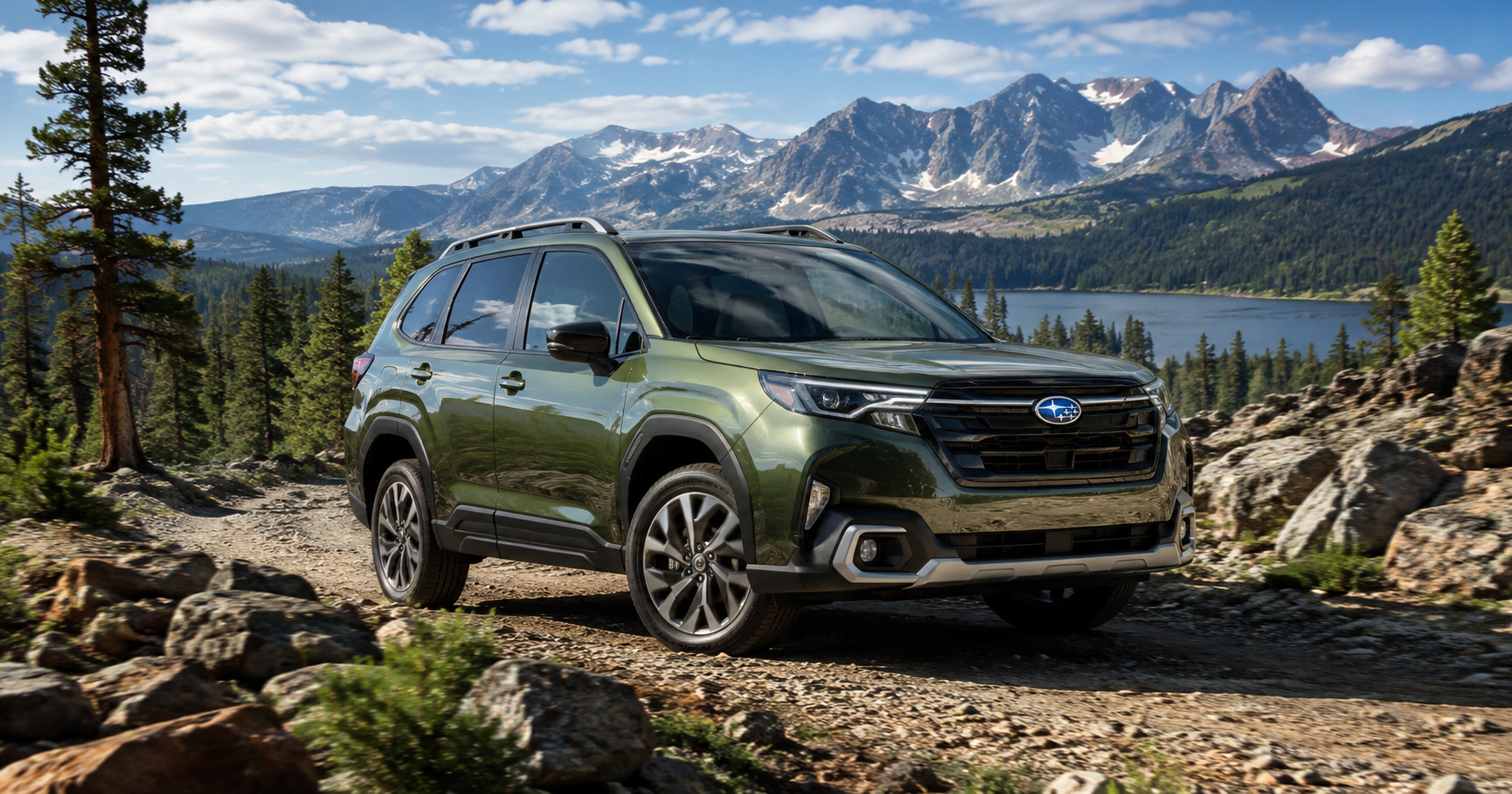
The 2026 Subaru Forester stands out as one of the strongest all-around choices for older drivers because it combines several qualities that are difficult to find together: a relatively upright seating position, excellent visibility, manageable dimensions and standard all-wheel-drive capability.
The Forester offers a strong combination of easy access, visibility, practical controls, all-weather capability and predictable ownership costs.
Its large glass area and relatively thin pillars are particularly useful for drivers who prioritize a clear view around the vehicle. That can make a difference when pulling out of parking spaces or navigating busy intersections.
The Forester also earned a 2026 IIHS Top Safety Pick+ designation. Its listed 2026 starting MSRP is about $31,445.
Best for: Older drivers who prioritize visibility, easy access and all-weather confidence.
2. Honda CR-V — Best for Easy Entry and Exit

The Honda CR-V is another natural choice for seniors, particularly for drivers who place a high value on getting in and out comfortably.
The CR-V was highlighted in the research as AARP’s standout small SUV for entry and exit in its senior-driver accessibility assessment. It also has an approximate front-seat height of 21.3 inches.
That matters because the ideal seating position is not necessarily the highest one. A seat that is too high can force a driver to climb up, while a seat that is too low requires more bending and dropping. A chair-like position can allow a more natural sideways slide into the driver’s seat.
The CR-V also benefits from wide doors and a spacious cabin, making it a practical choice for everyday errands, medical appointments, shopping trips and longer journeys.
Best for: Drivers who want one of the easiest compact crossovers to enter and exit.
3. Mazda CX-5 — Best Blend of Comfort and Safety

The redesigned 2026 Mazda CX-5 deserves attention because it combines a relatively compact footprint with a strong safety record.
The new CX-5 earned the IIHS Top Safety Pick+ award in July 2026. Mazda also described the recognition as its 100th IIHS Top Safety award.
For older buyers, the CX-5 can make sense when comfort and a more upscale driving experience are important without moving into luxury-SUV pricing.
Its listed 2026 starting price is approximately $31,485.
Best for: Seniors who want a comfortable, refined crossover with a strong safety credential.
4. Hyundai Tucson — Best Value for Space and Safety

The Hyundai Tucson is a compelling choice for older drivers who want a slightly larger compact crossover without stepping into a full-size SUV.
The Tucson is a 2026 IIHS Top Safety Pick+ model and has a 5-star overall NHTSA rating. Its listed starting MSRP is approximately $31,050.
The extra space can be useful for drivers who regularly carry groceries, luggage or other equipment. At the same time, its crossover proportions remain more manageable than those of a large SUV.
Hyundai also announced seven 2026 IIHS awards in August, including recognition for the Ioniq 5, Kona, Tucson and Santa Fe.
Best for: Seniors looking for a practical compact SUV with generous space and strong safety credentials.
5. Mazda CX-30 — Best Affordable Safety-Focused Choice

For older drivers who prefer something smaller and easier to park, the Mazda CX-30 is worth a close look.
Its compact exterior dimensions can be an advantage in crowded parking lots and narrow streets, while the vehicle still offers the elevated driving position associated with crossovers.
The 2026 CX-30 earned IIHS Top Safety Pick+, and its starting MSRP is listed at approximately $27,870.
That makes it one of the more affordable options for buyers who want a strong safety credential without moving into a larger vehicle.
Best for: Seniors who value easy parking, compact dimensions and a lower starting price.
6. Hyundai Kona — Best Budget-Friendly Pick

The Hyundai Kona is one of the most interesting choices for older drivers working with a tighter budget.
The 2026 Kona has a starting MSRP of about $27,100, making it the least expensive vehicle among several of the senior-friendly models examined. It also earned IIHS Top Safety Pick+ for 2026.
The Kona’s smaller footprint can be particularly useful for drivers who spend most of their time in urban environments. Parking and maneuvering can become increasingly important considerations as much as outright passenger capacity.
Best for: Budget-conscious seniors who primarily drive around town.
7. Honda HR-V — Best Small Crossover for Urban Driving
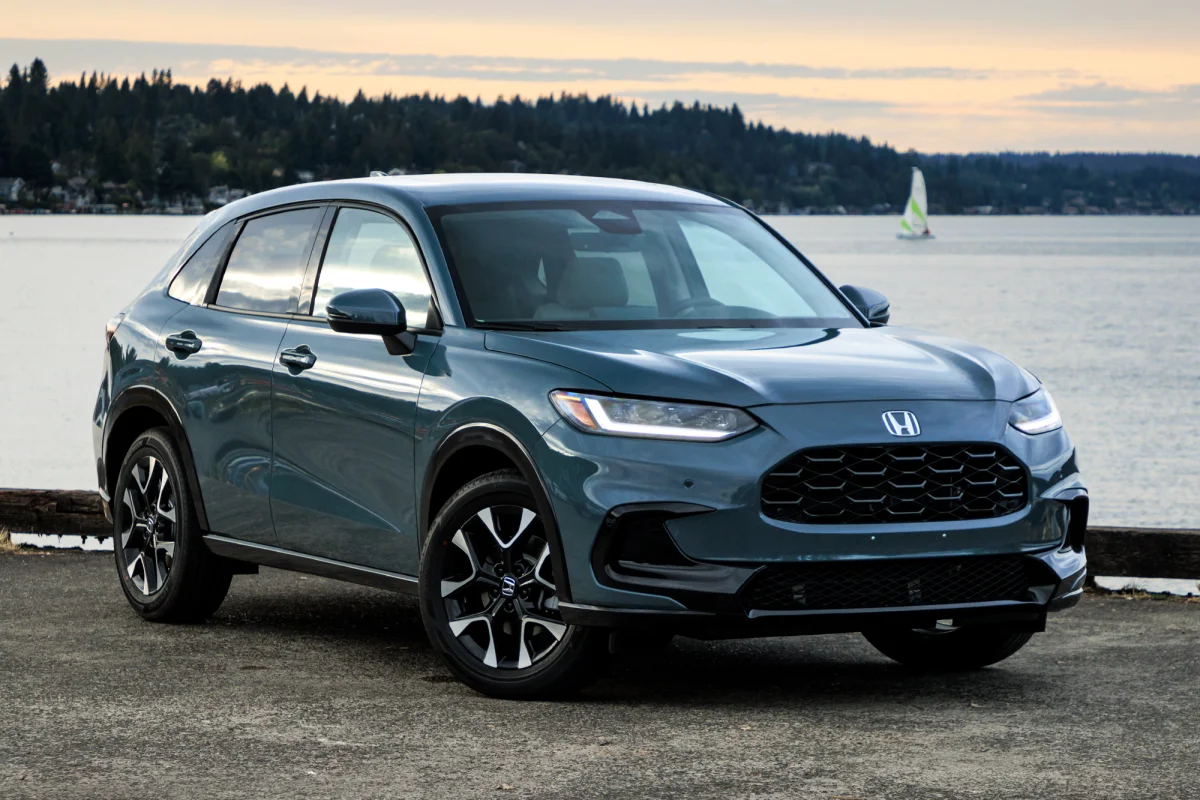
The Honda HR-V offers another combination that makes sense for older drivers: relatively compact dimensions, crossover seating and a strong safety record.
The HR-V appears among the 2026 IIHS Top Safety Pick+ small SUVs. Its listed starting price is approximately $27,950.
For seniors who find larger compact SUVs cumbersome, the HR-V’s smaller footprint can be an advantage. It is especially worth considering if most driving involves grocery stores, local roads, parking garages and other tight environments.
Best for: Older drivers who want a smaller crossover that’s easy to maneuver around town.
8. Kia Sportage — Best for Buyers Wanting More Room
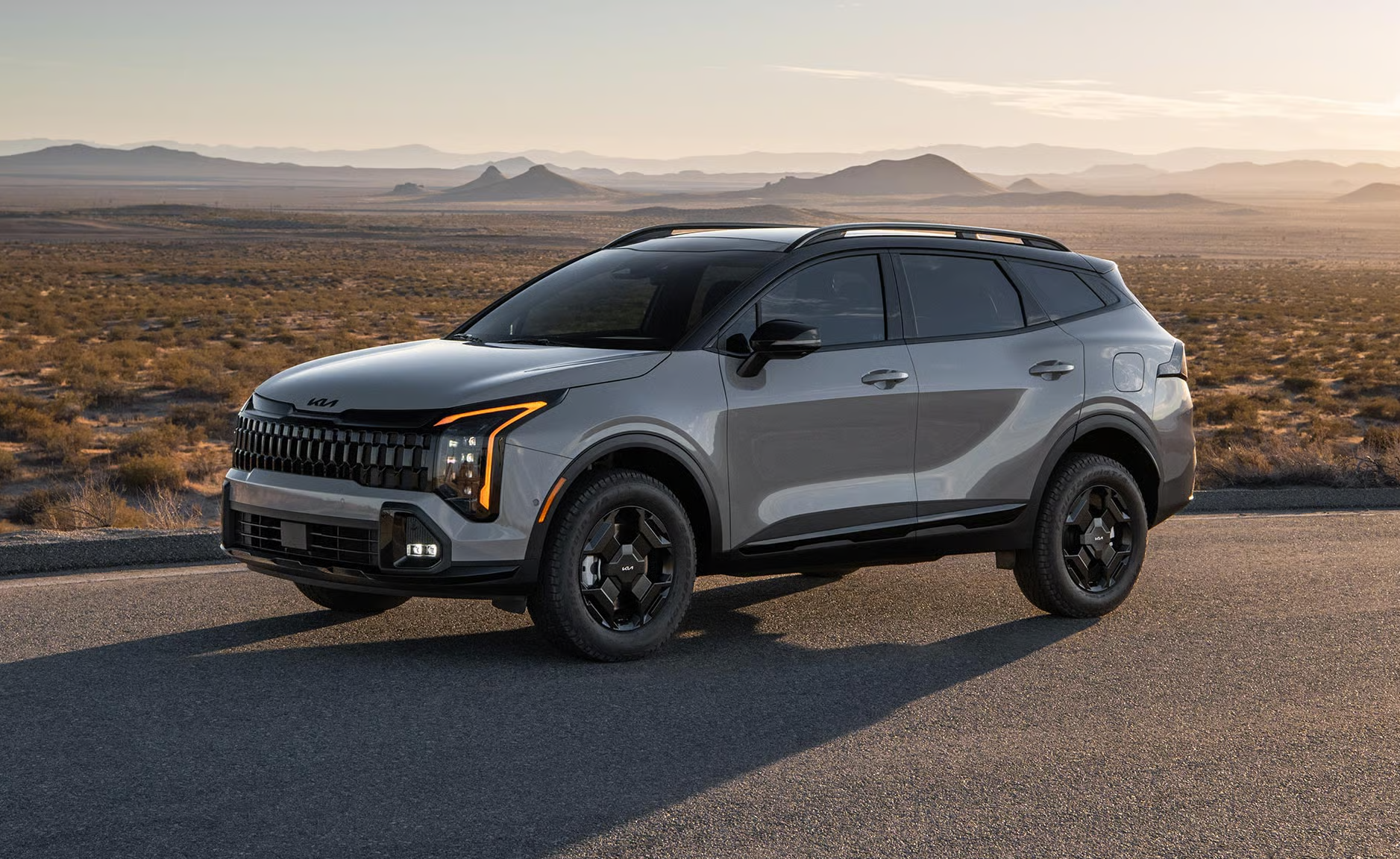
The Kia Sportage occupies a useful middle ground. It offers more room than the smallest crossovers while maintaining the general driving position that makes SUVs appealing to older motorists.
The 2026 Sportage appears on the IIHS Top Safety Pick+ list for vehicles built after May 2025. Its starting MSRP is approximately $30,285.
That qualification about build date is important. Buyers should confirm the exact vehicle’s production configuration and safety designation rather than assuming every used or new example has identical credentials.
Best for: Seniors who want additional passenger and cargo space without moving to a large SUV.
9. Mazda CX-50 — Best for All-Around Utility

The Mazda CX-50 is another IIHS Top Safety Pick+ model identified in the research.
Its appeal for older drivers comes from the balance between crossover practicality and a more rugged design. For seniors who occasionally travel outside the city or want additional confidence in poor weather, that can be attractive.
However, shoppers should pay attention to seat height and door-sill design during an actual test drive. Safety ratings tell you how a vehicle performs in specified crash and avoidance tests; they do not measure how easy it is for a particular individual to enter the driver’s seat.
Best for: Drivers who want a versatile crossover with strong safety credentials.
10. BMW X1 — Best Luxury Small SUV for Seniors

The BMW X1 is the premium choice on this list. It combines the relatively manageable footprint of a small luxury SUV with the comfort and technology expected from a premium vehicle.
Importantly, the 2026 X1 was added to the IIHS Top Safety Pick+ list in July 2026. It earned good results in key crash tests and performed well in headlight and crash-prevention testing.
The tradeoff is price. The research lists a starting MSRP of approximately $44,550, significantly above the mainstream options.
For an older buyer, however, premium features can be worthwhile if they improve seat adjustment, visibility, comfort or driving confidence.
Best for: Seniors who want a luxury crossover without the size of a larger premium SUV.
11. Hyundai Ioniq 5 — Best Electric Option for Local Driving
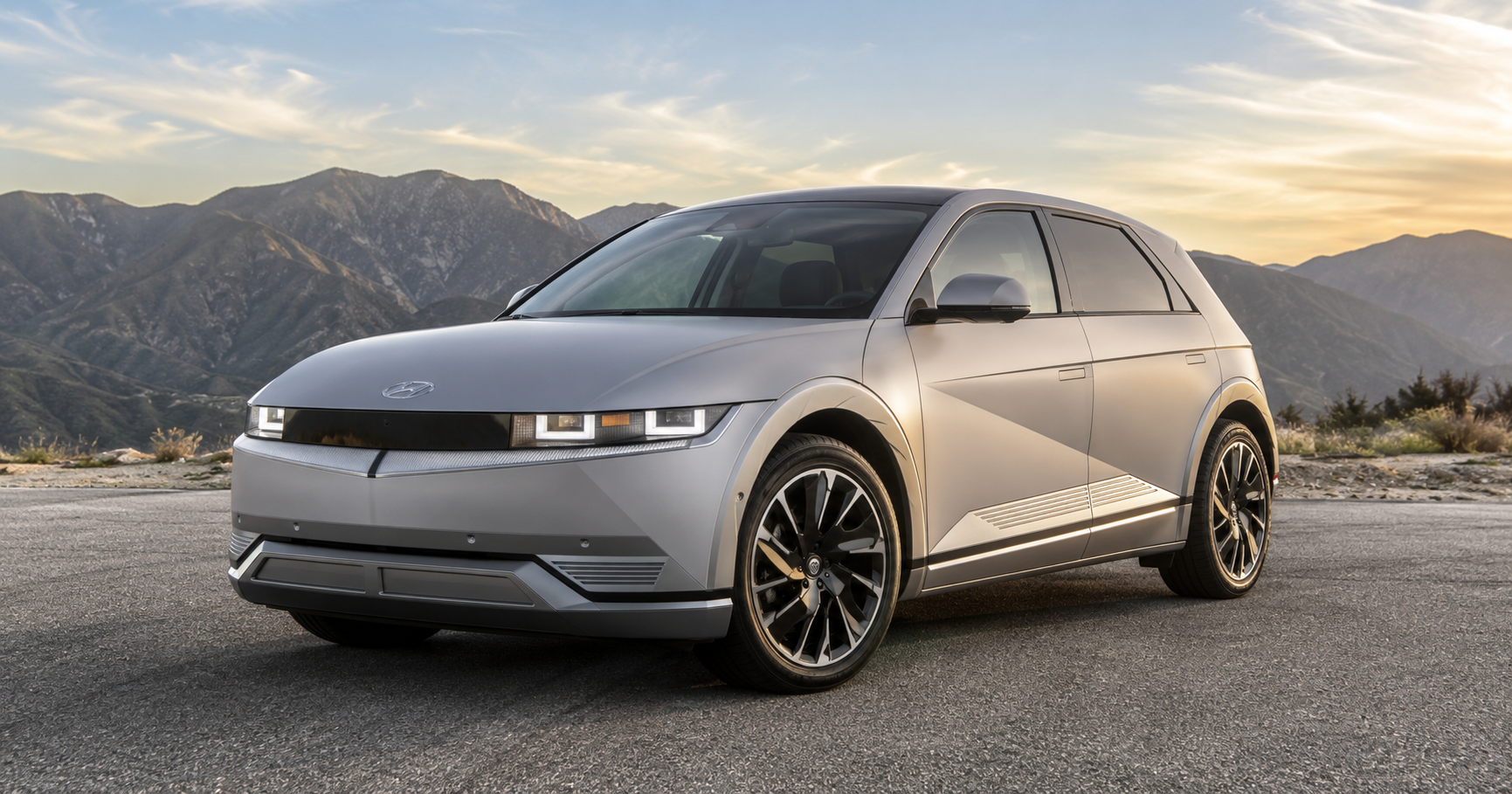
The Hyundai Ioniq 5 shows that electric vehicles can also make sense for older drivers.
The Ioniq 5 is among the 2026 IIHS Top Safety Pick+ vehicles and has a starting price of approximately $36,600.
EVs offer several characteristics that may appeal to seniors: quiet operation, smooth acceleration and potentially lower operating costs.
The major consideration is charging. An electric SUV makes considerably more sense for someone who can charge at home and primarily drives predictable local routes than for someone who regularly makes long road trips without reliable charging access.
Best for: Seniors who have convenient home charging and mostly drive locally.
12. Genesis GV60 — Best Luxury Electric Crossover
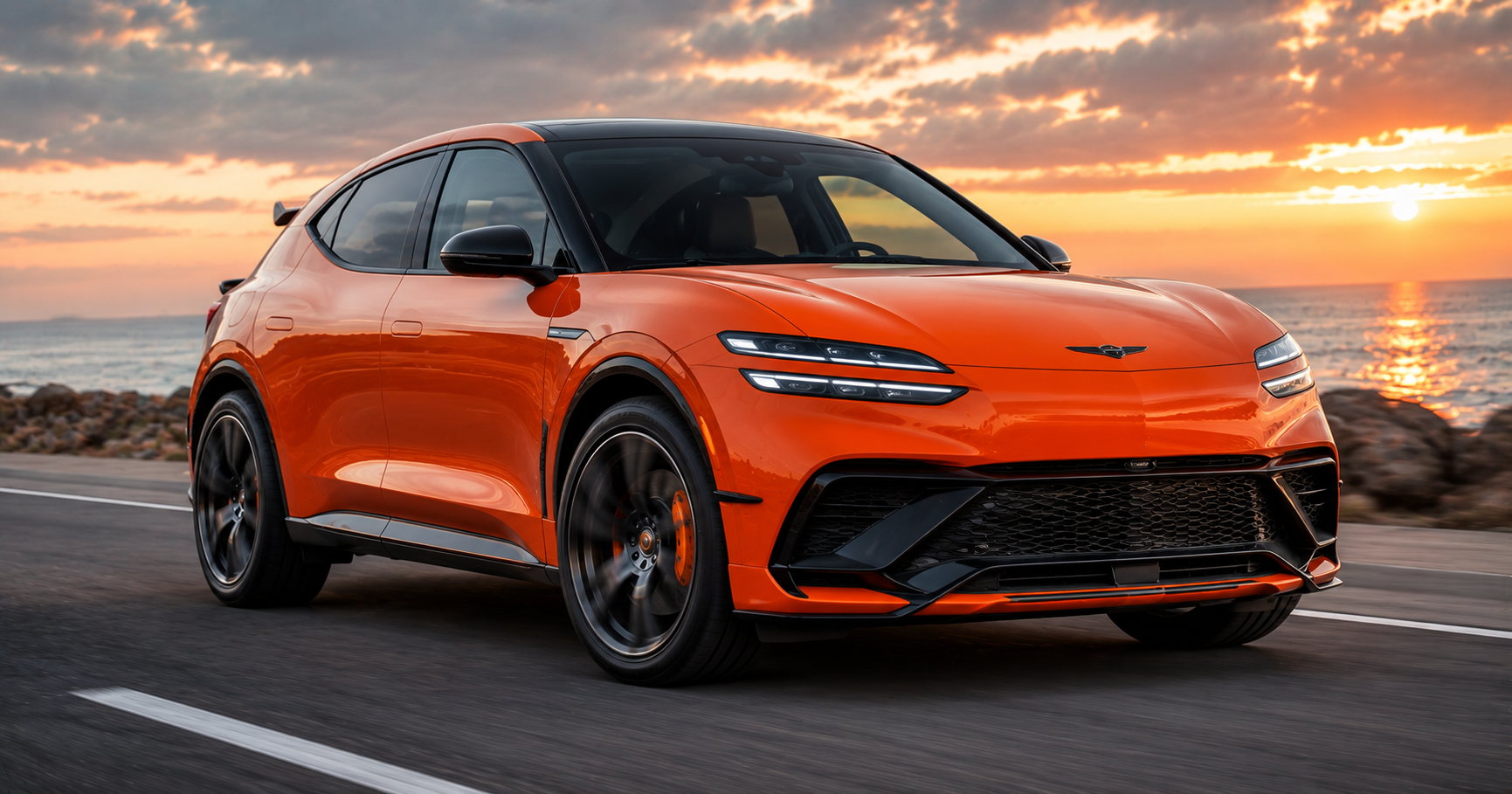
The Genesis GV60 is the premium EV option in this group.
The GV60 is among the 2026 IIHS Top Safety Pick+ vehicles and has a starting MSRP of approximately $52,525. The research also cites a 5-star overall NHTSA rating.
It is a compelling choice for an older buyer who wants the quietness and smoothness of an EV combined with a luxury interior.
But the same EV considerations apply: charging access, road-trip planning and the higher initial purchase price should all be considered before buying.
Best for: Seniors who want a premium electric crossover and have convenient charging access.
Quick Comparison: 12 Senior-Friendly SUVs for 2026
| Model | Starting MSRP* | Key Strength | Safety Highlight |
|---|---|---|---|
| Subaru Forester | $31,445 | Visibility and accessibility | IIHS Top Safety Pick+ |
| Honda CR-V | Not specified | Easy entry and exit | AARP accessibility recognition |
| Mazda CX-5 | $31,485 | Comfort and safety | IIHS Top Safety Pick+ |
| Hyundai Tucson | $31,050 | Space and safety | IIHS Top Safety Pick+; NHTSA 5-star |
| Mazda CX-30 | $27,870 | Compact size | IIHS Top Safety Pick+ |
| Hyundai Kona | $27,100 | Value | IIHS Top Safety Pick+ |
| Honda HR-V | $27,950 | Urban maneuverability | IIHS Top Safety Pick+ |
| Kia Sportage | $30,285 | Space and practicality | IIHS Top Safety Pick+* |
| Mazda CX-50 | Not specified | Utility | IIHS Top Safety Pick+ |
| BMW X1 | $44,550 | Luxury | IIHS Top Safety Pick+ |
| Hyundai Ioniq 5 | $36,600 | Electric driving | IIHS Top Safety Pick+ |
| Genesis GV60 | $52,525 | Luxury EV | IIHS Top Safety Pick+ |
*Starting prices and safety information are based on the supplied 2026 research. The Kia Sportage IIHS designation applies to vehicles built after May 2025.
What Safety Features Should Older Drivers Look For?
Buying a vehicle with a strong crash-test rating is an excellent starting point, but seniors should also consider the technology designed to help avoid crashes in the first place.
- Automatic emergency braking: Can help detect an imminent collision and apply the brakes.
- Forward collision warning: Alerts the driver when the vehicle is approaching an obstacle too quickly.
- Blind-spot monitoring: Helps identify vehicles approaching from areas that can be difficult to see.
- Rear cross-traffic alert: Particularly useful when reversing out of parking spaces.
- Lane-departure warning: Alerts the driver when the vehicle begins leaving its lane.
- Adaptive cruise control: Can reduce fatigue during longer drives.
- Rear automatic braking: Can provide an additional safeguard while reversing.
Why Seat Height Matters More Than Many Buyers Realize
One of the biggest mistakes when shopping for small SUVs and crossovers for elderly drivers is focusing entirely on safety scores and ignoring ergonomics.
Imagine a driver who has difficulty bending the knees. A vehicle with a very low seat might have an excellent crash-test rating, but getting into it every morning could still be uncomfortable.
Now consider the opposite extreme. A very tall SUV can require the driver to climb up into the cabin. That can be equally inconvenient.
The sweet spot is often a seat that allows the driver to turn, sit and slide sideways into position with minimal vertical movement.
That is why physically testing a vehicle is so important. Sit in the driver’s seat several times. Open the door fully. Move the seat forward and backward. Adjust the steering wheel. Then get out and repeat the process.
Visibility Can Be a Deal-Breaker
Modern SUVs sometimes sacrifice outward visibility for styling. Thick pillars, high beltlines and small rear windows can make a vehicle look sleek while making it harder to see around.
For older drivers, that tradeoff may not be worthwhile.
The Subaru Forester is particularly notable here. Its large side glass, thin pillars and relatively low beltline create a more panoramic view.
A good test is simple: sit in the driver’s seat and look toward the front corners, side mirrors and rear quarter areas. If you have to move your head dramatically to see around the vehicle, it may not be the right fit.
Are Hybrid SUVs Better Than Electric SUVs for Seniors?
There is no universal answer.
A hybrid can be an excellent compromise for older drivers who want better fuel economy without changing their refueling habits. Hybrids provide smooth operation, fuel savings and the familiarity of gasoline refueling.
EVs can be attractive because they are quiet, smooth and potentially cheaper to operate. But charging becomes part of the ownership routine.
For a senior who has a garage with home charging and drives mostly around town, an EV such as the Ioniq 5 can be very convenient.
For someone living in an apartment without charging access or frequently taking long-distance trips, a hybrid may be the less complicated solution.
What About Touchscreens and Complicated Technology?
More technology does not necessarily mean a better senior vehicle.
Touchscreen-heavy interfaces, deep menus and small fonts can become usability problems for some older drivers.
Before buying, make sure you can comfortably perform basic tasks such as changing the climate temperature, adjusting audio volume, changing drive settings and accessing navigation.
Physical controls for frequently used functions can be easier to operate without taking your eyes off the road.
How Much Should Seniors Spend on a Small SUV?
There is no ideal budget for every household, but the 2026 market offers several strong options below $30,000.
The Hyundai Kona is listed at $27,100, the Mazda CX-30 at $27,870 and the Honda HR-V at $27,950.
Moving toward the $30,000-$32,000 range opens the door to vehicles such as the Kia Sportage, Hyundai Tucson, Subaru Forester and Mazda CX-5.
Premium buyers can move considerably higher, with the BMW X1 listed at $44,550 and Genesis GV60 at $52,525.
But purchase price should not be the only consideration. Insurance, maintenance, fuel or electricity costs, tires and the cost of optional safety or comfort packages can significantly affect the long-term ownership bill.
New vs. Used: Which Is Better for an Older Driver?
A new SUV generally offers the latest safety technology, warranty protection and the newest accessibility features.
A used vehicle can reduce depreciation and provide excellent value, but shoppers need to be more careful about safety equipment and vehicle condition.
For an older driver, a relatively recent used vehicle with modern automatic emergency braking, blind-spot monitoring and rear cross-traffic alert may be preferable to an older luxury SUV with outdated safety technology.
The most important rule is simple: do not buy based on the badge alone. Evaluate the exact vehicle, model year, equipment and condition.
How to Test-Drive a Senior-Friendly SUV
- Enter and exit at least three times. Pay attention to knee, hip and back movement.
- Test the driver’s door. Make sure it opens wide enough for comfortable entry.
- Adjust the seat. Confirm that you can find a comfortable driving position without excessive stretching.
- Check visibility. Look through every window and mirror before moving.
- Test the controls. Adjust the climate system, audio and other frequently used functions.
- Try parking. A vehicle that feels fine on the road may feel very different in a tight parking space.
- Test the driver-assistance systems. Make sure warnings are understandable rather than distracting.
- Bring the person who will actually drive it. A vehicle that works for one senior may not work for another.
Which Small SUV Should You Choose?
There is no single winner for every older driver.
If visibility and overall usability are the priorities, the Subaru Forester is one of the strongest candidates.
If getting in and out is the biggest concern, the Honda CR-V deserves serious attention because of its recognition for entry and exit accessibility.
If price is the primary consideration, the Hyundai Kona, Mazda CX-30 and Honda HR-V provide relatively affordable entry points while carrying strong safety credentials.
If luxury matters, the BMW X1 offers a premium alternative with a 2026 IIHS Top Safety Pick+ designation.
And for seniors ready to switch to electric power, the Hyundai Ioniq 5 and Genesis GV60 offer two very different approaches to electric crossover ownership.
The important thing is to match the vehicle to the driver’s actual needs rather than simply choosing the SUV with the longest feature list.
Frequently Asked Questions
What is the best small SUV for elderly drivers in 2026?
The Subaru Forester and Honda CR-V are among the strongest choices. The Forester is particularly praised for visibility and accessibility, while the CR-V is specifically highlighted for easy entry and exit.
What is the easiest SUV for seniors to get in and out of?
The Honda CR-V is a standout because of its strong entry and exit accessibility. The Subaru Forester and Hyundai Tucson are also worth considering because of their seating position and overall accessibility.
What is the safest small SUV for seniors?
Several small SUVs earned IIHS Top Safety Pick+ recognition in 2026, including the Subaru Forester, Honda HR-V, Hyundai Kona, Hyundai Tucson, Kia Sportage, Mazda CX-30, Mazda CX-50, BMW X1 and Mazda CX-5.
Is the Subaru Forester good for seniors?
Yes. The Subaru Forester is praised for easy access, strong visibility, practical controls, standard all-weather capability and predictable ownership costs.
Is the Honda CR-V good for elderly drivers?
Yes. The Honda CR-V is highlighted for its approximately 21.3-inch front-seat height, wide door openings and senior-friendly entry and exit characteristics.
Are small SUVs better than sedans for elderly drivers?
Small SUVs can offer easier entry and exit, a higher driving position, more cargo space and useful visibility advantages, although the best choice depends on the driver’s individual needs.
What seat height is best for elderly drivers?
The supplied research cites approximately 21 to 24 inches as an AARP recommendation, while other ergonomic sources identify roughly 18 to 22 inches as an optimal range.
Are electric SUVs good for elderly drivers?
Electric SUVs can work very well for seniors who have convenient home charging and mostly drive local routes. They offer quiet operation and smooth acceleration, but long trips require charging planning.
What safety features should seniors look for in an SUV?
Important features include automatic emergency braking, forward collision warning, pedestrian detection, blind-spot monitoring, rear cross-traffic alert, lane-departure warning, adaptive cruise control and rear automatic braking.
What is the best affordable small SUV for seniors?
Based on the supplied 2026 pricing, the Hyundai Kona, Mazda CX-30 and Honda HR-V are among the most affordable options with IIHS Top Safety Pick+ credentials.
Should seniors buy a new or used SUV?
A new SUV offers the latest safety systems and warranty coverage, while a used vehicle can reduce purchase costs. Buyers should verify the exact model year’s safety equipment and condition.