Honda EV plans in North America appear to be moving further into the future, with company executives indicating that new fully electric vehicles are unlikely to arrive until after the automaker begins launching its next-generation hybrids around 2030.
Honda Shifts Its Near-Term Focus to Hybrids
Honda entered the year with three electric vehicles targeted for production in North America, including two Honda models and one Acura. All three were canceled earlier this year, and no successors have been announced.
The automaker has since made clear that its immediate strategy will focus on hybrids. However, Honda has not abandoned plans for fully electric vehicles and still intends to bring EVs to market to help meet its carbon emission targets.
According to Motor Trend, Honda and Acura executives discussed the company’s direction during a press event, indicating that the next generation of hybrids will begin arriving around 2030. Fully electric vehicles are not expected to begin launching until after that.
New Honda and Acura Hybrids Expected Around 2030
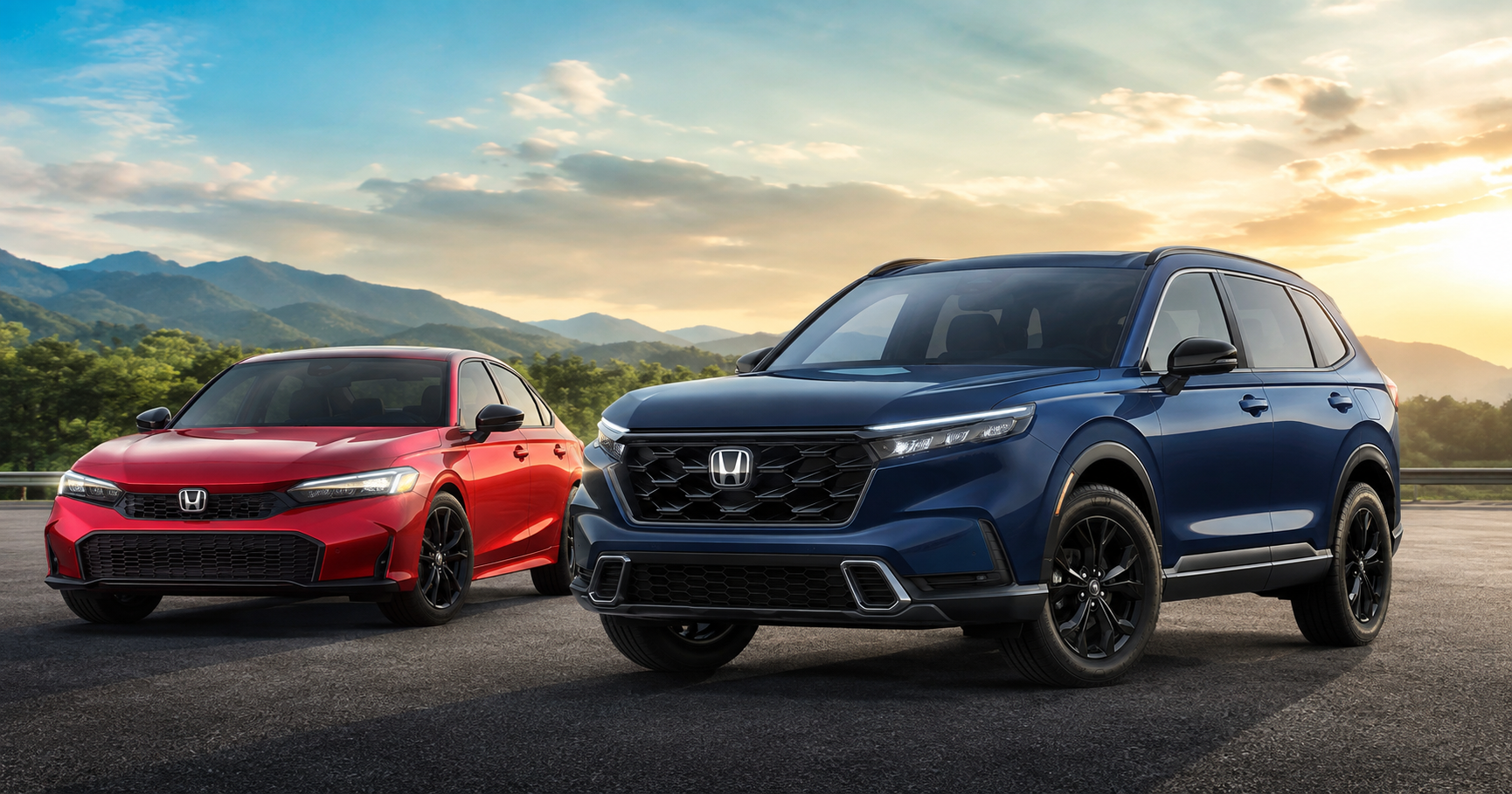
The upcoming hybrid lineup is expected to include production versions of the Honda Hybrid Sedan Prototype and Acura Hybrid SUV Prototype.
Acura has said the SUV Prototype previews a model arriving in just two years. The vehicle is believed to be the next-generation RDX and will use a new hybrid V6 powertrain designed for larger vehicles similar to the Honda Odyssey and Pilot.
The hybrid sedan could arrive in 2029 or 2030 as either a next-generation Civic or Accord. Regardless of the model, it is expected to use a four-cylinder hybrid powertrain rather than a V6.
Honda Rules Out Plug-In Hybrids
Honda also does not plan to introduce plug-in hybrids during this period. According to Motor Trend, American Honda Vice President of Auto Strategy Gary Robinson said customers either do not understand plug-ins or simply prefer either a non-plug-in vehicle or a fully electric model.
Honda technically still offers a plug-in hybrid of sorts through the CR-V e:FCEV, a hydrogen fuel-cell version of the compact SUV with a battery large enough to be plugged in and driven on battery power alone before the fuel cell must be activated.
The company also previously offered the Clarity as a plug-in hybrid using a powertrain very similar to those found in its conventional hybrids.
Why Honda Canceled Its EV Program
Honda representatives had raised concerns about the company’s EV program even before the automaker canceled its 0 Series EVs and the Acura RSX.
Last November, an executive said the EV market had been set back by five years because of the end of America’s federal EV tax credit, rising tariffs, and slowing EV adoption rates. Executives at the press event attended by Motor Trend cited those same factors as contributing to the cancellation of the program.
The EV projects were also expensive enough that Honda posted its first-ever financial loss last year. The company also said its EVs were not “competitive” with products from other automakers.
Honda Still Has Major Hybrid and Battery Plans
While Honda’s completely new generation of hybrids may not arrive until the end of the decade, the automaker has already announced plans to introduce 15 other hybrid models before then.
Honda has also announced a partnership with QuantumScape aimed at developing solid-state batteries, indicating that the company continues to pursue future electric vehicle technology despite delaying its next wave of EV launches.
For now, Honda’s strategy centers on expanding its hybrid lineup while pushing the arrival of its next fully electric vehicles beyond 2030, following the cancellation of its previously planned Honda and Acura EV models.