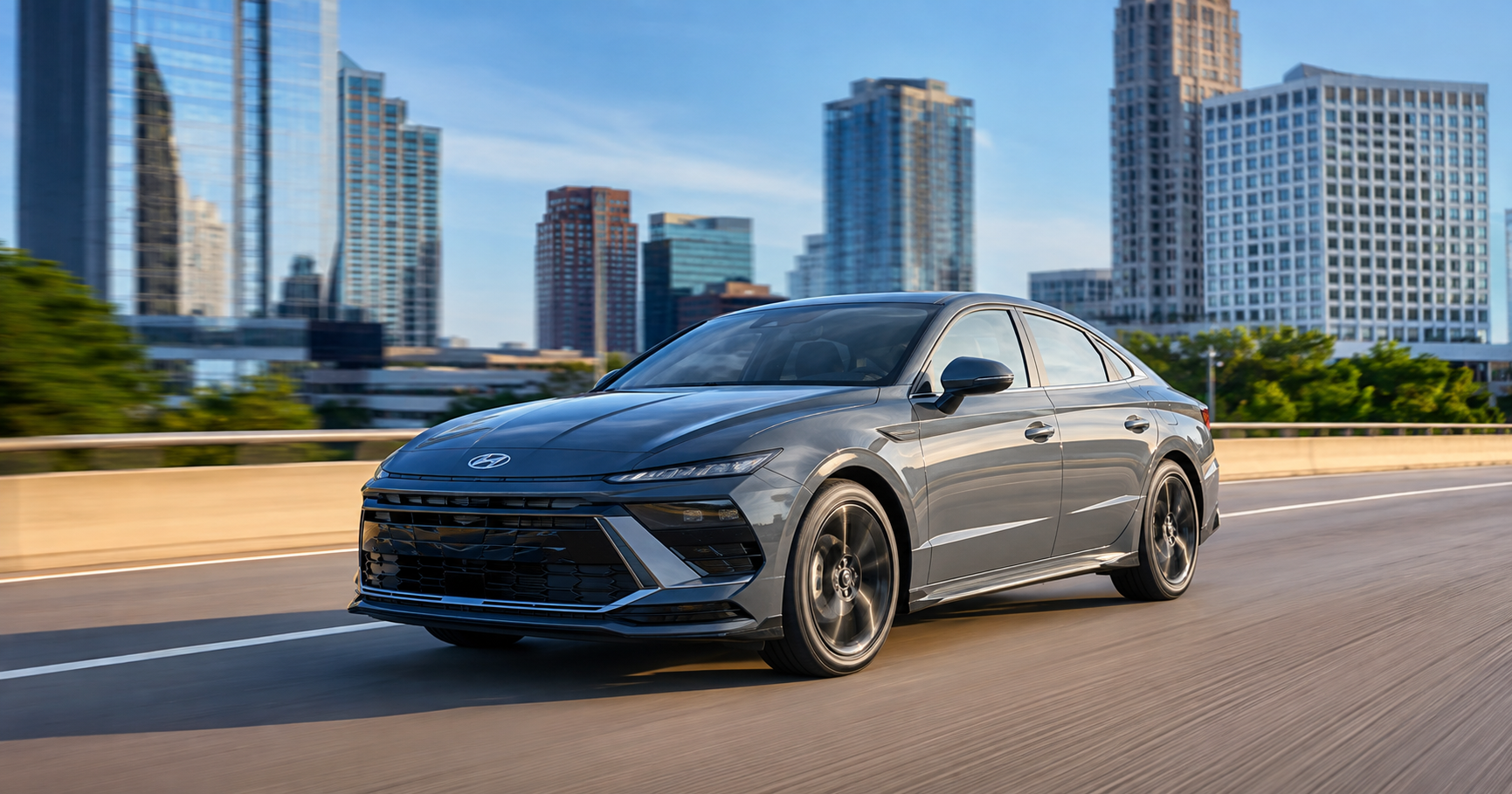
Hyundai Sonata sales surged 44% in August compared with the same month last year, leading a strong month for the automaker’s remaining sedans as both the Sonata and Elantra posted year-over-year gains. While the broader auto industry has increasingly shifted toward SUVs, Hyundai’s August results show that demand for traditional passenger cars remains significant.
The Sonata Had an Awesome August
Of Hyundai’s two remaining sedans, the midsize Sonata delivered the strongest performance in August, switching places with the compact Elantra.
Sonata sales jumped 44% compared with August of last year, rising from 4,793 vehicles to 6,899. For the year as a whole, Sonata sales are up 17%, increasing from 42,192 to 49,174 compared with the same period last year.
The Elantra did not post the large percentage increase it recorded last month or the gain achieved by the Sonata in August, but it continued to show growth.
Hyundai sold 17,747 Elantras in August, an increase of 2,465 units compared with the same month last year. Year-to-date sales are up 12%, climbing from 102,404 to 114,701.
Those figures also mean the Elantra remains Hyundai’s second-bestselling model behind the Tucson SUV.
How Hyundai’s Sedans Compare With the Competition
Hyundai is among the first automakers to publish monthly sales numbers, limiting the number of direct comparisons currently available. Honda, however, has also released its August sales figures and remains, alongside Toyota, a mainstream leader in the sedan segment.
Despite Hyundai’s healthy growth, its sedans still face substantial gaps when compared with Honda’s leading models. The Civic sold 177,411 units so far this year, leaving a gap of 62,710 vehicles compared with the Elantra.
The difference between the Accord and Sonata is even larger. Honda sold 129,014 Accords, or 79,840 more than the Sonata.
However, neither Honda model recorded percentage increases as large as Hyundai’s sedans, indicating that the Hyundai models appear to be narrowing the gap.
Sedan Sales Show the Segment Is Far From Dead
The SUV market has become the larger portion of the overall automotive market, but the sales results posted by Hyundai, Kia, Honda and Toyota show that sedans remain an important part of the industry.
There may still be growth potential in the segment, particularly for automakers that have continued offering sedans. With fewer choices available, buyers may increasingly turn to the models that remain.
The fact that some of these sedans rank among their brands’ top-selling vehicles, even as the market appears to favor SUVs, highlights their importance within automakers’ product portfolios.
Buyer preferences could also shift back toward more traditional cars from SUVs and trucks. Factors such as gas prices could contribute, similar to previous periods when consumers moved toward smaller economy cars during gas price increases and economic crises.