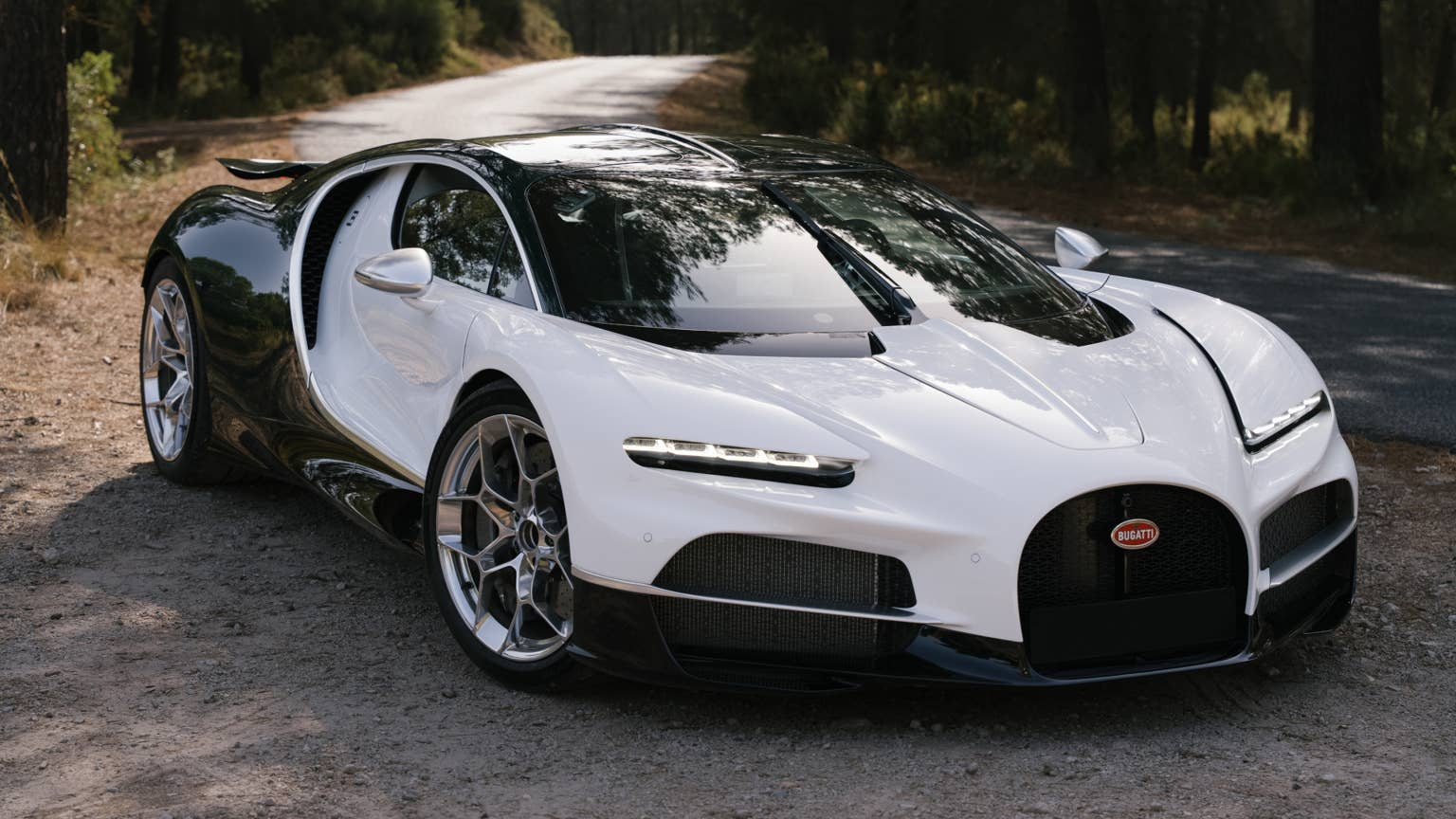
Bugatti has released a new episode documenting the Tourbillon hypercar’s development, offering a closer look at how the automaker worked to give its new V16 powertrain an exciting sound while keeping the car legal and refined enough for long-distance cruising.
Titled “Sound of a New Era Part 1,” the short video focuses on the challenges surrounding the Tourbillon’s Cosworth-developed 8.3-liter naturally aspirated V16. It also shows the hypercar being pushed hard, including powerslides through corners, donuts and blue flames from the exhaust.
Bugatti Tourbillon V16 Balances Rawness and Refinement
Bugatti’s Head of NVH & Acoustics, Romain Volatier, said the company deliberately retained some of the raw character associated with its previous engines.
“Bugatti, from a sound perspective, has never had a very clean-sounding engine,” Volatier said. “It has always been a little bit dirty and raw, so we decided to keep that as one of the key points of the sound.”
The video presents the Tourbillon’s V16 as having a guttural, big-displacement character reminiscent of the 8.0-liter quad-turbocharged W16. At the same time, the V16 exhaust note carries a degree of Italian exoticism, particularly when the engine revs in neutral.
Bugatti also says there are no fake sounds being pumped into the cabin. The goal is for drivers to feel directly and authentically connected to the throttle and powertrain, helping inspire confidence.
Thousands of Simulations Helped Shape the Sound
Creating a sound that could deliver a smooth cruising note and a visceral pitch at high revs while remaining within noise limits presented a significant engineering challenge.
Those limits can also be affected by tire wear and aerodynamics. Bugatti says its engineers ran thousands of simulations involving both the exhaust and air intake systems to find “the right balance between performance, refinement, and the distinctive rawness that is synonymous with a Bugatti engine.”
The automaker adds that lowering the windows slightly makes the sounds experienced inside the Tourbillon richer and more multi-dimensional.
Bugatti Tourbillon Passes Noise Homologation Tests
One noise homologation test required the Tourbillon to produce no more than 72 decibels, averaged across multiple individual evaluations. Those evaluations included constant-speed tests and accelerated runs.
The testing was complicated by several factors. Tire noise contributes to the readings, while the Tourbillon’s body, including its large rear wing, also affects the sound captured by microphones. Temperature can influence the results as well, while unpredictable gusts of wind can invalidate test runs.
Bugatti says the Tourbillon passed all of the tests “with flying colors.” However, development driver Paolo Magrone said Molsheim is “still working on small refinements and little details.”
Tourbillon Development Nears Customer Deliveries
The episode is the first part of Bugatti’s look at the Tourbillon’s sound development, with more expected to be covered in the next video.
After three years of development, customer deliveries are almost ready to begin. The Tourbillon’s 9,000-rpm, 1,775-horsepower V16 hybrid powertrain is set to be unleashed to the public.