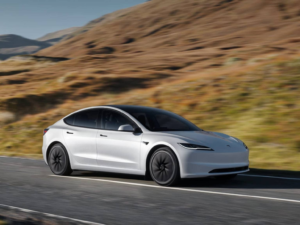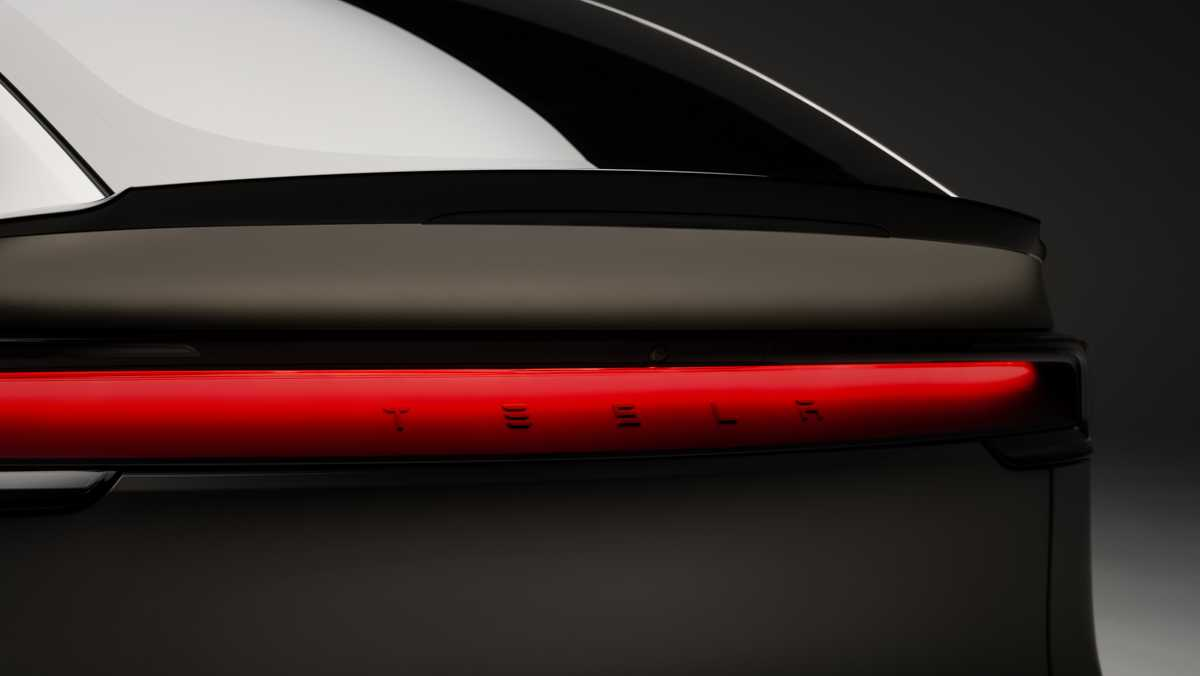
Tesla laser windshield wipers could replace traditional wipers and washers under a newly granted patent, reviving an idea the automaker has been pursuing for years. The system would use lasers, sensors and cameras to detect and remove dirt, water, bugs and other debris from vehicle glass.
Tesla Has Been Exploring Laser Glass Cleaning for Years
Tesla has been working on laser-based windshield and glass cleaning for some time. The company was granted a patent for the concept in 2021, and in 2026, CarBuzz reported that Tesla was again granted a patent by the U.S. Patent and Trademark Office, numbered 2026/0257648 A1.
The newer patent appears to be practically identical to the earlier one. The two patents even use the same illustrations and credit the same inventor. The reason Tesla filed what appears to be an almost identical patent remains unclear.
The concept covers glass surfaces throughout a vehicle, including windshields and sensor lenses, as well as screens and solar panels. The system is designed to remove dirt, water, bug guts, bird poop and other debris that can obscure those surfaces.
How Tesla’s Laser Cleaning System Would Work
The patent describes a sensor system that could use a capacitive surface on the windshield to detect debris. A camera system could then determine the precise location of the material that needs to be removed.
Once the debris is identified, a laser would be pulsed at it until it was removed. The patent also describes calibrating the laser so it would not penetrate the depth of the windshield.
Coatings could also be applied to further prevent laser penetration. The measures would be intended to protect passengers and potentially sensitive cameras.
Tesla also suggests that the technology could be used for products such as household solar panels. The company touts the potential for reducing cleaning time by eliminating the need to dry surfaces and avoiding the use of “sophisticated chemical solutions” that could potentially damage components.
Are Laser Windshield Wipers Actually Practical?
The idea of using lasers to clear raindrops from a windshield may sound futuristic, but the system could be significantly more complicated than the problem it is designed to solve.
Even assuming the technology could effectively clear a windshield, it would require a laser and lens system that needs careful calibration. That equipment would be expensive on its own and would also require a complex computer and sensor system to locate debris and direct the laser.
During a storm, the amount of debris and water that the system would need to handle could be substantial. Traditional windshield wipers, by comparison, rely on a basic electric motor operating a pair of arms at different speeds.
When additional cleaning power is needed, windshield washers use relatively simple components, including a bottle of washer fluid, a hose and a water pump.
The Case for Eliminating Soap and Water
Tesla’s argument that the system could eliminate the need for soap and water may be accurate if the laser technology proves effective. But the article questions whether avoiding those materials addresses a meaningful problem.
Glass is highly durable and generally is not significantly affected by water, soap or the rubber used in wiper blades. Exterior glass can also encounter much harsher substances during its lifetime.
Exterior cameras are another example, as they are frequently cleaned with the same washer fluid used on the windshield. If a glass or clear surface on a vehicle cannot withstand soap and water, the article argues that it may not be suitable for use on a car.
Questions Remain About Laser Power and Safety
The concept also raises questions about whether the laser system would be effective and safe enough for real-world use. Lasers are highly focused, and producing enough power to evaporate materials such as water droplets or large bird droppings could take time.
Powerful lasers available for purchase online can set paper on fire or pop a balloon, but even those applications require the laser to remain focused on the material for a moment or two. Removing a drop of water or a large bird dropping could potentially take longer.
The focused nature of a laser could create another limitation. A large smear from a bug could require the laser to work across the affected area, potentially making the cleaning process much slower.
Heavy rain and snow could present an even greater challenge. The article questions whether a laser-based system would be remotely useful under those conditions.
Laser Safety Could Be a Major Concern
Safety is another issue. Tesla says it would take measures to prevent the laser from penetrating the glass and would probably use wavelengths unlikely to harm the human eye.
However, the system could still require powerful and potentially dangerous lasers. The article also points to reports of some phone cameras being harmed by lidar sensors, which use relatively low-power laser systems for imaging rather than attempting to vaporize material.
That raises concerns about directing a powerful laser toward human eyes or cameras, both of which are critical components in new vehicles.
Tesla’s latest patent brings its long-running laser glass-cleaning concept back into focus, but questions remain over the system’s complexity, effectiveness, power requirements and safety compared with conventional windshield wipers and washers.