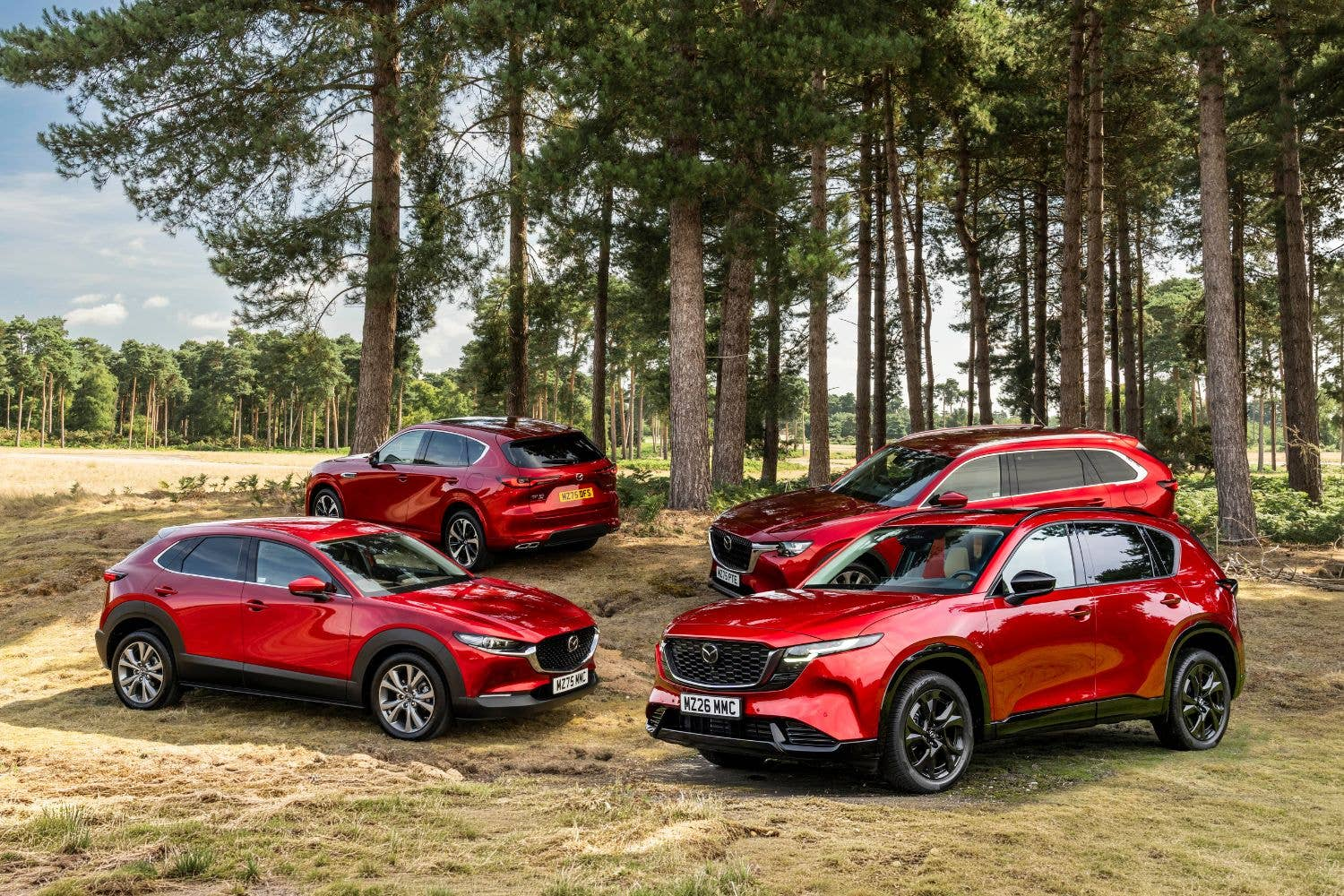
Mazda says it has no plans to abandon combustion engines anytime soon, arguing that the technology remains highly relevant in markets such as the U.S. and Japan. The automaker is continuing to pursue multiple powertrain solutions while developing hybrid technology and other approaches to reduce emissions.
Mazda Will Continue Investing in Combustion Engines
Several automakers previously announced plans to move toward all-electric lineups within specific timeframes, largely in response to tightening regulations. But as those plans have evolved, many companies have adjusted their electric vehicle timelines or put some projects on hold.
For Mazda, the approach is different. Speaking to British publication Car, Moritz Oswald, Project Manager for Product Planning and Co-Creation at Mazda Motor Europe, said the company will continue investing in multiple powertrain solutions rather than abandoning combustion engines.
“Part of our strategy is that we want the right engine for the right customer. So, we will continue to invest in our multi-solutions approach. We will not kill the combustion engine tomorrow,” Oswald said.
He added that combustion engines remain highly relevant globally, particularly in the U.S. and Japan.
“Combustion engines are still, globally, super relevant. If you talk about markets, such as the US, combustion engines for the next couple of years will definitely be the way to go. BEV share is still super low there, even with Tesla’s home market. Also in Japan, we see combustion engines are still very relevant,” Oswald said.
Mazda Is Still Pursuing Electrification
Mazda’s electrification efforts have included the MX-30, which was limited by its range. The rotary range-extender model addressed that shortcoming, although it was still described as a sales dud.
The company has also introduced plug-in hybrid versions of the CX-90 and CX-70, which have received a mixed reception.
Despite those results, Mazda is continuing to explore electrification. The company is looking into developing a hybrid system that can compete with those offered by rivals, according to Oswald.
That approach also supports Mazda’s claim that the CX-5 hybrid will be a proper hybrid following lessons learned from its previous efforts. Hybridization could allow Mazda to keep combustion engines relevant while continuing its move toward electrification.
Mazda Wants to Keep Its “Rebel” Identity
Mazda has also maintained an interest in pursuing its own approach to powertrains. The company has repeatedly promised to bring back the rotary engine in a sporty application, with Oswald hinting that hybridization could help make that possible in a way that improves on the MX-30 R-EV.
Oswald said he joined Mazda after his boss described the brand as a “rebel with a cause.” That cause, he explained, would involve continuing to offer a wide range of powertrains until the world is ready to go electric or adopts a different approach.
At the same time, Oswald acknowledged the need to keep pace with the industry.
“But, of course, we need to keep up with developments. Because going from being a rebel with a cause to losing sight of your competitors is a thin line,” he said.
Mazda Is Also Exploring CO2 Recapture
Mazda is exploring another approach to reducing emissions by attempting to recapture CO2 from vehicle exhaust systems. The technology remains in the prototype stage.
The goal is to use zeolite to repurpose the captured emissions into useful materials such as plastics, fertilizers or synthetic fuels.
The effort represents another part of Mazda’s approach as it works to navigate tightening emissions regulations while pursuing carbon neutrality without abandoning combustion engines.