BMW’s growing electric vehicle sales are helping the automaker continue offering powerful gasoline and diesel engines, including six-cylinder and V8 models. In Australia, strong EV demand is giving the company more flexibility to meet tightening emissions regulations without abandoning traditional powertrains.
Fully electric vehicles accounted for nearly 20% of BMW Group Australia’s sales last year, CEO Vikram Pawah said. That share has helped offset higher CO2 emissions from gasoline and diesel vehicles, allowing BMW to maintain its broad engine lineup without dropping models to meet regulatory requirements.
BMW EV Sales Help Balance Australia’s Emissions Rules
Australia’s New Vehicle Efficiency Standard (NVES) does not directly prohibit combustion-powered vehicles. Instead, it sets fleet-wide emissions targets and penalizes automakers when their average CO2 output exceeds prescribed limits.
That system gives manufacturers an incentive to sell more zero-emissions vehicles, which can create additional room in their fleets for models with larger engines.
BMW’s electric vehicle sales are helping provide that flexibility in Australia, where stricter emissions requirements are putting pressure on automakers to reduce average fleet emissions.
BMW’s Power of Choice Strategy Keeps Multiple Engines Available
BMW’s “Power of Choice” approach allows customers to choose gasoline, diesel, plug-in hybrid and fully electric powertrains, often within the same model family.
The company plans to add hydrogen power to that strategy later this decade with the arrival of the iX5 Hydrogen, bringing a fifth drivetrain option to the X5 lineup.
“We can absolutely create that balance \[of powertrains\] as an organization, and that’s what we intend to keep,” Pawah told the Australian publication.
The executive also rejected the prospect of BMW Australia having to eliminate large engines or pass emissions-related costs directly to customers through higher prices.
Some electric versions already achieve take-up rates of between 35% and 40% in certain parts of BMW’s lineup, providing an even larger buffer against fleet emissions requirements.
BMW’s Six-Cylinder and V8 Engines Will Continue Into the 2030s
BMW’s commitment to combustion engines extends beyond Australia. BMW M boss Frank van Meel has previously confirmed that the company is updating its inline-six and V8 engines to comply with Euro 7 emissions regulations, keeping both engine families alive well into the 2030s.
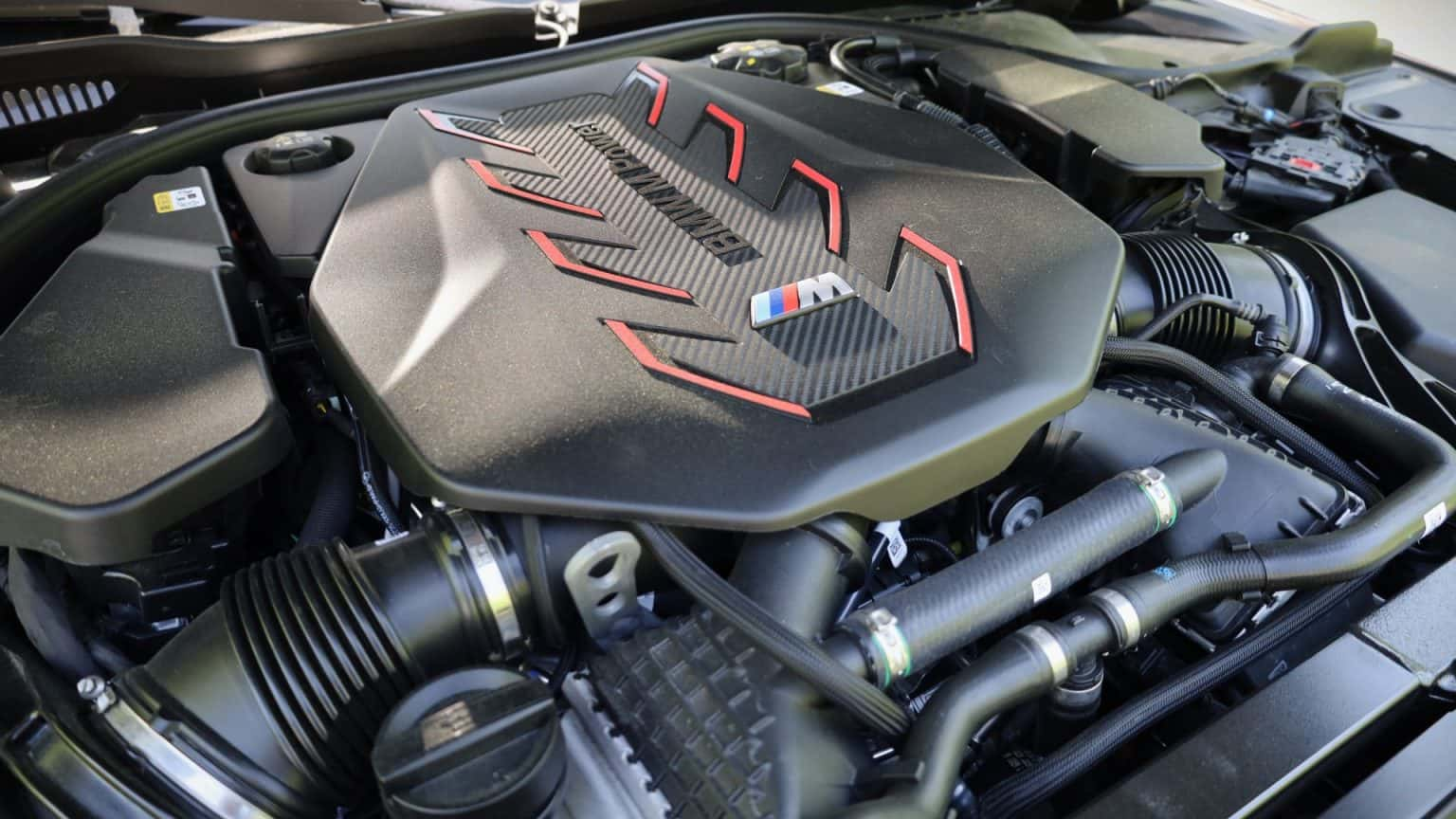
The revised 3.0-liter S58 engine used in Europe’s M2, M3 and M4 models features BMW’s M Ignite technology, a higher compression ratio and variable-geometry turbochargers.
BMW’s 4.4-liter S68 V8 is also receiving changes, including a switch to the Miller combustion cycle and updates to its engine management and exhaust aftertreatment systems.
However, the eight-cylinder engine had to be detuned in the M5 and XM in Europe to meet Euro 7 requirements, resulting in a loss of 41 horsepower.
Upcoming BMW Models Will Continue Offering Large Engines
Several upcoming models are expected to keep BMW’s traditional engines relevant. The M350 will receive the most powerful B58 inline-six yet, while the next-generation M3 is expected to feature a mild-hybrid S58 when it arrives in 2028.
Higher in the lineup, models from the 5 Series onward continue to offer a choice between six- and eight-cylinder engines.
BMW ALPINA is also expected to expand its lineup, bringing additional models with large-displacement engines into the portfolio.
BMW’s EV Strategy Supports Its Combustion Lineup
BMW’s approach illustrates how electric and combustion-powered vehicles can support each other within the company’s broader powertrain strategy.
In Australia, EV buyers are helping offset emissions from customers who continue to choose inline-six and V8-powered sports sedans, wagons and SUVs.
As BMW expands its electric offerings while updating its traditional engines to meet emissions standards, the company intends to preserve a wide range of powertrain choices for customers.