Missouri is set to raise the speed limit on rural interstates and freeways from 70 mph to 75 mph, but motorists will have to wait for specific roads to be approved before the higher limit takes effect.
Missouri Raises Rural Speed Limits to 75 MPH
The new law increases the speed limit on all rural interstates and freeways from 70 mph to 75 mph. Missouri Gov. Mike Kehoe recently approved the measure after Senate Bill 1408, sponsored by State Sen. Jamie Burger, passed.
The law is scheduled to take effect on August 28. However, Missouri still needs to determine which roads will receive the higher limit. That responsibility falls to the Missouri Department of Transportation, or MoDOT.
Rural sections of I-70 and I-49 around the Kansas City metro are among the leading candidates, but no roads have been officially confirmed. Urban highways are not included in the increase, meaning the change applies only to rural roads.
When Will the 75 MPH Limit Begin?
For now, drivers must continue following the existing 70 mph speed limit. MoDOT has not yet installed signs indicating a 75 mph limit, and its review of eligible roads remains underway.
According to local station KCTV5, MoDOT is evaluating several factors before determining whether a particular stretch of road qualifies for the higher speed limit. Those factors include traffic volume, terrain and the road’s accident history.
MoDOT says the full 75 mph rule is unlikely to take effect until sometime in early 2027.
Genesis GV90 Could Get an Extended-Range Powertrain
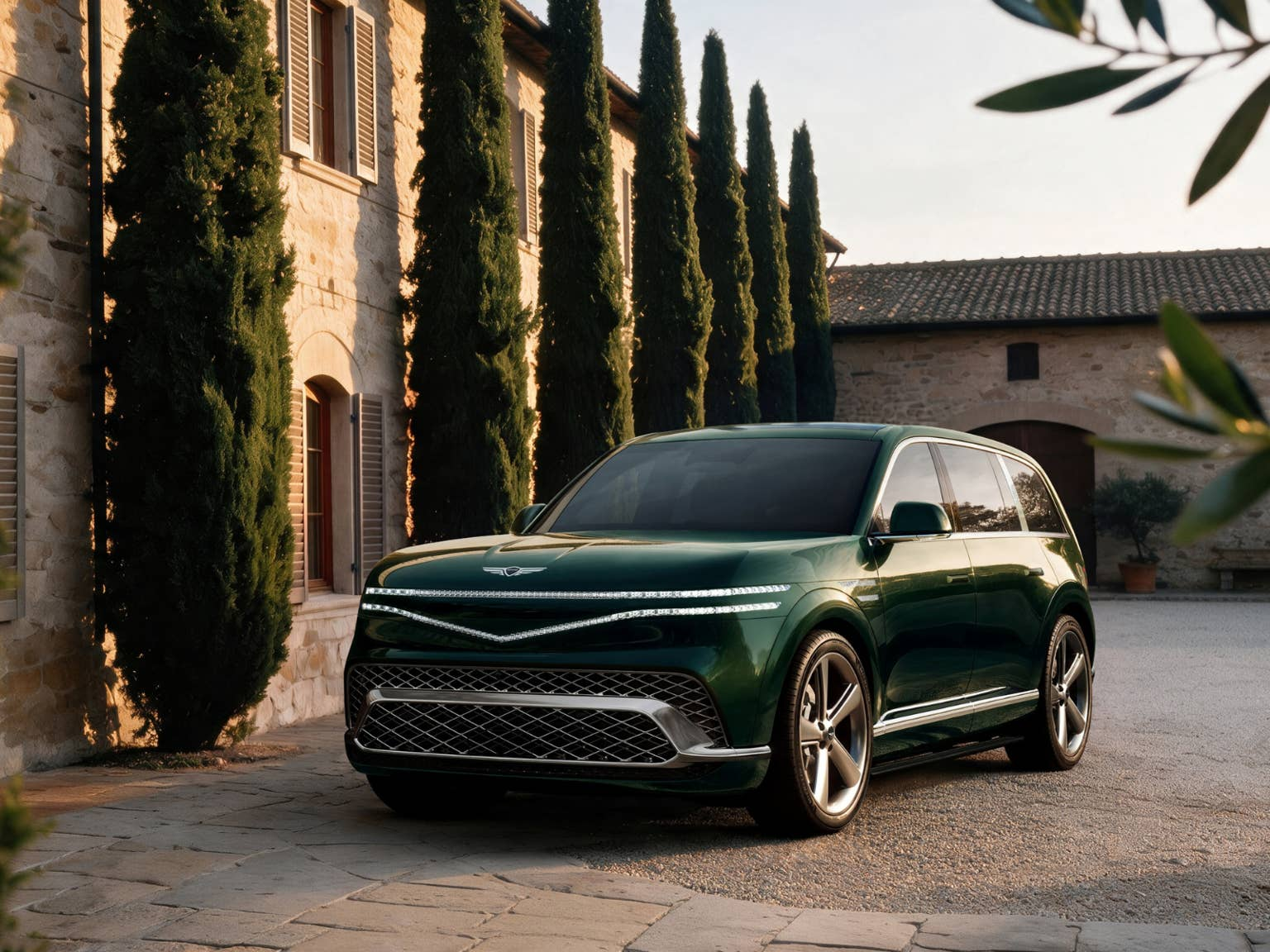
While Missouri moves ahead with its speed-limit changes, Genesis is considering another type of powertrain for its new flagship SUV, the GV90.
The GV90 was recently revealed with an all-electric powertrain. During the model’s debut in San Francisco, Genesis Chief Creative Officer Luc Donckerwolke addressed the possibility of offering an extended-range electric powertrain.
Speaking to Carscoops, Donckerwolke said, “Why not? It’s compatible. It’s another discussion.”
Genesis Eyes U.S. EV Market Conditions
An extended-range electric vehicle, or EREV, could retain electric-motor propulsion while adding a combustion engine that operates as a generator. This would allow the vehicle to be refueled with gasoline while addressing concerns about range and charging availability.
The possibility comes as EV sales in the U.S. fell sharply after the federal tax credit of up to $7,500 ended last year. Tariffs have also added cost and uncertainty to EV adoption, while Hyundai has dropped the standard models of the South Korea-built Ioniq 6.
Automakers are instead expanding their hybrid offerings. Toyota, for example, now sells the U.S.-spec RAV4 exclusively with hybrid or plug-in-hybrid powertrains.
Whether Genesis adds an EREV option to the GV90 will depend on customer demand. The company plans to offer the rest of its lineup with multiple powertrain options.
Genesis GV90 Power and Range
For now, the full-size GV90 is equipped with a 123.5-kilowatt-hour high-voltage battery, the largest fitted to a Hyundai Motor Group EV.
With front and rear motors, the system produces a combined maximum output of 657 horsepower and 590 lb-ft of torque. The seven-seat version has an estimated range of approximately 310 miles based on internal testing.
Charging from 10% to 80% takes about 22 minutes when using a 350-kW fast charger.
Genesis GV90 U.S. Arrival and Competition
The Genesis GV90 is scheduled to arrive in the U.S. in early 2027. Pricing has not been announced, but its flagship position means it will likely cost more than the G90 sedan, which currently starts at $92,700.
The GV90 will compete against the Cadillac Escalade IQ, Lucid Gravity and Rivian R1S, all of which are currently offered exclusively with battery-electric powertrains.