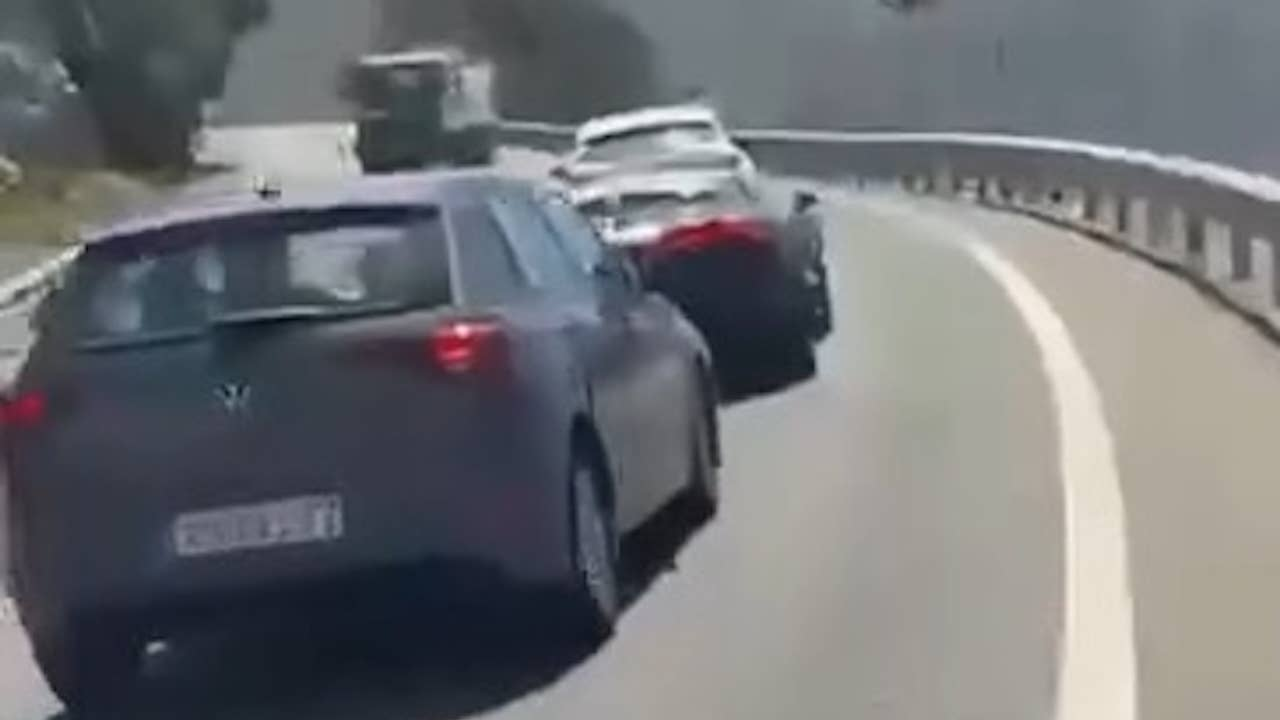
A Bugatti Tourbillon prototype was involved in a crash during a high-altitude test run in Spain after a Volkswagen Polo rear-ended the hypercar on a winding mountain road in the Sierra Nevada region. The Tourbillon was valued at 3.8 million euros before options, turning the collision into a potentially substantial financial liability.
Bugatti Tourbillon Hit During Mountain Test
Bugatti was conducting extreme weather evaluations when the prototype encountered public traffic. Video footage uploaded to social media captured the moment the Volkswagen failed to stop in time and struck the handcrafted French test mule.
The Bugatti had been following a white Kia through an active construction zone. When the Kia suddenly stopped for a red light, the Tourbillon stopped immediately, but the Volkswagen Polo behind it could not do the same.
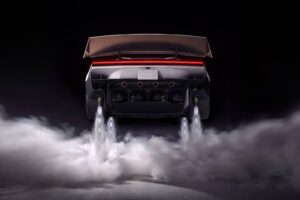
The Polo was traveling at speed while following too closely, leaving it unable to avoid the impact. The collision damaged the Tourbillon’s carbon-fiber aerodynamic diffuser.
The Tourbillon’s Expensive Hardware
The crash put some highly specialized hardware at risk. The Tourbillon is powered by an 8.3-liter Cosworth V16 engine paired with three electric motors, forming a 1,775-horsepower hybrid system that produces a distinct motorsport engine sound under heavy acceleration.
Its braking system also differs sharply from that of a conventional hatchback. The Bugatti uses large carbon-ceramic brakes and bespoke Michelin tires designed to handle extreme friction, while the Volkswagen Polo relies on standard steel brakes and narrower tires designed around everyday efficiency.
Even replacing a single handcrafted rear panel on the Bugatti would easily exceed the entire retail price of the Volkswagen, according to the article.
The Risks of Testing Prototypes on Public Roads
The incident highlights the risks automakers face when testing valuable prototypes on public roads, where everyday traffic can introduce unpredictable situations. Insurance adjusters could face significant costs when a claim involves bespoke carbon-composite bodywork instead of standard mass-market components.
The crash illustrates the financial and practical challenges manufacturers accept when validating next-generation vehicles in real-world environments.
A Reminder About Following Distance
The collision also underscores the importance of maintaining a safe following distance, regardless of the vehicles involved. The Volkswagen driver was following the Tourbillon too closely through a congested area and was unable to stop when traffic ahead came to a sudden halt.
Ultimately, the incident demonstrates that standard commuter vehicles cannot overcome the laws of physics when traffic stops unexpectedly, reinforcing the importance of basic road safety over aggressive driving.