BMW is preparing to expand its driver assistance technology into urban environments in 2027, introducing new navigation-guided features designed to help drivers handle turns, lane changes, intersections, right-of-way situations and roundabouts. The move brings BMW into more direct competition with Tesla’s Full Self-Driving (Supervised) technology, while highlighting a different approach to automated driving that keeps drivers actively involved.
BMW Expands Driver Assistance Technology to City Streets
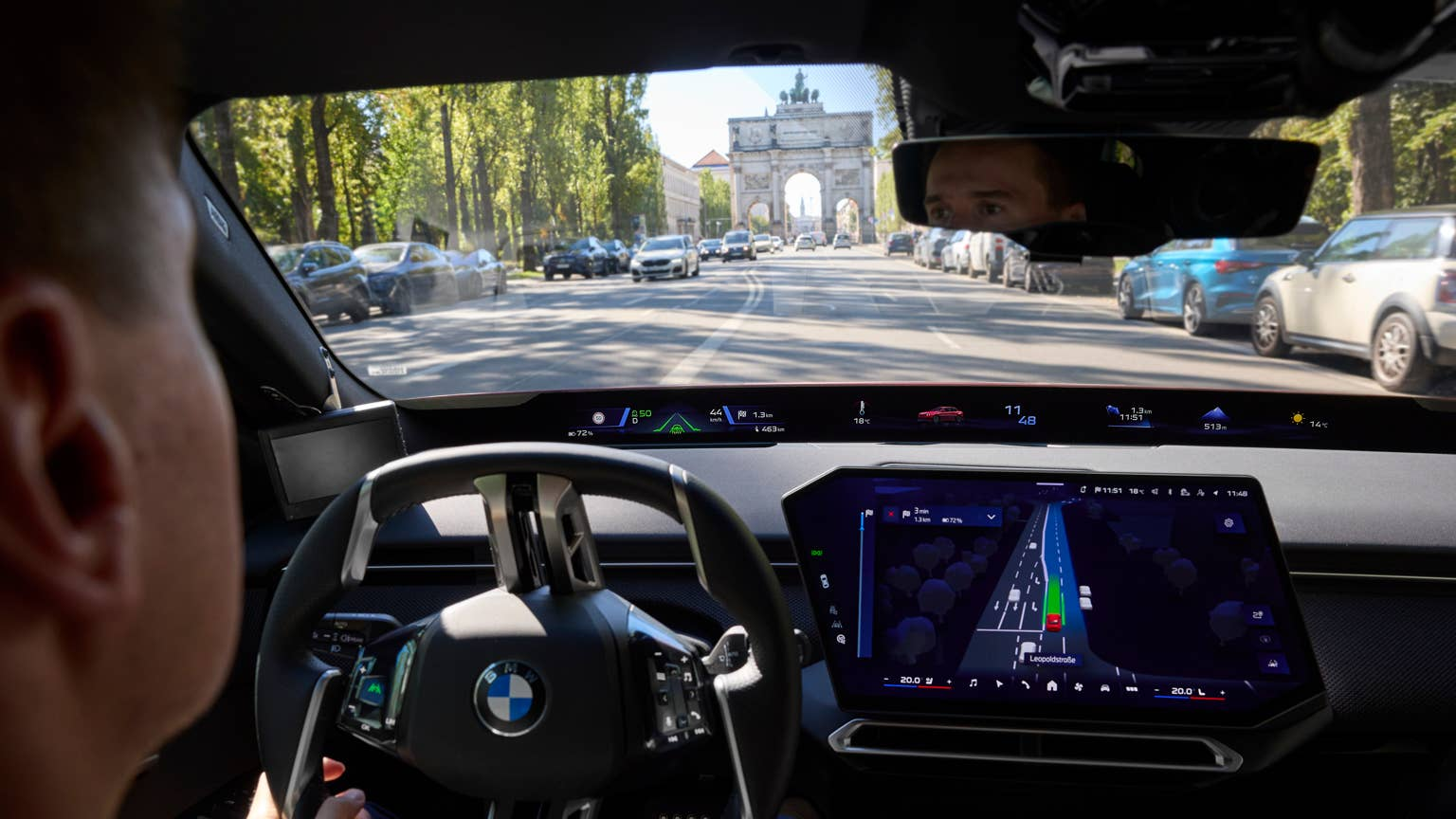
BMW’s upgraded City Assistant will use active route guidance through BMW Maps to anticipate upcoming driving maneuvers. The system is designed to assist with navigating intersections, changing lanes in urban traffic and moving through roundabouts.
The new technology will complement BMW’s existing Motorway Assistant, extending partially automated driving assistance beyond highways and country roads into city environments.
BMW will use its Symbiotic Drive approach, allowing drivers to continue steering, accelerating and braking while the assistance technology operates. The system will remain classified as SAE Level 2, requiring drivers to stay attentive and remain ready to take control of the vehicle.
Germany is scheduled to receive the new functions first in 2027, with additional markets following gradually. BMW says the necessary hardware is already installed in the iX3, iX4, 3 Series, 7 Series and X5.
The additional capabilities will be delivered through over-the-air software updates. The system has also completed the required real-world testing for type approval, subject to official confirmation.
BMW City Assistant vs. Tesla Full Self-Driving
Tesla’s Full Self-Driving (Supervised) system is designed to manage a broader range of driving situations, including residential streets, intersections, lane changes, roundabouts and highway navigation.
The technology relies on onboard vehicle cameras and AI-based driving software to follow a selected route under the driver’s active supervision. Compatible Tesla vehicles also offer additional functions such as automated parking and Summon.
The system does not make Tesla vehicles fully autonomous.
BMW is taking a more focused approach by integrating its driver assistance capabilities with existing navigation and driver-monitoring systems. Rather than emphasizing increasingly complex automated driving tasks, the company is highlighting cooperation between the driver and the vehicle.
Both systems require human supervision, although Tesla’s technology currently supports a wider range of driving scenarios.
Why BMW Stepped Back From Level 3 Automated Driving
BMW’s move toward expanded Level 2 assistance follows its decision to remove the Personal Pilot L3 system from the updated 7 Series.
The Level 3 technology allowed drivers to take their eyes off the road under specific conditions. However, high development costs and limited customer demand made the system difficult to justify commercially.
The optional feature cost around $6,700, but only a small number of customers chose it.
BMW was not alone in reconsidering its Level 3 strategy. Mercedes-Benz also stepped back from its ambitions in this area, reflecting a broader reassessment across the automotive industry.
BMW Focuses on Advanced Level 2 Driver Assistance
The industry’s shift toward advanced Level 2 technology reflects a move toward systems considered more commercially practical and capable of reaching a wider customer base.
BMW’s upcoming city-driving functions indicate that the automaker is continuing to develop automated driving technology despite moving away from its previous Level 3 plans.
With its planned 2027 rollout, BMW is focusing on bringing more navigation-guided assistance to everyday urban driving while keeping drivers responsible for controlling their vehicles.